
The human form, seemingly immutable over millennia, stands on the precipice of its most profound transformation yet. Driven by an accelerating convergence of biotechnology, artificial intelligence, and advanced materials science, the future of human appearance and capability is no longer solely a matter of biological evolution but increasingly one of technological design. We are entering an era where our physical selves can be engineered, augmented, and even reimagined, leading to a species that may bear striking differences from our current iteration.
The Dawn of Designer Genes: CRISPR and Beyond
Perhaps the most fundamental change will originate at the genetic level. Breakthroughs in gene-editing technologies, most notably CRISPR-Cas9, offer an unprecedented ability to modify the human genome with precision. Initially conceived to eradicate debilitating genetic diseases, the potential extends far beyond pathology into the realm of enhancement and aesthetic customization.
Eliminating Disease, Enhating Traits
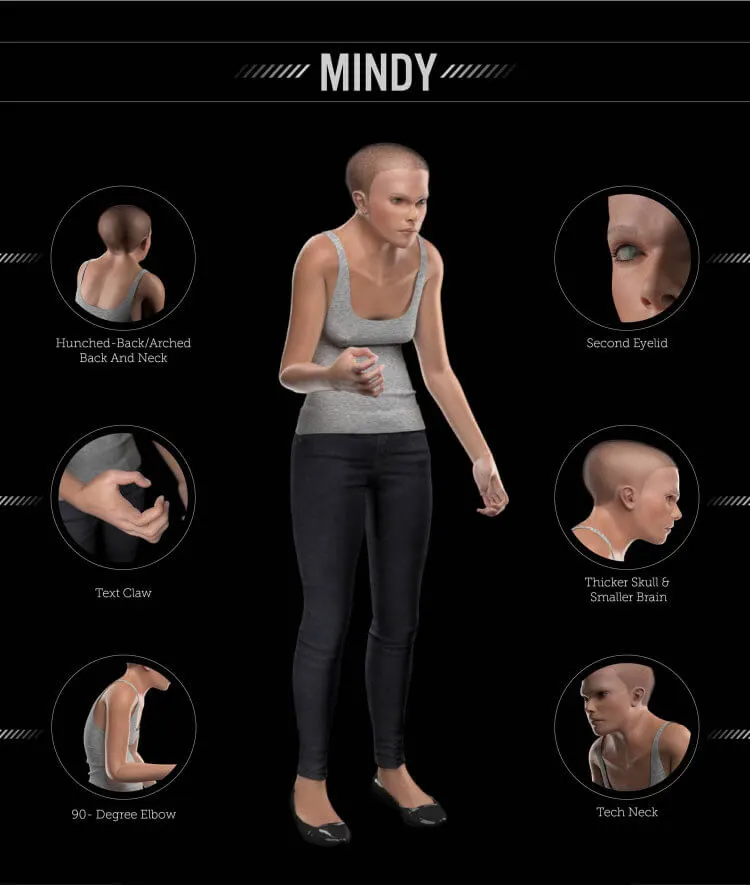
The primary application of gene editing in the near term will undoubtedly remain therapeutic. Correcting genes responsible for conditions like cystic fibrosis, Huntington’s disease, and certain cancers will not only extend lifespans but also prevent the physical tolls these diseases inflict. However, the line between correcting a defect and enhancing a trait is inherently blurry. Imagine genetic interventions that boost muscle density, improve vision beyond 20/20, enhance cognitive functions, or even subtly alter skin pigmentation and hair texture. While the initial focus might be on “health optimization,” the market for cosmetic or performance-based genetic enhancements could rapidly emerge.
Future humans might be genetically predisposed to resist common illnesses, boast increased resilience to environmental stressors like UV radiation, or exhibit enhanced cellular repair mechanisms that slow down the visible signs of aging. Our skin might retain its elasticity longer, our hair might resist graying, and our skeletal structure might become more robust, all thanks to carefully orchestrated genetic modifications. The idea of “genetic beauty standards” could become a reality, with certain gene sequences becoming desirable for their aesthetic outcomes.
Ethical Boundaries and Accessibility
The widespread application of germline gene editing—changes passed down to future generations—raises significant ethical considerations. The “designer baby” debate is already active, questioning the implications of intentionally altering human heredity for non-medical reasons. Yet, technological advancement rarely halts at ethical qualms indefinitely. As the technology matures and becomes safer, the allure of preventing inheritable diseases or bestowing advantageous traits could drive its adoption.
Accessibility will also play a crucial role in determining the future landscape of human appearance. If genetic enhancements are costly, a divide could emerge between those who can afford superior genetic profiles and those who cannot, potentially creating new forms of social stratification based on genetically optimized traits. This could lead to divergent human phenotypes, where different socioeconomic groups exhibit distinct physical characteristics shaped by their access to advanced biotechnology.
The Symbiotic Future: Bio-Augmentation and Cybernetics
Beyond intrinsic genetic changes, extrinsic technological integrations will profoundly redefine human appearance. The concept of “cybernetics” – the blend of biology and technology – is evolving from science fiction into a tangible reality. Humans of the future may not merely use technology; they may become it.
Seamless Prosthetics and Enhanced Senses
Today’s prosthetics, while functional, often remain distinct from the biological body. Tomorrow’s prosthetics will be indistinguishable, merging seamlessly with flesh and bone, nerve and muscle. Advanced neural interfaces will allow individuals to control robotic limbs with the same dexterity and proprioception as biological ones, offering feedback that feels natural. These limbs could surpass biological limitations, incorporating materials stronger than bone, sensors more acute than skin, and dexterity greater than human hands.
Consider advanced ocular implants that grant night vision, telescopic capabilities, or even the ability to perceive additional spectra like infrared or ultraviolet light. Auditory implants might enable selective hearing, perfect pitch, or language translation in real-time. These augmentations will not just restore lost function but expand human perceptual capabilities, changing how we interact with and perceive our environment, and consequently, how we appear. A future human might sport eyes that subtly glow or change color to indicate their enhanced capabilities, or limbs that possess an unearthly grace and strength, signaling their artificial origins.
Brain-Computer Interfaces: The Mind-Machine Merge
Perhaps the most radical augmentation involves direct brain-computer interfaces (BCIs). While currently used for medical applications like controlling prosthetic limbs or restoring communication for paralyzed individuals, BCIs hold the potential to connect the human mind directly to external computational power and vast data networks.

Such integration could alter brain structure and function over generations. While not directly changing external appearance in a visible way, the shift in cognitive processing, memory recall, and communication methods could indirectly influence subtle facial expressions or body language. More overtly, future humans might choose to incorporate external ports or subtle cranial implants, signaling their connection to a digital realm. These interfaces could become a new form of personal adornment or a badge of advanced status, much like high-end smart devices are today. The visible signs might be minimal – a slight luminescence under the skin, or a barely perceptible cranial contour – but they would signify a profound internal shift in human identity and capability.
AI as the Architect: Predictive Design and Personalized Evolution
Artificial intelligence will act as a pivotal architect in shaping future human forms. AI’s capacity for processing vast datasets, identifying patterns, and making predictive models will be instrumental in guiding genetic interventions and designing optimal augmentations.
AI-Driven Health and Longevity Modifications
AI algorithms will analyze an individual’s complete genetic code, lifestyle data, and environmental exposures to predict disease susceptibility and aging pathways with unprecedented accuracy. This predictive power will allow for highly personalized genetic and epigenetic modifications to prevent illness and extend healthy lifespans. AI could identify precise gene targets for interventions that promote cellular regeneration, reduce oxidative stress, and maintain telomere length, thus slowing down visible and internal aging processes. The result could be a human population that retains youthful vigor and appearance for far longer than currently possible, with AI continuously monitoring and suggesting biological adjustments.
Furthermore, AI could design personalized dietary plans, exercise regimes, and even environmental conditions tailored to maximize an individual’s genetic potential and desired physical outcomes. It might recommend specific CRISPR edits to enhance nutrient absorption or alter metabolic rates, all geared towards achieving a user-defined physical ideal or a state of optimal health and performance.
Curating Aesthetics and Functionality
Beyond health, AI could be employed in the creation of bespoke physical appearances. Imagine an AI design studio where individuals can visualize various physical enhancements—from subtle facial symmetry adjustments and skin texture refinements to more radical modifications like new sensory organs or enhanced musculature. AI’s generative capabilities could produce countless iterations, allowing individuals to ‘try on’ different future selves before committing to genetic or cybernetic interventions. This level of personalized aesthetic design, informed by AI, could lead to a diverse range of human appearances, moving away from a singular beauty standard towards a highly individualized and self-curated aesthetic.
AI could also be critical in the development of new materials and biomechanical designs for prosthetics and implants. Using advanced simulations, AI could optimize everything from the flexibility of an artificial muscle fiber to the bio-compatibility of a neural interface, ensuring that augmentations are not only functional but also seamlessly integrate and contribute to the aesthetic of the human form.
Adapting to New Worlds: Environmental Pressures and Technological Solutions
While internal technological advancements drive much of the speculation, external environmental pressures will also play a significant role, often mediated by technology. As humanity explores and potentially colonizes other planets, or as Earth’s own environment shifts, our physical forms might need to adapt, and technology will be our primary tool for doing so.
Surviving Extraterrestrial Environments
Venturing into space or establishing colonies on Mars will necessitate radical adaptations. Low gravity environments could lead to significant changes in bone density and muscle mass, but technology could counteract these, or even enhance them. Humans living in sustained low-gravity might develop lighter, more efficient skeletal structures, or conversely, employ genetic and cybernetic technologies to maintain Earth-like physicality. Perhaps more fascinating, humans on Mars, exposed to different atmospheric compositions and radiation levels, might develop enhanced radiation resistance through genetic engineering, or specialized breathing apparatuses that are seamlessly integrated into their respiratory systems, subtly altering their facial or neck anatomy.
Furthermore, long-term habitation in enclosed, artificial environments or extreme conditions could lead to changes in skin pigmentation (less need for UV protection, perhaps adaptation to grow food via photosynthesis-like tech), eye sensitivity, or even the development of entirely new sensory organs designed to navigate non-terrestrial landscapes. These modifications would be driven by survival and efficiency, but would fundamentally change our physical appearance.
Earthbound Evolution Through Technology
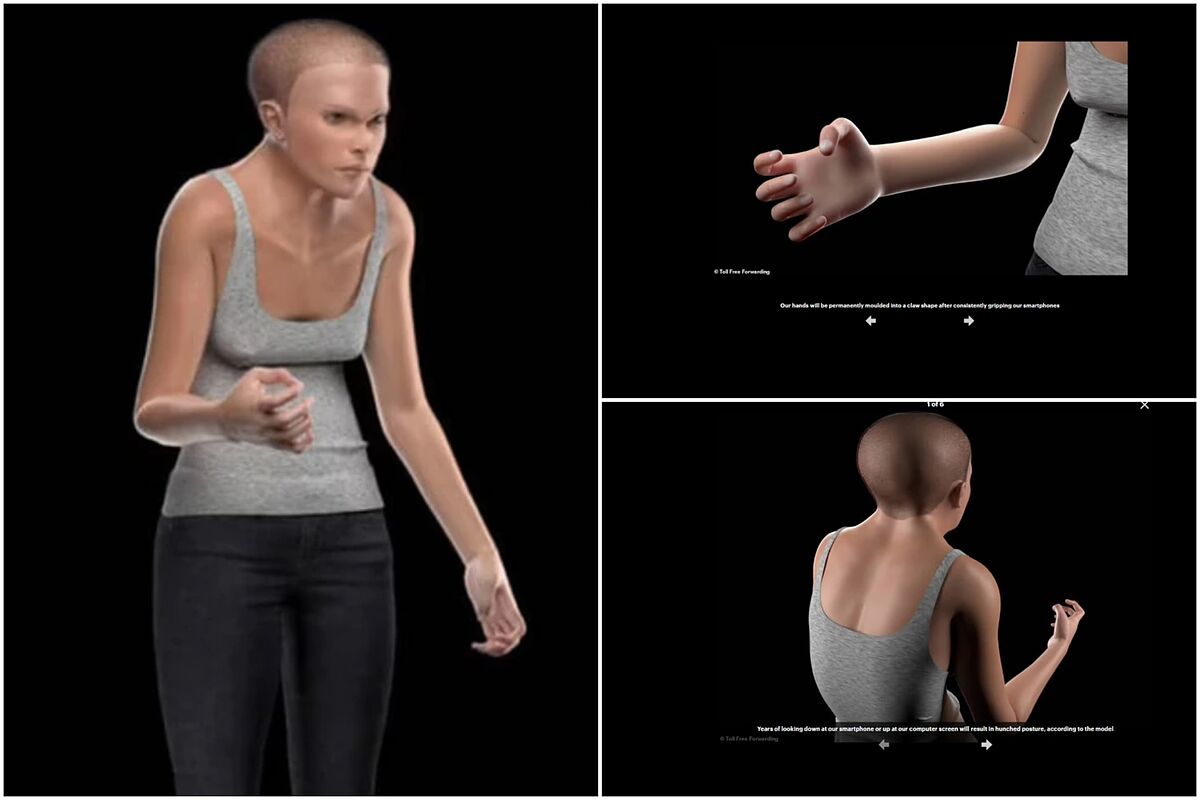
Even on Earth, technology could drive adaptations. Climate change, resource scarcity, and new urban living conditions might prompt technological solutions that translate into physical changes. For instance, enhanced respiratory systems could cope with polluted air, or modified digestive tracts could derive nutrition from novel sources. The human body might become more energy-efficient, requiring less sustenance, or more resilient to extreme temperatures, all thanks to gene editing and bio-augmentation.
The future human form is not a singular destination but a continuum of possibilities. It will be a dynamic canvas, shaped by genetic choice, cybernetic integration, AI design, and environmental demands, all mediated and accelerated by technology. The “look” of humans in the future will be a testament to our ingenuity, our ambition, and our increasingly intimate relationship with the tools we create.
aViewFromTheCave is a participant in the Amazon Services LLC Associates Program, an affiliate advertising program designed to provide a means for sites to earn advertising fees by advertising and linking to Amazon.com. Amazon, the Amazon logo, AmazonSupply, and the AmazonSupply logo are trademarks of Amazon.com, Inc. or its affiliates. As an Amazon Associate we earn affiliate commissions from qualifying purchases.