
For decades, the “smell of grass” has served as a universal shorthand for summer, renewal, and the outdoors. To a botanist, it is a complex chemical defense mechanism; to a homeowner, it is the byproduct of weekend chores. However, in the rapidly evolving landscape of technology, this scent represents one of the final frontiers of digital immersion. As we push deeper into the realms of high-fidelity Virtual Reality (VR), Augmented Reality (AR), and sophisticated Artificial Intelligence (AI), the question “What does grass smell like?” is no longer just a philosophical or biological query. It has become a technical challenge involving molecular mapping, digital scent synthesis, and olfactory interface design.

In the tech sector, replicating the organic complexity of the natural world is the ultimate benchmark. Just as early graphics processing units (GPUs) struggled to render realistic water and light, contemporary sensory tech is now grappling with how to digitize the evocative, sharp, and earthy aroma of grass.
The Chemistry of the “Green” Signal: Data-Driven Olfaction
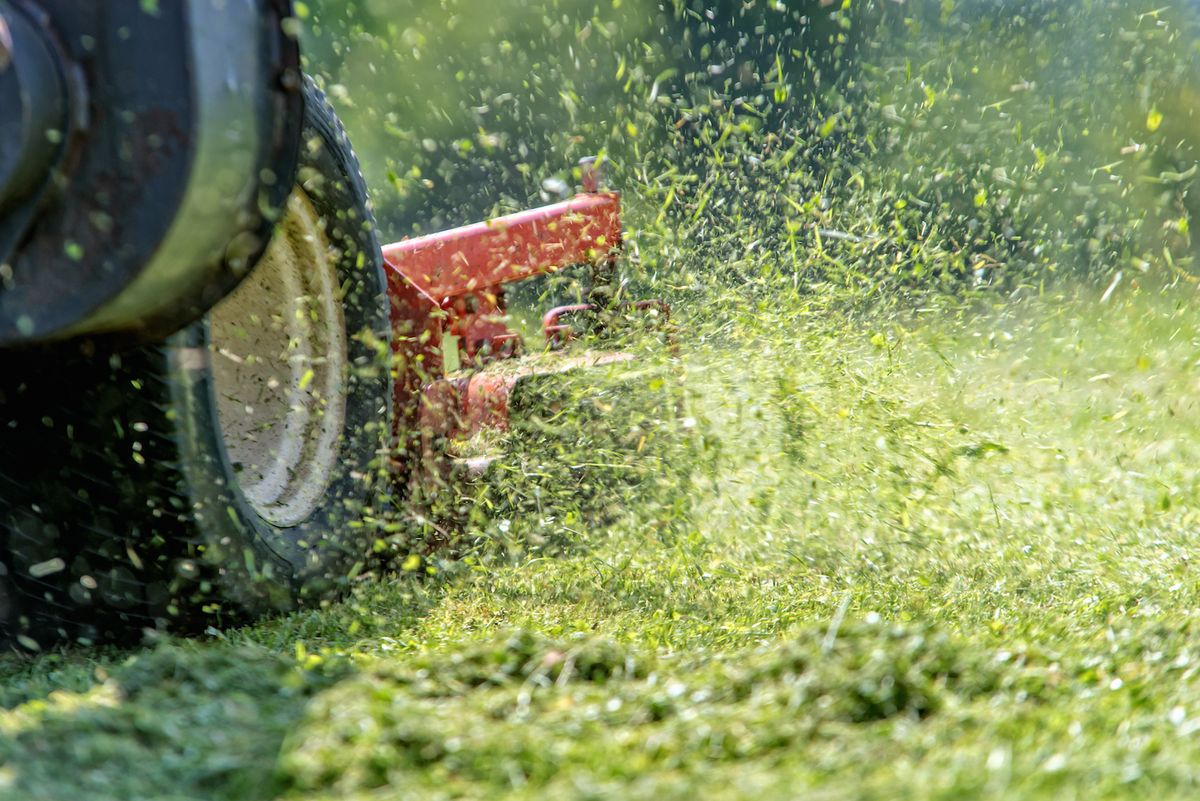
To understand how technology can replicate the scent of grass, we must first look at the “data” provided by nature. The distinctive aroma released when grass is cut is not a single scent but a cocktail of organic compounds known as Green Leaf Volatiles (GLVs). When the cellular structure of a blade of grass is compromised—whether by a lawnmower or a grazing animal—enzymes break down fats and membranes, releasing these oxygenated hydrocarbons into the atmosphere.
Deciphering Green Leaf Volatiles (GLVs)
From a technical standpoint, the scent of grass is primarily composed of six-carbon aldehydes and alcohols. The most prominent among these is cis-3-Hexenal. In the world of chemical engineering and synthetic fragrance tech, this molecule is the “source code” for the green scent. However, cis-3-Hexenal is notoriously unstable, degrading quickly when exposed to air.
Tech firms specializing in digital olfaction are currently using gas chromatography and mass spectrometry to map these GLVs at a granular level. By treating these chemical releases as data points, developers can create a digital signature for “freshness.” This data-driven approach allows for the creation of synthetic analogs that are more stable and can be deployed via digital hardware, ensuring that the “digital grass” doesn’t smell like plastic or chemicals, but like the real, fleeting biological event.
The Algorithmic Composition of Freshness
Modern AI models are now being trained to predict how different ratios of these GLVs will be perceived by the human brain. Because every individual perceives scent slightly differently based on their olfactory receptors, tech companies are using machine learning to find the “median” scent profile. This involves processing thousands of data points regarding molecular weight, volatility, and receptor binding. The goal is to create an algorithmic standard for “Grass 1.0″—a baseline digital scent that is universally recognizable.
Digital Scent Technology (DST): Transmitting Nature via the Cloud
If the chemistry provides the “software,” Digital Scent Technology (DST) provides the “hardware.” For years, the tech industry has focused almost exclusively on sight and sound. However, as the “Experience Economy” grows, there is a burgeoning market for hardware that can emit precise scents on cue. This is where the scent of grass moves from a biological byproduct to a digital output.
The Hardware of Olfactory Synthesis
Emerging hardware companies are developing “olfactory displays”—devices that function much like an inkjet printer, but for smells. Instead of CMYK ink cartridges, these devices contain “scent cartridges” filled with base chemical components. When a user in a VR environment walks across a digital meadow, the software sends a signal to the hardware to atomize a precise mixture of GLV analogs.
The challenge here is precision and “latency.” Just as a lag in frame rate can cause motion sickness in VR, a lag in scent delivery can break immersion. If you see the grass being cut but don’t smell it until thirty seconds later, the sensory “uncanny valley” becomes jarring. Current innovations in micro-fluidics and piezo-electric atomizers are aimed at reducing this latency to milliseconds, allowing the smell of grass to be synchronized perfectly with visual and auditory stimuli.
OVR (Olfactory Virtual Reality) and Immersion
Olfactory Virtual Reality (OVR) is the specific niche of tech dedicated to integrating smell into head-mounted displays. Firms like OVR Technology have developed wearable scent devices that attach to VR headsets. These devices use spatial audio-like logic for smells; as you get closer to a digital patch of grass, the concentration of the scent increases. This “spatial olfaction” is a major leap in digital engineering, requiring complex algorithms to simulate how scent particles would naturally diffuse in a 3D space, accounting for virtual wind speed and direction.
AI and the Future of Synthetic Aromas
The intersection of Artificial Intelligence and olfactory science is perhaps the most exciting development in answering what grass “smells” like in a digital context. AI is not just helping us replicate existing smells; it is helping us design “optimized” versions of them for specific technological applications.
Machine Learning in Fragrance Development
Tech giants and specialized startups are using AI to bypass the traditional, slow process of perfume and aroma creation. By using deep learning, AI can analyze the molecular structure of thousands of “green” compounds and predict which ones will trigger the strongest emotional response of “calm” or “nature connection.” For a tech developer building a wellness app, the AI might suggest a specific modification to the grass scent—perhaps emphasizing the damp earth notes (geosmin) to simulate a post-rain environment, which data shows is more relaxing to users.
Personalized Digital Gardens
In the future, the smell of grass might be personalized through bio-feedback tech. Imagine a wearable device that monitors your cortisol levels. If the device detects high stress, it could trigger a subtle release of grass-scented volatiles through your workspace’s air filtration system or a personal wearable. Since the scent of grass is biologically linked to “distress” signals in plants, it ironically triggers a “nature-reconnection” response in humans, lowering heart rates. AI manages this feedback loop, ensuring the scent is subtle enough to be effective without causing olfactory fatigue.
Ethical and Technological Challenges of “Digitizing” Nature
As we advance toward a world where we can download the scent of a spring morning, we face significant technical and ethical hurdles. Digitizing a sensory experience as raw and evocative as the smell of grass isn’t just about chemistry; it’s about managing the human interface.
Sensory Saturation and the “Uncanny Valley” of Smell
One of the primary technical hurdles is “scent persistence.” Unlike light or sound, which travel and dissipate almost instantly, scent molecules physically linger. If a digital experience triggers the smell of freshly cut grass, that smell remains in the room or the mask long after the user has moved to the next scene. Tech companies are currently researching “neutralizing” agents—digital “delete” keys for the nose—that can quickly bind to and neutralize scent molecules to clear the air for the next sensory input.
Furthermore, there is the “Uncanny Valley” of olfaction. If a digital scent of grass is 95% accurate, the missing 5% can often result in a “chemical” or “medicinal” smell that the human brain finds repellant. Achieving 100% fidelity requires a level of molecular complexity that current hardware struggle to maintain over long periods.
Bandwidth and Hardware Limitations
From a logistics perspective, “streaming” scent is currently impossible. While we can stream 8K video because it consists of bits and bytes, scent requires physical atoms. This means that the “scent of grass” must be stored locally in a reservoir. The next frontier for tech will be the development of “universal scent cartridges”—a set of primary odors that can be mixed in infinite combinations to create any smell, much like how pixels create any color. Until this “RGB of Smells” is perfected, the smell of grass remains a premium, specialized feature of high-end tech setups rather than a standard component of the digital experience.
Conclusion: The New Green Frontier
The question of “what does grass smell like” has transitioned from the realm of nature walks to the cutting edge of laboratory research and digital innovation. As we continue to blur the lines between the physical and digital worlds, our tech must account for the full spectrum of human sensation.
By decoding the chemical signals of Green Leaf Volatiles, leveraging the power of AI for molecular design, and engineering sophisticated OVR hardware, we are nearing a reality where the digital world is as fragrant as the physical one. The smell of grass, in this context, serves as the ultimate proof of concept: if we can successfully digitize and transmit the complex, nostalgic, and fleeting essence of a mowed lawn, we have unlocked the key to true digital presence. The future of technology isn’t just something we see or hear—it’s something we breathe.
aViewFromTheCave is a participant in the Amazon Services LLC Associates Program, an affiliate advertising program designed to provide a means for sites to earn advertising fees by advertising and linking to Amazon.com. Amazon, the Amazon logo, AmazonSupply, and the AmazonSupply logo are trademarks of Amazon.com, Inc. or its affiliates. As an Amazon Associate we earn affiliate commissions from qualifying purchases.