
In the intersection of legal compliance and technological advancement, the humble car registration paper is undergoing a profound transformation. Traditionally viewed as a static slip of paper stored in a glove compartment, the “look” of a car registration is shifting from physical pulp to encrypted data strings and high-resolution digital displays. Understanding what a car registration paper looks like today requires an exploration of data architecture, UI/UX design in government apps, and the sophisticated security technologies that prevent document forgery.
As we move toward a “paperless” society, the visual identity of vehicle documentation is being redefined. This evolution is not merely aesthetic; it reflects a broader shift in how we manage identity, ownership, and connectivity in an increasingly digitized world.
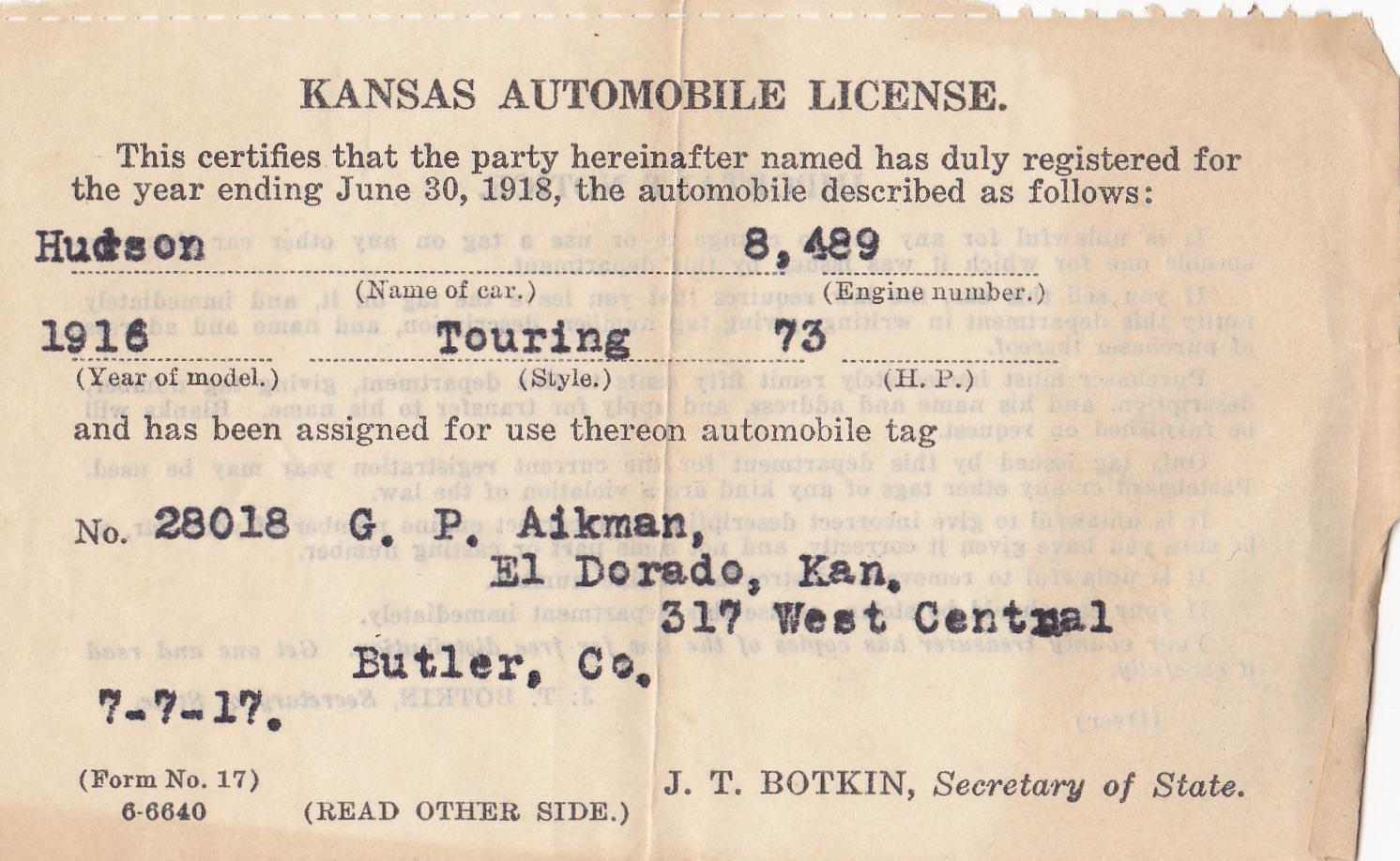
Anatomy of the Document: Decoding the Visual and Data Elements
To understand what a car registration paper looks like, one must first understand its function as a data repository. Whether in physical or digital form, the registration serves as the primary link between a specific human (or entity) and a specific machine.
Standard Fields and Identifying Information
Visually, a traditional car registration paper is typically a small, rectangular slip, often printed on lightweight thermal paper or cardstock. The layout is designed for rapid optical character recognition (OCR) by law enforcement systems. At the top, you will generally find the issuing authority’s header—often featuring a digital watermark or a state-specific seal.
The core data fields include:
- The Vehicle Identification Number (VIN): This 17-character alphanumeric string is the “digital DNA” of the car. On the registration paper, it is often highlighted or positioned near a barcode for easy scanning.
- License Plate Number: This is the most visible public-facing identifier, linked directly to the registration record in the state’s database.
- Owner Metadata: This includes the full name and residential address, formatted to match the standards of the National Motor Vehicle Title Information System (NMVTIS).
- Technical Specifications: This includes the make, model, year, body style, and fuel type. From a technical standpoint, these are categorized as “static data,” as they do not change throughout the vehicle’s lifecycle.
The Layout: Why It Looks the Way It Does
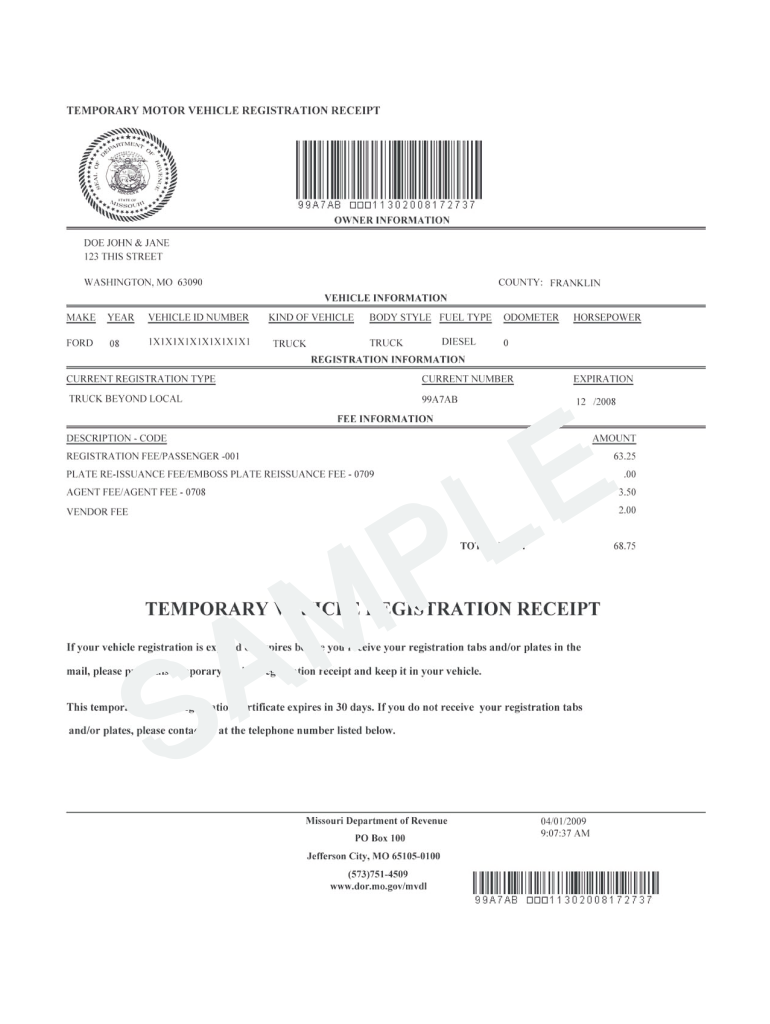
The “look” of the registration is dictated by readability. The typography usually employs sans-serif fonts like Arial or Helvetica to ensure that scanning hardware can interpret the text without errors. You will notice significant white space between fields; this is a deliberate design choice to prevent “bleed” during the printing process, which could obscure vital characters. Furthermore, many modern registrations now feature a 2D PDF417 barcode. This dense symbol contains all the printed information in a machine-readable format, allowing an officer’s handheld computer to ingest the document’s data instantly without manual typing.
From Paper to Pixels: The Digital Transformation of Vehicle Documentation
The transition from a physical “paper” to a digital “certificate” is the most significant change in the history of vehicle administration. As software-as-a-service (SaaS) platforms begin to handle DMV (Department of Motor Vehicles) backends, the physical paper is being replaced by digital credentials.
Electronic Registration and e-Titles
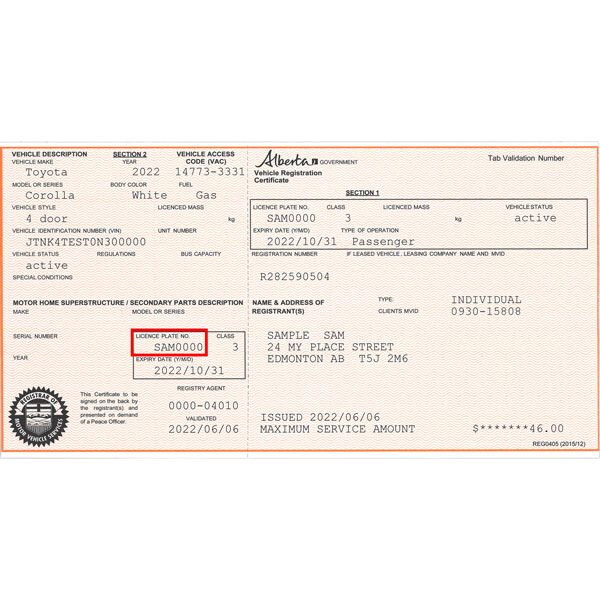
In many jurisdictions, what a car registration “looks like” is now a PDF file stored on a smartphone or a record within a secure cloud-based portal. These electronic registrations are often optimized for mobile viewing. Instead of a multi-column paper layout, the digital version uses a responsive design that prioritizes the most searched-for data: the expiration date and the VIN.
The “e-Title” and digital registration movement rely on centralized databases that update in real-time. When a user renews their registration online, the “look” of the document changes instantly in the system. There is no longer a need to wait for a physical sticker to arrive in the mail; the digital record is the “source of truth,” and the physical paper is merely a secondary representation of that data.
Mobile Apps and Digital Wallets: The New Interface
In the current tech landscape, a car registration is increasingly looking like a “card” in an Apple or Google Wallet. This shift utilizes ISO 18013-5 standards, which are the same standards used for mobile Driver’s Licenses (mDL).
In this format, the registration doesn’t look like a paper at all. It features:
- Dynamic Graphics: A rotating or shimmering seal that proves the document is not a static screenshot.
- NFC Integration: The ability to “tap” a device to share registration data with authorized readers.
- Privacy-First Views: A “selective disclosure” interface where the user can show that the vehicle is registered without necessarily revealing their home address, a level of data control that physical paper cannot provide.
Advanced Security Features: How Technology Prevents Fraud
The “look” of a car registration is heavily influenced by its security stack. Because these documents are high-value targets for identity thieves and car thieves, they incorporate multi-layered technological defenses.
Physical Security: Holograms and Microprinting
If you hold a modern physical registration paper up to the light, its appearance changes. This is due to the inclusion of OVDs (Optically Variable Devices). These are holographic overlays that are nearly impossible to replicate with consumer-grade printers.
Additionally, look closely at the borders of the document. What appears to be a solid line is often “microprinting”—text so small it can only be read under magnification. This tech ensures that if a document is photocopied, the micro-text blurs into a solid line, immediately flagging the document as a counterfeit. Some states also use “void” pantograph technology, where the word “VOID” appears across the paper if it is scanned or copied, thanks to specialized background pattern interference.
Digital Verification: QR Codes and Blockchain Integration
The most modern “look” for a registration paper includes a prominent QR code. This isn’t a standard URL link; it is often a cryptographically signed token. When scanned by a verified app, the code communicates with a secure server to confirm that the physical paper in hand matches the digital record in the database.
Some forward-thinking jurisdictions are experimenting with blockchain or Distributed Ledger Technology (DLT) to manage vehicle registrations. In this scenario, a registration “looks” like a unique digital asset (similar to an NFT) on a private ledger. This creates an immutable history of the vehicle, where every change in registration is a “block” in the chain, making it technologically impossible to “wash” a title or forge a registration without detection.
The Future of Vehicle Identification: AI and Smart Infrastructure
As we look toward the next decade, the concept of a “paper” registration may disappear entirely, replaced by ambient tech and automated systems. In this future, what a car registration “looks like” is less about what a human sees and more about what a machine perceives.
Automated License Plate Recognition (ALPR)
In many smart cities, the “registration” is effectively the license plate itself, interpreted through the lens of an AI-powered camera. ALPR systems use deep learning models to identify plates in milliseconds, cross-referencing them against registration databases. To these systems, a registration looks like a “High” status in a SQL database. The physical paper becomes redundant when the vehicle’s hardware and external sensors can communicate compliance status through the airwaves.
Connected Vehicles and Real-Time Compliance
The rise of Connected Vehicles (CV) and V2X (Vehicle-to-Everything) communication suggests a future where the car broadcasts its registration status. In this tech-heavy ecosystem, the car registration “looks” like a digital heartbeat.
Imagine a vehicle that automatically transmits its registration credentials to a toll booth or a parking garage via a secure 5G slice. The “paperwork” is handled by an onboard computer executing a smart contract. The owner never sees a physical document; instead, they see a “Verified” badge on their vehicle’s infotainment dashboard. This integration represents the ultimate convergence of administrative law and high-tech software engineering.
Conclusion: The Death of the Paper Paradigm
To ask “what does a car registration paper look like” is to capture a moment in a rapid technological transition. While we still recognize the rectangular slip of paper with its thermal ink and holographic seals, that image is quickly becoming an anachronism.
In the modern tech-centric view, a car registration is a multi-dimensional data object. It is a secure entry in a state database, a cryptographically signed token in a mobile wallet, and a machine-readable string for AI-driven sensors. The “look” of the document is moving away from the physical constraints of wood pulp and toward the limitless potential of digital encryption. As we move forward, the most important aspect of a registration will not be how it looks to the eye, but how securely and efficiently it communicates its data to the digital ecosystem that surrounds our roads. Professional, secure, and increasingly invisible—the car registration of the future is a masterpiece of modern digital engineering.
aViewFromTheCave is a participant in the Amazon Services LLC Associates Program, an affiliate advertising program designed to provide a means for sites to earn advertising fees by advertising and linking to Amazon.com. Amazon, the Amazon logo, AmazonSupply, and the AmazonSupply logo are trademarks of Amazon.com, Inc. or its affiliates. As an Amazon Associate we earn affiliate commissions from qualifying purchases.