
To the human eye, the question “what does a blouse look like?” seems elementary. We visualize a fluid garment, perhaps made of silk or chiffon, often featuring a collar, buttons, or aesthetic pleats, typically associated with feminine professional or semi-formal wear. However, in the realm of modern technology—specifically within the sectors of Artificial Intelligence (AI), Computer Vision, and E-commerce—answering this question is a complex computational feat.
As we transition into an era where digital shopping, virtual try-ons, and AI-driven design dominate the fashion industry, the way software “sees” and categorizes a blouse has become a cornerstone of retail tech. Defining a blouse is no longer just about fashion theory; it is about data points, neural network training, and the algorithmic interpretation of textile geometry.
The Anatomy of Visual Recognition in Fashion Tech
At the heart of modern fashion technology lies Computer Vision (CV). When a user uploads a photo to a visual search engine or an AI-powered styling app, the software must decompose the image into recognizable patterns. To a machine, a blouse is not a piece of clothing; it is a collection of pixels that suggest specific edges, textures, and silhouettes.
Pixel-Level Classification: How Neural Networks Identify Silhouettes
The first step in a computer understanding what a blouse looks like involves Convolutional Neural Networks (CNNs). These are deep learning algorithms designed to process pixel data. The AI looks for “feature maps”—the curve of a neckline, the taper of a sleeve, and the hemline.
Unlike a structured t-shirt, which has a relatively predictable geometric footprint, a blouse often features “soft” edges. AI models are trained on massive datasets, such as the DeepFashion dataset, which contains hundreds of thousands of categorized images. By analyzing these, the software learns that a “blouse” typically lacks the rigid collar of a formal men’s dress shirt and often possesses a higher degree of “draping” or fabric fluidity.
Attribute Tagging: Distinguishing the Blouse from the Shirt
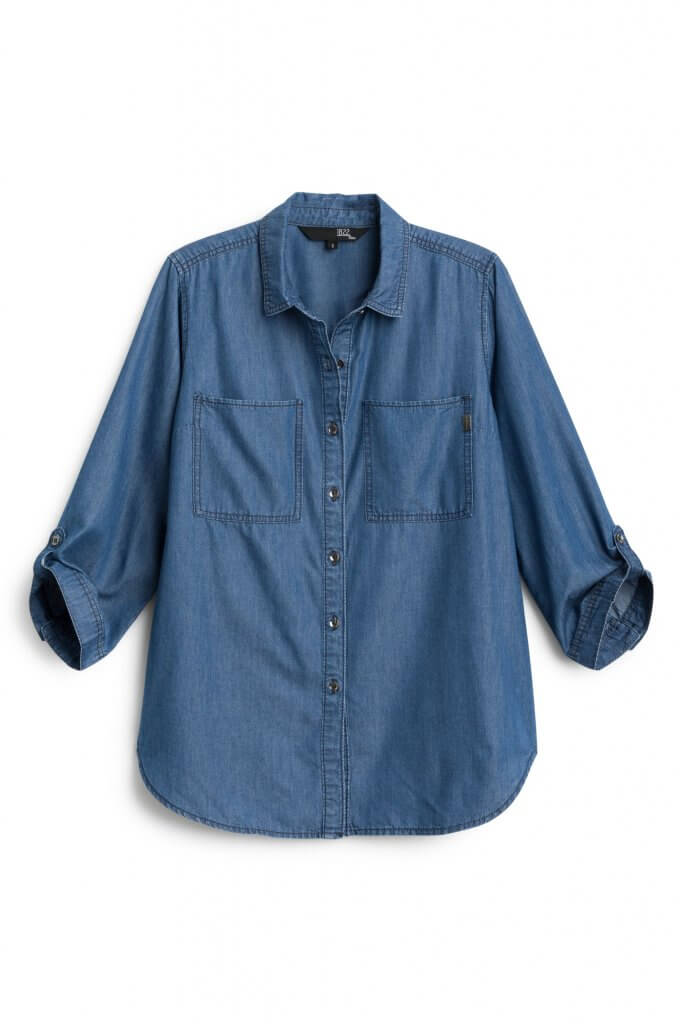
A major challenge in fashion tech is “fine-grained classification.” How does an algorithm distinguish a blouse from a button-down shirt or a tunic? This is achieved through attribute tagging.
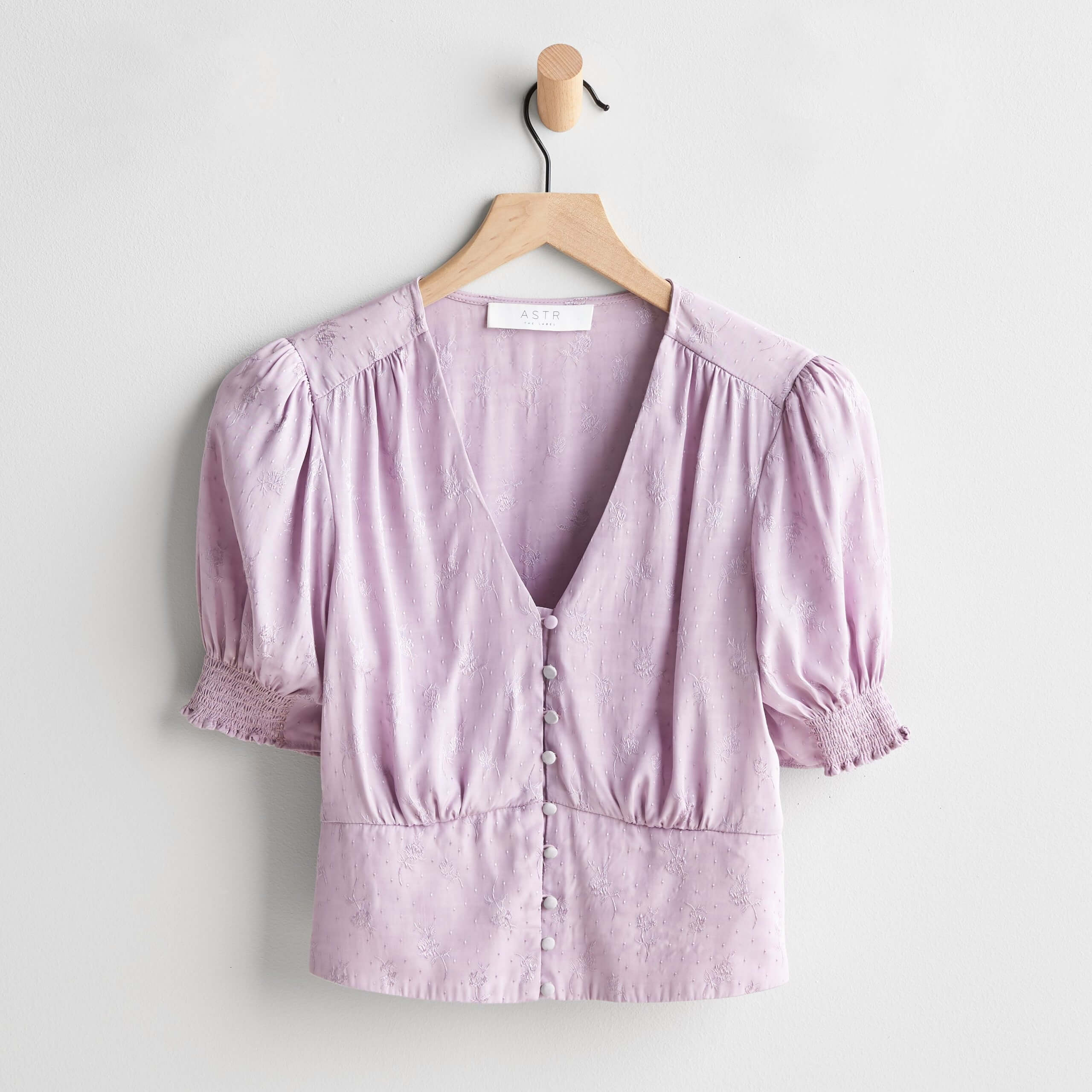
Advanced AI tools use multi-label classification to identify sub-features. For a garment to be classified as a blouse in a database, the AI looks for specific modifiers: “V-neck,” “Puff sleeve,” “Ruffle detail,” or “Peplum waist.” By identifying these specific nodes, the software creates a digital signature. If the AI detects a “stiff pointed collar” and “double cuffs,” it leans toward “shirt.” If it detects “sheer fabric” and “bow-tie neck,” it identifies a “blouse.” This granular level of distinction is what allows search algorithms to deliver precise results to consumers.
Generative AI and the Virtual Prototype
The emergence of Generative AI, specifically Diffusion Models and Large Graphical Models, has flipped the script. We are no longer just asking “what does a blouse look like” to identify one; we are asking AI to create what one looks like from scratch. This has profound implications for digital design and sustainable manufacturing.
From Text to Textile: The Role of Diffusion Models
Tools like Midjourney, DALL-E 3, and specialized platforms like CALA or Adobe Firefly allow designers to input text prompts such as: “A silk Victorian-style blouse with lace inserts and bishop sleeves.”
To fulfill this request, the AI synthesizes its “knowledge” of thousands of historical and contemporary blouse designs. It understands the relationship between “Victorian” and “high necklines,” or “bishop sleeves” and “volume at the wrist.” This isn’t just a collage; the AI generates a novel image by predicting the placement of shadows and the behavior of light on specific textures like silk or lace. This tech allows brands to visualize a product before a single yard of fabric is cut, drastically reducing physical prototyping waste.
Solving the “Draping” Problem: Physics-Informed Neural Networks
One of the most difficult things for tech to replicate is how a blouse “looks” when in motion. Unlike a structured blazer, a blouse’s appearance changes based on the movement of the wearer and the weight of the fabric.
Engineers are now using Physics-Informed Neural Networks (PINNs) to simulate the “look” of a blouse in a 3D environment. By coding the physical properties of textiles—such as the shear of silk or the stiffness of poplin—the software can predict how the garment will drape over a 3D avatar. This technology is the backbone of the “Virtual Try-On” (VTO) experience, where the software must render a blouse accurately over a user’s unique body shape in real-time.

The Impact on E-commerce and Visual Search
The practical application of defining a blouse through tech is most visible in the global e-commerce market. For a multi-billion dollar retailer, ensuring that a “blouse” looks like a “blouse” to a search engine is a matter of significant financial consequence.
Visual Search Engines: “Snap and Shop” Technology
Mobile commerce has birthed the “Snap and Shop” era. When a consumer sees someone wearing an interesting top in public, they can take a photo and upload it to an app like Pinterest, Google Lens, or a brand’s proprietary app.
The underlying technology uses “Vector Embeddings.” The image is converted into a mathematical vector. The AI then scans the retailer’s inventory to find the closest mathematical match. For this to work, the system must have a robust definition of what a blouse looks like across different angles and lighting conditions. This tech effectively bridges the gap between physical inspiration and digital transaction, making every street a potential showroom.
Reducing Return Rates via Virtual Try-On Tech
Returns are a massive drain on digital retail, with many returns occurring because a garment did not “look” on the body as it did on the model. Tech-enabled blouses—those rendered through Augmented Reality (AR)—are solving this.
By using “Pose Estimation” (tracking the joints of a user via their smartphone camera), AR software can overlay a digital blouse onto a live video feed. The software adjusts the scale and orientation of the garment, allowing the user to see how the ruffles fall or where the hemline sits. This “look” is calculated through “Occlusion” algorithms, which ensure that if the user moves their arm in front of the blouse, the digital fabric is hidden appropriately, creating a realistic visual experience.
The Future of Digital Identity and Wearable Tech
As we look toward the future, the definition of a blouse is expanding beyond its physical form into the realms of data-integrated design and the “Internet of Clothing.”
Smart Fabrics and Data-Integrated Design
What does a blouse look like when it’s integrated with technology? We are entering the age of “Smart Textiles,” where conductive threads and sensors are woven directly into the fabric. In this context, a blouse looks like a sophisticated data-gathering tool.
Companies are experimenting with blouses that can monitor heart rates, posture, or even change color based on the wearer’s body temperature or via an app. Here, the “look” of the blouse is dynamic. The design software must account for the placement of haptic sensors and battery housing while maintaining the aesthetic appeal of a traditional garment.
The Ethical Implications of Biased Datasets in Fashion AI
Finally, we must consider the socio-technical aspect of what a blouse “looks like.” If an AI is trained primarily on Western fashion datasets, it may fail to recognize a kurti (a traditional South Asian garment) or a qipao as a blouse or its equivalent.
Tech leaders are now focusing on “Inclusive AI” to ensure that visual recognition models are culturally diverse. This involves diversifying the training data to ensure that the software’s definition of “professional attire” or “feminine blouses” reflects a global perspective. This is not just a social imperative but a business one; as e-commerce penetrates deeper into emerging markets, the tech must be able to categorize and display garments that resonate with every demographic.
Conclusion
The question “what does a blouse look like” serves as a fascinating case study in the power and complexity of modern technology. What was once a simple matter of fashion observation has been transformed into a sophisticated intersection of neural networks, 3D physics, and global data management.
By understanding the “DNA” of a garment through pixels and vectors, technology is not only changing how we shop but also how we design, manufacture, and interact with the very clothes on our backs. As AI continues to evolve, the “look” of a blouse will become even more precise, personalized, and integrated into our digital lives, proving that even the most common objects are being redefined by the digital revolution.
aViewFromTheCave is a participant in the Amazon Services LLC Associates Program, an affiliate advertising program designed to provide a means for sites to earn advertising fees by advertising and linking to Amazon.com. Amazon, the Amazon logo, AmazonSupply, and the AmazonSupply logo are trademarks of Amazon.com, Inc. or its affiliates. As an Amazon Associate we earn affiliate commissions from qualifying purchases.