
The modern metropolis is a marvel of invisible engineering. Beneath the glass towers and bustling transit lines lies a complex network of arteries designed to move waste away from human habitats. However, when these systems fail, the results are more than just an inconvenience; they represent a significant breakdown in urban tech infrastructure. A sewer backup is a systemic failure that sits at the intersection of civil engineering, environmental science, and data management. To understand what causes these backups is to understand the limitations of our current physical tech and the urgent need for a digital revolution in municipal management.

In the contemporary landscape, we often view technology through the lens of software and silicon, yet the “tech” of sanitation—comprised of lift stations, gravity-fed conduits, and treatment algorithms—is arguably the most critical foundation of public health. When a backup occurs, it is rarely the result of a single isolated incident. Instead, it is usually a cascade of failures involving material fatigue, environmental interference, and a lack of real-time monitoring.
The Anatomy of System Failure: Engineering and Environmental Stressors
To diagnose the causes of sewer backups, we must first look at the physical hardware of the system. Most urban centers are operating on legacy hardware—pipes and junctions that were installed decades, if not a century, ago. These systems are being pushed beyond their original design specifications by population growth and shifting environmental patterns.
Structural Integrity and Material Fatigue
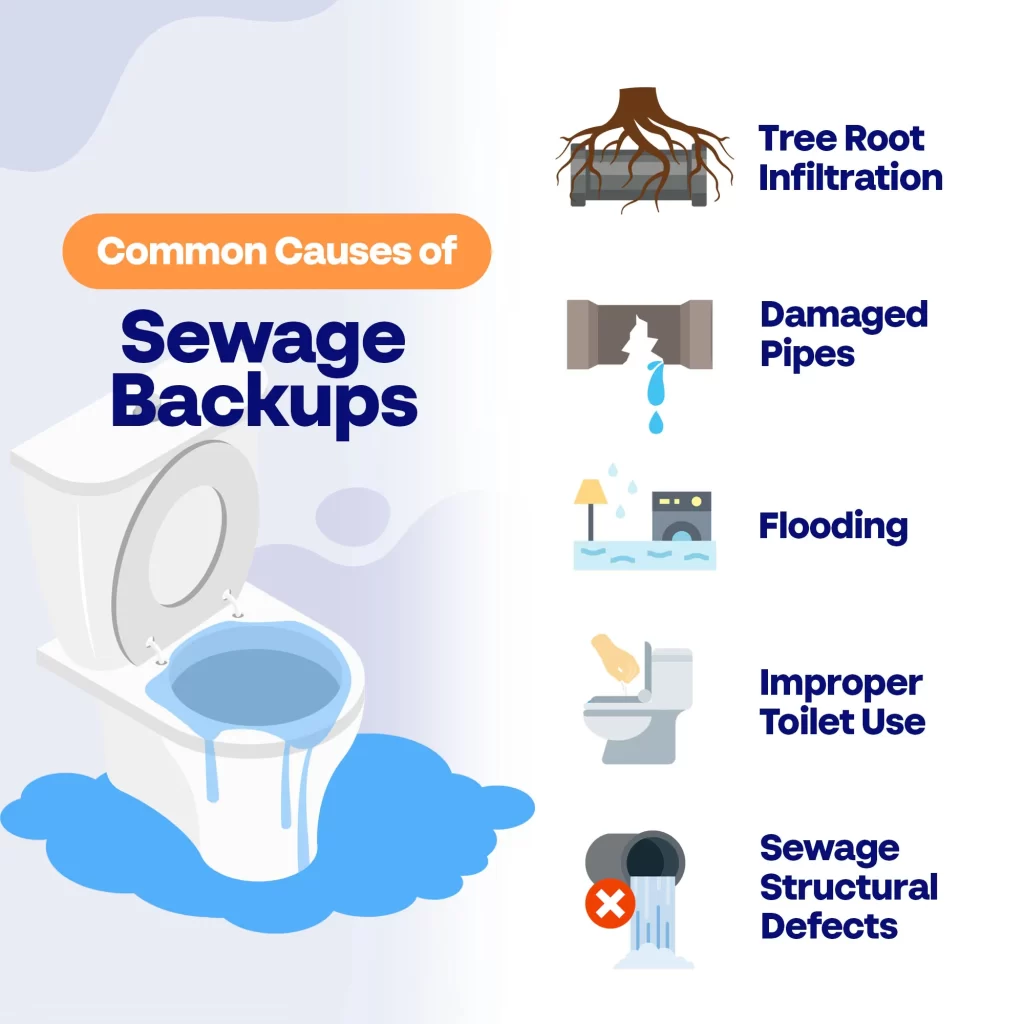
The primary physical cause of sewer backups is the degradation of the conduit materials. Depending on the era of installation, these pipes may be constructed from vitrified clay, cast iron, or early-generation PVC. Over time, chemical corrosion from hydrogen sulfide gas (a byproduct of sewage) eats away at the crown of the pipe, leading to structural thinning.
When the structural integrity of a pipe is compromised, it becomes susceptible to “Inflow and Infiltration” (I&I). This is a technical term for groundwater and rainwater entering the system through cracks or loose joints. During heavy precipitation, this influx of “clean” water overwhelms the capacity of the system, leading to a hydraulic surge that pushes waste back up through the lowest points of entry—typically residential and commercial basements.
Hydraulic Overload and the “Fatberg” Phenomenon
While structural failure is a hardware issue, “fatbergs” represent a failure of the inputs managed by the system. A fatberg is a congealed mass in a sewer system formed by the combination of non-biodegradable solids (such as wet wipes) and FOG (fats, oils, and grease).
From a technical perspective, fatbergs are a unique engineering challenge. They act as semi-solid dams, significantly reducing the cross-sectional area of the pipe. This reduction increases the velocity and pressure of the remaining flow, which can cause upstream backups. The rise of “flushable” wipes—a product of consumer tech that lacks the rapid fiber breakdown of traditional cellulose—has exacerbated this issue globally, creating massive blockages that require high-tech hydro-jetting and robotic cutters to clear.
The Digital Blind Spot: Why Legacy Monitoring Fails
The second major cause of sewer backups is not physical, but informational. Most municipal systems operate on a “reactive” maintenance model. This means that a problem is only identified once a backup has already occurred and been reported by a citizen. This delay in information is a byproduct of the digital blind spot inherent in legacy infrastructure.
Data Silos in Municipal Management
In many cities, the data regarding sewer health is siloed. Geographic Information Systems (GIS) may track where the pipes are, but they often lack real-time integration with flow sensors or weather predictive models. When a major storm event occurs, city engineers are often “flying blind,” unable to see where the system is nearing capacity until the sensors in a lift station trigger a high-level alarm. By that point, the hydraulic backup is already in motion.
This lack of interconnectedness means that maintenance crews are often deployed to the wrong areas or are unaware of a developing blockage until it becomes a catastrophe. The “cause” of the backup, in this sense, is an inability to process environmental and systemic data in a synchronized manner.
The Human Element and Reactive Maintenance Models
Human intervention—or the lack thereof—is a critical variable. Legacy systems rely on manual inspections, often using CCTV crawlers that are deployed on a fixed schedule (e.g., every five years). However, a pipe’s condition can change in a matter of months due to seismic shifts, rapid root intrusion, or illegal industrial dumping.
Because the monitoring tech is intermittent rather than continuous, the system is vulnerable to sudden-onset failures. A tree root can penetrate a hairline crack and grow into a massive obstruction within a single growing season, a timeline that manual inspection schedules are simply not designed to catch.
IoT and Smart Sensors: Transitioning to Predictive Infrastructure
The solution to the recurring causes of sewer backups lies in the transition from “dumb” pipes to “smart” infrastructure. By leveraging the Internet of Things (IoT) and advanced data analytics, municipalities are beginning to address the root causes of backups before they manifest as physical overflows.
Acoustic Sensing and Real-Time Flow Analytics
One of the most promising technological advancements in preventing backups is the use of acoustic sensors. These devices use sound waves to “ping” the interior of a sewer pipe. By analyzing the return signal, AI algorithms can determine the level of “airspace” remaining in the pipe.
If a blockage (like a fatberg or root mass) begins to form, the acoustic signature changes instantly. This data is transmitted via cellular or LoRaWAN networks to a central dashboard, allowing maintenance teams to clear the obstruction before a backup occurs. This shifts the cause of the “backup” from an inevitable failure to a manageable data point.
AI-Driven Predictive Modeling for Urban Planning
Modern urban tech now employs Digital Twins—virtual replicas of a city’s entire sewer network. By feeding these models real-time weather data and historical flow patterns, AI can predict which segments of the city are at the highest risk for a backup during a predicted 100-year storm.
These models allow for “Active Real-Time Control” (ARTC). In an ARTC-enabled city, smart valves and gates can automatically divert flow to detention tanks or less-burdened parts of the network during a surge. This technological intervention addresses the “hydraulic overload” cause of backups by dynamically re-engineering the system’s capacity on the fly.
Trenchless Technology and Robotics in Remediation
When the cause of a backup is a structural collapse, the traditional solution was to “dig and replace.” This is costly, slow, and disruptive to the urban economy. Modern tech has introduced trenchless solutions that fix the causes of backups from the inside out.
Cured-in-Place Pipe (CIPP) and Robotic Precision
Cured-in-Place Pipe (CIPP) technology involves inserting a resin-saturated fabric liner into the damaged pipe. Once in place, the liner is expanded and cured using steam or UV light, essentially creating a new, seamless pipe within the old one.
This technology eliminates the “joint failure” cause of backups. Because the new pipe is a single continuous sleeve, there are no joints for roots to penetrate or for groundwater to seep through. Robotic crawlers are then sent in to precisely cut out the lateral connections for individual houses, using high-definition cameras and laser-guided cutters to ensure perfect flow.
The Future of Autonomous Sewer Maintenance
Looking forward, the next frontier in preventing sewer backups is the deployment of autonomous “maintenance swarms.” These are small, specialized robots designed to live within the sewer network permanently. These robots would navigate the pipes, using onboard sensors to detect early signs of corrosion or grease buildup.
Equipped with high-pressure micro-jets or mechanical scrubbers, these autonomous units could perform “micro-maintenance,” clearing small obstructions daily so that they never have the chance to become fatbergs. By automating the maintenance process, we address the human-delay factor that contributes to so many systemic failures.
Conclusion: Toward a Fail-Safe Urban Network
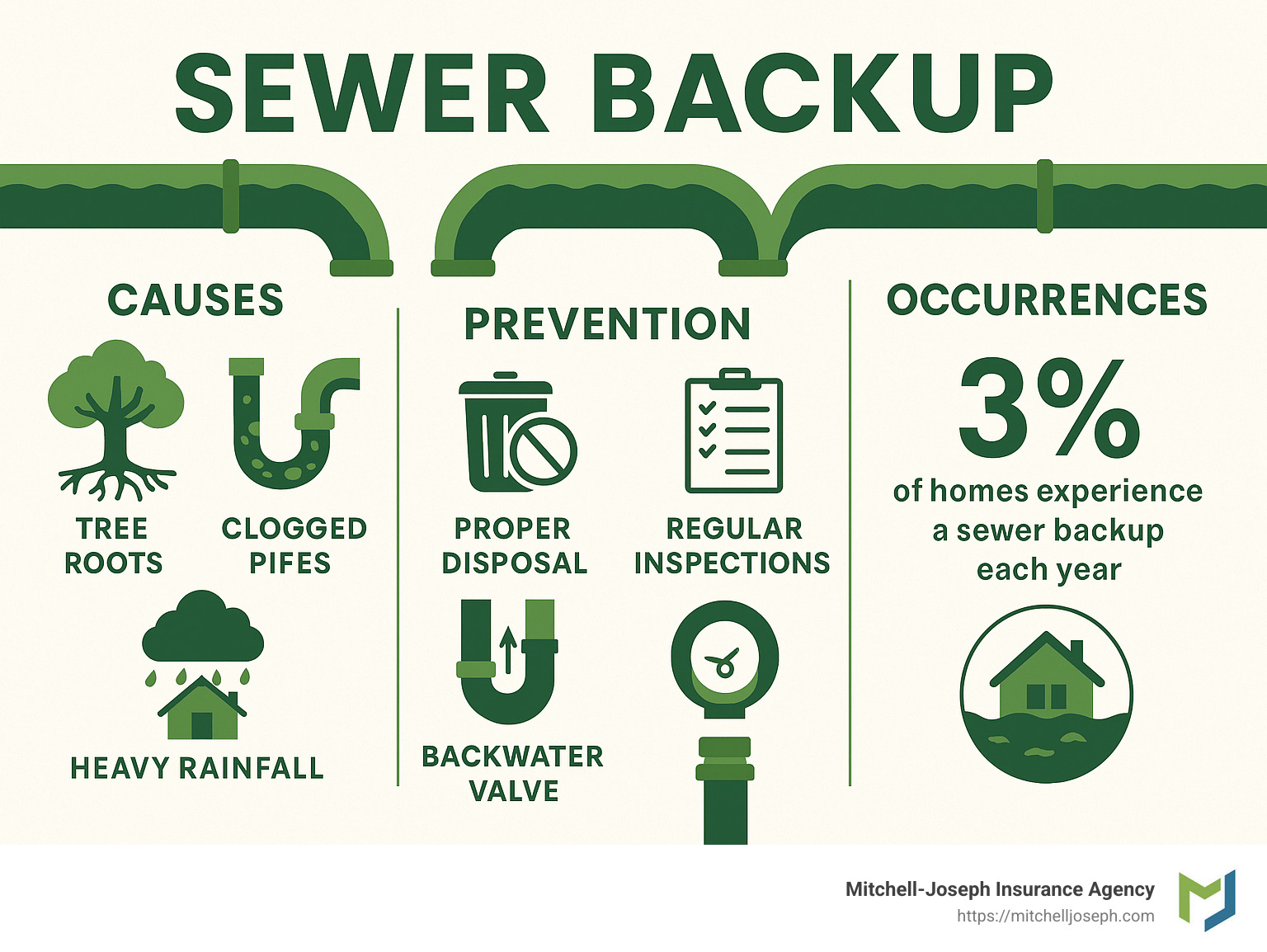
The causes of sewer backups—ranging from physical material decay and hydraulic overload to information gaps and “flushable” wipe obstructions—are being systematically dismantled by the rise of smart city technology. We are moving away from an era where “out of sight, out of mind” was the prevailing philosophy for underground infrastructure.
By integrating IoT sensors, AI-driven predictive modeling, and robotic remediation, we are transforming our sewer systems into resilient, data-driven networks. The “backup” of the future will not be a flooded basement or a polluted waterway, but rather a notification on a technician’s tablet, indicating that a potential issue has been identified and resolved by an autonomous system before the first drop of waste ever diverted from its path. In this high-tech future, the reliability of our invisible infrastructure will finally match the sophistication of the cities it supports.
aViewFromTheCave is a participant in the Amazon Services LLC Associates Program, an affiliate advertising program designed to provide a means for sites to earn advertising fees by advertising and linking to Amazon.com. Amazon, the Amazon logo, AmazonSupply, and the AmazonSupply logo are trademarks of Amazon.com, Inc. or its affiliates. As an Amazon Associate we earn affiliate commissions from qualifying purchases.