
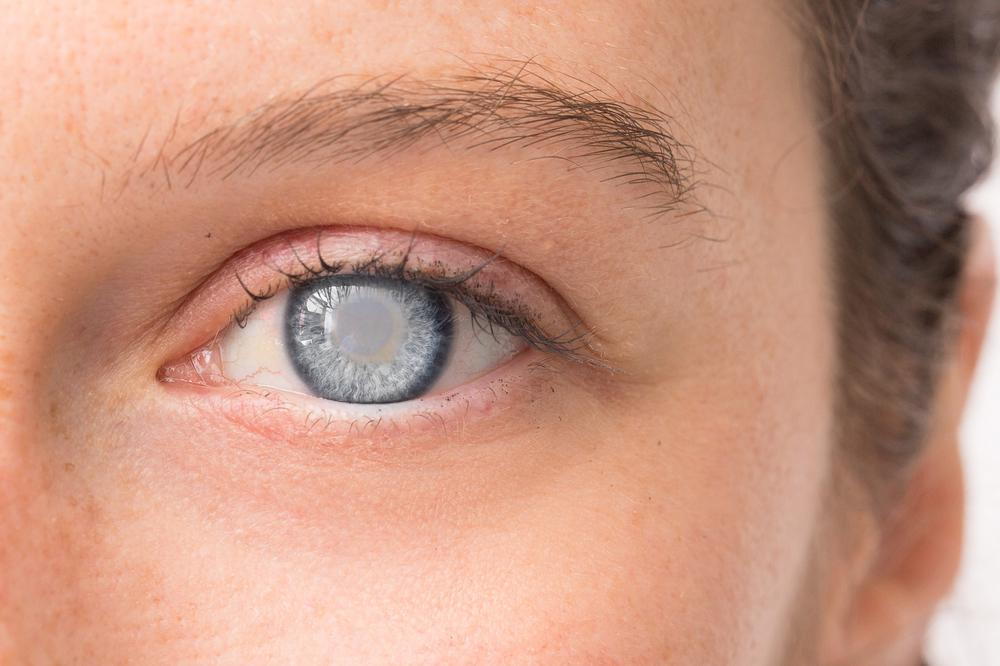
The intersection of biological healthcare and advanced engineering has never been more apparent than in the field of ophthalmology. While a “cataract” is biologically defined as the clouding of the eye’s natural crystalline lens, the modern approach to diagnosing and treating this condition has moved entirely into the realm of high-tech innovation. We are no longer simply looking at a medical procedure; we are looking at a masterclass in optical physics, robotic precision, and data-driven personalization.
As technology continues to evolve, the treatment of cataracts has transitioned from a basic functional necessity to a sophisticated refractive opportunity. This article explores the cutting-edge tech trends—from AI-driven diagnostics to femtosecond lasers—that are transforming how we understand and solve the challenge of cataracts in the digital age.

1. High-Resolution Diagnostics: Mapping the Eye’s Unique Data
Before a surgeon ever touches an eye, a suite of advanced software and hardware tools creates a digital twin of the patient’s ocular anatomy. In the tech niche, this is the equivalent of “pre-visualization” or “stress testing” a system before deployment.
Optical Coherence Tomography (OCT) and Biometry
The cornerstone of modern cataract tech is Optical Coherence Tomography (OCT). Using light waves to take cross-section pictures of the retina, OCT provides a level of detail that was previously unimaginable. Contemporary biometers now use swept-source OCT technology to measure the length of the eye, the curvature of the cornea, and the depth of the anterior chamber with micron-level precision. This data is essential for the software algorithms that calculate the power of the replacement lens.
AI-Enhanced Topography
Every eye has a unique “topographic map.” Modern corneal topographers utilize AI to analyze thousands of data points across the surface of the eye. These AI tools can identify subtle irregularities that might affect surgical outcomes, such as subclinical keratoconus or irregular astigmatism. By feeding this data into predictive models, software can now suggest the optimal surgical approach, reducing the margin of human error significantly.
Digital Integration and the Cloud
The modern ophthalmology clinic functions like a smart ecosystem. Diagnostic data from the topography and biometry machines are uploaded to cloud-based surgical planning modules. This allows surgeons to access patient data on tablets or integrated head-up displays (HUDs) during the operation, ensuring that the “blueprints” of the eye are always visible in real-time.
2. Femtosecond Lasers: The Hardware of Precision
The most significant leap in cataract technology over the last decade is the implementation of the femtosecond laser. In the world of tech, we often discuss “precision engineering,” and the femtosecond laser is the pinnacle of this concept in a biological context.
Computer-Guided Incisions
Traditional cataract surgery relied on manual incisions made with a diamond or steel blade. The femtosecond laser replaces the blade with an infrared light beam that operates at speeds measured in one-quadrillionth of a second. Controlled by sophisticated software, the laser creates incisions that are perfectly circular and centered—a level of reproducibility that the human hand, regardless of skill, cannot consistently match.
Automated Capsulotomy
The “capsulotomy” is the process of opening the thin membrane that surrounds the lens. Using image-guided software, the laser performs this step in seconds. This ensures that the replacement lens sits in the exact center of the visual axis. For tech enthusiasts, this is analogous to the precision found in CNC (Computer Numerical Control) machining, where software-driven tools execute designs with zero variance.
Laser-Assisted Fragmentation
Before the clouded lens can be removed, it must be broken into smaller pieces. The femtosecond laser uses a process called photodisruption to soften the cataract and break it into a grid-like pattern. This reduces the amount of ultrasonic energy (phacoemulsification) required during the surgery, which protects the delicate endothelial cells of the cornea and leads to faster recovery times.
3. Smart Intraocular Lenses (IOLs): The Ultimate Optical Gadget
If the laser is the tool, the Intraocular Lens (IOL) is the hardware upgrade. Replacing a biological lens with a synthetic one is essentially a “hardware swap” for the human eye. The engineering behind these lenses has moved far beyond simple vision correction into the realm of high-performance optics.
Multifocal and Extended Depth of Focus (EDOF) Designs
Modern IOLs use complex diffractive patterns etched into the lens surface to split light into different focal points. EDOF lenses, a trending technology in the space, utilize a “non-diffractive” design to stretch light, providing a continuous range of vision from distance to intermediate (computer screens). This tech mimics the autofocus capabilities of high-end camera lenses, allowing the patient to transition focus seamlessly.
Light-Adjustable Lens (LAL) Technology
Perhaps the most “tech-forward” innovation is the Light-Adjustable Lens. This lens is made of a special photosensitive material. Post-surgery, the surgeon can use a Light Delivery Device (LDD)—a specialized UV light projector—to change the shape and power of the lens while it is already inside the patient’s eye. This allows for a “beta testing” period where the patient can trial their vision and have it digitally adjusted until it is perfect.
Toric Lenses and Digital Alignment
For patients with astigmatism, Toric IOLs are the solution. However, these lenses must be aligned at a specific degree to be effective. New digital overlay technology allows surgeons to see a “GPS-like” guidance system through their microscope, showing exactly where to rotate the lens based on the pre-operative diagnostic data.
4. The Role of AI and Robotics in the Operating Room
As we look at the broader tech landscape, AI and robotics are the dominant themes. The cataract suite is no exception, evolving into a highly automated environment where data drives every decision.
Predictive Analytics for Refractive Outcomes
One of the hardest parts of cataract surgery is predicting how a patient’s eye will heal. AI algorithms are now trained on millions of surgical outcomes to predict “Effective Lens Position” (ELP). By using machine learning, these formulas are becoming more accurate than the traditional static mathematical formulas used in the past.
Automated Surgical Assistants
While we are not yet at the stage of fully autonomous robotic eye surgery, we are close. Digital microscopes now feature automated tracking that follows the movement of the eye in real-time, adjusting the focus and illumination automatically. This reduces the cognitive load on the surgeon, much like how advanced driver-assistance systems (ADAS) help a pilot or driver.
3D Visualization Systems
The traditional binocular microscope is being replaced by 3D “heads-up” display systems. Surgeons wear 3D glasses and look at a large 4K ultra-high-definition monitor. This tech provides better depth perception and allows for the overlay of digital data (like the patient’s vitals and eye maps) directly onto the surgical field. This “Augmented Reality” (AR) approach is a major trend in surgical tech.
5. Future Trends: From Bionic Vision to Smart Sensors
The future of cataract technology is moving toward integration with the “Internet of Bodies.” As we look toward the next decade, several emerging technologies are poised to redefine what is possible.
Smart Lenses with Embedded Sensors
Research is currently underway to develop IOLs with embedded micro-sensors. These “smart lenses” could theoretically monitor intraocular pressure for glaucoma patients or glucose levels for diabetics, transmitting the data wirelessly to a smartphone app. This would turn the cataract replacement lens into a wearable health-tech device.
Bionic Lens Prototypes
Some tech startups are working on “bionic” lenses that can dynamically change focus using the eye’s natural muscles, much like a liquid lens in a high-end industrial camera. This would move beyond the static nature of current IOLs and restore true “accommodation”—the ability to zoom in and out at will.
Tele-Ophthalmology and Remote Monitoring
Following cataract surgery, the “tutorial” or recovery phase is being managed via mobile apps. Patients use smartphone-connected devices to take high-resolution photos of their eyes, which are then analyzed by AI to check for signs of inflammation or infection. This reduces the need for in-person visits and utilizes the power of the pocket-sized computers we all carry.

Conclusion
The evolution of cataract treatment is a testament to the power of technological convergence. What was once a simple medical necessity has become a sophisticated intersection of laser physics, AI-driven data analysis, and advanced material science. For the modern consumer, treating a cataract is no longer just about removing a cloud; it is about choosing a technological path to “Super Vision.”
As we continue to iterate on these hardware and software solutions, the line between biological recovery and technological enhancement will continue to blur. In the world of tech, we are always looking for the next “upgrade”—and in the field of ophthalmology, that upgrade is already here, powered by the most advanced tools humanity has ever engineered.
aViewFromTheCave is a participant in the Amazon Services LLC Associates Program, an affiliate advertising program designed to provide a means for sites to earn advertising fees by advertising and linking to Amazon.com. Amazon, the Amazon logo, AmazonSupply, and the AmazonSupply logo are trademarks of Amazon.com, Inc. or its affiliates. As an Amazon Associate we earn affiliate commissions from qualifying purchases.