
For decades, the “American Dream” has been inextricably linked to the quality of the nation’s education system. In the context of global competitiveness, education is more than a social service; it is a primary driver of human capital and a cornerstone of long-term economic stability. However, when we ask, “What is America’s ranking in education?” the answer reveals a complex financial narrative. While the United States remains a global leader in higher education and research spending, its K-12 performance tells a different story—one of high investment but inconsistent returns.
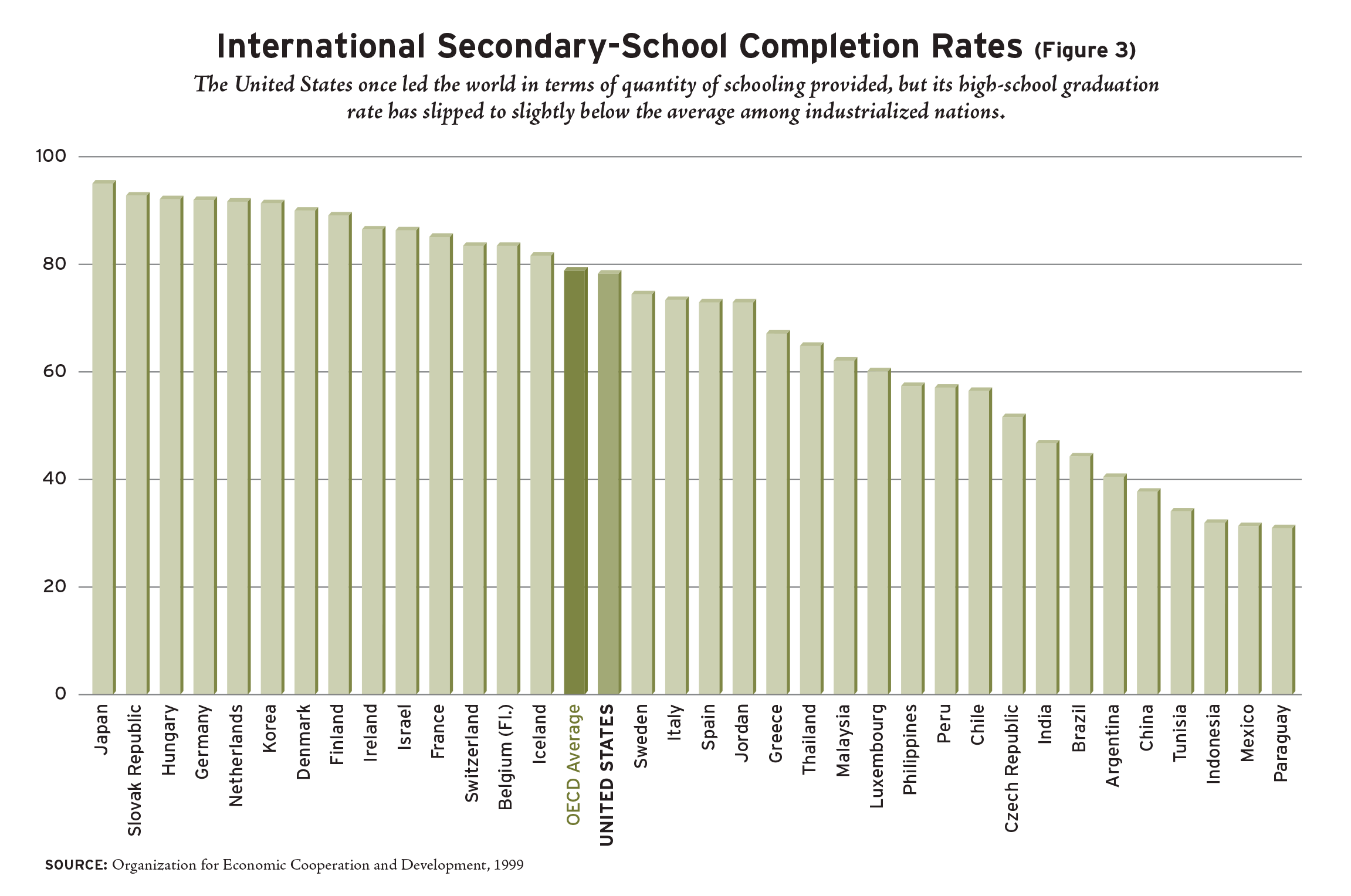
From a financial perspective, education rankings serve as a leading indicator of a country’s future GDP. In this analysis, we will explore where the United States stands globally, the fiscal disparities that influence these rankings, and the massive economic implications of falling behind in the global race for intellectual capital.
The Current Landscape: Where America Stands in Global Education Metrics
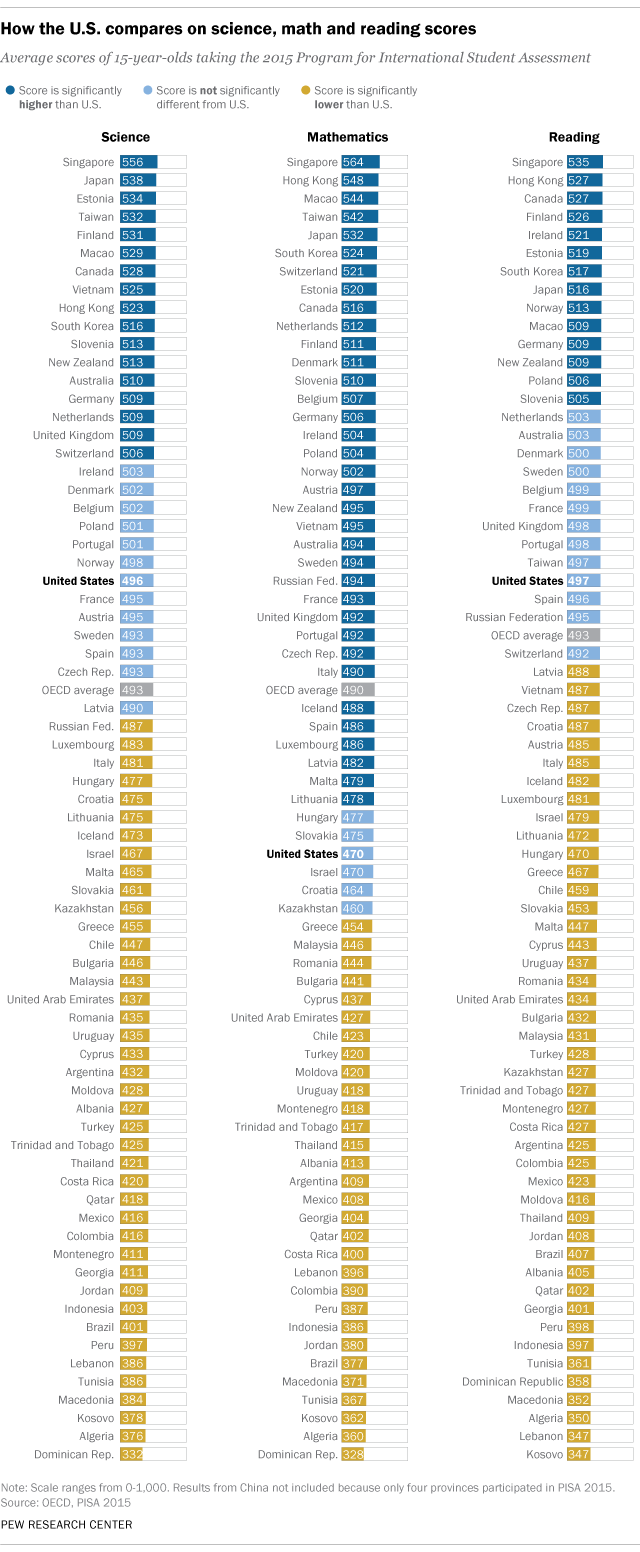
When assessing America’s education ranking, economists and policymakers primarily look to the Programme for International Student Assessment (PISA). Conducted by the OECD, this triennial study evaluates 15-year-old students in math, science, and reading. The most recent data paints a picture of a nation that is “middle-of-the-pack” among industrialized peers.
Decoding the PISA Scores and Economic Indicators
In the most recent PISA cycles, the United States has consistently ranked in the top 10 to 15 for reading, but it falters significantly in mathematics, often landing outside the top 30. For a nation that prides itself on being the world’s financial and technological hub, a ranking in the 30s for math is a significant economic red flag. Mathematics proficiency is a direct precursor to success in finance, engineering, and data science—sectors that drive the modern American economy.
The Disparity Between Spending and Performance
The most striking financial aspect of America’s education ranking is the “cost per result.” According to the National Center for Education Statistics (NCES), the U.S. spends over $14,000 per pupil in public elementary and secondary schools, a figure significantly higher than the OECD average. Nations like Estonia, Poland, and Vietnam often outrank the U.S. in core competencies despite spending a fraction of the amount. This suggests that the United States does not have a “funding” problem in the absolute sense, but rather a “financial efficiency” problem, where capital is not being converted into academic proficiency effectively.
Education as Human Capital: The ROI of a National Ranking
In the world of finance, human capital refers to the economic value of a worker’s experience and skills. A nation’s education ranking is essentially a valuation of its future workforce. If the U.S. cannot maintain a top-tier ranking, the Return on Investment (ROI) of its public spending diminishes, potentially leading to a stagnation in national wealth.
The Correlation Between STEM Proficiency and GDP Growth
There is a measurable link between a country’s math and science rankings and its GDP growth rate. Economic research suggests that even a modest increase in PISA scores can lead to billions of dollars in long-term economic gains. When American students lag in STEM (Science, Technology, Engineering, and Mathematics), the domestic labor market suffers from a “skills gap.” Companies are forced to outsource high-paying technical roles or rely on H-1B visas to fill the void, which shifts the flow of capital and reduces the upward mobility of the domestic middle class.
Future-Proofing the Workforce: The Financial Cost of Falling Behind
The cost of a mediocre education ranking is not just a loss of potential; it is a literal expense. Lower educational attainment is statistically correlated with higher rates of unemployment, increased reliance on social safety nets, and lower tax revenue. Economists estimate that if the U.S. could raise its student performance to match that of top-tier nations like Singapore or Finland, the resulting increase in productivity could add trillions to the U.S. economy over the next several decades. In this light, improving education rankings is not just a social goal—it is a mandatory fiscal strategy.
The Funding Gap: How Financial Infrastructure Dictates Rankings
One of the primary reasons for the volatility in America’s education ranking is the unique and often fragmented way schools are funded. Unlike many high-performing nations that utilize centralized federal funding, the U.S. relies heavily on local property taxes. This creates a direct link between a neighborhood’s real estate value and the quality of its schools.
Local Property Taxes and the Wealth Divide in School Districts
This localized funding model creates a “zip code destiny” for many students. Wealthy districts with high property values can afford state-of-the-art facilities, competitive teacher salaries, and advanced placement programs. Conversely, impoverished districts struggle with aging infrastructure and teacher shortages. From a business perspective, this is an inefficient distribution of resources. It creates “pockets of excellence” that bolster the national average while masking deep systemic failures in other regions. This inequality is a major factor why the U.S. national average remains lower than more socio-economically homogenous nations.
Federal vs. State Investment: A Business Perspective
The role of federal spending in education is often misunderstood. While the federal government provides “Title I” funding to support low-income schools, it only accounts for about 8-10% of total education spending. The bulk of the financial burden—and the decision-making power—rests with states and local municipalities. For investors and businesses looking to relocate, the educational health of a state is a primary factor. States that invest heavily in education often see a corresponding rise in property values and corporate investment, proving that education funding is a catalyst for local economic development.
Higher Education as a Global Export: The Premium on the American Brand
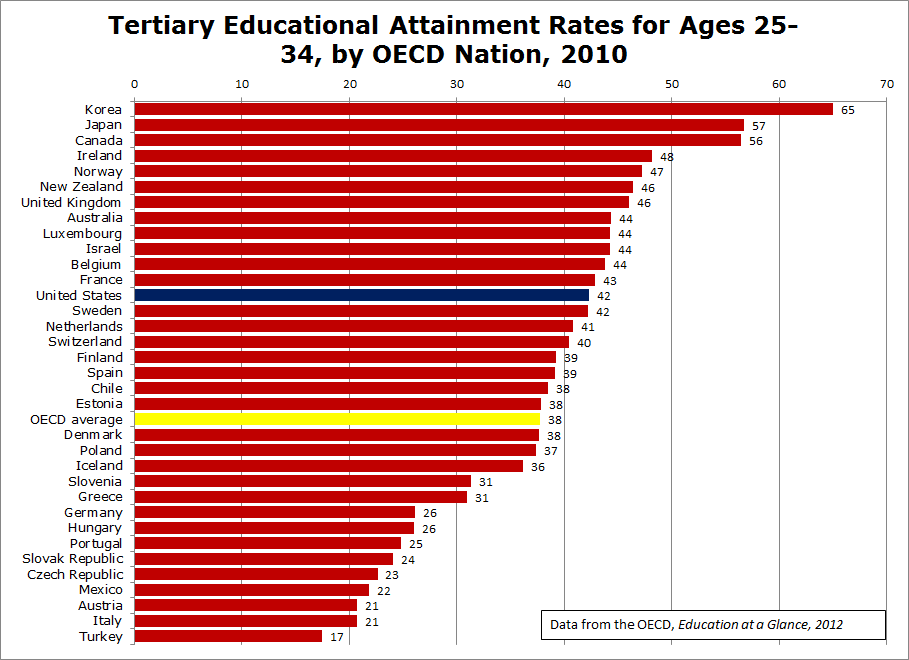
While America’s K-12 rankings are often scrutinized, its higher education system remains a different story entirely. In global university rankings, such as the QS World University Rankings or the Times Higher Education list, the United States dominates the top 20. This disparity between K-12 and Higher Ed creates a unique economic phenomenon where the U.S. “exports” education to the rest of the world.
The Multi-Billion Dollar International Student Economy
International students are a massive source of revenue for the American economy. According to data from the Department of Commerce, international students contributed nearly $38 billion to the U.S. economy in a single academic year. These students pay “full freight” tuition, subsidizing the research and operations of American universities. This makes higher education one of America’s most valuable services exports. However, this business model is threatened if the U.S. K-12 system continues to rank poorly, as domestic students may find themselves increasingly uncompetitive for spots at their own prestigious institutions.
Sustaining Innovation Through Research and Development Funding
American universities are engines of innovation, fueled by billions of dollars in federal research grants and private endowments. The financial health of the U.S. tech and biotech sectors is directly tied to the R&D outputs of institutions like MIT, Stanford, and the University of California system. While the K-12 ranking evaluates foundational knowledge, the Higher Ed ranking reflects America’s ability to monetize high-level intellectual property. Maintaining this edge is vital for the U.S. to remain the global leader in venture capital and startup culture.
Strategic Financial Reforms for Global Competitiveness
To improve America’s education ranking and protect its economic future, the focus must shift from “how much we spend” to “how we spend.” Strategic financial management within the education sector is required to ensure that every dollar contributes to measurable student outcomes.
Reallocating Budgets for Vocational and Technical Training
One area where the U.S. lags behind European peers like Germany and Switzerland is in vocational training. Many high-ranking countries offer “dual-track” systems that allow students to pursue high-paying technical certifications rather than traditional four-year degrees. From a financial planning perspective, this reduces student debt and gets workers into the economy faster. By reallocating a portion of educational budgets toward trades and apprenticeships, the U.S. could improve its overall workforce proficiency and reduce the economic drag of the “college-or-bust” mentality.
The Long-Term Wealth Benefits of Early Childhood Education Investment
Economists, including Nobel Prize winner James Heckman, have argued that the highest ROI in education comes from investing in the earliest years. The “Heckman Equation” suggests that every dollar spent on high-quality early childhood education for disadvantaged children yields a return of up to 13% per year through improved health, higher wages, and reduced crime. If the U.S. wants to climb the global rankings, the most financially sound move would be to front-load investment, ensuring that all students enter the K-12 system with a solid foundation.
In conclusion, America’s ranking in education is a tale of two systems: a struggling K-12 landscape that requires fiscal reform and a world-class higher education sector that serves as an economic powerhouse. For the United States to maintain its position as the world’s leading economy, it must address the inefficiencies in its primary education spending and bridge the gap between its wealthiest and poorest districts. Education is the ultimate long-term investment, and the dividends of a higher global ranking are measured in national prosperity, innovation, and financial security for generations to come.
aViewFromTheCave is a participant in the Amazon Services LLC Associates Program, an affiliate advertising program designed to provide a means for sites to earn advertising fees by advertising and linking to Amazon.com. Amazon, the Amazon logo, AmazonSupply, and the AmazonSupply logo are trademarks of Amazon.com, Inc. or its affiliates. As an Amazon Associate we earn affiliate commissions from qualifying purchases.