
In the modern financial landscape, few questions are asked with as much frequency and fervor as “how much is Bitcoin today?” For the casual observer, the answer is a simple numerical value flashing on a smartphone screen or a ticker tape. However, for the serious investor, the entrepreneur, and the student of personal finance, that number represents the pulse of a global, decentralized economy.
Bitcoin is no longer a fringe experiment for technologists; it has matured into a sophisticated financial asset class. Understanding its price requires more than just checking an exchange; it requires an appreciation of market liquidity, macroeconomic shifts, and the evolving psychology of global wealth.
The Mechanics of Bitcoin Pricing: Beyond the Current Number
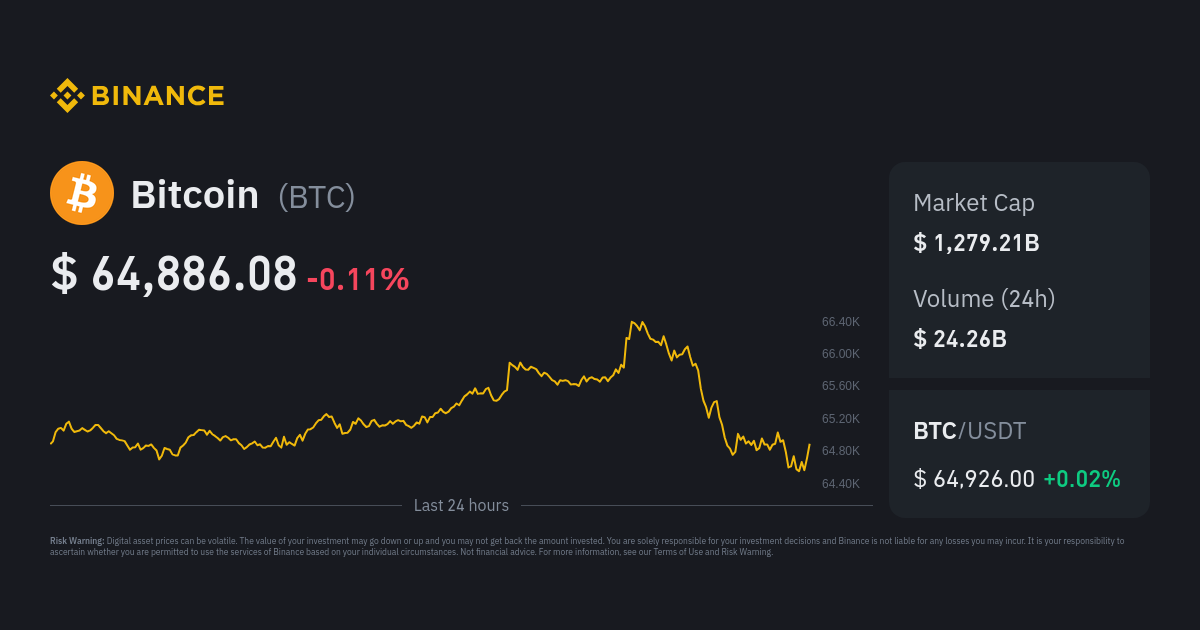
When you ask how much Bitcoin is worth, you are essentially inquiring about the latest “spot price”—the price at which the asset can be bought or sold for immediate delivery. Unlike traditional stock markets that have set opening and closing hours, the Bitcoin market never sleeps. It is a 24/7 global auction house.
Market Capitalization and Liquidity
The price of a single Bitcoin is often the headline, but the market capitalization (market cap) provides the broader financial context. Market cap is calculated by multiplying the current price by the total number of coins in circulation. This figure tells us where Bitcoin stands in relation to other assets like gold, silver, or the equity of major corporations.
Liquidity is the other side of this coin. It refers to how easily Bitcoin can be converted into cash without affecting its price. High liquidity in the Bitcoin market ensures that large institutional trades can occur with minimal “slippage,” making it an increasingly attractive destination for major capital allocations.
The Role of Supply and Demand in Price Discovery
At its core, Bitcoin’s price is a pure reflection of supply and demand. Unlike fiat currencies, which can be printed by central banks (increasing supply and often devaluing the currency), Bitcoin has a hard cap of 21 million coins.
This absolute scarcity is a fundamental pillar of its value proposition. When demand from retail investors and institutional hedge funds increases while the supply of new coins entering the market remains fixed (or decreases), the price must move upward to find a new equilibrium. This process of “price discovery” is what leads to the dramatic rallies and corrections seen in the crypto markets.
Why Bitcoin Fluctuates: Key Drivers of Price Volatility
Volatility is often viewed as a risk, but in the context of personal finance and wealth building, it is also an opportunity. To understand why the price of Bitcoin changes so rapidly, we must look at the external and internal forces acting upon it.
Macroeconomic Factors and Global Inflation
Bitcoin is increasingly viewed as a hedge against the devaluation of traditional currencies. When central banks engage in quantitative easing or maintain low-interest rates, the resulting inflationary pressure often drives investors toward “hard assets.”
In periods of high inflation, the purchasing power of the dollar or euro declines. Because Bitcoin cannot be debased by government decree, many investors treat it as “digital gold.” Consequently, when news breaks regarding Consumer Price Index (CPI) rises or shifts in Federal Reserve policy, the price of Bitcoin often reacts instantaneously as capital seeks a safe haven from currency debasement.
Regulatory Announcements and Institutional Adoption
The financial world changed for Bitcoin when major institutions began integrating it into their portfolios. The approval of Spot Bitcoin ETFs (Exchange-Traded Funds) in the United States marked a watershed moment. These financial instruments allow pension funds, 401(k) providers, and traditional brokerage users to gain exposure to Bitcoin’s price movements without the complexities of managing private keys.
However, regulation is a double-edged sword. Positive regulatory clarity can lead to price surges, while rumors of bans or restrictive tax laws in major economies like China or the US can lead to rapid sell-offs. For the modern investor, staying informed on the legal landscape is as important as tracking the price itself.
The “Halving” Cycle and Its Financial Impact
One of the most unique features of Bitcoin’s financial model is the “Halving.” Approximately every four years, the reward given to Bitcoin miners is cut in half. This effectively reduces the rate at which new Bitcoin is created.
Historically, the years following a halving event have seen significant price appreciation. This is a programmed supply shock. When the production of a high-demand asset is suddenly cut by 50%, the financial implications are profound. Investors often track these cycles years in advance to time their entries into the market.
Evaluating Bitcoin as a Financial Asset
Is Bitcoin a currency, a commodity, or a tech stock? In the world of finance, it is increasingly categorized as a “primal” asset—something that shares characteristics with several categories but remains unique.
Bitcoin vs. Traditional Gold (Store of Value)
For centuries, gold was the ultimate store of value because it is scarce, durable, and divisible. Bitcoin shares these traits but adds “portability” and “verifiability.” You cannot send $10 million worth of gold across the world in ten minutes for a nominal fee, but you can with Bitcoin.
From a portfolio management perspective, Bitcoin is often called “Gold 2.0.” While gold remains much more stable, Bitcoin’s growth trajectory over the last decade has far outpaced the precious metal. Many financial advisors now suggest a small percentage of a diversified portfolio—anywhere from 1% to 5%—be allocated to Bitcoin to capture this asymmetric upside.
Risk Assessment for the Retail Investor
No financial discussion about Bitcoin is complete without addressing risk. The same volatility that allows for 100% gains in a year can lead to 50% drawdowns in a month. For the individual investor, “how much Bitcoin is today” is less important than “how much can I afford to see fluctuate?”
Effective risk management involves understanding one’s time horizon. Short-term speculators often lose money because they react emotionally to price drops. Long-term investors, conversely, tend to view these drops as “buying opportunities,” using the volatility to lower their average entry price over time.
Practical Tools for Tracking and Managing Your Investment
To navigate the Bitcoin market successfully, an investor needs the right toolkit. Monitoring the price is the first step, but managing the asset requires a more disciplined approach.
Real-Time Price Tracking and Technical Analysis
Sophisticated financial tools like TradingView or specialized crypto aggregators provide more than just the current price. They offer insights into moving averages, Relative Strength Index (RSI), and volume. While “technical analysis” is not a crystal ball, it helps investors identify whether the market is currently “overbought” (potentially due for a correction) or “oversold” (potentially a good time to buy).
For the person asking “how much is Bitcoin today,” these tools provide the context of whether that price represents a peak or a trough in the current market cycle.
Strategies for Long-Term Wealth Accumulation
One of the most popular and effective strategies in the “Money” niche for Bitcoin is Dollar Cost Averaging (DCA). Instead of trying to “time the market” and buy at the absolute bottom, an investor commits to buying a fixed dollar amount of Bitcoin at regular intervals (e.g., $50 every week).
This strategy removes the emotional stress of price fluctuations. When the price is high, your $50 buys less Bitcoin; when the price is low, your $50 buys more. Over years, this typically results in a favorable average purchase price and significant wealth accumulation without the need for constant market monitoring.

Conclusion: Navigating the Future of Bitcoin
The question of “how much is Bitcoin today” will continue to be a focal point of global financial news. As the asset moves from the periphery to the center of the financial world, its price serves as a barometer for the health of the traditional monetary system and the growing appetite for decentralized alternatives.
Investing in Bitcoin is not merely about chasing a rising number; it is about participating in a new era of digital finance. By understanding the supply mechanics, the impact of institutional adoption, and the importance of a long-term strategy, investors can move beyond the “hype” and treat Bitcoin as a cornerstone of a modern, resilient financial plan. Whether the price is up or down on any given day, the underlying trajectory of Bitcoin as a global store of value remains one of the most compelling stories in the history of personal finance.
aViewFromTheCave is a participant in the Amazon Services LLC Associates Program, an affiliate advertising program designed to provide a means for sites to earn advertising fees by advertising and linking to Amazon.com. Amazon, the Amazon logo, AmazonSupply, and the AmazonSupply logo are trademarks of Amazon.com, Inc. or its affiliates. As an Amazon Associate we earn affiliate commissions from qualifying purchases.