
The saga of federal student loan forgiveness has been one of the most significant financial stories of the decade. For millions of American borrowers, the promise of debt relief has shifted from a broad, sweeping executive action to a complex series of targeted programs, legal challenges, and administrative adjustments. Understanding what happened to the initial proposal for mass cancellation—and what has replaced it—is essential for anyone navigating the current personal finance landscape.
The journey from the 2022 announcement of widespread debt cancellation to the current reality of the “SAVE” plan and targeted discharges involves a deep dive into constitutional law, federal policy, and the mechanics of the U.S. Department of Education. For borrowers, the “what happened” is less about a single event and more about a pivot toward a more sustainable, albeit more incremental, approach to managing the $1.7 trillion national student debt crisis.
The Legal Battles and the Supreme Court Pivot
The primary reason the initial plan for mass student loan forgiveness did not come to fruition as originally designed lies in the U.S. judicial system. In August 2022, the Biden administration announced a plan to forgive up to $10,000 in federal student debt for individuals earning less than $125,000, and up to $20,000 for Pell Grant recipients. This plan was rooted in the HEROES Act of 2003, which granted the Secretary of Education the authority to waive or modify loan provisions during a national emergency—in this case, the COVID-19 pandemic.
The SCOTUS Decision (Biden v. Nebraska)
In June 2023, the Supreme Court of the United States delivered a landmark ruling in Biden v. Nebraska. The Court ruled 6-3 that the HEROES Act did not grant the executive branch the authority to implement such a broad-scale debt cancellation program without explicit authorization from Congress. The majority opinion argued that a program of such “vast economic and political significance” required a clear legislative mandate, effectively striking down the $400 billion plan before a single dollar was discharged.
The Shift to the Higher Education Act (HEA)
Following the Supreme Court’s defeat, the administration immediately pivoted to a “Plan B.” This involves using the Higher Education Act (HEA) of 1965, which contains a provision allowing the Secretary of Education to “compromise, waive, or release” claims against borrowers. Unlike the HEROES Act path, the HEA process requires a “negotiated rulemaking” period—a lengthy bureaucratic process involving public hearings and consensus-building among stakeholders. This is currently the primary legal track for future versions of broad-based relief.
The End of the Payment Pause
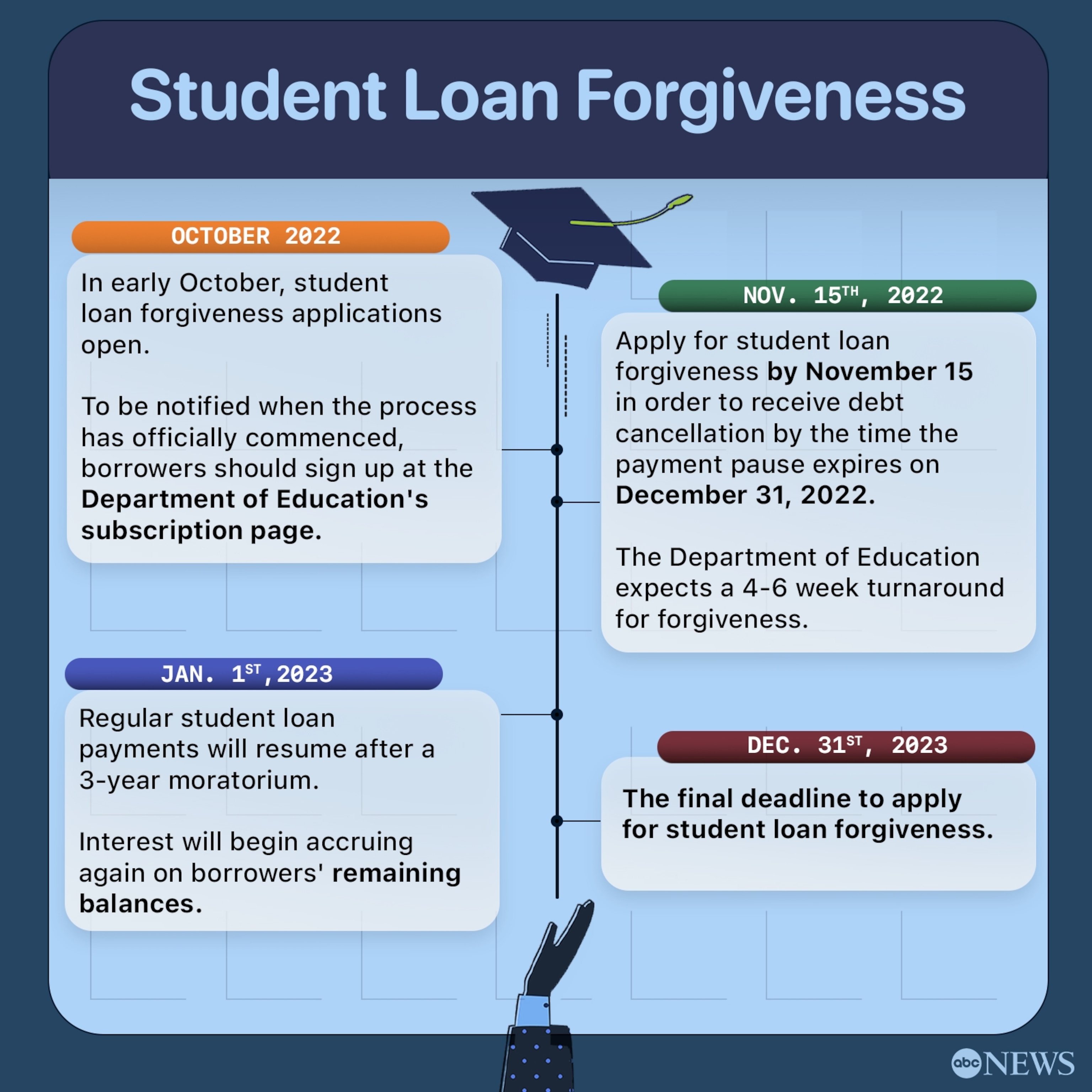
Concurrent with the legal setbacks was the end of the three-year “pause” on interest and payments. As part of the debt ceiling negotiations in the summer of 2023, Congress codified the end of the payment moratorium. Interest began accruing again in September 2023, and the first payments became due in October 2023, marking a significant shift in the monthly cash flow for over 40 million Americans.
Current Debt Relief Avenues: Beyond Mass Cancellation
While the headline-grabbing $10k/$20k forgiveness plan was halted, the Department of Education has moved forward with “targeted” forgiveness. These efforts focus on fixing existing programs that were historically plagued by administrative errors and complex requirements.
The SAVE Plan: A New Paradigm for IDR
The Saving on a Valuable Education (SAVE) plan is arguably the most significant change to student lending in decades. It is an Income-Driven Repayment (IDR) plan that replaces the previous REPAYE plan. The SAVE plan is revolutionary for three reasons:
- Lower Payments: It increases the income protection allowance from 150% to 225% of the federal poverty guideline, meaning more of a borrower’s income is shielded from payment calculations.
- Interest Subsidies: If a borrower’s calculated monthly payment does not cover the accruing interest, the government waives the remaining interest. This prevents the “ballooning balance” phenomenon where borrowers owe more after years of payments than they did at the start.
- Early Forgiveness: For those with original balances of $12,000 or less, debt can be forgiven after just 10 years of payments, rather than the standard 20 or 25 years.
Public Service Loan Forgiveness (PSLF) Improvements
For years, the PSLF program—designed for teachers, nurses, and government employees—had a rejection rate of nearly 99%. Through the “PSLF Waiver” and subsequent permanent regulatory changes, the government has streamlined the process. It now allows for formerly ineligible payments (such as those made under the wrong repayment plan) to count toward the 120 required payments. As a result, hundreds of thousands of public servants have seen their balances wiped clean.
The IDR Account Adjustment
Many borrowers have been in repayment for decades but were never properly credited for their time toward forgiveness due to “forbearance steering” by loan servicers. The one-time IDR Account Adjustment is an administrative “fix” where the Department of Education conducts a retroactive count of all months spent in repayment, deferment, or forbearance. For many long-term borrowers, this adjustment has resulted in immediate discharge because they have finally hit the 20- or 25-year threshold.
The Economic Impact of Resumed Payments
The resumption of student loan payments has created a ripple effect across the broader economy. For the individual, the reintroduction of a $300 to $500 monthly bill requires significant lifestyle adjustments. From a macro perspective, this represents a withdrawal of billions of dollars from consumer spending.
Managing the Monthly Budget
Financial planners have noted a surge in demand for debt management strategies as borrowers look for ways to integrate loan payments back into their budgets. The “on-ramp” period, which lasts until September 30, 2024, protects borrowers from the worst consequences of missed payments (such as credit score damage or default). However, interest still accrues during this time, making it a “safety net” rather than a true extension of the pause.
Interest Rates and Capitalization
A critical component of “what happened” is the change in how interest is handled. Under new regulations, interest capitalization—where unpaid interest is added to the principal balance, causing the debt to grow exponentially—has been eliminated in many scenarios, such as when a borrower enters a different repayment plan or exits a deferment. This is a subtle but powerful financial tool for debt containment.
The “Crowding Out” Effect on Homeownership
The return of student loan debt has direct implications for the housing market. High debt-to-income (DTI) ratios, exacerbated by the return of monthly loan obligations, make it harder for first-time buyers to qualify for mortgages. For many, the dream of homeownership has been deferred as they prioritize federal debt over a down payment.
Strategies for Borrowers in a Post-Forgiveness World
In the absence of a “magic wand” cancellation, borrowers must take a proactive, strategic approach to their student debt. The “Money” niche of personal finance emphasizes that debt is a math problem that can be solved with the right tools.
Consolidating vs. Refinancing
Borrowers often confuse these two terms. Consolidation is a federal process that combines multiple federal loans into one, maintaining federal protections and eligibility for programs like SAVE or PSLF. Refinancing involves moving federal debt to a private lender. While refinancing can sometimes offer a lower interest rate for those with high credit scores, it results in the permanent loss of all federal benefits, including the possibility of future forgiveness and income-driven protections.
Utilizing Tax Benefits
The IRS allows borrowers to deduct up to $2,500 of student loan interest paid during the year from their taxable income. This is an “above-the-line” deduction, meaning you don’t have to itemize to claim it. For those in higher tax brackets, this can result in a significant tax refund, which can then be reinvested back into the loan principal to accelerate repayment.
Financial Planning for the Long Haul
For many, the best strategy is no longer to “pay it off as fast as possible” but rather to “manage it until it’s forgiven.” Under the SAVE plan, if the forgiven amount is large, borrowers should prepare for a potential “tax bomb”—though current federal law exempts forgiven student debt from federal income tax through 2025, some states may still tax it as income, and the federal exemption may expire.
The Future of Federal Student Loan Policy
The landscape of student loan forgiveness is far from settled. It remains a central pillar of political debate, and the upcoming years will likely see further shifts based on legislative and executive actions.
Potential New Legislation
While the executive branch has been the primary driver of recent changes, there are bipartisan efforts to address the root cause of the debt: the rising cost of tuition. Proposed legislation like the “Lowering Education Costs and Debt Act” aims to increase transparency and limit how much students can borrow for certain programs. However, broad legislative forgiveness remains unlikely in a divided Congress.
The Role of the 2024 Election
The future of programs like SAVE and the ongoing HEA rulemaking process are heavily dependent on the executive branch. A change in administration could lead to the scaling back of income-driven repayment benefits or a halt to the “Plan B” forgiveness efforts. Conversely, a continuation of current policies could see the HEA-based forgiveness reach fruition.
In conclusion, “what happened” to student loan forgiveness is a transition from a singular, failed event to a multifaceted, ongoing process. While the $20,000 cancellation didn’t happen as planned, the combination of the SAVE plan, PSLF fixes, and IDR adjustments has resulted in billions of dollars in relief for specific groups. For the individual borrower, staying informed and choosing the right repayment vehicle is currently the most effective form of financial self-defense.
aViewFromTheCave is a participant in the Amazon Services LLC Associates Program, an affiliate advertising program designed to provide a means for sites to earn advertising fees by advertising and linking to Amazon.com. Amazon, the Amazon logo, AmazonSupply, and the AmazonSupply logo are trademarks of Amazon.com, Inc. or its affiliates. As an Amazon Associate we earn affiliate commissions from qualifying purchases.