
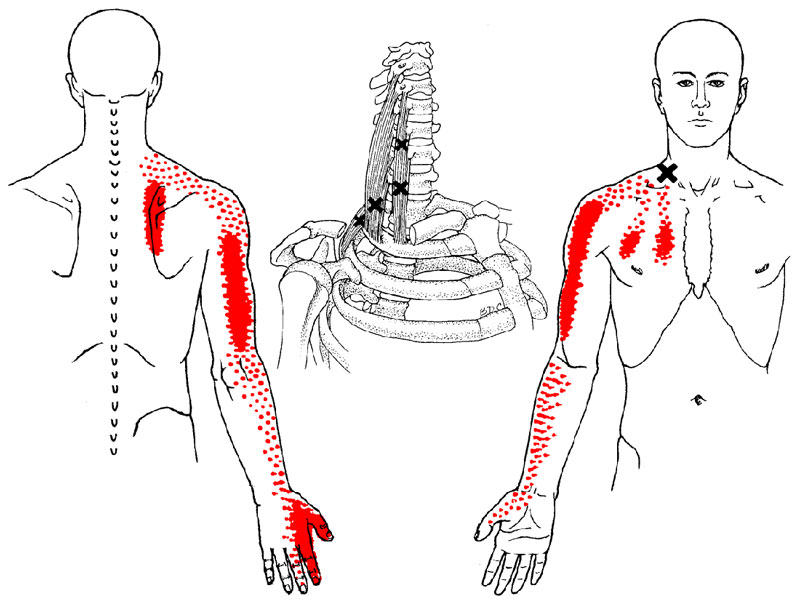
Myofascial trigger points, often simply referred to as trigger points, represent a common yet frequently misunderstood source of musculoskeletal pain. These are hyperirritable spots located within a taut band of skeletal muscle, palpable as a nodule, and can produce local tenderness, referred pain, and autonomic phenomena upon compression. While their existence has been acknowledged in clinical practice for decades, their precise etiology and optimal management have remained subjects of ongoing research. In an era dominated by technological advancement, the discourse surrounding trigger points is increasingly shifting towards how digital innovations, AI, and advanced hardware can transform our understanding, diagnosis, and treatment of these pervasive muscle dysfunctions.

Decoding Myofascial Trigger Points: A Digital Perspective
Understanding trigger points through a contemporary lens necessitates appreciating them not just as a physiological anomaly but as a complex data problem requiring sophisticated analytical and diagnostic tools. The human body, with its intricate network of muscles, nerves, and connective tissues, generates a vast array of biological signals. Trigger points manifest as specific deviations within this system, signaling areas of sustained muscle contraction, metabolic distress, and localized inflammation. From a technological standpoint, the challenge lies in accurately capturing, processing, and interpreting these signals to pinpoint the exact location, severity, and propagation patterns of trigger points.
The Neuromuscular Basis and Their Digital Footprint
At their core, trigger points are believed to arise from an acute or chronic muscle overload, leading to the sustained shortening of sarcomeres—the basic contractile units of muscle fibers. This creates an energy crisis within the affected tissue, leading to a vicious cycle of metabolic waste accumulation, nerve sensitization, and persistent muscle contraction. While conventionally identified through palpation by a skilled clinician, the subjective nature of this assessment presents a barrier to consistent diagnosis.
The digital footprint of a trigger point, however, extends beyond tactile sensation. Electromyography (EMG) studies have shown increased electrical activity in trigger points compared to surrounding tissue, indicating abnormal muscle fiber activity. Thermography reveals localized temperature changes, and sonoelastography offers visual evidence of altered tissue stiffness. These objective physiological markers are precisely the kind of data points that modern technology excels at capturing. The integration of such data through advanced sensors and algorithms can provide a more quantifiable, repeatable, and less operator-dependent method for trigger point identification, moving beyond anecdotal evidence to data-driven insights.
The Conundrum of Diagnosis: Bridging Subjectivity with Objectivity
Traditional diagnosis relies heavily on the practitioner’s ability to palpate muscle tissue and elicit a characteristic “jump sign” or referred pain pattern. This inherent subjectivity has contributed to diagnostic inconsistencies and often delays effective treatment. Digital solutions are poised to revolutionize this aspect by introducing objective measures and standardized protocols.
Consider the potential of haptic feedback devices, equipped with pressure sensors, that can quantify the force applied during palpation and measure tissue resistance. Such devices could provide clinicians with real-time data, ensuring consistency across examinations and facilitating clearer communication of findings. Furthermore, machine learning models, trained on extensive datasets comprising clinical symptoms, patient histories, and objective biometric data, could assist in differential diagnosis, distinguishing trigger points from other musculoskeletal conditions with greater accuracy. This blending of human expertise with algorithmic precision promises a significant leap forward in diagnostic reliability.
Leveraging Technology for Precision Identification and Assessment
The accurate identification and assessment of trigger points are paramount for effective intervention. Technology offers a suite of tools that transcend traditional methods, providing unprecedented precision and insight. From wearable gadgets to sophisticated AI-driven analytics, the tech landscape is rapidly evolving to address the nuances of musculoskeletal health.
Wearable Sensors and Biometric Feedback
The advent of compact, non-invasive wearable sensors has opened new avenues for continuous monitoring of muscle activity and physiological responses. Devices capable of real-time surface EMG (sEMG) can detect localized muscle tension and spasm, indicators often associated with trigger point activity. While current sEMG applications are largely focused on gross muscle activity, advancements in sensor miniaturization and signal processing hold the promise of pinpointing smaller, localized abnormalities characteristic of trigger points.
Beyond electrical activity, wearables are increasingly incorporating sensors for skin temperature, heart rate variability, and even localized tissue oxygenation. Anomalies in these biometric parameters can serve as indirect markers of metabolic distress and inflammation at trigger point sites. Integrating data from multiple sensor types into a cohesive platform allows for a holistic view of muscle health, enabling early detection of potential trigger point formation or exacerbation before they manifest as severe pain.
AI-Powered Diagnostic Tools and Advanced Imaging

Artificial intelligence is perhaps the most transformative technology in the realm of trigger point diagnosis. AI algorithms, particularly those leveraging deep learning, can analyze vast datasets from various sources—including medical images, clinical notes, patient-reported outcomes, and biometric data—to identify patterns indicative of trigger points that might be imperceptible to the human eye.
Advanced imaging techniques are also being refined. High-resolution ultrasound, combined with elastography, can visualize the structural changes within muscle tissue, such as localized stiffness or banding, that correspond to trigger points. When these images are processed by AI, the system can learn to automatically detect and quantify these pathological features, providing objective confirmation and precise localization. Furthermore, functional MRI (fMRI) could potentially reveal altered blood flow or metabolic activity in affected regions, offering another layer of diagnostic detail that AI can interpret to build predictive models for pain referral patterns.
Digital Therapeutics and Personalized Treatment Plans
The therapeutic landscape for trigger points is also being revolutionized by technology, moving towards highly personalized and accessible digital solutions. These tools empower patients with self-management strategies and provide clinicians with data-driven insights for tailored interventions.
Mobile Applications for Self-Management and Exercise
Mobile applications are increasingly becoming integral to managing chronic musculoskeletal conditions, including those involving trigger points. These apps can offer personalized exercise regimens, stretching protocols, and self-massage techniques (e.g., foam rolling or ball therapy), often guided by interactive 3D anatomical models and instructional videos. Gamification elements can enhance adherence, while integrated trackers can monitor pain levels, activity, and progress over time. This continuous data collection not only empowers patients but also provides valuable feedback to clinicians, allowing for dynamic adjustments to treatment plans based on real-world effectiveness.
Some advanced apps might integrate with wearable sensors to provide real-time biofeedback during exercises, ensuring correct form and preventing further strain. Virtual coaching through AI chatbots can offer motivational support, answer common questions, and guide users through their prescribed routines, making therapeutic care more accessible and consistent outside of clinical settings.
Virtual Reality and Tele-Rehabilitation Platforms
Virtual Reality (VR) and augmented reality (AR) technologies are emerging as powerful tools for both pain management and rehabilitation associated with trigger points. VR environments can create immersive experiences that distract from pain, helping to modulate pain perception through cognitive engagement. Beyond distraction, VR can be used for guided relaxation and mindfulness exercises, reducing muscle tension and stress—known exacerbating factors for trigger points.
Tele-rehabilitation platforms, enhanced with motion-tracking sensors and high-definition video conferencing, enable physical therapists to remotely assess patient movement, guide exercises, and monitor progress. This ensures continuity of care, especially for patients in remote areas or those with mobility limitations. By integrating AI-powered biomechanical analysis, these platforms can detect subtle compensations or improper form during exercises, providing immediate feedback to both the patient and the therapist, ensuring optimal therapeutic outcomes.
The Future of Musculoskeletal Health: Integrated Tech Solutions
The trajectory of technology in addressing trigger points points towards a future of highly integrated, predictive, and preventive care. This holistic approach leverages continuous data streams, advanced analytics, and sophisticated devices to move beyond reactive treatment to proactive health management.
Data Analytics for Predictive Insights
The convergence of data from wearables, diagnostic tools, and digital therapeutics creates a rich dataset ripe for advanced analytics. Machine learning algorithms can identify correlations between lifestyle factors, activity levels, stress markers, and the development or recurrence of trigger points. This allows for the creation of predictive models that can identify individuals at high risk, enabling early, targeted interventions before symptoms become debilitating. Imagine a smart system that analyzes your posture throughout the day via embedded sensors, detects patterns of muscle strain, and proactively suggests ergonomic adjustments or a specific stretching routine to prevent trigger point formation.
Robotics and Advanced Rehabilitation Devices
Robotics is poised to play an increasingly significant role in the precision treatment of trigger points. Robotic massage devices, for example, could be programmed to apply precise pressure and manipulation techniques to specific muscle areas, replicating and standardizing the therapeutic touch of a skilled therapist. Advanced exoskeletons and assistive devices, integrated with biofeedback systems, can aid in rehabilitation exercises, ensuring controlled movements and targeted muscle activation while minimizing the risk of re-injury. These devices, guided by AI, can adapt to individual patient needs, delivering highly personalized and efficient therapeutic interventions, further cementing technology’s pivotal role in unraveling and alleviating the complexities of trigger point pain.
aViewFromTheCave is a participant in the Amazon Services LLC Associates Program, an affiliate advertising program designed to provide a means for sites to earn advertising fees by advertising and linking to Amazon.com. Amazon, the Amazon logo, AmazonSupply, and the AmazonSupply logo are trademarks of Amazon.com, Inc. or its affiliates. As an Amazon Associate we earn affiliate commissions from qualifying purchases.