
In the world of professional sports, “standings” are typically viewed through the lens of wins, losses, and playoff seeds. However, for the astute investor, business analyst, and personal finance enthusiast, the true standings of the National Football League (NFL) are measured in billions of dollars, compound annual growth rates, and market capitalization. The NFL is no longer just a sports league; it is a sophisticated financial ecosystem that consistently outperforms traditional market indices.
Understanding the “standings” in the NFL requires looking past the scoreboard to analyze how on-field performance dictates franchise valuation, media rights distributions, and the burgeoning sector of sports-related investment. This article explores the financial hierarchy of the NFL, examining how the league’s economic structure creates a unique asset class for the ultra-wealthy and a high-stakes environment for the broader financial market.

The Revenue Engine: How League Standings Drive Franchise Valuations
While the NFL operates under a revenue-sharing model designed to ensure parity, there is a stark difference in the financial standing of various franchises. The correlation between a team’s position in the standings and its overall valuation is complex, driven by local market dynamics and historical brand equity.
The Correlation Between Wins and Local Revenue
While national television contracts are split equally among all 32 teams, local revenue—derived from ticket sales, luxury suite leases, local sponsorships, and concessions—is highly sensitive to a team’s standing. A winning record translates directly to “demand-pull inflation” for a franchise’s local products. When a team climbs the standings, the secondary ticket market see premiums of 50% to 200%, allowing the franchise to justify price hikes for the following season’s season-ticket packages. This creates a feedback loop where winning teams generate the excess capital necessary to invest in high-end training facilities and coaching staff, further solidifying their “standing” at the top of the financial ladder.
National Media Rights and the Parity Model
The NFL’s primary financial strength lies in its media rights, which are currently valued at over $110 billion over an 11-year period. In these “standings,” every team is a winner. This guaranteed income stream provides a financial floor that makes NFL franchises some of the safest “buy-and-hold” assets in the world. For an investor, the NFL represents a rare hedge against economic volatility; regardless of inflation or consumer spending habits, the networks’ commitment to live sports content ensures a steady flow of cash to every team, regardless of their win-loss record.
Investing in the Game: The Growth of NFL Franchises as Alternative Assets
For decades, NFL team ownership was a “closed shop” reserved for legacy families and eccentric billionaires. However, the financial standing of the league has reached such a height that the ownership model is evolving to mirror institutional private equity.
Private Equity’s Entry into Professional Football
In a landmark shift, the NFL recently adjusted its rules to allow private equity firms to acquire minority stakes in franchises. This move recognizes that team valuations have outpaced the liquidity of even the world’s wealthiest individuals. For the financial sector, this represents a new frontier for “alternative investments.” With the average NFL team now valued at over $5 billion, these stakes offer institutional investors a way to diversify portfolios with an asset that boasts low correlation with the stock market and high barriers to entry.
Real Estate and Stadium Development: Beyond the Gridiron
The most successful teams in the financial standings are those that have transformed from football clubs into real estate development companies. The “SoFi Stadium model” or the “Jerry World” approach demonstrates that the stadium is the centerpiece of a larger mixed-use development. By owning the surrounding retail, office space, and residential units, owners can decouple their financial standing from the team’s performance on any given Sunday. This diversification ensures that even if a team falls in the AFC or NFC standings, the parent company’s EBITDA (Earnings Before Interest, Taxes, Depreciation, and Amortization) remains robust.

The Monetization of Momentum: Sports Betting and Market Fluctuations
The integration of sports betting into the NFL experience has changed how the public perceives “standings.” In the modern era, standings are not just historical records; they are predictive data points used to move billions of dollars in the betting and futures markets.
How Standings Impact the Futures Market
For the individual looking at sports as a side hustle or a specialized investment vehicle, the NFL standings are the ultimate “ticker tape.” Early-season shifts in standings create massive swings in “Futures” contracts—bets placed on who will win the Super Bowl or their respective divisions. Savvy market participants treat these fluctuations like options trading, “buying low” on a talented team with a losing record due to a difficult schedule, and “selling high” on overachieving teams before their performance regresses to the mean.
Arbitrage and Algorithmic Betting Trends
The proliferation of legal sportsbooks has introduced institutional-grade technology to the world of NFL standings. Quantitative analysts now use “Expected Wins” and “Point Differential”—deeper layers of the standings—to find inefficiencies in the market. Just as high-frequency traders look for millisecond advantages in the NYSE, sports bettors use data analytics to identify when a team’s standing in the league table does not accurately reflect their “True Market Value.” This intersection of tech and money has turned the weekly NFL standings into a high-velocity financial market.
The Financial Cost of Failure: The Economics of the Rebuild
In the NFL, being at the bottom of the standings is not merely a sporting disappointment; it is a calculated financial reset. The league’s “hard” salary cap and draft system create a unique economic environment where failure is subsidized to encourage future growth.
Salary Cap Management and the Dead Cap Trap
Managing a team’s “standing” requires masterful accounting. The NFL salary cap is a financial puzzle where teams must balance current expenditures against future liabilities. When a team sits at the bottom of the standings, they often undergo a “purge” of expensive assets. This leads to “Dead Cap”—money paid to players no longer on the roster. From a business finance perspective, this is akin to a corporation taking a one-time restructuring charge to clean up the balance sheet for future profitability.
Draft Capital as a Currency for Long-Term Growth
The NFL draft is the ultimate wealth redistribution mechanism. Teams at the bottom of the standings receive the highest draft picks, which are essentially “undervalued assets.” Because rookie contracts are slotted at fixed prices, a high draft pick provides a team with elite talent at a fraction of market cost. This “surplus value” is the most effective way for a franchise to improve its financial standing quickly. For an owner, a successful draft is the equivalent of a startup hitting its Series A funding; it provides the talent necessary to scale the business (win games) without the immediate burden of massive payroll increases.
Strategic Diversification: The Modern Owner’s Playbook
To maintain a top-tier financial standing, NFL franchises are increasingly looking beyond domestic borders. The business of the NFL is now a global export, seeking to capture the “wallet share” of international consumers.
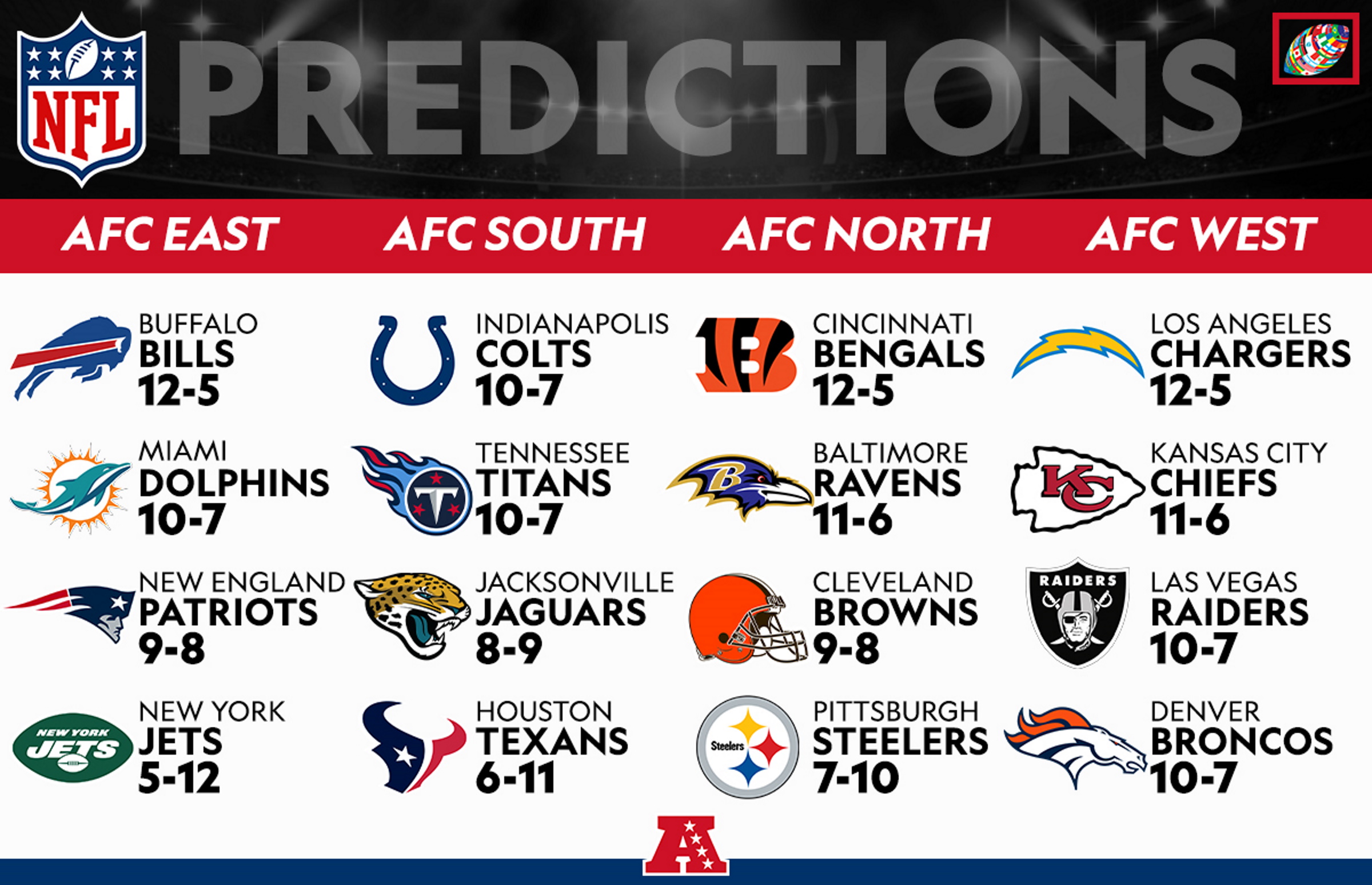
Global Expansion and the International Market
The NFL’s “International Home Marketing Areas” program allows teams to claim specific foreign territories, such as Germany, the UK, or Brazil, as their own for branding and commercial purposes. This is a strategic move to increase “Brand Equity” and “Global Revenue.” By playing games abroad and securing international sponsorships, teams can ensure their financial standing grows even if the domestic market reaches saturation. For the league, this is a play for “total addressable market” (TAM) expansion, positioning the NFL to compete with global entities like the Premier League or Formula 1 for sponsorship dollars and broadcasting eyes.
In conclusion, the “standings” in the NFL represent far more than a path to the playoffs. They are a reflection of a complex, multi-billion-dollar business strategy that combines media dominance, real estate savvy, institutional investment, and global expansion. Whether you are an owner, a sports bettor, or a financial analyst, understanding the economic underpinnings of these standings is essential to navigating the most successful financial machine in the history of professional sports. Success on the field is the catalyst, but the true victory lies in the compounding value of the franchise.
aViewFromTheCave is a participant in the Amazon Services LLC Associates Program, an affiliate advertising program designed to provide a means for sites to earn advertising fees by advertising and linking to Amazon.com. Amazon, the Amazon logo, AmazonSupply, and the AmazonSupply logo are trademarks of Amazon.com, Inc. or its affiliates. As an Amazon Associate we earn affiliate commissions from qualifying purchases.