
In the heart of the digital age, the act of voting has transitioned from a purely analog tradition into a sophisticated intersection of data science, software engineering, and cybersecurity. For New York voters, the question “What’s on my ballot?” is no longer answered solely by physical mailers or town hall meetings. Instead, a robust ecosystem of civic technology tools has emerged to provide personalized, real-time insights into the candidates, propositions, and legislative changes specific to each voter’s district. Understanding how to leverage these technological assets is essential for navigating the complex political landscape of the Empire State.
The Evolution of Voter Information Systems in New York
The transition from paper-based voter education to high-speed digital retrieval has fundamentally changed how New Yorkers prepare for Election Day. Historically, understanding a ballot required manual cross-referencing of assembly districts and senate maps—a process prone to human error and information gaps.
From Paper Pamphlets to Digital Sample Ballots
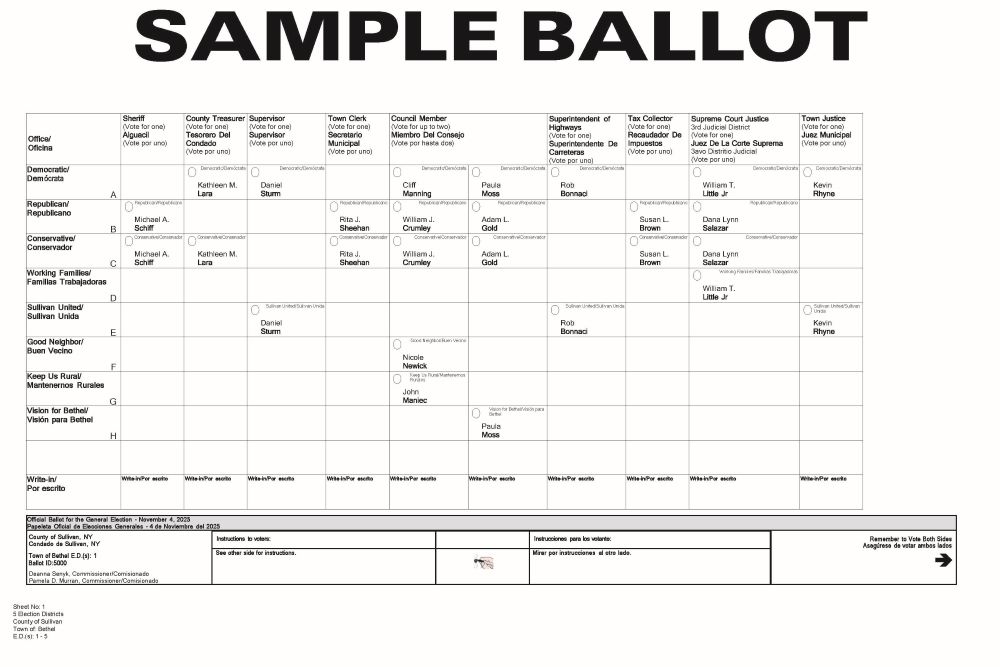
The New York State Board of Elections (BOE) and various municipal offices have undergone a massive digital transformation. Modern databases now allow for the generation of dynamic sample ballots based on a user’s specific geolocation data. This tech-driven approach ensures that a voter in Brooklyn Heights doesn’t receive information relevant only to someone in Harlem. By integrating Geographic Information System (GIS) mapping with voter registration databases, the state provides a seamless “Look-Up” tool that identifies exactly which legislative seats and judicial positions are up for contention on a specific street corner.
The Role of the Board of Elections (BOE) Portal
The backend infrastructure of the NYC Board of Elections portal is a testament to the power of centralized data management. This system must handle millions of queries in the weeks leading up to an election. It utilizes robust server architecture to ensure uptime during high-traffic periods, providing voters with immediate access to their registration status, poll site locations, and localized ballot previews. The API (Application Programming Interface) integrations used by these portals allow for the synchronization of data across various state and city departments, ensuring that when district lines are redrawn—as seen in recent redistricting cycles—the digital ballot reflects those changes instantly.
Essential Apps and Platforms for New York Voters
Beyond official government portals, a new wave of civic-tech platforms has emerged to aggregate data and provide a more user-friendly interface for ballot exploration. These tools use data scraping and official API feeds to create a comprehensive view of the political landscape.
Leveraging Non-Profit Tech Solutions
Platforms like BallotReady and Vote411 serve as the “search engines” of the electoral world. These organizations use complex algorithms to aggregate data from news outlets, candidate websites, and financial disclosures. For a New Yorker, these platforms offer a “one-stop-shop” tech experience. By entering a zip code, the software filters through thousands of data points to present the user with a curated list of their specific ballot items. This includes not just the high-profile gubernatorial or mayoral races, but also the nuanced “down-ballot” positions like Civil Court judges and District Leaders, where information is often scarce.
Mobile Tools for Geolocation-Based Ballot Previews
The shift toward mobile-first civic tech has led to the development of apps that utilize a smartphone’s GPS to provide hyper-local info. Many of these apps incorporate “Save” features, allowing users to digitize their choices before heading to the booth. In New York, where the “Ranked Choice Voting” system is utilized in primary and special elections for city offices, these digital tools are indispensable. They offer interactive interfaces where voters can practice their rankings, ensuring they understand how the software used by the BOE will eventually tally their votes. This “tech-prepping” reduces confusion and errors at the physical voting machine.

Cybersecurity and Data Integrity in the New York Voting Process
As we rely more on digital tools to tell us “what’s on the ballot,” the security of that information becomes paramount. In an era of sophisticated cyber threats, New York has implemented rigorous technological safeguards to protect both the information provided to voters and the integrity of the vote itself.
Protecting Voter Information Online
Digital security for voter portals involves multi-layered defense strategies. Encryption is used to protect sensitive voter registration data, such as Social Security digits and signatures. Furthermore, state-level IT departments employ “stress testing” and “penetration testing” to ensure that foreign or domestic actors cannot take down voter information sites or spread “spoof” ballots designed to mislead the public. Ensuring that the “Sample Ballot” you see online is the authentic representation of the legal ballot is a constant battle involving digital watermarking and secure cloud hosting.
Combatting AI-Generated Misinformation and Deepfakes
The 2024 election cycle has introduced a new technological challenge: Large Language Models (LLMs) and Generative AI. Voters searching for “what’s on my ballot in NY” may encounter AI-generated summaries that could potentially hallucinate or misrepresent a candidate’s platform. To counter this, New York’s tech infrastructure is increasingly incorporating verification badges and “Official Source” redirects. Tech companies and state agencies are working in tandem to deploy detection software that identifies deepfake videos or audio clips of candidates, ensuring that the digital content used for voter education remains grounded in fact.
The Future of Ballot Tech: Modernizing the New York Experience
Looking ahead, the roadmap for New York’s electoral technology involves even greater integration of emerging tech to increase accessibility and transparency. The goal is a frictionless experience from the moment a voter thinks “what’s on my ballot” to the moment their vote is tabulated.
Blockchain and the Potential for Remote Verification
While online voting remains a controversial topic due to security concerns, blockchain technology is being explored as a method for secure “ballot tracking.” Imagine a system where, after casting a paper ballot in a New York precinct, a voter could use a unique hash-key to verify digitally that their ballot was received and counted, without compromising the anonymity of their vote. This level of transparency, powered by decentralized ledgers, could significantly bolster public trust in the technological side of the democratic process.
Enhancing Accessibility Through Assisted Technology
Technology is also playing a critical role in making the ballot accessible to all New Yorkers, including those with visual or motor impairments. New York is investing in “Ballot Marking Devices” (BMDs) that feature high-contrast screens, audio-tactile interfaces, and sip-and-puff compatibility. Future iterations of these technologies may include the ability for voters to prepare their selections on a personal secure device at home and then transfer those selections via a secure, encrypted QR code at the polling site. This “Pre-Fill” tech could drastically reduce wait times and improve the accuracy of the voting process for populations that have historically faced barriers to entry.

Conclusion: Empowering the Informed Digital Citizen
The question of “what’s on my ballot in New York” is no longer a hurdle to be cleared, but an opportunity to engage with high-level civic technology. By utilizing official BOE portals, third-party data aggregators, and secure mobile platforms, New York voters can enter the polling booth with a level of clarity and confidence that was impossible in the pre-digital era.
As technology continues to evolve, the focus remains on ensuring that these tools are not only powerful and efficient but also secure and equitable. In the digital age, a well-informed voter is a “tech-savvy” voter. By embracing the digital transformation of the ballot, New Yorkers are not just participating in an election; they are participating in a modernized, tech-driven democracy that values data integrity, accessibility, and the informed voice of every citizen. Whether you are reviewing a judicial candidate on your smartphone or verifying your registration through a secure API, you are using the tools of the future to safeguard the traditions of the past.
aViewFromTheCave is a participant in the Amazon Services LLC Associates Program, an affiliate advertising program designed to provide a means for sites to earn advertising fees by advertising and linking to Amazon.com. Amazon, the Amazon logo, AmazonSupply, and the AmazonSupply logo are trademarks of Amazon.com, Inc. or its affiliates. As an Amazon Associate we earn affiliate commissions from qualifying purchases.