
For decades, the leap from 2D to 3D was considered the ultimate frontier in digital and physical design. We moved from flat images on a screen to three-dimensional objects that could be modeled in CAD software and eventually printed in plastic or metal. However, as the technological landscape matures, a new dimension is emerging: 4D.
In the context of modern technology, 4D does not simply refer to the abstract concept of time found in theoretical physics. Instead, it represents a revolutionary shift in how we manufacture objects, design software, and interact with the physical world. It is the marriage of 3D printing with the element of time, resulting in “smart” materials that can transform, adapt, and evolve after they have been created. This article explores the technical foundations of 4D technology, its industrial applications, and how it is poised to redefine the future of manufacturing and software design.
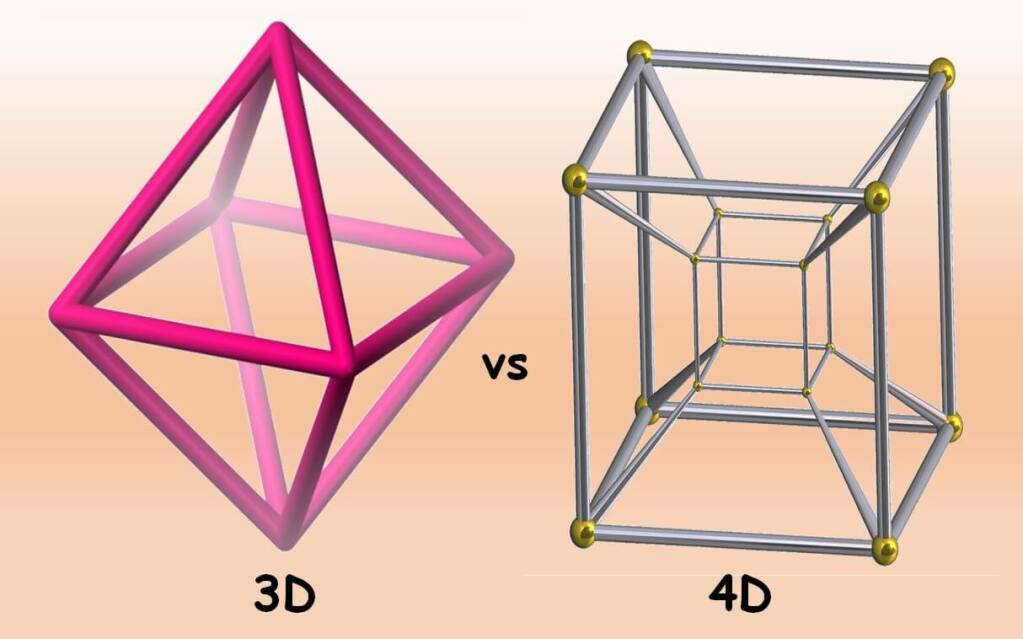
From Static to Dynamic: Defining 4D in the Digital Age
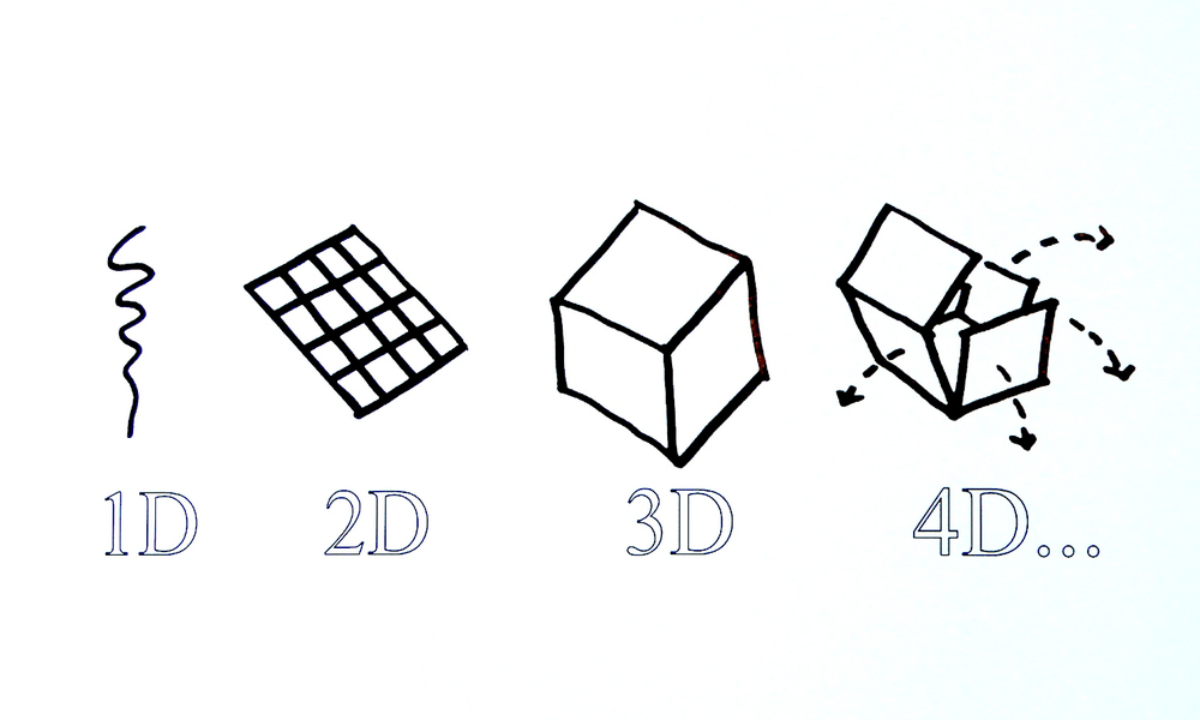
To understand what 4D is, one must first understand the limitations of 3D. A 3D-printed object is static; once it leaves the print bed, its shape, size, and properties are fixed. If you print a plastic bracket, it remains a plastic bracket until it breaks or is recycled. 4D technology introduces a paradigm shift where the object is no longer the final product, but rather a starting point.
Defining the Core Mechanics of 4D
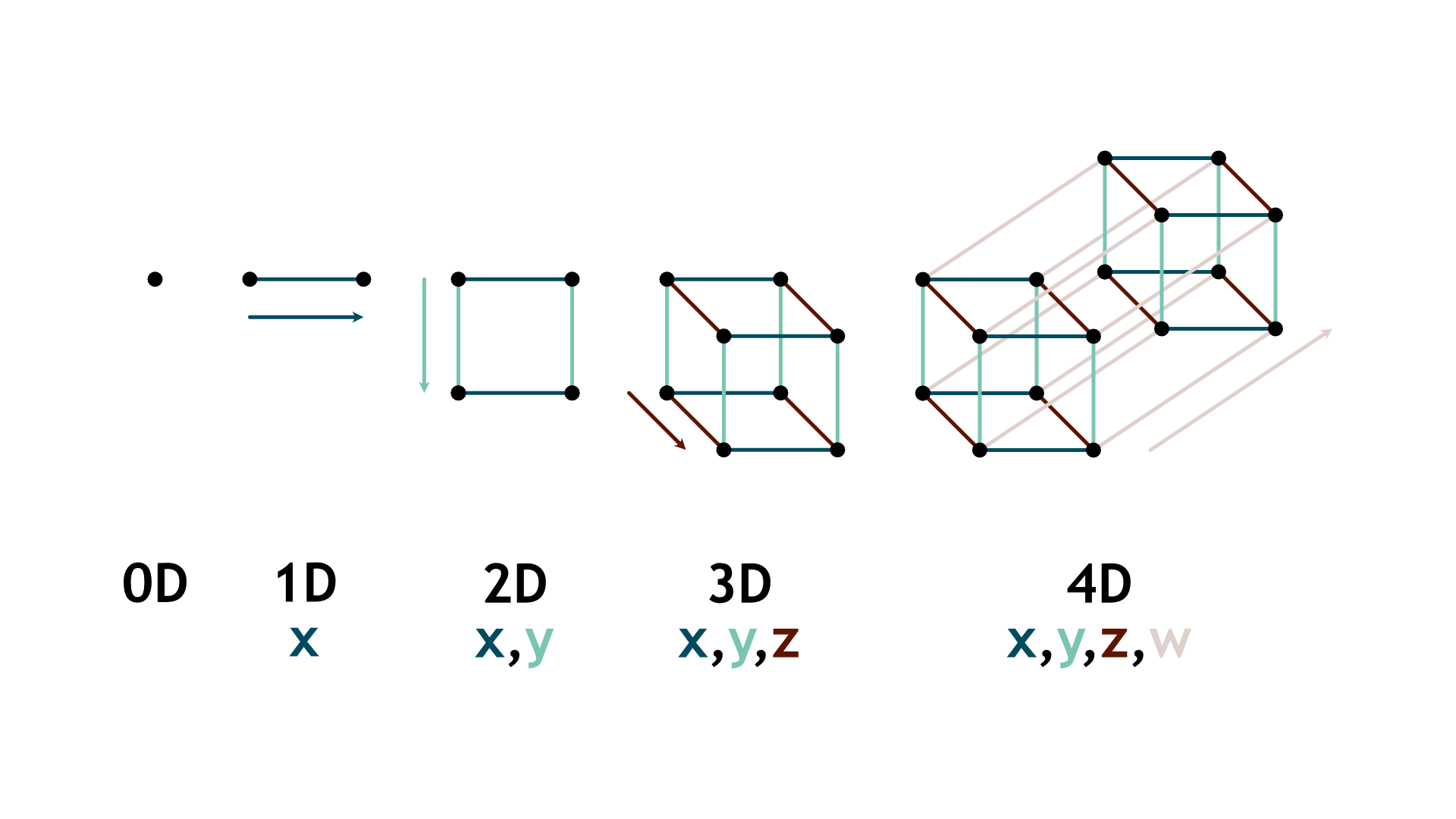
At its core, 4D technology—most notably 4D printing—is the process through which a 3D-printed object transforms its structure over time in response to external stimuli. These stimuli can include water, heat, light, electricity, or even magnetic fields. This means the fourth dimension is not just “time” in a chronological sense, but “transformation” enabled by time.
The breakthrough lies in the “coding” of the material itself. In 4D tech, the geometry is integrated with the material’s properties so that the object “knows” how to react when exposed to a specific environment. This eliminates the need for complex mechanical parts like motors, sensors, or gears to achieve movement, making the system more efficient and less prone to mechanical failure.
The Role of Smart Materials
The backbone of 4D technology is the development of “Smart Materials” or “Programmable Matter.” These include shape-memory polymers (SMPs), hydrogels, and liquid crystal elastomers.
Shape-memory polymers are particularly vital. They are designed to “remember” a primary shape. When deformed into a secondary shape and then exposed to a trigger (like heat), they automatically revert to their original state. Hydrogels, on the other hand, expand or contract when they absorb water. By strategically layering these materials during the printing process, engineers can create objects that fold, curl, or expand into entirely new configurations without human intervention.
The Science of 4D Printing: Programmable Matter
The transition from a 3D model to a 4D functional object requires a sophisticated understanding of material science and additive manufacturing. Unlike traditional manufacturing, which focuses on the external shape, 4D printing focuses on the internal composition and the “instructions” embedded within the layers.
Multi-Material Deposition
One of the key technical drivers of 4D is the ability to print with multiple materials simultaneously. Advanced 3D printers can now deposit different types of resins or filaments in a single pass. For instance, a designer might print a rigid plastic base interspersed with “active” joints made of a heat-sensitive polymer.
When the finished product is placed in warm water, the rigid parts remain still while the active joints contract. This creates a predictable, programmed movement. This “multi-material deposition” allows for the creation of complex, folding structures that would be impossible to manufacture using traditional injection molding or standard 3D printing.
Self-Assembly and Minimalist Logistics
One of the most exciting technical prospects of 4D is the concept of self-assembly. Imagine shipping a flat-packed piece of equipment to a remote location—perhaps an underwater research station or a space colony. Instead of requiring a team of engineers to assemble the components, the 4D-printed structure could be designed to self-assemble when exposed to the local environment (such as the pressure of the ocean or the heat of the sun).
This reduces logistical costs and the “carbon footprint” of transportation, as flat-packed items take up significantly less space. It also opens the door to “micro-robotics,” where tiny medical devices could be injected into the human body in a compressed state and then unfold into their functional shape once they reach a specific organ or temperature.
Industry Disruptions: Where 4D is Changing the World
While 4D technology is still in its relatively early stages, several industries are already seeing the potential for massive disruption. By moving away from static components toward adaptive ones, these sectors are solving long-standing engineering challenges.
Healthcare and Bioprinting
Perhaps the most profound application of 4D technology is in the field of medicine. Researchers are currently developing 4D-printed vascular stents that can adapt to a patient’s body. Traditional stents are rigid, but a 4D stent could be designed to expand as a child grows or to contract and expand in response to blood pressure changes.
Furthermore, “4D bioprinting” involves printing with living cells. As these cells grow and interact over time, the tissue matures and changes its shape, mimicking the natural development of human organs. This could eventually lead to lab-grown organs that truly “live” and adapt to the host body, rather than acting as static replacements.
Aerospace and Adaptive Infrastructure
In the aerospace industry, weight is the enemy. Traditional mechanical actuators used to move wing flaps or solar panels add significant weight and complexity. NASA has been experimenting with 4D-printed “smart fabrics”—metallic meshes that can change their reflectivity and thermal properties.
Similarly, 4D technology is being explored for use in adaptive infrastructure. Imagine water pipes that can change their diameter based on the flow rate or temperature, preventing bursts during freezes. Or consider “self-healing” roads where the pavement contains 4D-printed capsules that expand to fill cracks when they sense moisture or pressure changes.
Consumer Goods and Fashion
The fashion and footwear industries are also looking toward 4D to provide hyper-personalization. High-performance brands are experimenting with 4D-printed midsoles for running shoes that adapt their stiffness based on the runner’s gait and the impact force over time. In clothing, 4D fabrics could become more breathable when the wearer’s body temperature rises and more insulating when it drops, creating a “living” garment that responds to the environment.
The Software Ecosystem: Simulating Change
Technological progress in 4D isn’t just about the hardware and the materials; it’s equally dependent on the software used to design and simulate these transformations. Designing a 4D object is significantly more complex than designing a 3D one because the designer must account for the element of time and environmental variables.
Algorithmic Design and Simulation
Traditional CAD (Computer-Aided Design) software is built for static geometry. To design for 4D, engineers use “Algorithmic Design” tools that can simulate how a material will behave under specific stresses over time. This requires massive computational power and complex physics engines.
Software like Autodesk’s Project Dreamcatcher or specialized 4D simulation platforms allows designers to input their desired “end state” and the “trigger” (e.g., “I want this flat sheet to fold into a cube when heated to 40°C”). The software then back-calculates the necessary material distribution and lattice structure to achieve that goal. This “generative design” approach is essential because the mathematics behind 4D folding are often too complex for a human to calculate manually.
Real-Time Data Integration and Digital Twins
In more advanced industrial applications, 4D technology is being paired with the “Digital Twin” concept. A digital twin is a virtual replica of a physical object. By integrating sensors into 4D-printed components, companies can collect data on how the material is deforming in the real world.
This data is fed back into the digital twin, allowing AI to predict when the material might fatigue or fail. This creates a feedback loop where the software learns from the physical 4D object’s behavior, leading to better designs in the next iteration. It is a convergence of AI, data science, and material engineering.
Future Outlook: The Convergence of AI and 4D
As we look toward the next decade, the definition of 4D will likely expand even further. We are moving toward a world of “Autonomous Materials”—objects that don’t just react blindly to a stimulus, but “sense” and “decide” how to change.
Material Limitations and Scalability
Despite its promise, 4D technology faces significant hurdles. Currently, the “reset” capability of many smart materials is limited. While some can flip back and forth between shapes, many 4D-printed objects are “one-way” transformations; once they change, they stay that way. Furthermore, the speed of transformation can be slow, often taking minutes or hours to complete a fold.
Scaling these technologies from laboratory prototypes to mass-produced consumer goods also requires a transformation in the chemical supply chain. We need more durable, UV-resistant, and cost-effective smart resins before 4D becomes a household reality.
The Path to Commercialization
The future of 4D lies in its ability to solve problems that 3D printing and traditional manufacturing cannot. As AI continues to advance, it will become the primary tool for discovering new smart materials and optimizing 4D structures. We are entering an era where our environment will no longer be composed of “dumb,” static objects. Instead, our buildings, our clothes, and even our medical implants will be dynamic systems, capable of responding to our needs and the environment in real-time.
What is 4D? It is the technology of change. It is the realization that the objects we create do not have to be finished the moment they are made. By adding the dimension of time to the precision of 3D printing, we are unlocking a new era of “living” technology that promises to be more efficient, more personal, and infinitely more adaptable.
aViewFromTheCave is a participant in the Amazon Services LLC Associates Program, an affiliate advertising program designed to provide a means for sites to earn advertising fees by advertising and linking to Amazon.com. Amazon, the Amazon logo, AmazonSupply, and the AmazonSupply logo are trademarks of Amazon.com, Inc. or its affiliates. As an Amazon Associate we earn affiliate commissions from qualifying purchases.