
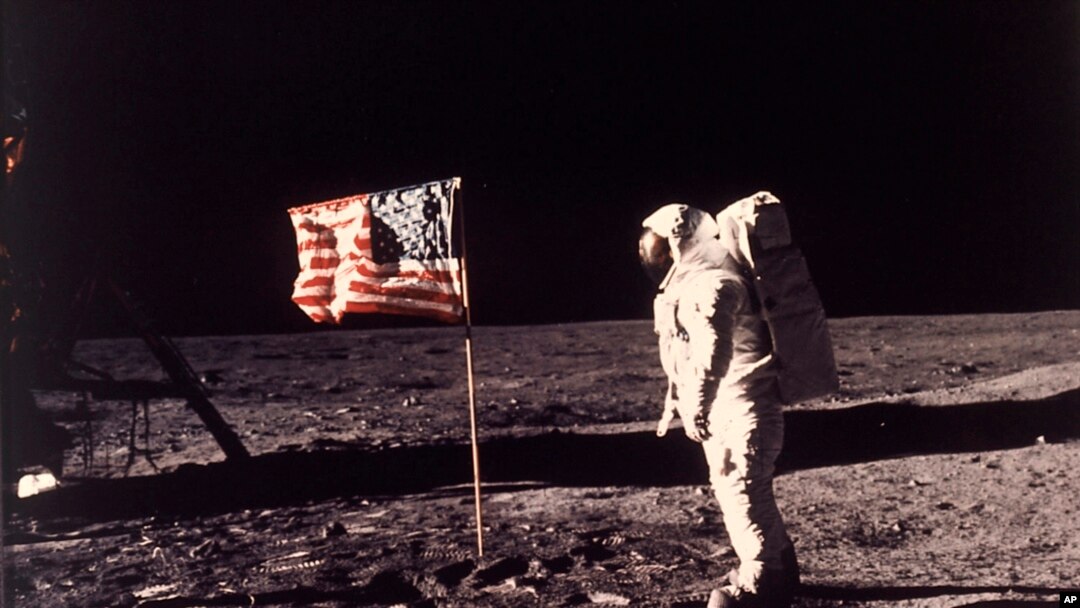
When the world watched Neil Armstrong take those first tentative steps onto the lunar surface on July 20, 1969, most saw a triumph of human spirit and exploration. However, for those in the world of engineering and digital innovation, the year 1969 represents something even more profound: the birth of modern computing and the acceleration of the digital age. The Apollo 11 mission was not just a journey of 238,855 miles; it was a high-stakes demonstration of cutting-edge technology that would eventually pave the way for the smartphones, AI, and software ecosystems we rely on today.

To answer the fundamental question—what year did the U.S. land on the moon—is to identify the specific moment when humanity moved from mechanical reliability to digital precision. The technological leaps required to achieve a lunar landing in 1969 laid the groundwork for miniaturization, real-time operating systems, and the sophisticated hardware architectures that define the 21st century.
The Apollo Guidance Computer: A Revolution in Miniaturization
In the mid-1960s, computers were massive, room-sized machines that relied on fragile vacuum tubes or early transistors. To go to the moon, NASA needed something that had never existed before: a computer that was powerful enough to calculate complex orbital mechanics but small enough to fit inside a spacecraft. This necessity led to the creation of the Apollo Guidance Computer (AGC).
From Vacuum Tubes to Integrated Circuits
The AGC was one of the first computers to utilize integrated circuits (ICs). At a time when the tech industry was skeptical about the reliability of “microchips,” NASA became the world’s largest consumer of ICs, purchasing nearly 60% of the total US production between 1962 and 1965. This massive investment essentially jumpstarted the semiconductor industry in Silicon Valley.
The hardware was a marvel of its time, featuring a clock speed of roughly 1.024 MHz. While this is millions of times slower than a modern budget smartphone, it was a masterpiece of efficiency. The logic was built using “Core Rope Memory,” where the software was literally woven into the hardware by hand. This provided a level of stability and “hard-wired” security that modern software developers still study as a baseline for mission-critical systems.
The DSKY Interface and User Experience
Modern tech enthusiasts often talk about User Experience (UX) and User Interface (UI). The Apollo astronauts were the original testers of high-stakes UI. The DSKY (Display and Keyboard) served as the primary interface between the crew and the computer. It used a “Verb/Noun” system, allowing astronauts to input commands using numeric codes. This logic—breaking down complex technical operations into simplified, actionable commands—is a direct ancestor to the command-line interfaces and eventually the app icons we use today.
Software Engineering: The Hidden Hero of 1969
If the Saturn V rocket was the muscle of the moon landing, the software was the brain. In 1969, “software engineering” wasn’t even a recognized profession. It was during the Apollo program that Margaret Hamilton, the lead developer for the Apollo flight software, coined the term to give her team’s work the same respect as hardware engineering.
Real-Time Operating Systems and Priority Scheduling
The most critical moment of the 1969 landing occurred when the “1202” and “1201” alarms flashed on the DSKY as the Eagle was descending. These alarms indicated that the computer was being overloaded with data from the rendezvous radar.
In a modern context, this would be akin to a computer “hanging” or crashing during a vital update. However, Hamilton’s team had designed the software with “priority scheduling.” The system was smart enough to recognize that landing the module was more important than processing radar data, so it automatically dropped low-priority tasks to focus on the descent. This was an early, primitive form of the multi-tasking and resource management found in modern operating systems like Windows, macOS, and Linux.
Bug Testing and Digital Security
Digital security and software reliability were matters of life and death in 1969. Every line of code was hand-verified and tested in simulators. Because there was no “over-the-air” update capability or cloud backup, the software had to be perfect before launch. This rigorous approach to debugging and architectural integrity influenced how critical infrastructure software—such as that used in medical devices and aviation—is developed today.
Propulsion and Engineering: The Raw Power of the Saturn V
While the computer was the brain, the Saturn V rocket was the ultimate gadget of the 1960s. Standing at 363 feet tall, it remains one of the most powerful machines ever built. The engineering challenges of 1969 forced breakthroughs in materials science and thermodynamics that have since migrated into civilian tech.
Mastering Liquid Oxygen and Kerosene (RP-1)
The F-1 engines used in the Saturn V had to manage temperatures and pressures that would melt most known materials. To solve this, engineers developed regenerative cooling systems—where the cold fuel itself was pumped through the walls of the engine nozzle to keep the metal from melting. This type of thermal management is a direct precursor to the liquid cooling systems used in high-end gaming PCs and data centers today.
Structural Integrity and Heat Shield Innovations
Returning to Earth required a heat shield capable of withstanding 5,000 degrees Fahrenheit. The development of “Avcoat,” an ablative material that charred and fell away to dissipate heat, represented a massive leap in chemical engineering. This research led to advancements in flame-retardant materials and high-performance insulation used in modern construction and gadget manufacturing, protecting sensitive electronics from overheating.
The Technological Legacy: From Apollo to AI and Modern Gadgets
The year 1969 didn’t just end with a footprint on the moon; it started a butterfly effect that touches every piece of technology we use today. The drive to make things smaller, faster, and more reliable was fueled by the moon landing’s success.
How Moon Tech Lives in Your Smartphone
The most direct descendant of the Apollo missions is the modern smartphone. The obsession with miniaturization that began with the AGC led to the development of the microprocessor. Furthermore, the global positioning system (GPS) that powers our mapping apps relies on the orbital mechanics and synchronized timing protocols first perfected during the Apollo era. Even the CMOS sensors used in modern digital cameras and phone cameras trace their lineage back to NASA’s efforts to miniaturize imaging technology for space.
The Future of AI in Modern Lunar Exploration
As we look beyond the 1969 landing toward the upcoming Artemis missions, the “Tech Trends” have shifted from basic calculation to Artificial Intelligence (AI). While the 1969 crew had to manually input verbs and nouns, the next generation of lunar landers will use AI-driven terrain-relative navigation (TRN). This technology uses machine learning to compare real-time camera feeds with pre-loaded maps to avoid craters and boulders autonomously.
The digital security protocols have also evolved. In 1969, communication was relatively open; today, lunar communication requires robust encryption and decentralized data storage (often discussed in the context of “Space 2.0” and blockchain applications) to ensure that mission-critical commands are not intercepted or corrupted.

Conclusion: The 1969 Blueprint for Innovation
When we ask, “what year did the U.S. land on the moon,” the answer—1969—serves as a benchmark for what technology can achieve under pressure. It was the year that proved software could handle life-or-death decisions, that microchips were the future of hardware, and that complex systems could be managed through elegant UI design.
The Apollo 11 mission was the ultimate tutorial in project management and technological scaling. It taught the tech world that no goal is too ambitious if you have the right architecture and a commitment to rigorous testing. Today’s AI tools, cloud networks, and ubiquitous gadgets are all, in some way, small steps taken by the giant leap of 1969. As we continue to innovate in the digital space, we are still operating on the foundation built by the engineers who dared to put a computer in a tin can and point it at the moon.
aViewFromTheCave is a participant in the Amazon Services LLC Associates Program, an affiliate advertising program designed to provide a means for sites to earn advertising fees by advertising and linking to Amazon.com. Amazon, the Amazon logo, AmazonSupply, and the AmazonSupply logo are trademarks of Amazon.com, Inc. or its affiliates. As an Amazon Associate we earn affiliate commissions from qualifying purchases.