
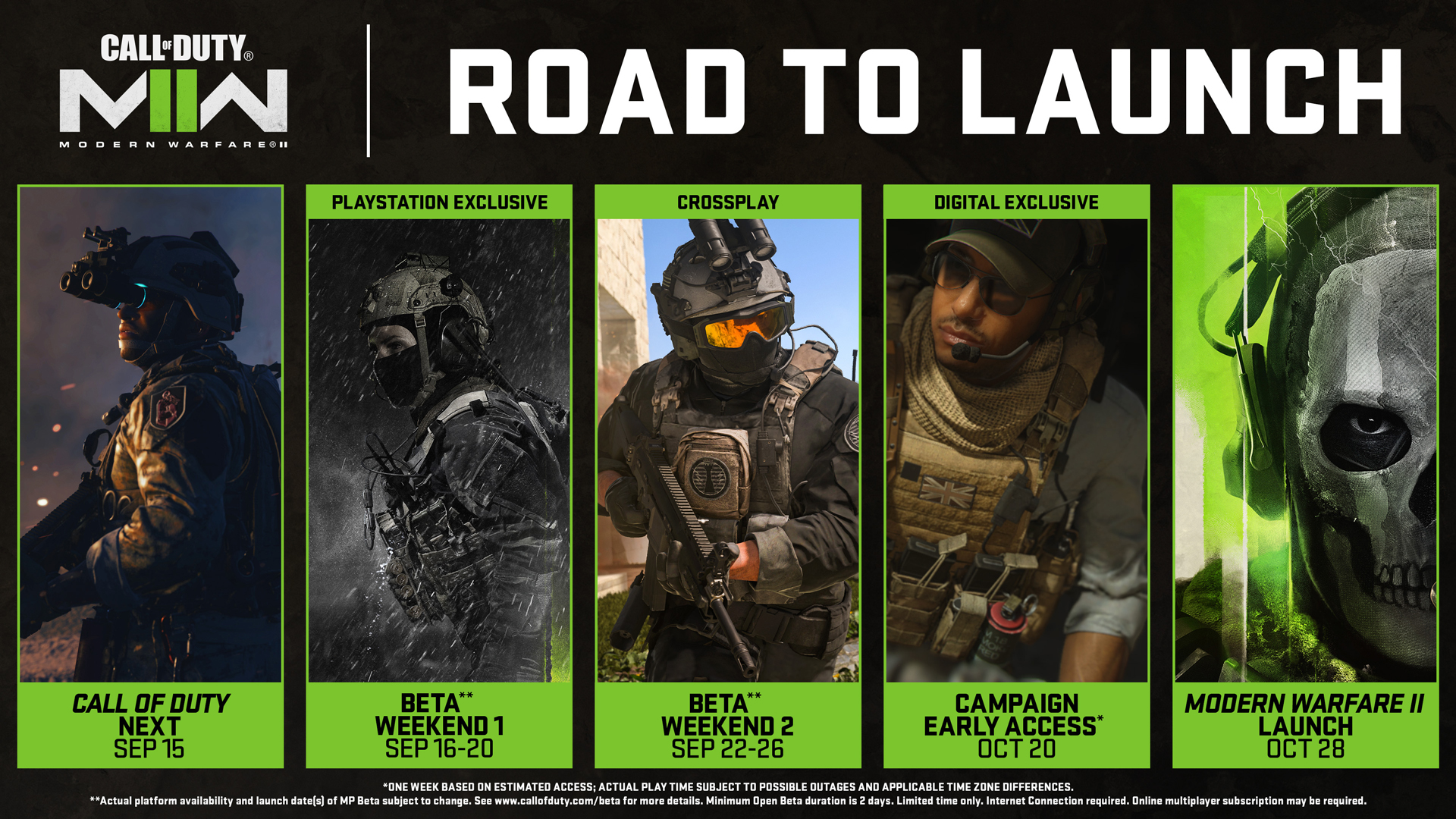
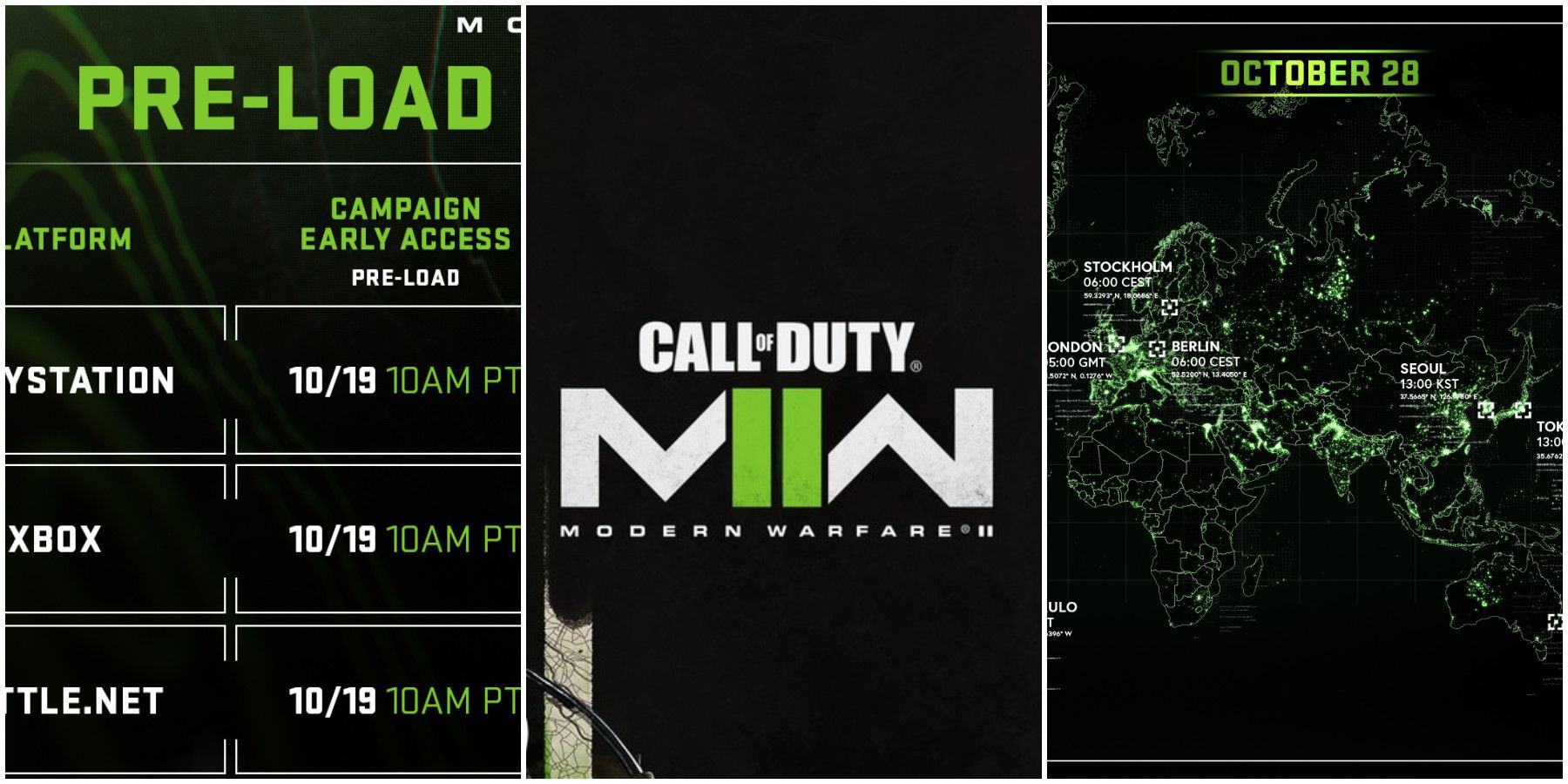
To answer the most direct question first: the original Call of Duty: Modern Warfare 2 was released on November 10, 2009. However, for the modern tech-savvy gamer and software enthusiast, the answer is dual-layered, as a complete “reimagining” or reboot of Modern Warfare II was released more recently on October 28, 2022.
Between these two pivotal dates lies a thirteen-year chasm of monumental technological progress. The release of these two titles serves as a perfect case study for the evolution of software engineering, graphics rendering, and digital infrastructure. In the world of technology, Modern Warfare 2 is more than just a game; it is a benchmark that illustrates how far we have come in terms of processing power, artificial intelligence, and global networking.
The 2009 Technical Revolution: Engineering the IW 4.0 Engine
When the original Modern Warfare 2 launched in 2009, it arrived at a time when the Seventh Generation of consoles—the PlayStation 3 and Xbox 360—were hitting their technical stride. The game was built on the proprietary IW 4.0 engine, a piece of software architecture that redefined what was possible in high-speed, interactive environments.
The 60 Frames Per Second Benchmark
One of the most significant technological achievements of the 2009 release was the commitment to a consistent 60 frames per second (FPS) on console hardware. At the time, many developers sacrificed frame rate for graphical fidelity, often capping games at 30 FPS. Infinity Ward’s technical team, however, prioritized “input latency” and fluid motion. By optimizing the IW 4.0 engine to handle complex geometry and particle effects without dropping frames, they set a new industry standard for responsiveness in first-person software.
Breakthroughs in Texture Streaming and Lighting
The 2009 title introduced advanced “Texture Streaming” techniques. Given the limited RAM of consoles at the time (only 512MB on the Xbox 360), the engine had to be incredibly efficient at loading and unloading assets in real-time as the player moved through the environment. Furthermore, the introduction of “Bullet Penetration” tech required the engine to calculate physics and material density on the fly, a software feat that added a layer of tactical realism previously unseen in mainstream shooters.
The Pivot to IWNet and Centralized Matchmaking
From a networking perspective, the 2009 release of Modern Warfare 2 marked a controversial but important shift in digital infrastructure. On the PC side, the game moved away from user-hosted dedicated servers toward “IWNet.” This was an early iteration of modern matchmaking technology, designed to streamline the user experience by automating lobby creation and player connections. While it faced pushback from the tech community at the time, it laid the groundwork for the seamless, one-click multiplayer systems we use today.
Digital Distribution and the Shift in Software Delivery
The year Modern Warfare 2 came out (2009) also signaled a massive shift in how software was distributed. We were witnessing the transition from physical media (discs) to the “Games as a Service” (GaaS) model and digital storefronts.
The Integration of Steam and Digital Ecosystems
Modern Warfare 2 (2009) was one of the first major non-Valve titles to require the Steam client for activation on PC. This was a watershed moment for digital rights management (DRM) and software ecosystems. It forced a massive influx of users into the Steam environment, accelerating the growth of digital software libraries. This move proved that high-budget, “Triple-A” software could thrive within a digital-first framework, eventually leading to the decline of the physical retail model.
Post-Launch Support and DLC Architecture
The technology used to deliver updates and downloadable content (DLC) in 2009 was rudimentary compared to today’s “live service” models. Updates were often large, infrequent patches. However, Modern Warfare 2 helped pioneer the “Map Pack” structure, which tested the pipes of digital distribution networks. The success of these digital downloads proved to publishers that software could be a continuous revenue stream, leading to the sophisticated, modular update systems we see in the 2022 reboot.
The 2022 Reboot: Leveraging Next-Generation Hardware and Photogrammetry
Fast forward to October 2022, and the tech landscape had shifted entirely. The “reboot” of Modern Warfare II wasn’t just a graphical upgrade; it was a total overhaul utilizing the latest advancements in software engineering, including the unified Call of Duty engine that spans multiple titles.
Photogrammetry and High-Fidelity Rendering
One of the most impressive tech trends utilized in the 2022 version is Photogrammetry. This is the process of taking thousands of high-resolution photographs of real-world objects and environments and using software to “stitch” them into 3D models. This tech allows for a level of realism where textures—such as the porous surface of a brick wall or the weave of a tactical vest—look identical to their real-world counterparts. Combined with Physically Based Rendering (PBR), the 2022 game simulates how light interacts with different material surfaces (metal vs. plastic vs. skin) with surgical precision.
The Unified Engine and Cross-Platform Architecture
Unlike the 2009 release, which had fragmented versions for different platforms, the 2022 title was built on a unified engine. This allowed for seamless Cross-Play and Cross-Progression. The technical challenge of allowing a player on a PlayStation 5 to compete against someone on a high-end PC and an Xbox Series X—all while maintaining fair latency and synchronized game states—is a marvel of modern networking. This requires a robust cloud infrastructure and real-time data synchronization that was purely theoretical back in 2009.
Advanced AI and NPC Pathfinding
The 2022 reboot showcased significant jumps in Artificial Intelligence. Modern NPCs (non-player characters) no longer follow simple “if-then” scripts. Instead, they use advanced pathfinding algorithms to navigate complex 3D spaces, seek cover dynamically, and coordinate “flanking” maneuvers. The computational power required to run these AI routines in the background, alongside 4K visuals and complex physics, demonstrates the massive leap in CPU utilization over the last decade.
The Intersection of AI and Cybersecurity in Modern Gaming
As software becomes more complex, so do the threats against it. A major technical component of the 2022 Modern Warfare II release that didn’t exist in 2009 is the sophisticated integration of Cybersecurity and Anti-Cheat software.
The Ricochet Anti-Cheat System
In the modern era, cheating in software has become a sophisticated industry involving kernel-level exploits. To combat this, Activision developed the Ricochet Anti-Cheat system. This is a multi-layered approach that includes a kernel-level driver on PC. This driver monitors the computer’s operating system for unauthorized software attempting to manipulate the game’s memory. This represents a significant trend in digital security: the move toward “active” defense mechanisms that operate at the deepest levels of the hardware/software interface.
Machine Learning for Fair Play
Beyond the kernel driver, the tech behind Modern Warfare II now uses Machine Learning (ML) to identify cheating patterns. The software analyzes millions of data points—such as snap-to-target speeds and movement anomalies—to identify “bad actors” faster than any human moderator could. This application of AI in the realm of digital security is a prime example of how gaming tech often leads the way for broader software applications.
Conclusion: A Legacy of Technical Excellence
Whether you are looking back at the 2009 classic or the 2022 powerhouse, the Modern Warfare 2 titles represent the cutting edge of technology in their respective eras.
In 2009, the focus was on optimizing limited hardware, establishing digital distribution through Steam, and perfecting the 60 FPS console experience. By 2022, the focus shifted to photorealism, unified cross-platform engines, and the use of AI for both NPC behavior and cybersecurity.
Asking “what year did Modern Warfare 2 come out” opens a door to two different worlds. One world laid the foundation for the digital age of gaming, and the other is currently pushing the boundaries of what modern processors and cloud networks can achieve. As we look toward the future, the technological trajectory of this franchise suggests that the next iteration will likely involve even deeper integrations of AI, real-time ray tracing, and perhaps a complete shift into the realm of cloud-native gaming. For now, both the 2009 and 2022 releases remain high-water marks in the history of software development.
aViewFromTheCave is a participant in the Amazon Services LLC Associates Program, an affiliate advertising program designed to provide a means for sites to earn advertising fees by advertising and linking to Amazon.com. Amazon, the Amazon logo, AmazonSupply, and the AmazonSupply logo are trademarks of Amazon.com, Inc. or its affiliates. As an Amazon Associate we earn affiliate commissions from qualifying purchases.