
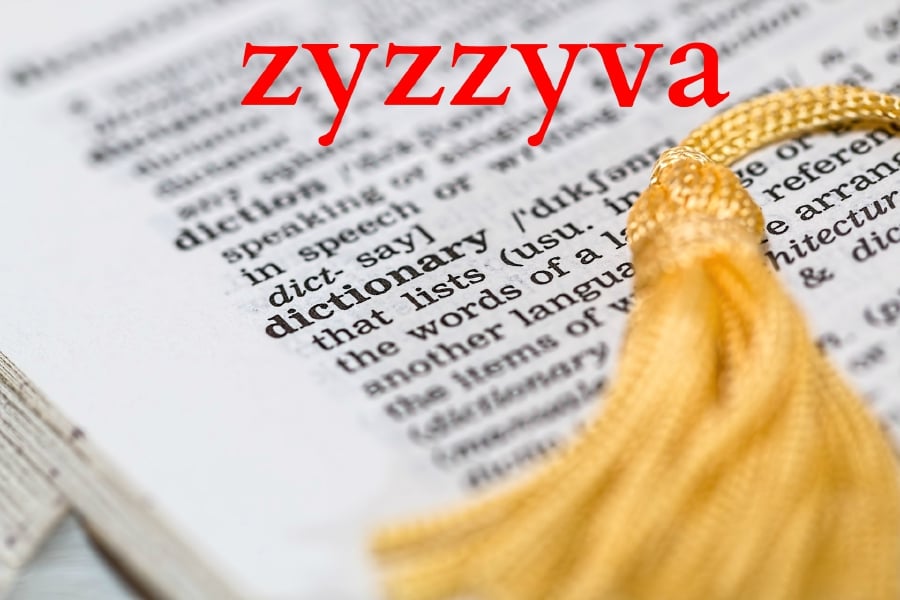
For decades, the question “What is the last word in the dictionary?” was a popular trivia point, usually answered by the South American weevil known as the Zyzzyva. In the era of physical print, the boundaries of language were defined by the physical limits of paper and binding. However, as we transition into a digital-first world, the “last word” is no longer a static entry at the bottom of page 1,500. Instead, it has become a fascinating case study in data indexing, character encoding, and the algorithmic architecture of modern technology.
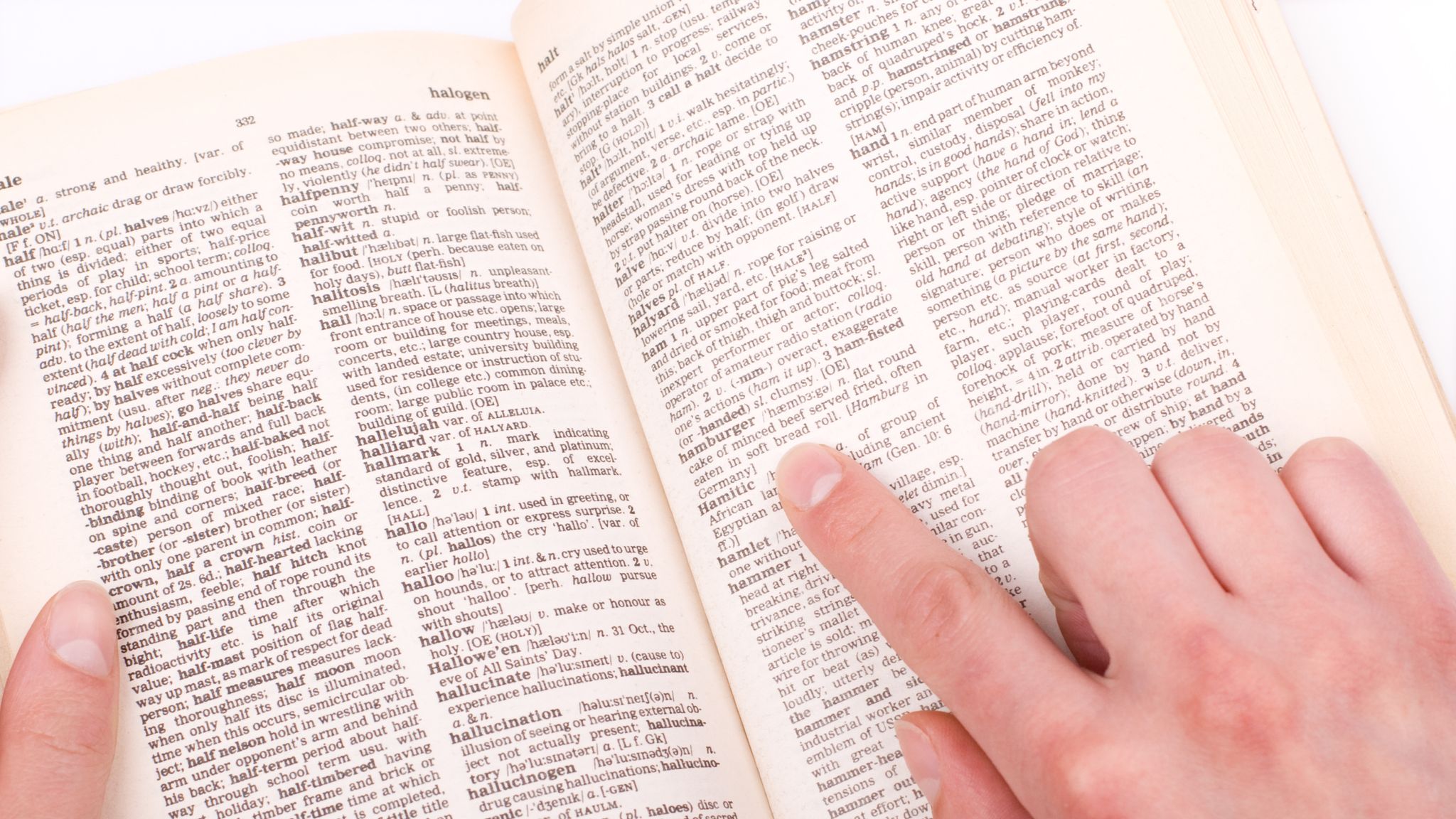
In the tech industry, a dictionary is more than a reference book; it is a structured database, a training set for machine learning, and a cornerstone of Natural Language Processing (NLP). Understanding the “last word” requires us to look past the ink and examine the software and data structures that now organize human knowledge.
The Evolution from Print to Digital Databases
The transition of the dictionary from a physical object to a digital service represents one of the most significant shifts in information technology. In the print era, lexicographers were limited by space, meaning words were often cut to save room. Today, digital dictionaries like the Oxford English Dictionary (OED) or Merriam-Webster are hosted on vast cloud infrastructures, allowing for near-infinite expansion.
How Indexing Algorithms Determine the “Final” Word
In computer science, the “last word” in a list is determined by the sorting algorithm and the collation method used by the database. Most modern software uses Unicode, a universal character encoding standard. When a developer builds a dictionary app, the order of words is governed by binary values assigned to characters.
While Zyzzyva holds its place in many English-language databases, the introduction of non-alphanumeric characters and symbols in digital “leetspeak” or technical jargon can technically shift what a computer considers the “last” entry. If a database is programmed to prioritize alphabetical strings, Zyzzyva remains king. However, if the system includes Unicode symbols or emoji-based entries, the “last word” could technically be a character that doesn’t even exist in the traditional alphabet.
The Transition from Physical Pages to Scalable Databases
Modern dictionaries are rarely stored as flat text files. They are built using relational databases (SQL) or document-oriented databases (NoSQL). This structure allows for “dynamic lexicography.” When a tech company like Google or Apple updates its built-in dictionary, it isn’t just adding a line of text; it is updating an entry in a global schema that powers spell-checkers, predictive text, and voice assistants. This scalability means the “last word” is constantly in flux, as new technical terms are indexed in real-time.
Exploring the “Last Word” in Global Lexical Registries
While Zyzzyva is the most famous answer, the tech world recognizes various contenders depending on the specific registry being used. The “last word” is a moving target influenced by how we code language into software.
Zyzzyva vs. Emerging Tech Neologisms
The word Zyzzyva was intentionally popularized to be the final entry, but the rapid growth of the tech sector frequently introduces new terms that challenge the “Z” hierarchy. Terms originating from cryptography, deep learning, and specialized hardware often utilize “Z” prefixes to ensure unique branding or categorization.
In specialized technical dictionaries, the last word might be Zzz, a common variable name or placeholder in programming, or Zyxel, a prominent brand in networking hardware that often appears in tech-specific glossaries. The competition for the final spot is now a matter of technical nomenclature rather than biological classification.
The Role of Unicode and Character Encoding in Sorting
To understand why certain words appear at the end of a digital list, we must understand UTF-8 encoding. In the ASCII and Unicode standards, characters are assigned numerical values. Uppercase “Z” and lowercase “z” have different values, which can fundamentally change the order of a dictionary depending on whether the software is “case-sensitive.”
Furthermore, many modern digital dictionaries are becoming multilingual. When a database integrates characters from the Cyrillic, Greek, or Han script, the concept of a “last word” expands beyond the Latin alphabet. In a globalized tech stack, the last word might be a character from a script that follows “Z” in the universal sorting order, making the English-centric view of the dictionary obsolete.
The Last Word in the Age of AI and LLMs
The most profound shift in lexicography is the rise of Large Language Models (LLMs) like GPT-4, Claude, and Gemini. These AI tools do not view the dictionary as a list of words from A to Z. Instead, they view language as a high-dimensional vector space.
Tokenization and How AI “Sees” the End of Language
Artificial Intelligence doesn’t read words; it processes “tokens.” A token can be a whole word, a prefix, or just a cluster of characters. In the vocabulary files of these models (often referred to as vocab.json), every word is mapped to an ID.
In this context, the “last word” is the token with the highest integer ID in the model’s vocabulary. For many AI models, the “last word” isn’t a word at all, but a special control token like <|endoftext|> or [SEP]. These tokens tell the machine that a string of data has concluded. In the world of AI, the last word is a functional command that signals the limits of machine understanding.
Training Data: Why the Dictionary is the Bedrock of NLP
Despite their complexity, AI models are trained on massive scrapes of the internet, which include digital dictionaries. These dictionaries serve as the “ground truth” for the models. If a word is the last entry in the training data, it defines the boundary of the model’s linguistic capabilities.
Developers spend significant time “cleaning” these dictionary datasets to ensure that the AI understands the nuances between a biological Zyzzyva and a technical term. The “last word” represents the edge of the known linguistic universe for a machine—anything beyond that is “out-of-vocabulary” (OOV) and results in the machine failing to comprehend or generate the text correctly.
Future-Proofing Language: Dynamic Dictionaries and Real-Time Updates
We are moving toward an era of “Living Dictionaries.” The idea that a dictionary is a finished product released every few years is a relic of the past. Today’s language is governed by software updates and API calls.
APIs and the End of Static Word Lists
Most modern applications—from Word processors to social media platforms—pull their linguistic data from an API (Application Programming Interface). When the Oxford English Dictionary adds a new tech term like “Metaverse” or “DeFi,” it is updated on a server and pushed to millions of devices instantly.
In this environment, the “last word” can change overnight. Developers utilize “hooks” to ensure their software always has the most recent version of a language database. This means that the search for the last word is no longer a task for a librarian, but a query for a data engineer. The “last word” is simply the result of the latest GET request to a linguistic server.
Semantic Search and the Shift Beyond Alphabetical Order
The most significant tech trend impacting the dictionary is the shift from alphabetical sorting to semantic searching. In a semantic search engine, words are grouped by meaning rather than their starting letter. When you search for “the last word” in a modern tech environment, the system might not give you Zyzzyva; it might provide a list of terms related to finality, conclusions, or the latest additions to the database.
As search technology evolves, the linear A-to-Z structure of the dictionary is becoming less relevant. We are moving toward a “graph-based” dictionary where words are nodes in a massive web of meaning. In this model, there is no “first” or “last” word—only the word that is most relevant to your current digital context.
Conclusion: The Final Byte
The question “What is the last word in the dictionary?” has evolved from a simple trivia question into a complex exploration of how humans and machines interact through data. While Zyzzyva remains the traditional answer for print enthusiasts, the tech world recognizes that the “last word” is defined by Unicode standards, database collation, and AI tokenization.
As we continue to integrate AI into our daily lives and expand our digital registries, the boundaries of language will continue to shift. In the realm of technology, the last word is never truly final—it is simply the most recent entry in an ever-expanding, algorithmic attempt to map the infinite complexity of human thought. Whether it is a South American weevil or an AI control token, the last word serves as a reminder that even in a world of limitless data, we still seek to find the edges of our knowledge.
aViewFromTheCave is a participant in the Amazon Services LLC Associates Program, an affiliate advertising program designed to provide a means for sites to earn advertising fees by advertising and linking to Amazon.com. Amazon, the Amazon logo, AmazonSupply, and the AmazonSupply logo are trademarks of Amazon.com, Inc. or its affiliates. As an Amazon Associate we earn affiliate commissions from qualifying purchases.