
In the landscape of modern software and digital entertainment, few titles have demonstrated the sheer technical ambition and hardware-demanding complexity of Ark: Survival Evolved and its successor, Ark: Survival Ascended. Developed by Studio Wildcard, Ark is more than just a video game; it is a massive-scale simulation that pushes the boundaries of rendering engines, server-side networking, and artificial intelligence. To understand what the game Ark is, one must look past the surface-level premise of dinosaurs and survival and examine the sophisticated technology that powers its persistent, prehistoric world.
The Evolution of Game Engines: From Unreal Engine 4 to Unreal Engine 5
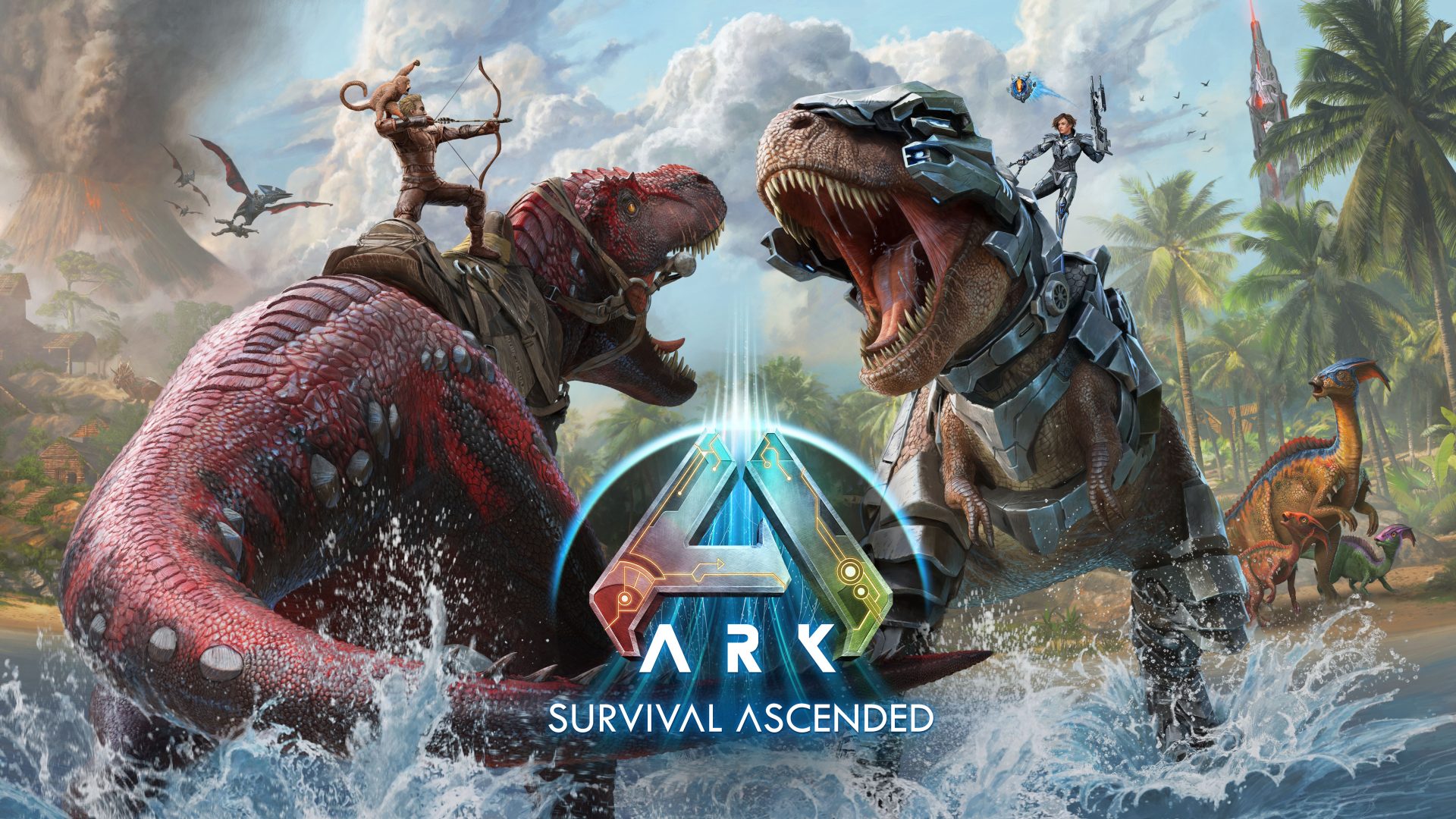
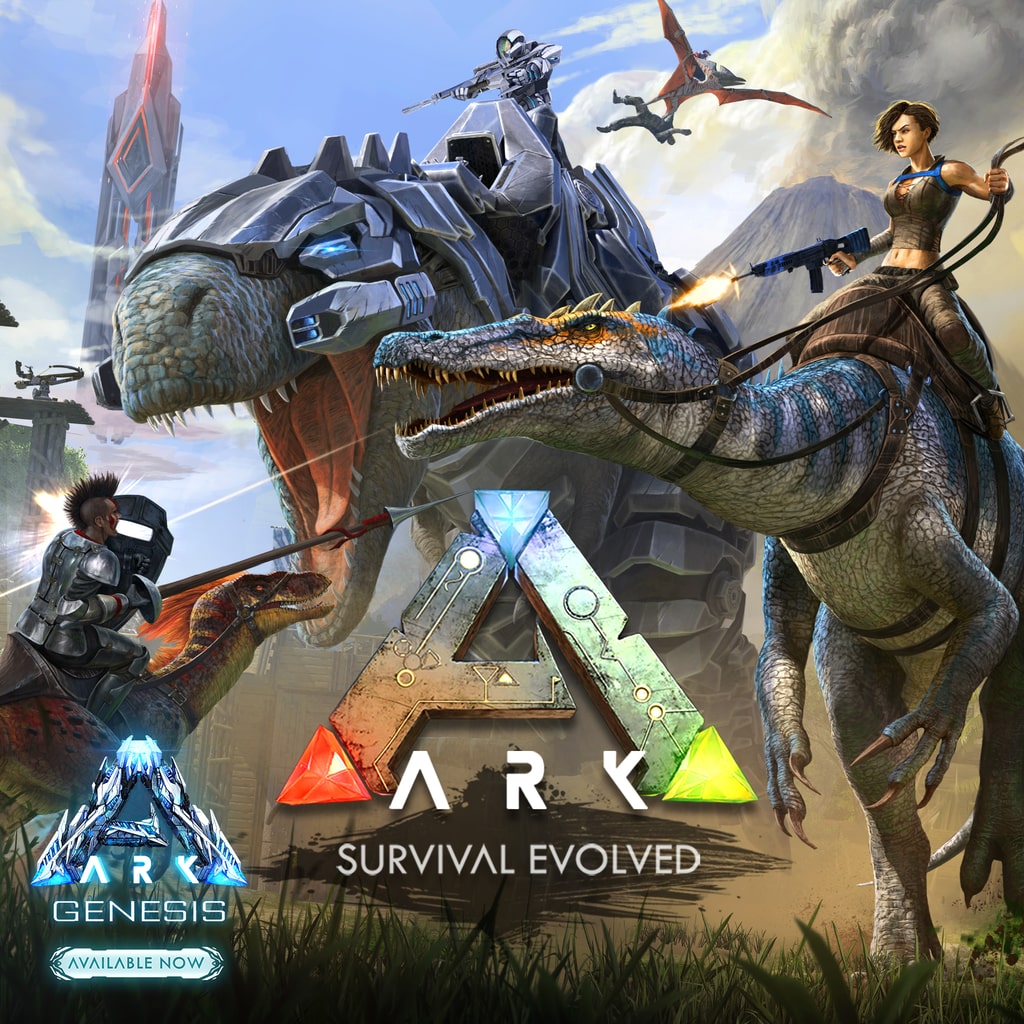
At its core, Ark is a masterclass in the evolution of the Unreal Engine. When Ark: Survival Evolved first launched in early access in 2015, it was one of the most hardware-intensive applications on the market. It utilized a heavily modified version of Unreal Engine 4 (UE4), pushing the limits of what was possible regarding draw distances, foliage density, and dynamic lighting.
The Leap to Unreal Engine 5 and Nanite Technology
With the release of Ark: Survival Ascended, the developers transitioned the entire software architecture to Unreal Engine 5 (UE5). This wasn’t merely a graphical update; it was a fundamental shift in how the game processes geometric data. By leveraging Nanite, a virtualized geometry system, Ark can render billions of polygons in real-time without the traditional bottlenecks of Level of Detail (LOD) transitions. This allows for hyper-realistic environments where every pebble, leaf, and scale on a creature is rendered with cinematic precision.
Lumen and Global Illumination
Another pillar of Ark’s technical prowess is the implementation of Lumen. In the original version of the game, lighting was often baked or relied on resource-heavy ray-tracing hacks. In the modern iteration of Ark, Lumen provides fully dynamic global illumination. This means that as the sun moves across the sky in the game’s 24-hour cycle, light bounces realistically off surfaces. If a player builds a wooden structure, the light filtering through the cracks reacts to the environment in a way that mimics real-world physics, creating an immersive atmosphere that was previously impossible in a sandbox survival game.
Chaos Physics and Fluid Simulation
Beyond visuals, the “Tech” of Ark extends to its physics engine. The integration of the Chaos physics engine allows for complex destruction sequences. When a massive dinosaur destroys a player-built base, the structure doesn’t simply disappear; it breaks apart into physically simulated fragments. Furthermore, the game utilizes advanced fluid simulations to handle water displacement and flow, ensuring that every interaction with the environment feels grounded in high-level computational logic.
Software Architecture and Gameplay Systems
Ark operates as a sophisticated sandbox software where multiple interlocking systems must communicate in real-time. Unlike linear games, Ark’s software must manage thousands of independent AI entities, player-constructed buildings, and environmental variables simultaneously.
Artificial Intelligence and Behavioral Logic
One of the most complex aspects of Ark is its creature AI. Each of the 100+ species in the game operates on a set of behavioral scripts that dictate hunger, aggression, and interaction with other species. The “Taming System”—a core gameplay mechanic—is essentially a complex data-management task where the software tracks the “affinity” and “torpor” levels of an entity. From a technical standpoint, managing the pathfinding of a three-story-tall Brontosaurus through a dense, procedurally decorated forest is a significant feat of computational navigation.
The Persistent World Data Structure
Ark is designed around the concept of a persistent world. Whether on a single-player local host or a massive multiplayer server, the game must constantly save and update the state of the world. Every structure placed by a player, every item in a storage box, and the exact coordinates of every creature must be logged in the save file. This creates a massive data footprint. The software architecture uses a “chunking” system, loading and unloading different parts of the map (zones) based on the player’s proximity to optimize RAM usage and CPU cycles.
Procedural Generation and Map Design
While Ark features several handcrafted “Canonical Maps” like The Island and Scorched Earth, it also includes tools for Procedurally Generated Maps (PGMs). This tech allows the software to generate a unique landmass based on a seed value, including randomized biomes, mountain ranges, and resource spawns. This highlights the game’s roots in sophisticated algorithmic design, offering infinite replayability through calculated randomness.
Networking, Server Infrastructure, and Multiplayer Ecosystem
The “Tech” of Ark is perhaps most visible in its networking requirements. As a massively multiplayer online survival game, Ark relies on a robust client-server model that can handle up to 70–100 players per instance, along with thousands of AI-controlled dinosaurs.
Dedicated vs. Non-Dedicated Hosting
Ark provides users with several ways to interface with its world. Players can run a “Non-Dedicated Session,” where their local machine acts as both the client and the server. However, this creates a “tether” effect due to CPU limitations. To solve this, the game supports Dedicated Servers. Many tech-savvy players host their own servers using tools like the Ark Server Manager, which requires knowledge of port forwarding, IP configuration, and server-side optimization. This DIY server culture has turned Ark into a hub for aspiring systems administrators.
Cross-Platform Integration and Middleware
In the modern era, Ark has become a leader in cross-platform technology. Through the use of specialized middleware, players on PC, PlayStation, and Xbox can interact within the same digital space. This requires the software to synchronize data across different hardware architectures, ensuring that a player on a high-end RTX 4090 PC sees the same world-state as a player on a ninth-generation console. This synchronization is managed through “netcode” that prioritizes “actor replication,” ensuring that the movement of creatures and players is smooth across all connected devices.
BattleEye and Digital Security
Because Ark features competitive “Player vs. Player” (PvP) environments, digital security is a high priority. The game integrates BattlEye, an anti-cheat software that scans for unauthorized memory injections and scripts. Maintaining the integrity of a persistent world where players invest thousands of hours is a constant technological battle against exploits and “meshing” (a technical glitch where players pass through the game’s 3D collisions).
The Power of User-Generated Content: Modding and the Dev Kit
Perhaps the most significant “Tech” aspect of Ark is its relationship with the modding community. Studio Wildcard took a proactive approach by releasing the Ark Dev Kit, a streamlined version of the Unreal Engine editor specifically for Ark.
The Steam Workshop and Overwolf Integration
For years, the Steam Workshop served as the primary repository for Ark mods, allowing developers to create everything from new creatures to entirely new game mechanics. With the transition to Ark: Survival Ascended, the developers partnered with Overwolf to bring “CurseForge” modding to consoles. This is a revolutionary piece of tech implementation, as it allows console players—historically a “closed” ecosystem—to download and install user-generated content directly within the game’s UI.
Scripting and Blueprinting
The Dev Kit allows users to access the game’s “Blueprints”—Unreal Engine’s visual scripting language. This allows people who aren’t professional coders to manipulate the game’s logic. By democratizing the technology used to build the game, Ark has fostered a massive ecosystem of “total conversions,” where the base software is transformed into something entirely different, such as a primitive-only survival sim or a high-tech sci-fi shooter.

Conclusion: Ark as a Technical Milestone
When asking “What is the game Ark?”, the answer lies in its identity as a boundary-pushing piece of software. It is a digital laboratory where the latest features of Unreal Engine 5—Nanite, Lumen, and Chaos—are put to the ultimate test in a live, persistent environment. It is a complex network of AI, physics, and data management that requires significant hardware power to realize its full potential.
From its intricate server-side infrastructure to its open-door policy regarding modding and development tools, Ark represents the cutting edge of the “Tech” niche in gaming. It is not just a game about surviving dinosaurs; it is a testament to how far real-time rendering and interactive software have come in the last decade, and it continues to serve as a benchmark for what is possible in the realm of digital sandbox environments. For the tech-enthusiast, Ark offers a fascinating look at the challenges and triumphs of modern software engineering at scale.
aViewFromTheCave is a participant in the Amazon Services LLC Associates Program, an affiliate advertising program designed to provide a means for sites to earn advertising fees by advertising and linking to Amazon.com. Amazon, the Amazon logo, AmazonSupply, and the AmazonSupply logo are trademarks of Amazon.com, Inc. or its affiliates. As an Amazon Associate we earn affiliate commissions from qualifying purchases.