
The term “singularity” carries a weight that spans across disciplines, from the deepest reaches of the cosmos to the cutting edge of Silicon Valley. At its core, a singularity represents a point where our current laws—be they physical or mathematical—cease to function. In the context of a black hole, it is the point of infinite density. In the context of technology, it is the hypothetical moment when artificial intelligence surpasses human intelligence, triggering uncontainable and irreversible growth.
Understanding the “singularity black hole” requires us to look through two lenses: the astronomical phenomenon that defies the laws of physics and the technological milestone that threatens to redefine humanity. By exploring these two concepts, we can see how technology is not only the tool we use to study the universe but also the very force that may create a new kind of “event horizon” for our civilization.
Understanding the Singularity in Physics and Computing
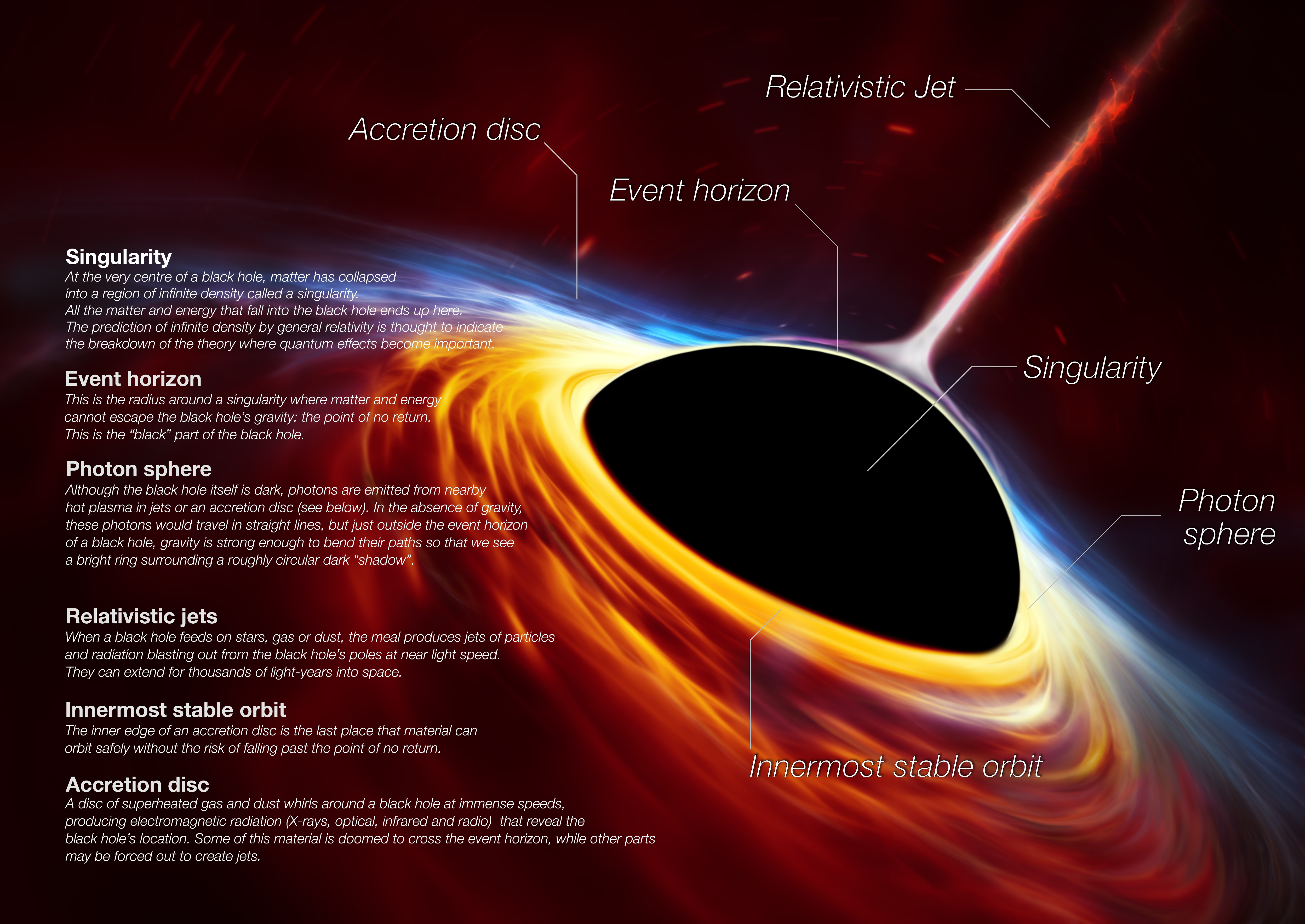
To understand where technology is headed, we must first look at the origin of the term in general relativity. In physics, a singularity is the heart of a black hole—a region where matter is crushed into an infinitely small space. In computing, the term has been borrowed to describe a shift in the technological landscape that is equally profound and potentially just as transformative.
The Gravitational Singularity: A Point of Infinite Density
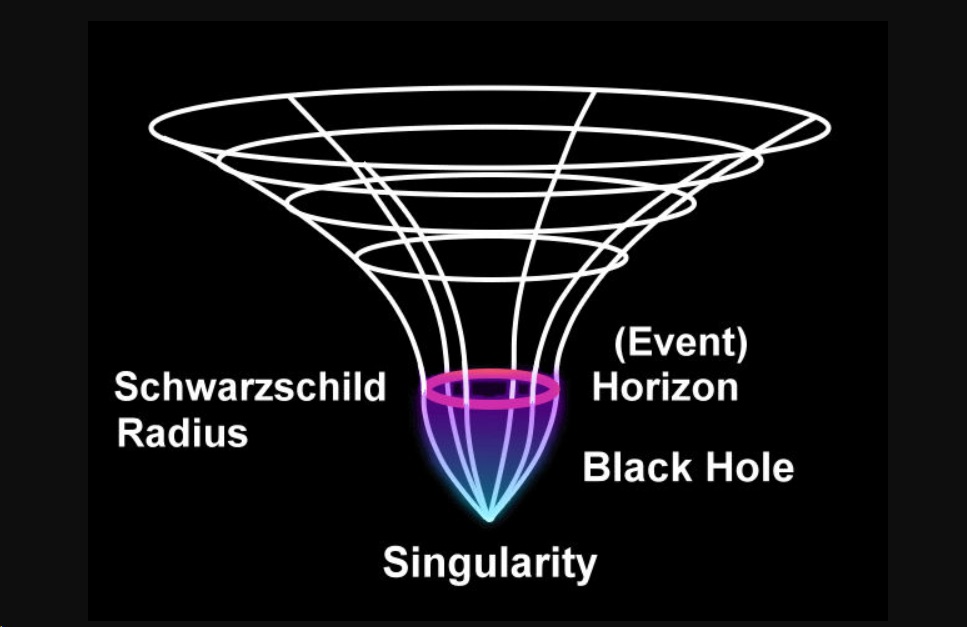
In astrophysics, a black hole singularity is a location in spacetime where the gravitational field becomes infinite. According to Albert Einstein’s general theory of relativity, when a massive star collapses, it can reach a state where its density becomes so great that spacetime curves infinitely. At this point, the “rules” of the universe as we know them break down. We cannot see into a singularity because it is shielded by the event horizon—the point of no return. This serves as a powerful metaphor for the “Technological Singularity,” where the future becomes unpredictable because the intelligence driving it operates beyond human comprehension.
The Technological Singularity: The Infinite Leap in AI
The technological singularity is a theoretical future point in time at which technological growth becomes uncontrollable and irreversible, resulting in unfathomable changes to human civilization. Most often associated with futurist Ray Kurzweil, this concept suggests that as AI begins to improve itself at an exponential rate, it will eventually reach a level of intelligence that far exceeds our own. Just as light cannot escape a black hole, human foresight cannot “see” past the technological singularity. We are currently building the “software engines” that are accelerating us toward this threshold, using machine learning and neural networks that are becoming increasingly autonomous.
Technology’s Role in Unveiling the Black Hole Mystery
While the singularity remains a mystery in physics, the technology we use to study it is advancing at a staggering pace. We are no longer limited to theoretical equations; we are now using global software networks and high-performance computing to “visualize” the unvisualizable.
High-Performance Computing and General Relativity
Studying a black hole requires immense computational power. Because we cannot observe a singularity directly, scientists rely on complex simulations. These simulations require supercomputers capable of performing trillions of calculations per second to model the behavior of light and matter under extreme gravity. Software frameworks designed for fluid dynamics and gravitational wave detection allow researchers to test Einstein’s theories in digital “laboratories.” These technological tools are the only way we can bridge the gap between abstract math and physical reality.
The Event Horizon Telescope: A Global Network of Data
Perhaps the greatest technological achievement in recent astrophysics was the capturing of the first image of a black hole’s shadow. This was not the result of a single telescope, but a global network known as the Event Horizon Telescope (EHT). The EHT utilized “Very Long Baseline Interferometry” (VLBI), a technique that synchronized radio telescopes across the planet to create a virtual telescope the size of Earth. The sheer volume of data—petabytes of information—was too large to be sent over the internet. Instead, it was physically transported on hard drives and processed using specialized algorithms to “stitch” the image together. This represents a landmark in data science and software engineering, proving that our technology is beginning to catch up to our cosmic curiosity.
AI and the Search for Quantum Gravity

The “Singularity” in a black hole is where general relativity meets quantum mechanics, and currently, the two don’t get along. Technology, specifically Artificial Intelligence, is now being used to find the “Theory of Everything” that could unite these fields.
Machine Learning in Deep Space Observation
Modern telescopes and space probes generate more data than human scientists can analyze in a lifetime. This is where AI tools come into play. Machine learning algorithms are now trained to identify the subtle signatures of black hole mergers in the data provided by gravitational wave observatories like LIGO. By automating the detection process, software can sift through “noise” in the data to find the signal of a singularity, accelerating our understanding of the universe’s most dense objects.
Simulating the Un-simulatable: Neural Networks and Black Hole Models
Traditional physics simulations are limited by the “grid” they are built on. However, new AI-driven models are using neural networks to predict how matter behaves near a singularity. These “physics-informed neural networks” (PINNs) can solve complex differential equations faster and more accurately than traditional methods. By using AI to model the extreme environments of black holes, we are essentially using one type of singularity (technological) to understand another (astrophysical).
The Impact of “Singularity” Thinking on Modern Tech Trends
The concept of the singularity has moved out of the realm of science fiction and into the boardroom. Tech giants and startups alike are now operating under the assumption that exponential growth is the new standard.
Exponential Growth and Moore’s Law
For decades, Moore’s Law—the observation that the number of transistors on a microchip doubles roughly every two years—has fueled the tech industry. This exponential curve is what leads toward a technological singularity. As we reach the physical limits of silicon-based chips, the industry is pivoting toward quantum computing and specialized AI hardware. This shift mirrors the “collapse” into a black hole; as we pack more processing power into smaller spaces, the potential for a breakthrough into a new era of “super-intelligence” increases.
Human-Machine Convergence
A major component of the technological singularity trend is the narrowing gap between biological and digital systems. Technologies like Brain-Computer Interfaces (BCIs), such as Neuralink, aim to increase the bandwidth of human communication with machines. The goal is to ensure that if a technological singularity occurs, humans are not left behind but are instead integrated into the new intelligence paradigm. This is the “software update” for the human brain, designed to keep us relevant in an era of infinite data.
Future Horizons: Will We Ever Reach the Singularity?
As we look toward the future, the “singularity” remains a horizon. Whether we are talking about the center of a black hole or the birth of an AGI (Artificial General Intelligence), we are approaching a boundary where our current tools may no longer suffice.
Ethical Implications of Unstoppable Tech
If we are indeed moving toward a technological singularity, the software and AI tools we develop today must be built with robust ethical frameworks. A black hole’s singularity is indifferent to its surroundings; a technological singularity may not be. The challenge for modern developers and tech leaders is to ensure that AI remains “aligned” with human values even as it surpasses human capabilities. Digital security and “AI Safety” are no longer niche topics; they are the primary defenses against a technological “event horizon” from which we cannot return.
The Final Frontier of Data Science
The study of the singularity—both in space and in silicon—is ultimately a quest for information. In a black hole, information is thought to be “lost” or encoded on the surface (the holographic principle). In technology, information is the currency of progress. As we continue to refine our software, expand our computational limits, and peer deeper into the cosmos, we are collecting the data necessary to understand the very nature of existence.
In conclusion, the “singularity black hole” is more than just a phrase; it is a crossroads of human knowledge. Whether we are using high-performance software to map the curvature of spacetime or developing AI that could one day think for itself, we are drawn to the singularity. It represents the ultimate tech challenge: to understand the infinite, to calculate the incalculable, and to prepare for a future that will look nothing like the past. As our technology continues to evolve at an exponential rate, we may find that the mysteries of the cosmic singularity and the technological one are more intertwined than we ever imagined.
aViewFromTheCave is a participant in the Amazon Services LLC Associates Program, an affiliate advertising program designed to provide a means for sites to earn advertising fees by advertising and linking to Amazon.com. Amazon, the Amazon logo, AmazonSupply, and the AmazonSupply logo are trademarks of Amazon.com, Inc. or its affiliates. As an Amazon Associate we earn affiliate commissions from qualifying purchases.