
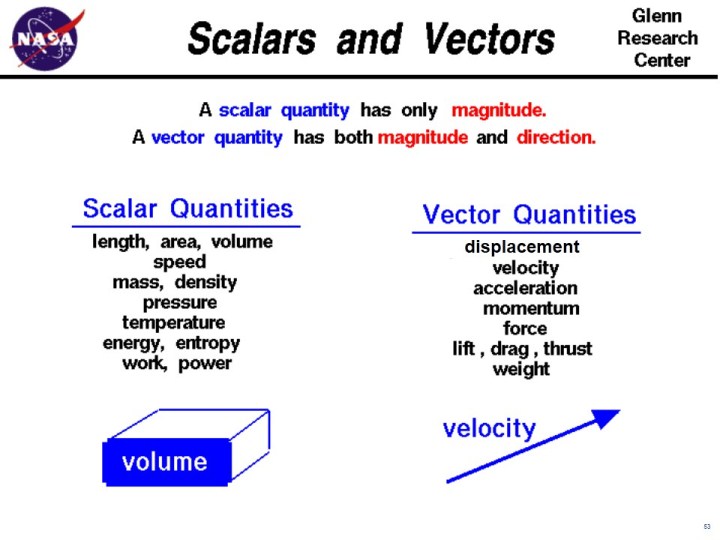
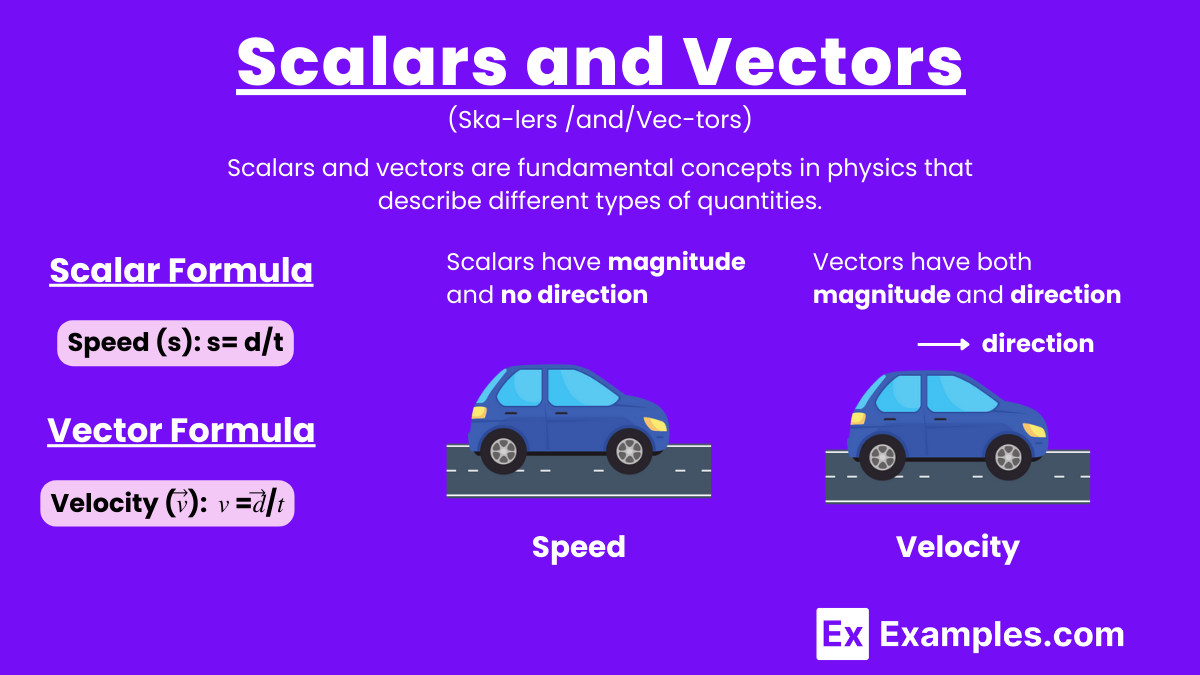
In the realms of physics and mathematics, the terms “scalar” and “vector” are foundational concepts used to describe physical quantities. However, as we transition into the digital age, these terms have been repurposed to form the very bedrock of computer science, software engineering, and artificial intelligence. Whether it is the way a processor executes instructions, how an AI model “understands” a sentence, or how a digital artist scales an image without losing quality, the distinction between scalar and vector data is critical.
To navigate the modern tech landscape—from high-performance computing to the latest generative AI tools—one must understand how these two concepts operate within a digital framework. This article explores the evolution of scalar and vector systems in technology, their roles in hardware architecture, and their indispensable value in the era of machine learning.
1. Scalar vs. Vector in Programming Logic and Data Structures
At the most basic level of software development, every piece of data is either a scalar or a vector. Understanding this distinction is the first step in writing efficient code and building scalable applications.
Scalar Data Types: The Building Blocks
In programming, a scalar is a single data item that holds one value at a time. Think of it as the simplest unit of information. Common scalar types include integers (1, 2, 42), floating-point numbers (3.14), booleans (true/false), and characters (‘A’). When a developer declares a variable like age = 25, they are working with scalar data.
Scalar operations are sequential. If you want to add five to ten different numbers, a scalar approach requires you to perform ten separate addition operations, one after the other. While this is intuitive for human logic, it can become a bottleneck when dealing with the massive datasets typical of modern tech environments.
Vectorized Data: Arrays and Multi-Dimensionality
A vector in tech is more complex. Rather than a single value, a vector is an ordered collection of scalars, often represented as an array or a list. In a computational context, a vector can represent a point in space, a color code (RGB), or a sequence of sensor readings.
The power of vectors lies in “vectorization”—the process of performing a single operation on an entire set of data simultaneously. Instead of looping through a list of ten numbers to add five to each (the scalar way), a vectorized operation treats the entire list as a single unit, applying the change across the board in one go. This efficiency is what allows modern software to process millions of data points in real-time.
2. Computing Power: Scalar CPUs and Vectorized GPUs
The distinction between scalar and vector is perhaps most visible in hardware architecture. The hardware that powers our smartphones, laptops, and cloud servers is categorized by how it handles these two types of data.
The Sequential Nature of Scalar Processing (CPUs)
The Central Processing Unit (CPU) is often described as the “brain” of the computer. Traditionally, CPUs were designed as scalar processors. They excel at “Single Instruction, Single Data” (SISD) operations. This means the CPU takes one instruction and applies it to one piece of data before moving on to the next.
This architecture is perfect for general-purpose computing—tasks like running an operating system, opening a web browser, or executing complex conditional logic (“if this, then that”). However, because scalar processing is linear, it faces limitations when tasks require massive parallelization, such as rendering 4K video or training a neural network.
Parallelism and SIMD: The Rise of Vector Processing (GPUs)
To overcome the limitations of scalar processing, computer engineers developed “Single Instruction, Multiple Data” (SIMD) architectures, which are the hallmark of vector processors. This is the primary design philosophy behind the Graphics Processing Unit (GPU).
A GPU contains thousands of small, specialized cores designed to handle vector operations. While a CPU might be a “scholar” capable of doing one complex task at a time, a GPU is an “army of workers” doing the same simple task simultaneously. When you play a high-end video game, the GPU is performing vector calculations to determine the position and lighting of millions of pixels at once. This shift from scalar to vector processing has been the single greatest driver of performance in the last decade of hardware evolution.

3. Vector Embeddings and the Infrastructure of AI
If hardware is the body of modern tech, Artificial Intelligence is its most sophisticated application. In the world of Large Language Models (LLMs) like GPT-4, the concepts of scalar and vector take on a new, multidimensional meaning through “vector embeddings.”
How Machines “Understand” Context Through Vectors
Computers do not understand words, images, or sounds; they only understand numbers. To enable a machine to understand language, we convert words into “vectors”—long lists of numbers that represent coordinates in a multi-dimensional space. This is known as a vector embedding.
In this high-dimensional space (often involving hundreds or thousands of dimensions), words with similar meanings are placed close to each other. For example, the vector for “King” and the vector for “Queen” would be mathematically near one another. By treating data as vectors, AI can perform mathematical operations on concepts. This is the technology that allows ChatGPT to predict the next word in a sentence or Midjourney to generate an image from a text prompt.
The Vital Role of Vector Databases
As AI usage explodes, a new category of technology has emerged: the Vector Database (such as Pinecone, Milvus, or Weaviate). Traditional databases (scalar/relational) are built to find exact matches—searching for a specific user ID or a precise price point.
However, AI requires “similarity searches.” If a user asks a chatbot a question, the system needs to find the most relevant information in its memory. A vector database stores information as vectors and uses complex algorithms to find the “nearest neighbors” to the user’s query. This is the infrastructure that powers recommendation engines (like Netflix or Spotify) and allows AI models to have “long-term memory” via Retrieval-Augmented Generation (RAG).
4. Beyond Math: Vectors in Digital Security and Networking
The application of scalar and vector logic extends even into the invisible layers of our digital lives, specifically in how we protect data and move it across the globe.
Attack Vectors in Cybersecurity
In the context of digital security, the term “vector” is used to describe the path or means by which a hacker gains access to a computer or network. An “attack vector” is not just a point of entry; it is a directional force aimed at a vulnerability.
Common attack vectors include phishing, unpatched software, or compromised credentials. Understanding these vectors allows security professionals to build multi-layered defenses. While a scalar defense might focus on protecting a single file, a vector-based defense looks at the entire flow of data across a network to identify anomalies and potential breaches before they occur.
Distance Vector Routing Protocols
In networking, routers must decide the most efficient path for data to travel from point A to point B. One of the primary methods for doing this is through “Distance Vector Routing.”
In this system, each router maintains a table (a vector) representing the known distance to various destinations. It shares this vector with its neighbors, allowing the network to dynamically update the best path for traffic. This ensures that even if one server goes down, the “vector” of the data can be rerouted in real-time, maintaining the stability of the global internet.
Conclusion: The Vectorized Future
The transition from scalar-centric thinking to vector-centric processing represents one of the most significant shifts in the history of technology. While scalar operations provided the foundation for early computing and basic logic, they are no longer sufficient to meet the demands of a data-driven world.
Today, the most exciting advancements in tech—from real-time ray tracing in gaming to the cognitive capabilities of AI—are powered by vectorization. By processing data in bulk and mapping relationships in high-dimensional space, we have moved beyond simple calculation into the realm of digital intelligence. As we look toward the future, the ability to store, process, and analyze vector data will remain the ultimate competitive advantage in the global tech landscape. Understanding “what is scalar and vector” is no longer just a physics requirement; it is a prerequisite for understanding the digital world.
aViewFromTheCave is a participant in the Amazon Services LLC Associates Program, an affiliate advertising program designed to provide a means for sites to earn advertising fees by advertising and linking to Amazon.com. Amazon, the Amazon logo, AmazonSupply, and the AmazonSupply logo are trademarks of Amazon.com, Inc. or its affiliates. As an Amazon Associate we earn affiliate commissions from qualifying purchases.