
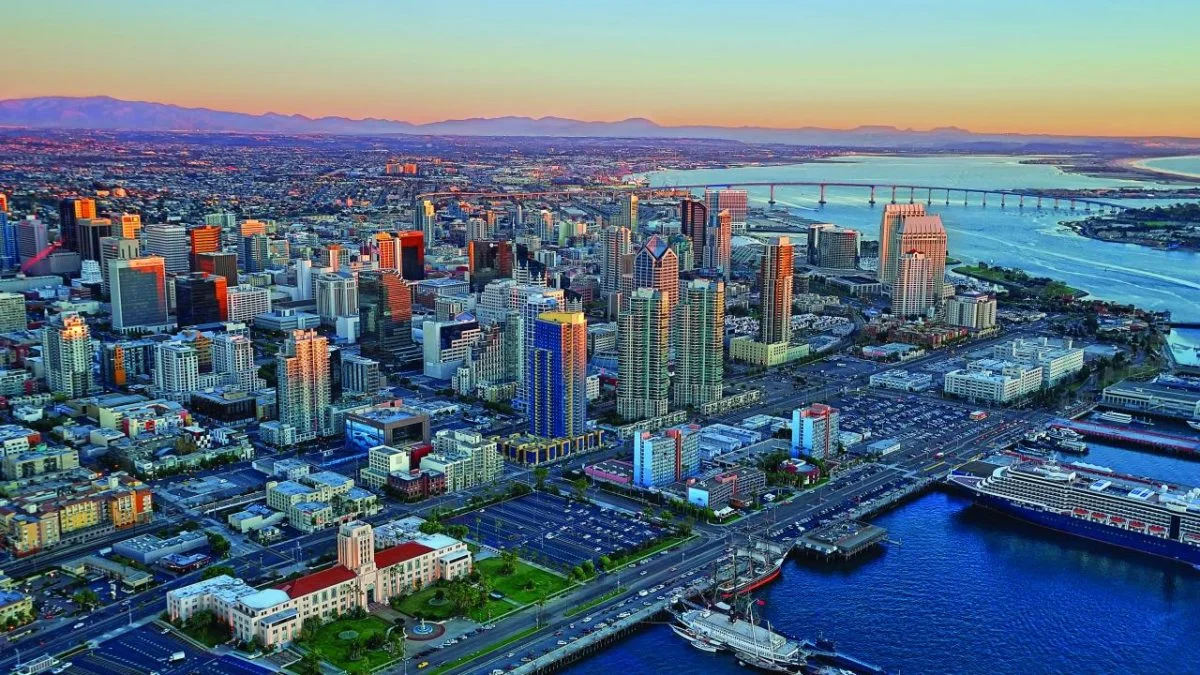
When most people hear the words “San Diego,” their minds immediately drift to images of sun-drenched beaches, world-class zoos, and a laid-back coastal lifestyle. However, beneath the surface of its “America’s Finest City” moniker lies a sophisticated powerhouse of global industry. If you look at the city through a professional lens, San Diego is not just a vacation destination; it is one of the most significant technological hubs on the planet.
From the pioneering days of wireless communication to the cutting edge of genomic sequencing and artificial intelligence, San Diego has cultivated a unique ecosystem where academic research meets aggressive commercialization. This article explores the technological pillars that define San Diego’s fame in the 21st century, detailing how this Southern California gem became a global leader in high-tech innovation.
The Wireless Revolution: Qualcomm and the Global Telecommunications Standard
San Diego is arguably the most important city in the world for mobile connectivity. While Silicon Valley may own the software that runs on our phones, San Diego owns the technology that allows those phones to talk to each other.
The Legacy of CDMA and the Rise of 5G
The story of San Diego tech begins largely with Qualcomm. Founded in 1985, Qualcomm pioneered Code Division Multiple Access (CDMA) technology, which eventually became the backbone of modern mobile communications. Today, San Diego remains the epicenter of the 5G revolution. The city is home to thousands of engineers working on the next generation of wireless standards, ensuring that everything from autonomous vehicles to smart cities can operate with low latency and high reliability.
A Hub for Semiconductor Design and Engineering
Because of Qualcomm’s presence, a massive cluster of semiconductor and hardware talent has settled in the region. San Diego is famous for being a “hardware-first” city. While other tech hubs focus on the latest social media apps, San Diego engineers are building the Snapdragon processors and modem chips that power the world’s most popular smartphones. This concentration of expertise has attracted other giants like Apple, Google, and Amazon to open significant engineering offices in the area, specifically to tap into the local talent pool specializing in radio frequency (RF) engineering and system-on-a-chip (SoC) design.
The Growth of IoT and Connected Infrastructure
Beyond phones, San Diego is leveraging its wireless heritage to lead the Internet of Things (IoT) movement. Local firms are developing the sensors and connectivity modules that allow industrial machinery, medical devices, and home appliances to transmit data in real-time. This has transformed San Diego into a living laboratory for “Smart City” initiatives, utilizing data analytics to manage traffic flow, lighting, and energy consumption more efficiently than almost any other major American city.
The Biotech Mecca: Leading the Global Charge in Genomics and Life Sciences
If wireless tech is the city’s left brain, biotechnology is its right. San Diego is consistently ranked as one of the top three biotech clusters in the world, alongside Boston and the San Francisco Bay Area. It is famous for transforming biological data into life-saving software and hardware.
The Genomic Sequencing Capital: The Illumina Influence
San Diego is the undisputed world capital of genomic sequencing, primarily thanks to Illumina. Headquartered in the Sorrento Valley/Torrey Pines area, Illumina’s technology has revolutionized medicine by making DNA sequencing affordable and accessible. The sheer density of genomic data processed in San Diego is staggering. This has birthed a secondary industry of bioinformatics—a field that sits at the intersection of biology and big data—where software developers create complex algorithms to interpret the three billion base pairs of the human genome.
The Synergy of the Torrey Pines Mesa
One of the reasons San Diego is a tech standout is the physical proximity of its research institutions. The Torrey Pines Mesa is a geographical miracle of innovation, housing the University of California, San Diego (UCSD), the Salk Institute, Scripps Research, and the Sanford Burnham Prebys Medical Discovery Institute. This proximity allows for a “lab-to-market” pipeline that is virtually unmatched. When a breakthrough in molecular engineering happens at UCSD, there are often venture capitalists and startup incubators just a few blocks away ready to turn that discovery into a marketable tech platform.
Digital Health and AI in Diagnostics
In recent years, San Diego has become a leader in the “Digital Health” space. This involves using AI tools and wearable tech to monitor patient health remotely. Companies like ResMed and Dexcom—both San Diego giants—are leaders in using cloud-based software to manage chronic conditions like sleep apnea and diabetes. By integrating AI with medical hardware, San Diego is moving healthcare away from reactive treatment and toward proactive, data-driven management.
Defense and Aerospace: The High-Tech Frontier of National Security

San Diego’s identity is inextricably linked to the military, but in the modern era, that relationship is defined by advanced technology rather than just troop presence. The city is a primary hub for defense tech, specifically in the realms of unmanned systems and cybersecurity.
Unmanned Aerial Systems (UAS) and Robotics
San Diego is the birthplace of the modern drone. General Atomics, headquartered in Poway, developed the Predator and Reaper drones, which changed the face of modern intelligence and surveillance. This has fostered a massive local ecosystem for robotics and autonomous systems. Today, this expertise is pivoting toward civilian applications, including autonomous delivery drones and underwater robotics (Blue Tech) used for oceanographic research and infrastructure inspection.
Cybersecurity and Naval Information Warfare
As the home of the Navy’s Space and Naval Warfare Systems Command (now NAVWAR), San Diego is a critical node in the nation’s cybersecurity infrastructure. This has led to a booming private sector dedicated to digital security. Hundreds of local firms specialize in protecting critical infrastructure from cyberattacks, developing encrypted communication tools, and utilizing AI for threat detection. For tech professionals, San Diego offers a unique niche where software engineering meets national defense.
Aerospace Innovation and Satellite Tech
While the “Space Coast” might be in Florida, much of the intelligence behind satellite communication and aerospace engineering happens in San Diego. The city’s history with companies like Convair has evolved into a modern sector focused on small-sat technology and space-based data analytics. San Diego tech firms are currently building the components for the next generation of low-earth-orbit (LEO) satellites, which aim to provide global internet coverage to the most remote corners of the planet.
Silicon Beach 2.0: The Rise of Software, AI, and the Startup Ecosystem
For decades, San Diego was seen as a hardware and biotech town. However, a significant shift has occurred over the last decade. The city is now famous for a burgeoning SaaS (Software as a Service) and AI startup scene that rivals traditional tech hubs, earning it the nickname “Silicon Beach.”
The SaaS Explosion and Enterprise Software
San Diego has birthed several “unicorns” and successful software enterprises, such as ServiceNow (founded in San Diego) and Teradata. The local software scene is characterized by a focus on enterprise solutions—tools that help large companies manage workflows, data, and customer relationships. This focus on “B2B” (business-to-business) software provides a stable and lucrative foundation for the local tech economy, attracting software engineers who prefer the city’s high quality of life over the hyper-competitive atmosphere of Silicon Valley.
AI and Machine Learning Research
Thanks to the foundational research coming out of the Halıcıoğlu Data Science Institute at UCSD, San Diego has become a magnet for AI research. Local startups are applying machine learning to everything from climate modeling to financial fraud detection. The city is particularly famous for “Applied AI”—taking the theoretical models developed in academia and applying them to solve specific industrial problems in the biotech, defense, and wireless sectors mentioned previously.
A Thriving Incubator Culture
The infrastructure for startups in San Diego has matured significantly. Organizations like EvoNexus and Connect provide the mentorship and venture capital pipelines necessary for tech entrepreneurs to thrive. This ecosystem has made San Diego famous for “cross-pollination”—where a wireless engineer might team up with a biologist to create a new wearable medical device, or a defense software developer might pivot to create a cybersecurity firm for the private sector.
The Future of Innovation: Blue Tech and Sustainable Solutions
Finally, San Diego is becoming famous for its leadership in “Blue Tech”—the intersection of technology and oceanography. As a coastal city with a deep history in marine science (led by the Scripps Institution of Oceanography), San Diego is the global leader in developing technology to protect and utilize the ocean.
Marine Robotics and Underwater Sensors
The same expertise that built San Diego’s aerospace industry is now being applied subsea. Local companies are developing autonomous underwater vehicles (AUVs) that can map the ocean floor in high definition, monitor water quality, and track the effects of climate change. These tools are essential for the future of global shipping, offshore wind energy, and environmental conservation.
Cleantech and Energy Storage
San Diego’s commitment to sustainability has driven a surge in cleantech innovation. The city is a leader in smart grid technology and high-capacity battery storage. As the world transitions to renewable energy, San Diego’s tech sector is providing the software and hardware necessary to manage decentralized energy grids, ensuring that solar and wind power can be stored and distributed efficiently.
In conclusion, while San Diego will always be famous for its sunshine and surf, its true global impact lies in its intellectual capital. It is a city that builds the chips that connect us, sequences the DNA that heals us, and develops the AI that secures us. For any tech professional or enthusiast, San Diego represents the perfect synthesis of lifestyle and cutting-edge innovation—a city that is truly building the future.
aViewFromTheCave is a participant in the Amazon Services LLC Associates Program, an affiliate advertising program designed to provide a means for sites to earn advertising fees by advertising and linking to Amazon.com. Amazon, the Amazon logo, AmazonSupply, and the AmazonSupply logo are trademarks of Amazon.com, Inc. or its affiliates. As an Amazon Associate we earn affiliate commissions from qualifying purchases.