
The intersection of medicine and technology has transformed the way we perceive human health, turning biological markers into actionable data points. Among these metrics, the Red Cell Distribution Width (RDW) test stands as a prime example of how traditional pathology has been revolutionized by high-throughput hardware and sophisticated software. While once a footnote in a standard Complete Blood Count (CBC), the RDW test is now at the forefront of digital health-tech, serving as a critical variable in predictive algorithms, longevity tech, and AI-driven diagnostic suites.
Understanding the RDW Test in the Era of Digital Diagnostics
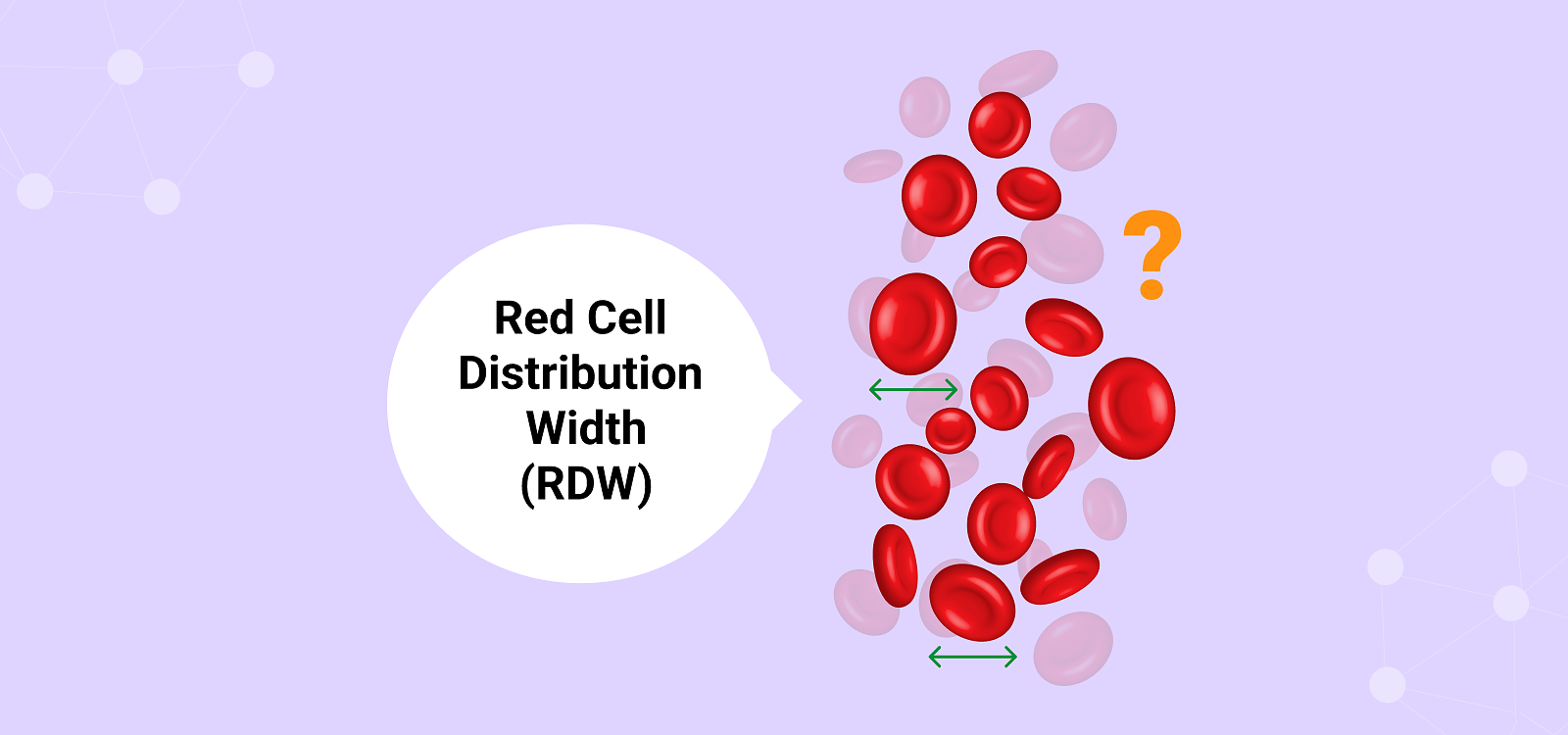
To understand the technological significance of the RDW test, one must first understand what it represents as a data metric. RDW measures the variation in the size and volume of red blood cells (erythrocytes). In a perfectly optimized system, red blood cells should be relatively uniform. A high RDW indicates “anisocytosis,” or a significant variation in cell size, which the tech industry increasingly views as “biological noise” or a systemic signal of inefficiency.

What is RDW? The Technical Metric
Technically, the RDW is a calculation of the coefficient of variation (CV) of the erythrocyte volume distribution. In simpler terms, it is a statistical measure of heterogeneity. From a data science perspective, RDW is a “dispersion” metric. High dispersion in cell size often correlates with underlying technical or biological malfunctions, ranging from nutrient deficiencies to chronic inflammation. By digitizing this dispersion, clinicians and health-tech platforms can create a baseline for a patient’s “biological stability.”
The Transition from Manual Counting to Automated Hematology Analyzers
The RDW test would not be possible in its current form without the evolution of flow cytometry and automated hematology analyzers. In the pre-digital era, technicians manually examined blood smears under microscopes—a process prone to human error and low granularity. Today, high-tech analyzers use the Coulter Principle (impedance) or laser-based light scattering to count and size thousands of cells per second.
These devices function as high-precision sensors, converting the physical properties of cells into digital signals. The RDW is calculated automatically by the analyzer’s internal software using complex mathematical formulas, ensuring a level of precision that was previously unattainable. This transition from manual observation to automated data capture marks the birth of RDW as a critical “biomarker of interest” in the tech world.
The Role of Artificial Intelligence and Machine Learning in Interpreting RDW Data
As we move deeper into the age of Big Data, the RDW test is being extracted from the vacuum of simple blood reports and fed into large-scale machine learning (ML) models. Tech companies are no longer looking at RDW as a standalone number; they are looking at it as a predictive feature in multi-dimensional health models.
Predictive Analytics: Predicting Mortality and Chronic Disease
One of the most fascinating developments in health-tech is the use of RDW in predictive analytics. Recent studies integrated into AI health platforms have shown that RDW is a robust predictor of all-cause mortality. Silicon Valley startups focused on “Longevity Tech” use ML algorithms to analyze longitudinal RDW data.
Because a rising RDW often precedes the clinical onset of cardiovascular disease, heart failure, and even cognitive decline, software engineers are developing “early warning systems.” These platforms ingest CBC data, normalize the RDW against other variables like C-reactive protein (CRP), and provide a “Biological Age” score. This shift turns a simple blood metric into a key-value pair in the quest for life extension technology.
Precision Medicine and Algorithm-Driven Diagnostics
In the realm of precision medicine, software is being developed to differentiate between types of anemia using RDW as a primary logic gate. For instance, an algorithm can quickly distinguish between iron deficiency anemia (typically high RDW) and thalassemia (typically normal RDW).
By automating this differential diagnosis, AI-driven diagnostic tools reduce the cognitive load on healthcare providers and minimize diagnostic lag. These tools leverage “Decision Support Systems” (DSS) that integrate with Electronic Health Records (EHRs), flagging abnormal RDW trends before a human doctor might even notice the deviation.
Biohacking and the Rise of Direct-to-Consumer Health-Tech Platforms

The democratization of health data has moved the RDW test from the hospital lab to the consumer’s smartphone. A new wave of “Biohacking” apps and Direct-to-Consumer (DTC) lab services has emerged, allowing tech-savvy individuals to track their blood metrics with the same granularity they track their website traffic or stock portfolios.
Integrating Blood Metrics into Wearable Ecosystems
While smartwatches currently focus on heart rate and blood oxygen (SpO2), the next frontier of the wearable tech stack is “integrated bio-monitoring.” Startups are currently working on ways to sync lab-derived RDW data with wearable data.
Imagine a dashboard where your Oura Ring or Apple Watch data is overlaid with your latest RDW results. If your wearable detects a decrease in recovery sleep and your RDW software flags an upward trend in cell size variation, the integrated ecosystem can suggest specific nutritional or lifestyle interventions. This is the “Full-Stack Health” approach, where the RDW test serves as a foundational data layer for a personalized digital twin.
The Democratization of Health Data
Platforms like InsideTracker, Levels, and Forward Health represent a shift toward “Consumerized Diagnostics.” These companies provide sleek, user-friendly interfaces that translate the RDW—a cryptic medical term—into a digital progress bar.
By applying UX (User Experience) design principles to blood test results, these platforms make health optimization feel like a game or a software update. The technical challenge here lies in “Data Translation”—taking the raw output from a LabCorp or Quest Diagnostics server and parsing it into a format that is not only readable but also actionable for a non-medical user.
Cybersecurity and Data Privacy in Laboratory Information Systems (LIS)
As RDW and other blood metrics become increasingly digitized and integrated into cloud-based AI platforms, the focus shifts to the infrastructure supporting this data. The Laboratory Information System (LIS) is the backbone of modern diagnostics, and its security is paramount.
Protecting Sensitive Bio-Data
The digitization of the RDW test introduces significant cybersecurity risks. Medical data is highly valuable on the dark web, and blood metrics can be used to infer a wide range of sensitive information about an individual’s health status, predisposition to disease, and even lifestyle.
Modern LIS providers are adopting “Zero Trust” architectures and advanced encryption standards (AES-256) to protect this data. The tech challenge is to ensure that while the data is accessible for AI analysis and patient viewing, it remains siloed from unauthorized entities. The RDW value, though just a number, is a piece of a larger “Biometric Identity” that requires rigorous digital safeguarding.
The Blockchain Future for Diagnostic Records
Looking forward, there is a growing movement to move diagnostic data, including RDW histories, onto decentralized ledgers (Blockchain). This would allow patients to own their “Biological Data Assets.”
By using smart contracts, a patient could grant temporary access to their RDW data to an AI diagnostic tool or a research study in exchange for tokens or services, without the data ever being stored on a centralized, vulnerable server. This represents the ultimate convergence of Fintech and Medtech—treating one’s RDW and blood chemistry as a digital asset that can be managed, secured, and utilized within a Web3 framework.
Conclusion: The RDW Test as a Digital Landmark
The RDW test has evolved from a simple measurement of red blood cell size into a sophisticated digital marker that sits at the center of the modern health-tech revolution. Through the lens of automated hardware, predictive AI, consumer-facing apps, and high-level data security, we see that RDW is more than just a medical result—it is a vital data point in the digitization of the human body.
As we continue to refine the algorithms that interpret these biological signals, the RDW test will play an increasingly prominent role in the transition from reactive medicine to proactive, tech-driven wellness. In the future, “knowing your numbers” will not just be a medical recommendation; it will be a standard operating procedure for anyone navigating the digital landscape of 21st-century longevity.
aViewFromTheCave is a participant in the Amazon Services LLC Associates Program, an affiliate advertising program designed to provide a means for sites to earn advertising fees by advertising and linking to Amazon.com. Amazon, the Amazon logo, AmazonSupply, and the AmazonSupply logo are trademarks of Amazon.com, Inc. or its affiliates. As an Amazon Associate we earn affiliate commissions from qualifying purchases.