
In the realm of linguistics, the progressive tense—often referred to as the continuous tense—describes ongoing actions that are happening at a specific point in time. In English, we recognize this through the “is doing” or “was working” construction. While this may seem like a basic pillar of primary school grammar, it has become one of the most significant hurdles and areas of innovation within the Technology sector, specifically in Natural Language Processing (NLP) and Artificial Intelligence (AI).
As we transition from static search engines to generative AI and real-time virtual assistants, the machine’s ability to decode the “progressive” nature of human activity is what separates a clunky bot from a sophisticated digital companion. This article explores the technical evolution of the progressive tense through the lens of machine learning, temporal logic, and the future of human-computer interaction.
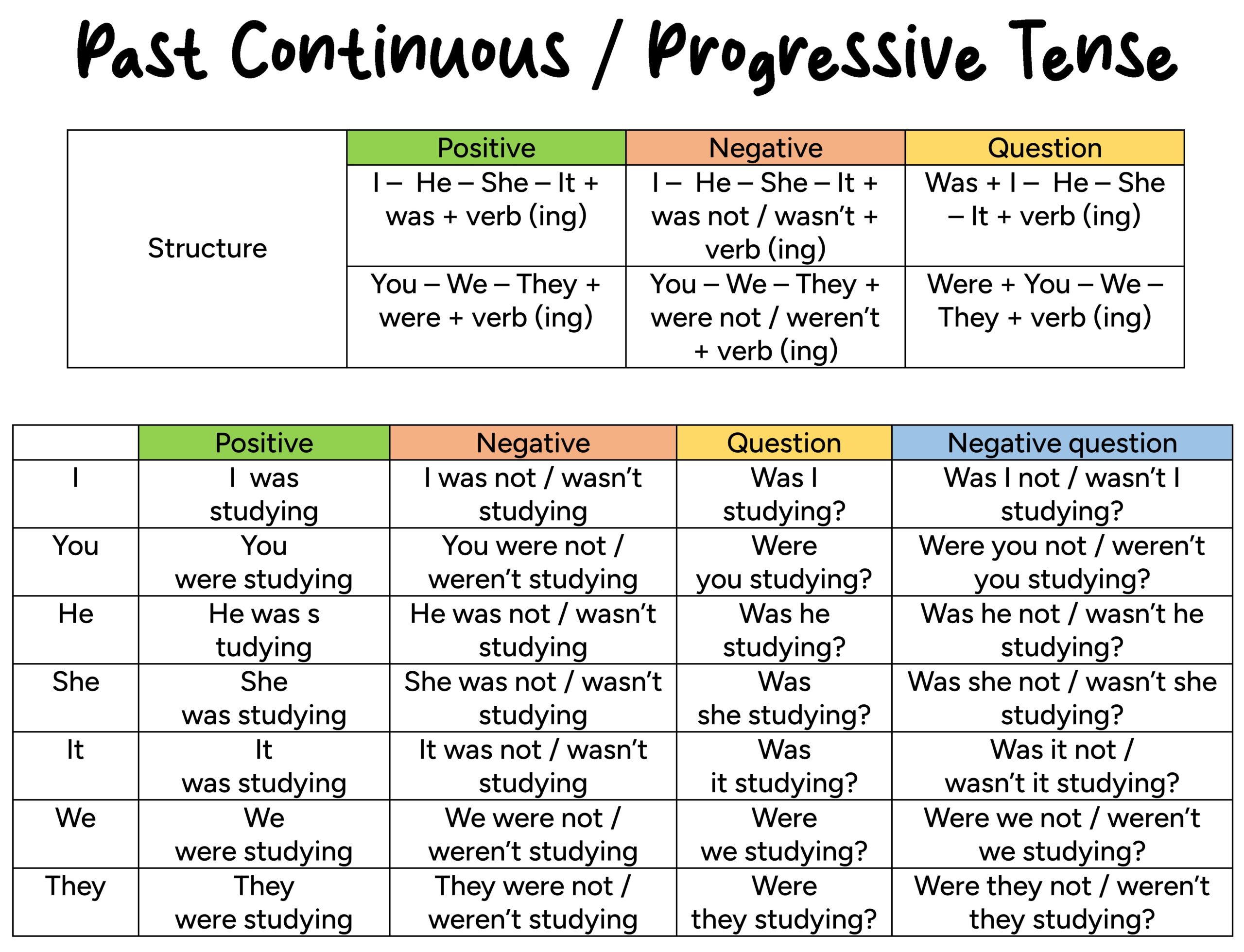
The Role of Progressive Tense in Natural Language Processing (NLP)
Natural Language Processing is the branch of AI that helps computers understand, interpret, and generate human language. At its core, NLP must distinguish between a completed action and one that is currently unfolding. For a machine, “I run” (simple present) and “I am running” (present progressive) represent two entirely different data states.
Temporal Logic and Machine Understanding
In software development, temporal logic is used to represent and reason about propositions qualified in terms of time. The progressive tense introduces a layer of complexity because it implies a state of “flux.” When an AI processes a sentence in the progressive tense, it cannot simply log a data point; it must create a temporal window.
For example, in automated customer support tech, if a user types “I am trying to reset my password,” the AI must recognize that the action is currently in progress and has not yet reached a terminal state. If the AI confuses this with the simple past (“I tried to reset my password”), it may offer redundant or frustrating solutions. Modern NLP models use “Temporal Tagging” to categorize these verbs, ensuring the software understands the “now” versus the “then.”
Contextual Awareness in Modern Chatbots
The leap from early rule-based systems to modern Large Language Models (LLMs) like GPT-4 involves a deeper grasp of “aspect.” In linguistics, aspect describes how an action, event, or state extends over time. The progressive tense is a “continuous aspect.”
Tech companies are currently refining chatbot architectures to better handle these nuances. If a project management AI hears a user say, “We are developing a new app,” it uses context to understand that this is a long-term progressive state. It then adjusts its internal database to categorize the “App Development” task as “In Progress” rather than “Completed.” This seamless transition from linguistic tense to software state-management is a cornerstone of current AI research.
Progressive Tense and the Evolution of Large Language Models (LLMs)
The development of the Transformer architecture revolutionized how tech tools handle the progressive tense. Unlike older models that processed words one by one, Transformers look at the entire sentence at once, using “attention mechanisms” to weigh the importance of different words.
From Static Responses to Real-Time Context
In the early days of AI, machines often struggled with the “continuous” nature of the progressive tense because they lacked a sense of duration. Today’s LLMs use “positional encoding” to understand the order of words and “attention heads” to link the auxiliary verb (is/are) with the present participle (-ing).
When a developer prompts an AI to “Write a story about a man who is falling,” the AI understands it must maintain a state of suspension. If the AI switched to the simple present (“The man falls”), the narrative tension would break. The technology’s ability to maintain the “progressive” state across paragraphs is a testament to the sophisticated memory management in modern neural networks.
How Transformers Handle Continuous Action
Transformers excel at identifying the “temporal boundaries” of a sentence. In the tech world, this is crucial for applications like automated legal tech or medical AI. If a medical AI reads a doctor’s note saying, “The patient’s heart rate is stabilizing,” it recognizes a progressive improvement.
Technically, the model achieves this through “embeddings”—mathematical vectors that represent words. The embedding for “stabilizing” is physically located in a different vector space than “stabilized.” By calculating the “distance” between these vectors, the software determines whether an action is ongoing or finished, allowing for more accurate data analysis in mission-critical industries.

The Impact on Voice AI and Real-Time Translation
The most practical application of the progressive tense in the tech industry today is found in Voice AI—think Siri, Alexa, or Google Assistant—and real-time translation software like DeepL or Google Translate.
Syncing Speech Recognition with Continuous Actions
Voice-to-text technology faces the unique challenge of “phoneme recognition.” When a user speaks in the progressive tense, the “-ing” suffix is often swallowed or shortened in casual speech (e.g., “runnin'” vs. “running”).
Advanced speech-recognition algorithms use “Predictive Modeling” to fill in these gaps. The software calculates the probability of the next sound. If the model detects the word “is,” it increases the weight of the “progressive” possibility, expecting a verb ending in “-ing.” This predictive tech allows for smoother, real-time transcription that feels intuitive to the user.
Future-Proofing Virtual Assistants
The next frontier for tech giants is “proactive AI.” For an assistant to be truly proactive, it must understand the progressive tense as it relates to user intent. If you tell your smart home, “I am cooking dinner,” a sophisticated system recognizes this as an ongoing state that requires a specific environment (e.g., kitchen lights on, music playing, timer ready).
This is no longer just about grammar; it is about “State Logic.” The progressive tense acts as a trigger for the software to enter a “Mode.” Moving forward, we can expect tech ecosystems to rely heavily on these linguistic cues to anticipate our needs before we explicitly state them.
Coding “Progressive” Logic: From Linguistics to Software Architecture
Beyond AI and NLP, the concept of “progressive” has influenced how we build software and manage data streams. In software engineering, “State Management” is the digital equivalent of tense.
Event-Driven Programming and State Management
In traditional programming, code often executes in a “simple” tense: If X, then Y. However, modern web applications—especially those using React or Angular—function in a “progressive” state.
Developers use “Hooks” and “Observables” to monitor actions that are currently happening. For instance, when you see “User is typing…” in a messaging app, the software is essentially executing a “Progressive Tense” logic. It detects a continuous stream of events and updates the UI (User Interface) to reflect that the action is not yet complete. This bridge between linguistic “aspect” and digital “state” is fundamental to the modern user experience (UX).
Progressive Enhancement and Continuous Delivery
The tech industry even uses the term “Progressive” in its infrastructure. “Progressive Enhancement” is a design strategy that provides a baseline of content and then “progressively” adds layers of complexity for more capable browsers.
Similarly, “Continuous Integration/Continuous Deployment” (CI/CD) pipelines in DevOps mirror the progressive tense. The software is never “done” in the traditional sense; it is always “being updated,” “being tested,” and “being deployed.” This shift from a static product (simple past) to a continuous service (progressive tense) defines the current SaaS (Software as a Service) economy.

The Future of AI: Fluidity in Human Time Structures
As we look toward the future of technology, the distinction between tenses will become even more vital. We are moving toward “General Intelligence,” where machines must not only understand what we say but also understand the flow of our lives.
The progressive tense is the linguistic representation of “flow.” For AI to become a seamless part of our reality, it must master the nuances of ongoing action. This involves better “Context Windows,” where the AI remembers that you were “working on a report” three hours ago and can ask if you are “still working” on it now.
In conclusion, “what is progressive tense” is no longer just a question for a linguist. For the software engineer, the AI researcher, and the tech innovator, it is a blueprint for building more responsive, intelligent, and “human” systems. By mastering the art of the continuous, technology is finally learning to live in the “now” right alongside us. Through the integration of temporal logic, transformer-based LLMs, and state-driven architecture, we are moving toward a world where our gadgets don’t just process our commands—they understand our journey.
aViewFromTheCave is a participant in the Amazon Services LLC Associates Program, an affiliate advertising program designed to provide a means for sites to earn advertising fees by advertising and linking to Amazon.com. Amazon, the Amazon logo, AmazonSupply, and the AmazonSupply logo are trademarks of Amazon.com, Inc. or its affiliates. As an Amazon Associate we earn affiliate commissions from qualifying purchases.