
The fundamental principles governing heredity have fascinated scientists for centuries, laying the groundwork for our understanding of life itself. At the heart of this inquiry lies the concept of monohybrid crossing, a cornerstone of Mendelian genetics. While seemingly a basic biological concept, its exploration and application in the 21st century are deeply intertwined with cutting-edge technology. From sophisticated simulation software to advanced bioinformatics tools and artificial intelligence, technology has not only made this foundational genetic principle more accessible but has also expanded its practical implications across various scientific and commercial domains. This article delves into what monohybrid crossing entails, specifically through the lens of how technological advancements enhance our comprehension, prediction, and manipulation of genetic inheritance.
The Foundational Science: Monohybrid Crossing in Theory
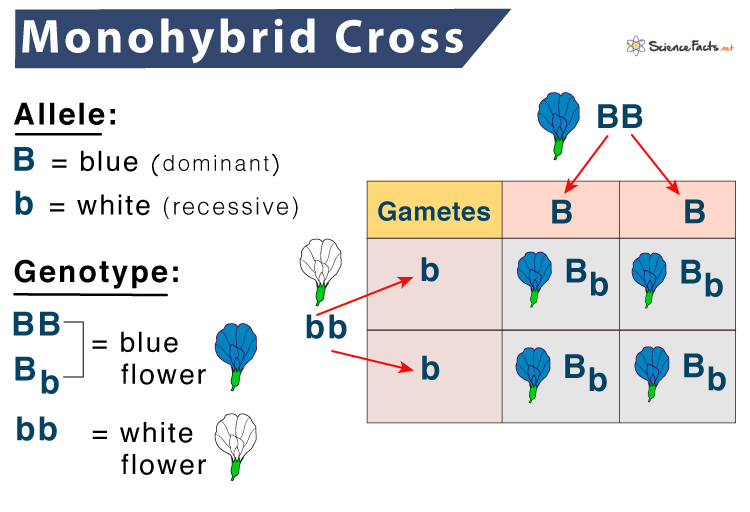
Before exploring the technological interface, it’s crucial to grasp the core concept of monohybrid crossing. It represents the simplest form of genetic cross, focusing on the inheritance pattern of a single characteristic or trait, such as flower color, seed shape, or eye color. Pioneered by Gregor Mendel in the 19th century, this concept forms the bedrock of classical genetics.
Mendel’s Principles and the Single Trait
Mendel’s experiments with pea plants revealed that characteristics are inherited in discrete units, which we now call genes. Each gene can have different forms, or alleles. A monohybrid cross typically involves two parents that differ in a single trait, where one parent is homozygous dominant for that trait (e.g., AA) and the other is homozygous recessive (e.g., aa). Their offspring, the first filial (F1) generation, will all display the dominant phenotype and be heterozygous (Aa). When these F1 individuals are crossed with each other, the second filial (F2) generation exhibits a predictable phenotypic ratio (typically 3:1 dominant to recessive) and a genotypic ratio (1:2:1 homozygous dominant: heterozygous: homozygous recessive). This predictable inheritance is explained by Mendel’s Law of Segregation, which states that each parent contributes only one allele for each gene to its offspring.
Punnett Squares and Probabilistic Predictions
For decades, the Punnett square has been the primary manual tool for visualizing and predicting the outcomes of genetic crosses, including monohybrid ones. This simple grid system allows researchers and students to determine the probability of different genotypes and phenotypes in the offspring. While effective for simple crosses, constructing Punnett squares for multiple traits or complex scenarios quickly becomes cumbersome and prone to error. This inherent limitation paved the way for technological solutions that automate and expand upon this fundamental predictive capability, enabling more complex analyses with greater efficiency and accuracy.
The Significance of Dominance and Recessiveness
Understanding dominance and recessiveness is central to interpreting monohybrid crosses. A dominant allele expresses its trait even when only one copy is present, masking the effect of a recessive allele. A recessive allele, conversely, only expresses its trait when two copies are present. This relationship is crucial for predicting traits and understanding genetic disorders. Technology, particularly bioinformatics, helps us move beyond simple dominant-recessive patterns to analyze more complex modes of inheritance, such as incomplete dominance, co-dominance, and polygenic traits, though monohybrid crossing remains the simplest model to build upon.
Simulating Inheritance: Software Tools for Monohybrid Crosses
The advent of computational power transformed the study of genetics, offering dynamic tools that transcend the limitations of traditional paper-and-pencil methods. Simulation software now plays a pivotal role in visualizing and understanding monohybrid crosses.
Virtual Labs and Genetic Simulation Platforms
Modern educational technology provides “virtual labs” where students and researchers can perform monohybrid crosses without the need for actual biological samples. Platforms like Labster, HHMI BioInteractive, and various university-developed simulations allow users to select parent organisms, define traits, run crosses, and observe the resulting genotypes and phenotypes. These digital environments provide instant feedback, allowing for repeated experimentation and a deeper understanding of probabilistic outcomes. They often include graphical representations, statistical analyses, and interactive quizzes, making abstract genetic concepts tangible and engaging.
Advantages of Digital Modeling in Genetics Education
Digital modeling offers several distinct advantages over traditional methods. Firstly, it eliminates the time-consuming and resource-intensive nature of actual biological experiments. Students can conduct dozens of crosses in minutes, experimenting with different allele combinations and observing their effects. Secondly, these tools minimize human error in data collection and calculation, ensuring that the focus remains on understanding the underlying genetic principles. Thirdly, simulation platforms can introduce variables and complexities that might be difficult or impossible to replicate in a physical lab, such as environmental influences or mutation rates, gradually preparing learners for more advanced genetic studies.
From Basic Probability to Complex Allele Interactions
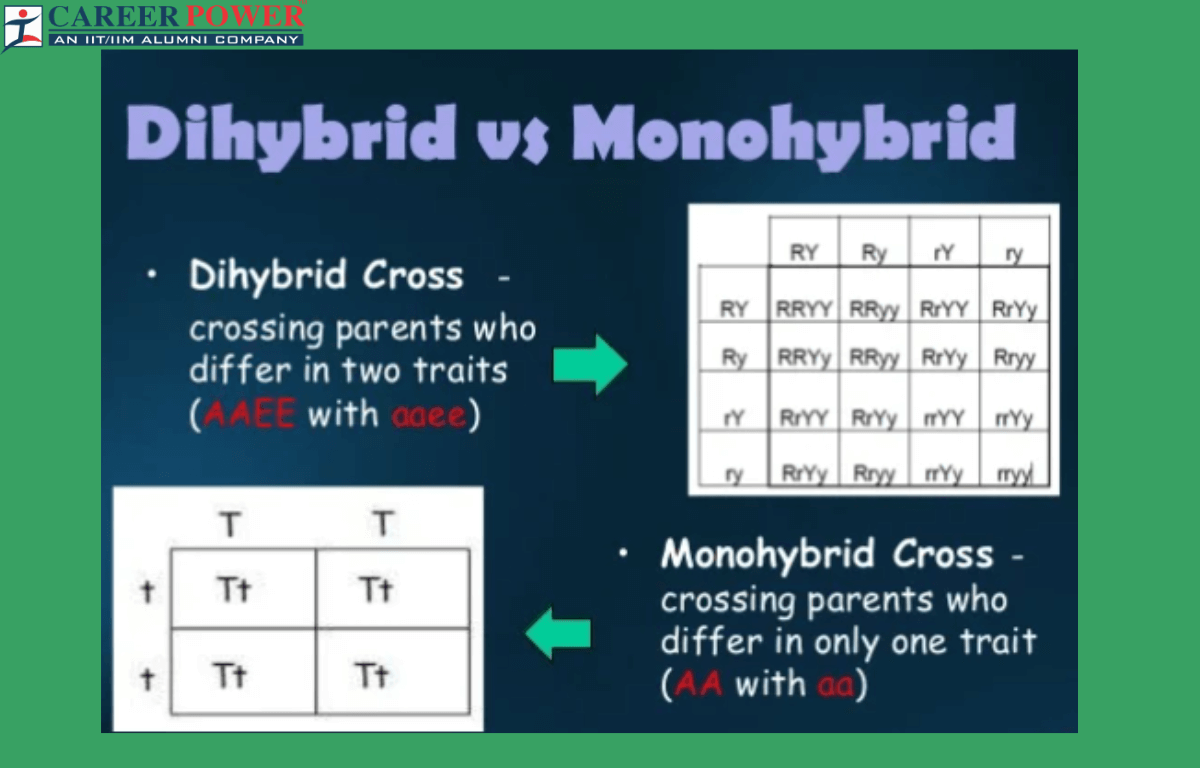
While beginning with simple monohybrid crosses, these software platforms are scalable. They can often extend to dihybrid crosses, polygenic inheritance, and even population genetics. By building a strong foundation with monohybrid simulations, users can then progressively tackle more intricate genetic scenarios, including those involving epistasis, linked genes, and quantitative traits, all within a computational framework that handles the complexity of data management and visualization. This progression is essential for aspiring geneticists and biotechnologists.
Bioinformatics and Data Analytics in Monohybrid Analysis
Beyond simulation for learning, the principles of monohybrid crossing are inherently relevant to the broader field of bioinformatics, which uses computational techniques to manage and analyze biological data.
Processing Genetic Data with Computational Tools
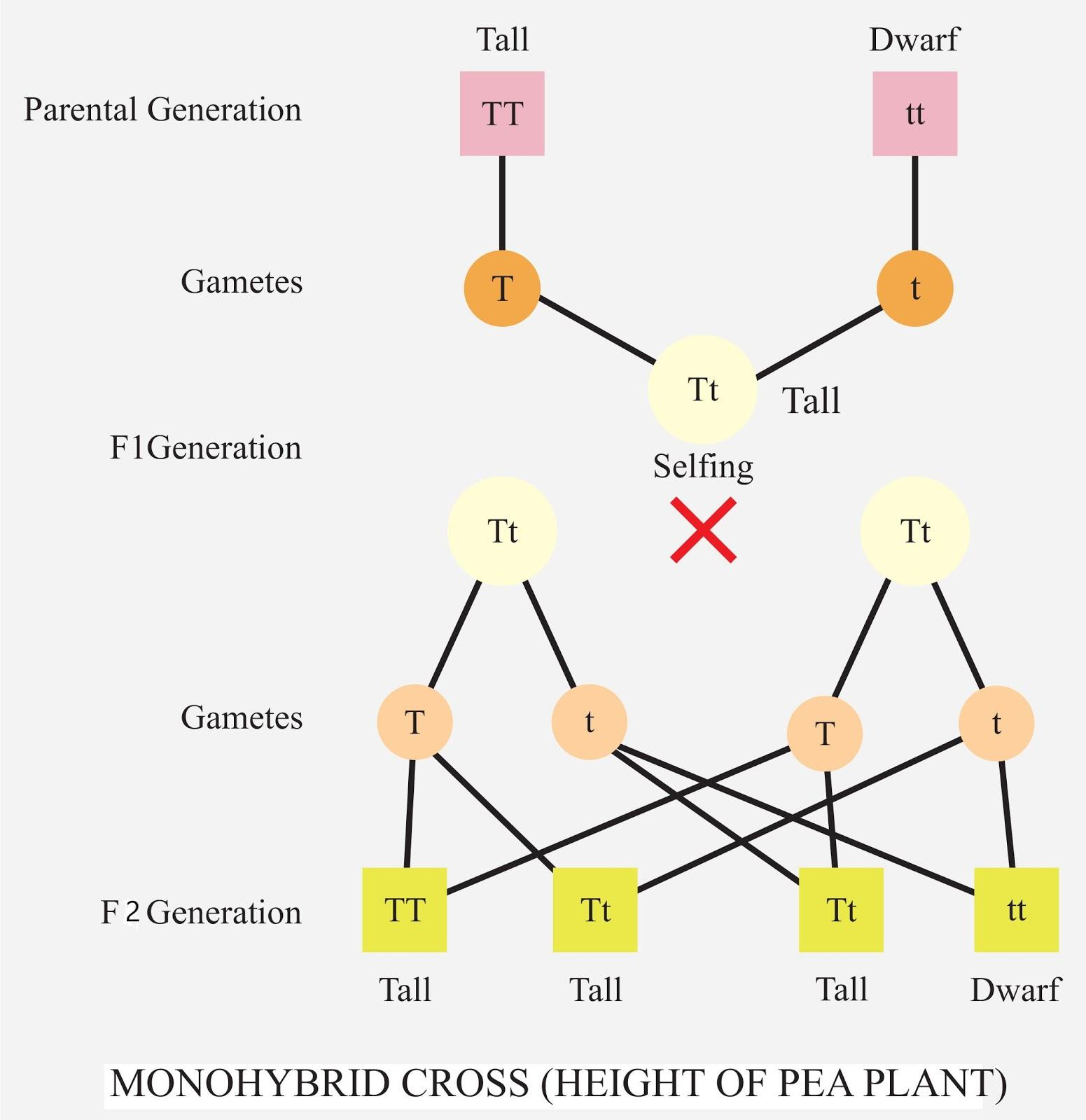
In real-world genetic research, scientists work with vast amounts of genomic data. Computational tools are essential for processing DNA sequences, identifying genes, and cataloging alleles. When analyzing inheritance patterns in families or populations, bioinformatics pipelines can automatically sift through genomic markers to identify Mendelian inheritance patterns, including those consistent with monohybrid crosses. These tools can handle thousands of samples, identifying specific alleles and their transmission across generations, far surpassing manual capabilities. For instance, in genetic disease research, identifying a single gene responsible for a mendelian disorder often begins by looking for segregation patterns reminiscent of a monohybrid cross within pedigrees.
Identifying Mendelian Patterns in Large Datasets
Bioinformatics algorithms can be designed to detect the telltale 3:1 phenotypic ratios or 1:2:1 genotypic ratios expected from monohybrid crosses within large population datasets or experimental populations. This is particularly useful in agricultural genetics for tracking desirable traits or in human genetics for identifying markers linked to specific conditions. Tools like pedigree analysis software can automate the construction and interpretation of family trees, flagging potential monohybrid inheritance patterns for further investigation. The ability to quickly identify these patterns from complex genomic data accelerates discovery and improves diagnostic capabilities.
The Role of AI in Predicting Genetic Outcomes
Artificial intelligence (AI) and machine learning (ML) are increasingly being deployed in genetics to analyze complex datasets and predict genetic outcomes. While monohybrid crosses are too simple to require advanced AI, they serve as foundational models. AI algorithms trained on vast genomic and phenotypic data can learn to identify subtle patterns that might escape human observation, even for more complex inheritance. Building on the understanding of basic Mendelian inheritance, AI can predict the likelihood of specific traits appearing in offspring, the efficacy of gene therapies, or even identify novel genes associated with particular phenotypes. This predictive power has significant implications for personalized medicine and precision agriculture, moving beyond statistical probability to sophisticated, data-driven forecasting.
Educational Technology: Democratizing Genetic Understanding
The complexity of genetics has historically posed a challenge for learners. Educational technology has stepped in to demystify these concepts, making them accessible to a broader audience, with monohybrid crossing often serving as an entry point.
Interactive Apps and Online Learning Resources
A multitude of interactive apps and online platforms are now available, offering engaging ways to learn about monohybrid crosses. These resources often feature drag-and-drop interfaces for setting up crosses, animated visualizations of allele segregation during meiosis, and immediate feedback on user-generated Punnett squares. Websites like Khan Academy, Crash Course, and various university open courseware platforms provide video tutorials, explanatory texts, and practice problems that break down the topic into digestible segments, catering to diverse learning styles.
Gamification of Genetic Principles
Gamification, the application of game-design elements and game principles in non-game contexts, has found fertile ground in genetics education. Games that involve breeding virtual organisms, solving genetic puzzles, or even building a virtual ecosystem often integrate the principles of monohybrid crossing. By making learning fun and competitive, these gamified experiences enhance retention and motivate learners to explore more complex genetic concepts. This approach transforms a potentially dry subject into an interactive challenge.
Personalized Learning Paths in Genetics
Ed-tech platforms increasingly offer personalized learning paths. Adaptive algorithms can assess a learner’s understanding of monohybrid crossing and then recommend subsequent modules or exercises tailored to their needs. If a student struggles with calculating probabilities, the system might offer additional practice problems; if they grasp it quickly, they might be advanced to dihybrid crosses or more complex inheritance patterns. This individualized approach ensures that learners build a solid foundation at their own pace, maximizing comprehension and engagement.
Advanced Applications and the Future of Genetic Tech
The understanding derived from simple monohybrid crosses, when scaled and combined with advanced technology, has profound implications for various fields.
Genetic Engineering and Targeted Trait Development
The ability to predict and manipulate the inheritance of single traits is a fundamental prerequisite for genetic engineering. CRISPR-Cas9 and other gene-editing technologies allow scientists to precisely alter genes, with the goal of introducing desirable traits or correcting deleterious ones. While these interventions are far more complex than a simple monohybrid cross, the underlying principle of targeting specific alleles to achieve a predictable phenotypic outcome remains central. Understanding monohybrid inheritance helps in designing experiments and predicting the success rates of introducing or modifying genes.
Agricultural Biotechnology: Designing Desirable Phenotypes
In agriculture, biotechnology leverages genetic principles to develop crop varieties with enhanced yields, disease resistance, or nutritional value. Breeding programs, whether traditional or genetically engineered, are inherently concerned with the inheritance of specific traits. The principles of monohybrid crosses guide agricultural scientists in predicting the outcomes of cross-breeding efforts, identifying desirable homozygous or heterozygous lines, and efficiently selecting for particular characteristics. Advanced genomic selection techniques, powered by AI and bioinformatics, accelerate these processes by analyzing genetic markers across entire genomes to predict performance, a highly sophisticated extension of Mendelian principles.
Ethical AI and Data Privacy in Genetic Research
As technology enables more sophisticated genetic analysis, particularly with AI, ethical considerations regarding data privacy and the responsible use of genetic information become paramount. The potential to predict traits, predispositions, and even complex characteristics raises significant questions about consent, discrimination, and equitable access to genetic technologies. Ensuring the ethical deployment of AI in genetics, including the analysis of simple inheritance patterns like monohybrid crosses at scale, requires robust regulatory frameworks, transparent algorithms, and a commitment to protecting individual privacy. The future of genetic technology must be built on a foundation of scientific rigor, ethical responsibility, and societal benefit.
In conclusion, “what is monohybrid crossing” transcends its definition as a mere biological concept. It is a foundational pillar whose understanding and application have been revolutionized by technology. From virtual labs and simulation software that make learning accessible, to bioinformatics tools and AI that analyze vast datasets, technology has amplified our capacity to explore, predict, and manipulate genetic inheritance. As we continue to push the boundaries of genetic research and biotechnology, the principles derived from Mendel’s simple pea plant crosses, empowered by sophisticated technological advancements, will remain indispensable in unraveling the intricate tapestry of life.
aViewFromTheCave is a participant in the Amazon Services LLC Associates Program, an affiliate advertising program designed to provide a means for sites to earn advertising fees by advertising and linking to Amazon.com. Amazon, the Amazon logo, AmazonSupply, and the AmazonSupply logo are trademarks of Amazon.com, Inc. or its affiliates. As an Amazon Associate we earn affiliate commissions from qualifying purchases.