
In the rapidly evolving landscape of technology, we often focus on the macro-level innovations: the sleek finish of a new smartphone, the processing power of a quantum computer, or the range of an electric vehicle (EV). However, the efficiency and viability of these technologies are dictated by interactions occurring at the molecular level. Among the most critical of these is the ion-dipole force. While it may sound like a term relegated to high school chemistry textbooks, the ion-dipole interaction is actually a foundational pillar of modern tech, specifically in the realms of energy storage, hardware cooling, and advanced material manufacturing.

Understanding what an ion-dipole force is—and how tech companies are manipulating it—is essential for anyone looking to grasp the future of hardware and sustainable energy solutions.
The Physics of Attraction: Defining Ion-Dipole Interactions in a Tech Context
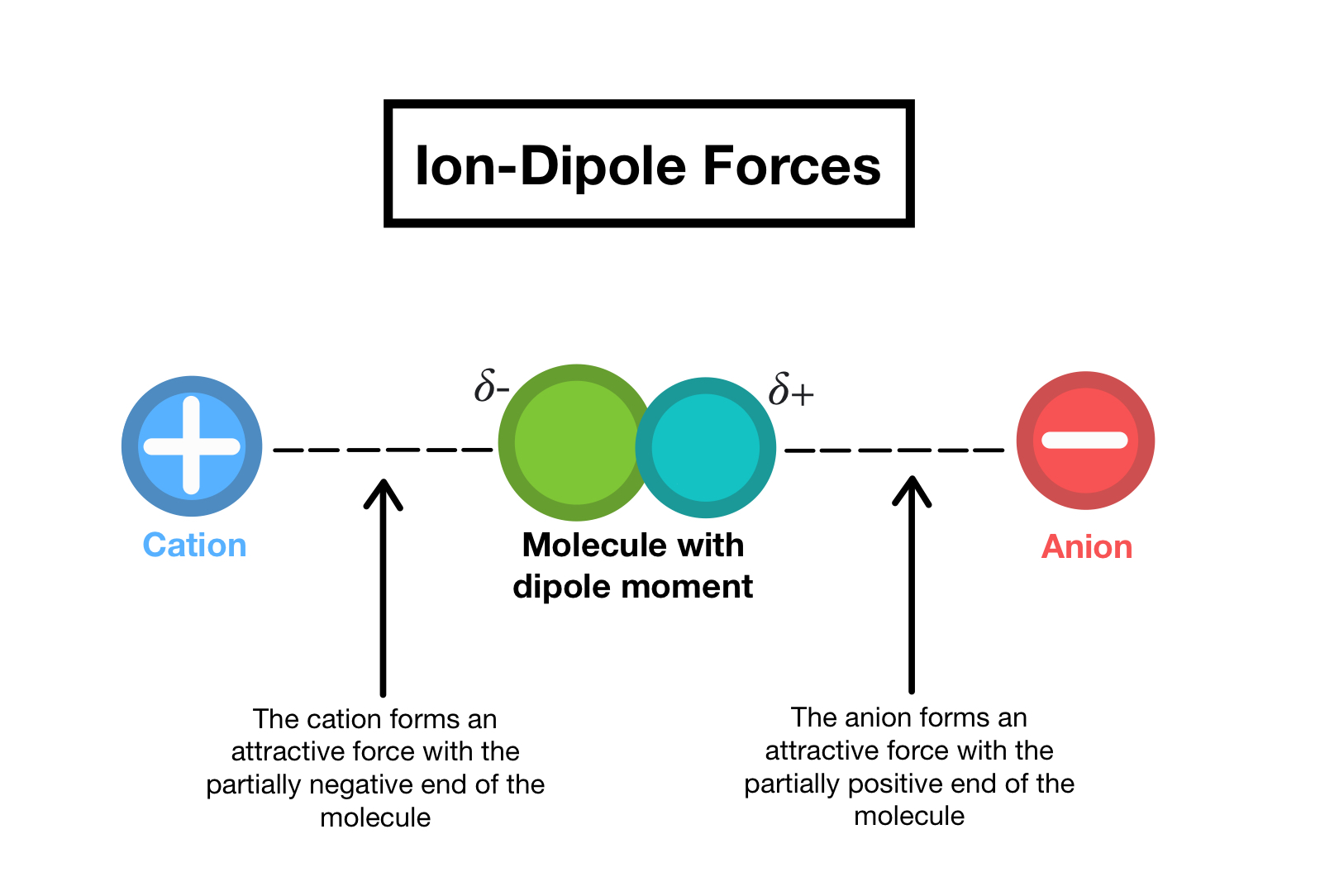
To understand the trajectory of modern hardware, one must first understand the fundamental forces that govern the movement of energy. An ion-dipole force is an electrostatic attraction between a fully charged ion (either a positive cation or a negative anion) and a neutral polar molecule.
What is an Ion-Dipole Force?
In the world of digital hardware, we deal with electricity, which is essentially the movement of charge. At the molecular level, certain molecules are “polar,” meaning they have a partial positive end and a partial negative end due to the way their atoms share electrons. When an ion (a particle with a net charge) is introduced to these polar molecules, it creates a powerful attraction. The positive ion attracts the negative end of the polar molecule, and vice-versa.
This force is significantly stronger than the more common dipole-dipole interactions but weaker than a full ionic bond. This “middle-ground” strength is precisely what makes it so valuable in technology: it is strong enough to hold substances together and facilitate energy transfer, but flexible enough to allow for the movement of particles, such as lithium ions moving through a battery.
The Role of Polarity in Tech Materials
In technology manufacturing, materials are selected based on their “dielectric constant” and their ability to interact with charges. For example, in the production of high-performance capacitors and liquid electrolytes, engineers must choose polar solvents that can effectively surround ions. This process, known as solvation, creates a “solvation shell” around the ion.
In a tech context, the efficiency of this shell determines how well a battery can hold a charge or how effectively a liquid cooling system can whisk heat away from a high-performance GPU. If the ion-dipole force is too weak, the system becomes unstable; if it is too strong, the ions cannot move freely, leading to a “bricked” or inefficient device.
Powering the Portable Revolution: Ion-Dipole Dynamics in Lithium-Ion Batteries
The most significant technological application of ion-dipole forces today is in the development and optimization of Lithium-ion (Li-ion) batteries. From the smartphone in your pocket to the Tesla in your driveway, the “magic” of rechargeable energy is largely a result of managed ion-dipole interactions.
Electrolyte Stability and Ion Transport
Inside a battery, there are two electrodes (anode and cathode) and an electrolyte. The electrolyte is typically a lithium salt dissolved in a polar organic solvent. When you charge your phone, lithium ions move from the cathode to the anode. This movement is facilitated by ion-dipole forces.
The polar molecules of the solvent surround the lithium ions, stabilizing them as they transit through the battery. Tech companies like Panasonic and CATL spend billions of dollars researching new solvent formulations that optimize these ion-dipole interactions. The goal is to create a “slicker” path for the ions. By fine-tuning the molecular attraction, engineers can increase the charging speed of devices without causing the battery to degrade or catch fire.
Solving the Heat Dissipation Challenge
A major hurdle in tech hardware—especially in data centers and high-end gaming rigs—is heat. Heat is a byproduct of resistance, and resistance often occurs when ion-dipole interactions are poorly managed. In advanced liquid cooling systems, dielectric fluids are engineered to utilize dipole moments to absorb thermal energy from processors.
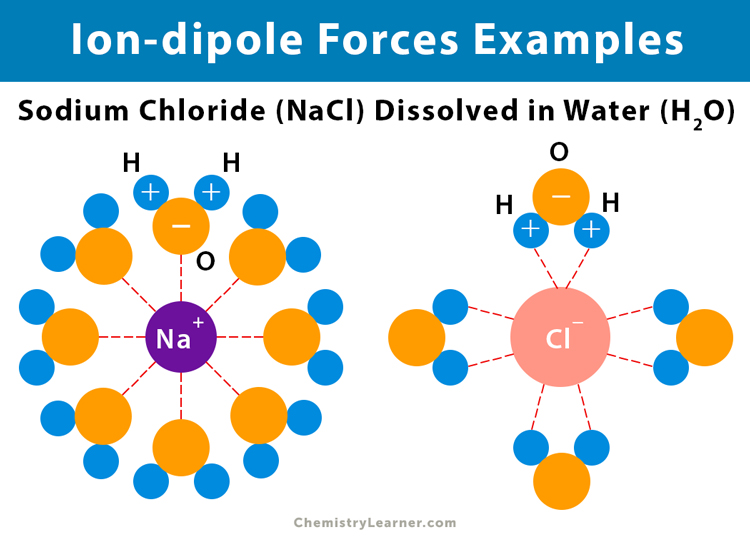
Furthermore, in battery tech, if the ion-dipole attraction is too intense, the “solvation shell” becomes too bulky, causing the ion to move sluggishly. This internal friction generates heat. Modern AI-driven material science is now being used to design “ligands” (molecules that bind to a central metal atom) that optimize this force, allowing for cooler-running batteries and more efficient power delivery in high-performance computing environments.
Beyond Batteries: Ion-Dipole Forces in Advanced Hardware and Manufacturing
While energy storage is the most visible application, ion-dipole forces are also the “silent partners” in the fabrication of the chips and sensors that power our digital world.
Semiconductors and Precise Chemical Etching
The manufacturing of semiconductors involves a process called photolithography and various cleaning stages. To create the nanometer-scale transistors found in modern CPUs (like Apple’s M-series or Nvidia’s H100s), silicon wafers must be cleaned and etched with extreme precision.
Cleaning agents are often designed to leverage ion-dipole forces to “grab” ionic contaminants off the surface of the silicon. Because the ion-dipole force is highly specific, chemists can design solvents that attract unwanted metal ions while leaving the delicate silicon structure untouched. Without the ability to manipulate these molecular attractions, the yield rates for modern 3nm and 5nm chips would be catastrophically low.
Water Desalination Tech: The Global Resource Frontier
Tech isn’t just about screens; it’s about solving global infrastructure problems. Ion-dipole forces are at the heart of Reverse Osmosis (RO) and Electrodialysis, the leading technologies for water desalination.
In these systems, membranes are engineered with polar pores. As saltwater is pushed through, the ion-dipole forces help to “filter” the sodium and chloride ions away from the water molecules. As tech firms move into the “Climate Tech” space, the ability to manipulate these forces at scale is becoming a massive software and hardware engineering challenge, requiring advanced sensors to monitor ion concentration in real-time.
The Future of High-Performance Materials: Tuning Molecular Interactions
As we look toward the next decade of technology, the focus is shifting from simply using existing materials to “tuning” materials at the molecular level using AI and machine learning.
Smart Polymers and Self-Healing Tech
One of the most exciting trends in tech reviews today is the concept of “foldable” and “self-healing” electronics. These rely on specialized polymers where ion-dipole interactions act as a sort of molecular Velcro.
In self-healing screens, for instance, a scratch can be “healed” if the material contains ions and polar groups that are naturally attracted to one another. When the material is damaged, the ion-dipole forces pull the molecular chains back together, effectively closing the gap. This transition from static plastic to “active” molecular tech is entirely dependent on our mastery of these electrostatic attractions.
AI-Driven Molecular Modeling for Next-Gen Capacitors
The traditional R&D process for discovering new materials is slow. However, new AI tools and simulation software are now capable of modeling trillions of ion-dipole interactions in a fraction of a second. This “Digital Twin” approach allows tech companies to predict how a new battery electrolyte or a new semiconductor coating will perform before a single drop of the chemical is mixed in a lab.
By inputting the dipole moment of a molecule and the charge of an ion into these AI models, researchers can discover “Super-capacitors”—energy storage devices that could potentially charge in seconds and last for decades. These advancements represent the pinnacle of tech: using software (AI) to master the most fundamental physics of the physical world (ion-dipole forces).
Conclusion: The Molecular Foundation of Tech
The question “what is ion-dipole?” might begin as a query about chemistry, but it ends as a roadmap for the future of technology. Whether it is the ability to charge an EV in five minutes, the creation of a self-healing smartphone screen, or the manufacturing of the world’s most powerful AI chips, the ion-dipole force is the invisible hand guiding the hand of innovation.
As we continue to push the boundaries of what is possible in the digital and physical realms, the winners in the tech industry will be those who best understand and manipulate these molecular forces. Innovation is no longer just about bigger screens and faster code; it is about mastering the very atoms that make those things possible.
aViewFromTheCave is a participant in the Amazon Services LLC Associates Program, an affiliate advertising program designed to provide a means for sites to earn advertising fees by advertising and linking to Amazon.com. Amazon, the Amazon logo, AmazonSupply, and the AmazonSupply logo are trademarks of Amazon.com, Inc. or its affiliates. As an Amazon Associate we earn affiliate commissions from qualifying purchases.