
In the rapidly evolving landscape of artificial intelligence and deep learning, the ability to process sequential data—such as text, speech, and time-series information—has become a cornerstone of modern technological progress. While standard Recurrent Neural Networks (RNNs) initially promised to handle these data types, they were famously plagued by structural limitations. Enter the Gated Recurrent Unit (GRU). Introduced by Kyunghyun Cho et al. in 2014, the GRU has emerged as a streamlined, high-performance alternative to more complex architectures like the Long Short-Term Memory (LSTM) network. This article explores the architecture, advantages, and applications of the Gated Recurrent Unit within the broader context of machine learning.

Understanding the Architecture of Gated Recurrent Units
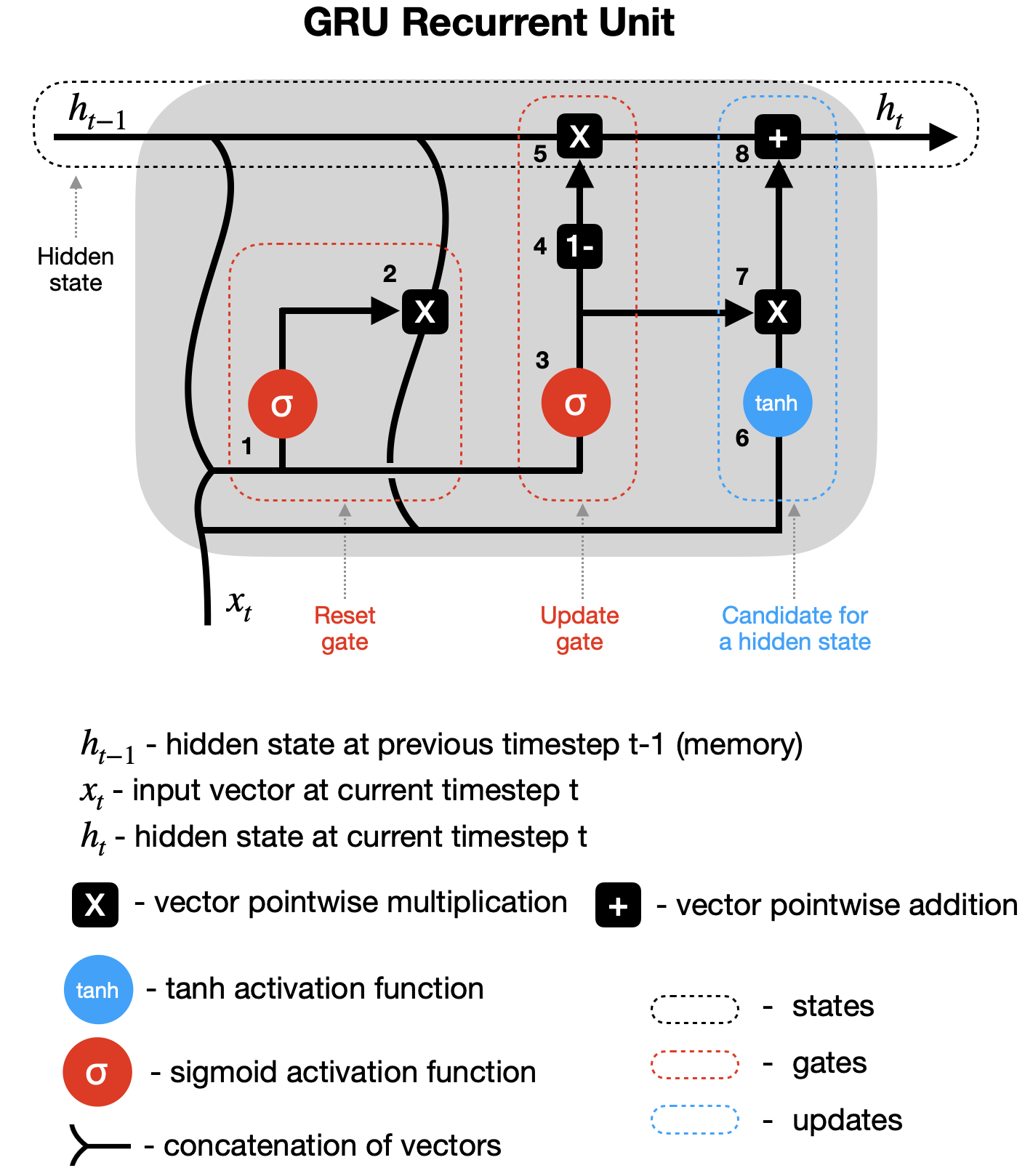
At its core, a Gated Recurrent Unit is a specialized type of RNN designed to solve the “Vanishing Gradient Problem.” In traditional RNNs, as information travels through long sequences, the gradients used to update the network weights can become infinitesimally small, effectively “vanishing.” This prevents the network from learning long-range dependencies—for example, remembering the beginning of a long sentence to understand the context of the final word.
The Vanishing Gradient Problem and the Need for Memory
To appreciate the GRU, one must first understand the failure of its predecessors. Standard RNNs apply a simple transformation to the input and the previous hidden state. When backpropagating through many time steps, the repeated multiplication of small derivatives causes the signal to die out. GRUs address this by using a “gating” mechanism that allows the network to selectively store and discard information. Instead of forcing every piece of data through the same bottleneck, the gates act as valves, controlling the flow of information over time.
The Reset Gate: Deciding What to Forget
The first major component of a GRU is the Reset Gate. This gate determines how much of the past information (the previous hidden state) should be forgotten or ignored when calculating the new “candidate” hidden state. If the reset gate is close to zero, the model effectively “forgets” the previous state and starts fresh with the current input. This is particularly useful in tasks like natural language processing, where a change in subject or the end of a sentence might render previous context irrelevant to the immediate next step.
The Update Gate: Managing Long-Term Memory
The Update Gate is perhaps the most critical component of the GRU architecture. it functions similarly to the “forget” and “input” gates of an LSTM but combines them into a single operation. The update gate decides how much of the previous hidden state should be carried over to the current state. If the update gate is set to a high value, the model can retain information from many time steps ago, effectively creating a long-term memory. This dual-gate system—Reset and Update—enables the GRU to maintain a balance between short-term input and long-term context without the heavy computational overhead of more complex models.
GRU vs. LSTM: A Comparative Analysis
When discussing gated networks, the Gated Recurrent Unit is almost always compared to the Long Short-Term Memory (LSTM) network. While both are designed to handle sequential data and mitigate vanishing gradients, they differ significantly in their internal logic and efficiency.
Structural Differences: Parameters and Complexity
The most immediate difference is the number of gates. An LSTM utilizes three gates: the input gate, the forget gate, and the output gate. It also maintains a separate “cell state” in addition to the hidden state. In contrast, the GRU merges the cell state and hidden state and reduces the gate count to two. From a software engineering and hardware perspective, this means the GRU has fewer parameters to train. Fewer parameters translate to lower memory consumption and faster convergence during the training phase.
Performance and Computational Efficiency
Because the GRU architecture is simpler, it is often more computationally efficient than the LSTM. In scenarios where datasets are smaller or computational resources (like GPU memory) are limited, GRUs frequently outperform LSTMs or match their performance while requiring significantly less time to train. This makes GRUs a favorite for mobile AI applications and edge computing, where processing power is a premium. However, it is worth noting that for extremely complex, large-scale sequences, the extra gate in an LSTM can sometimes provide a more nuanced “fine-tuning” of memory that the GRU might lack.
Choosing the Right Model for Your Project
In the tech industry, the choice between GRU and LSTM often comes down to empirical testing. If a developer is building a real-time translation tool or a voice-activated assistant, they might start with a GRU to take advantage of its speed. If the model fails to capture the necessary complexity, they may then scale up to an LSTM. Generally, the GRU is seen as the “modern, optimized” version of sequential modeling that provides a better balance of performance and speed for most standard AI tools.
Practical Applications of GRUs in Modern Technology
The theoretical elegance of GRUs is backed by their widespread implementation across various sectors of the technology industry. Any application that requires the interpretation of data over time likely utilizes some form of gated architecture.
Natural Language Processing (NLP) and Machine Translation
GRUs are a staple in NLP. In machine translation, the model must understand the context of an entire sentence to produce an accurate result in another language. Because GRUs can maintain context over dozens of words, they are used in encoder-decoder architectures to transform a source sequence into a meaningful target sequence. They also power sentiment analysis tools, where the model must “remember” a modifier (like “not”) at the start of a sentence to correctly interpret a sentiment word at the end.
Speech Recognition and Audio Processing
Audio is inherently sequential; a sound wave is a series of pressure changes over time. GRUs are exceptionally good at processing these temporal signals. Tech giants use GRU-based models in smart speakers and transcription software to map acoustic signals to phonetic units. The efficiency of the GRU is particularly beneficial here, as speech recognition often needs to happen in near real-time to provide a seamless user experience.
Time-Series Forecasting and Anomaly Detection
Beyond human language, GRUs are utilized in data-heavy fields like cybersecurity and server monitoring. For instance, in digital security, a GRU can analyze network traffic patterns over time. By “learning” what a normal sequence of data packets looks like, the model can trigger an alert if it detects a sequence that deviates from the norm (an anomaly). Similarly, they are used in weather forecasting and IoT (Internet of Things) sensor data analysis to predict future states based on historical trends.
Implementation and Training Best Practices
For developers and data scientists looking to integrate GRUs into their tech stack, understanding the practical nuances of implementation is key. Modern frameworks have made utilizing these units more accessible than ever, but optimization remains a craft.
Frameworks and Library Integration
Major AI frameworks such as TensorFlow, Keras, and PyTorch offer built-in GRU layers. Implementing a GRU is often as simple as a single line of code within a sequential model. For example, in PyTorch, nn.GRU handles the complex gate mathematics under the hood, allowing developers to focus on architecture design rather than manual gradient calculations.
Hyperparameter Tuning for Sequential Models
While GRUs are robust, they are sensitive to hyperparameter choices. The “hidden size” (the number of features in the hidden state) determines the model’s capacity to learn. Too small, and the model underfits; too large, and it may overfit the training data. Additionally, the use of “dropout”—a technique where random neurons are disabled during training—is essential in GRU layers to prevent the model from becoming too reliant on specific connections, thereby improving its ability to generalize to new data.
The Role of Bidirectional GRUs
A powerful variation of the standard architecture is the Bidirectional GRU (Bi-GRU). In many tasks, like text processing, it is helpful for the model to have access to both past and future context. A Bi-GRU processes the sequence in two directions: forward and backward. The outputs are then concatenated. This approach is widely used in named entity recognition (NER), where the word after a name often provides the best clue that the previous word was indeed a name (e.g., “Elon Musk said“).

Conclusion: The Future of GRUs in the Age of Transformers
As we look toward the future of AI, the dominance of recurrent architectures like the GRU is being challenged by the rise of the “Transformer” architecture (the tech behind ChatGPT). Transformers use “Attention” mechanisms rather than sequential gating, allowing for even better parallelization. However, the GRU remains far from obsolete. Its ability to process streams of data with minimal memory footprint makes it irreplaceable for “online” learning and real-time edge applications where the massive computational requirements of Transformers are impractical.
The Gated Recurrent Unit stands as a testament to the power of architectural optimization in technology. By simplifying the complex gating logic of the LSTM, it provided the industry with a tool that is faster, leaner, and remarkably effective at making sense of the world’s sequential data. Whether you are interacting with a chatbot, using a voice assistant, or relying on a digital security filter, there is a high probability that a GRU is working silently in the background, filtering the past to predict the future.
aViewFromTheCave is a participant in the Amazon Services LLC Associates Program, an affiliate advertising program designed to provide a means for sites to earn advertising fees by advertising and linking to Amazon.com. Amazon, the Amazon logo, AmazonSupply, and the AmazonSupply logo are trademarks of Amazon.com, Inc. or its affiliates. As an Amazon Associate we earn affiliate commissions from qualifying purchases.