
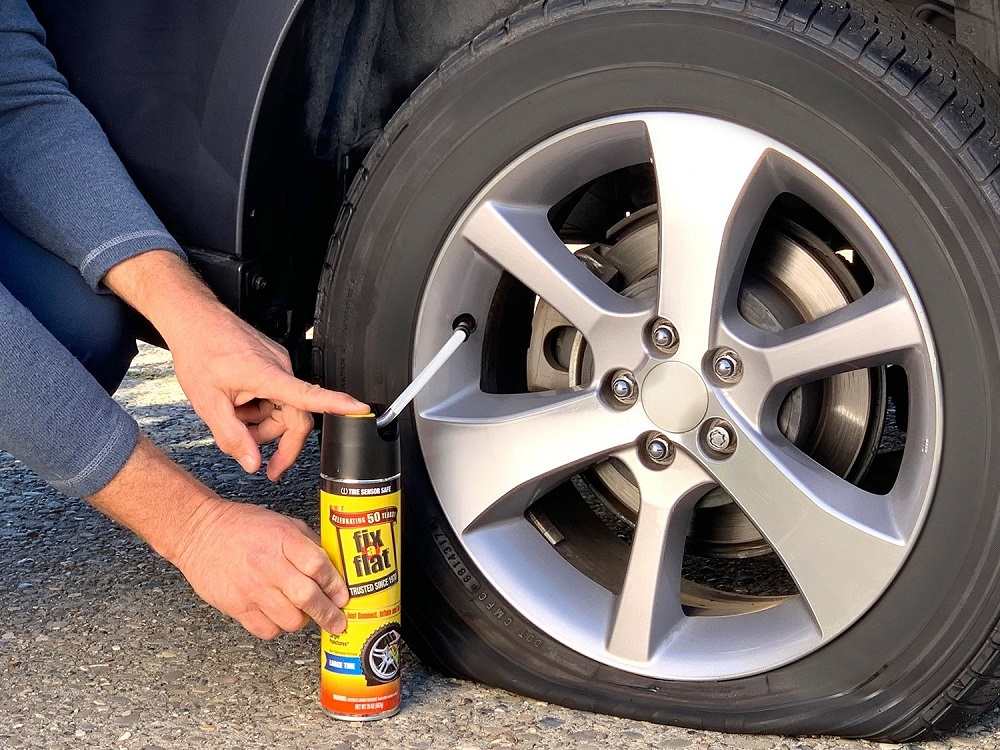
In the ecosystem of automotive technology, few tools have maintained as much relevance over the decades as the aerosol tire inflator and sealant. Commonly known by the brand name “Fix-a-Flat,” this gadget represents a critical intersection of chemical engineering and emergency hardware. While modern vehicles are increasingly becoming “computers on wheels,” the fundamental vulnerability of the rubber tire remains a physical reality. Fix-a-Flat serves as a temporary technological bridge, allowing a driver to regain mobility without the immediate need for a mechanical jack or a spare tire.
To understand what Fix-a-Flat is from a technical perspective, one must look beyond the pressurized can. It is a sophisticated delivery system for a liquid polymer that addresses one of the most common points of failure in mechanical transport. As we move toward autonomous vehicles and smart infrastructure, the technology behind roadside recovery continues to evolve, yet the “emergency in a can” remains a staple of the digital-age glovebox.

The Engineering Behind the Can: How Chemical Sealants Work
At its core, Fix-a-Flat is a pressurized delivery system containing two primary components: a liquid sealant and a gas propellant. The “magic” of the technology lies in how these two substances interact with the physics of a rotating tire. Unlike a standard air compressor, which only adds volume to the tire, this chemical solution attempts to solve the problem of structural integrity.
The Propellant and Liquid Sealant Synergy
The propellant in a Fix-a-Flat canister serves a dual purpose. First, it provides the necessary pressure to force the liquid sealant through the tire valve stem against the resistance of the remaining air inside. Second, it provides a temporary increase in tire pressure, often enough to lift the rim off the ground so the vehicle can be driven.
The sealant itself is typically a water-based or latex-based emulsion. When the liquid is injected into the tire, it remains in a fluid state until it encounters a leak. The engineering principle here is pressure differential: the air escaping through the puncture carries the sealant toward the hole. As the sealant is forced through the puncture and meets the outside atmosphere, it undergoes a rapid change in state, thickening and hardening to create a temporary plug.
Polymerization and the Curing Process
Modern iterations of this technology utilize advanced polymers that are designed to remain stable inside the high-pressure environment of the tire while being highly reactive when exposed to the friction and heat of driving. Once the sealant is inside, the driver must immediately operate the vehicle. This is not just a safety recommendation; it is a technical requirement. The centrifugal force generated by the spinning wheel distributes the liquid evenly across the inner tread area. This ensures that the sealant finds the puncture and that the tire remains balanced, preventing the liquid from pooling at the bottom and causing severe vibration.
Fix-a-Flat and the Modern Vehicle: Compatibility with Digital Sensors
One of the most significant shifts in automotive technology over the last two decades was the introduction of the Tire Pressure Monitoring System (TPMS). For tech enthusiasts and car owners, this created a massive question regarding the safety of using chemical sealants. Early versions of tire sealants were notorious for “gumming up” the delicate sensors located inside the wheel assembly, leading to expensive repairs.
The TPMS Challenge: Monitoring Systems and Chemical Exposure
A TPMS sensor is a sophisticated piece of digital hardware that transmits real-time pressure data to the car’s ECU (Engine Control Unit). These sensors are often integrated into the valve stem. When a traditional sealant is injected, there is a risk that the viscous liquid will coat the sensor’s diaphragm, preventing it from reading pressure accurately or, worse, short-circuiting the electronics.
The tech industry responded by developing “TPMS-safe” formulas. These modern sealants are engineered with lower viscosity and non-corrosive chemicals that are less likely to adhere permanently to the sensor. From a technical standpoint, this was a major leap forward, ensuring that emergency repairs didn’t result in a secondary failure of the vehicle’s digital monitoring systems.
Sensor-Safe Formulas: Advancements in Automotive Tech
The current generation of Fix-a-Flat utilizes a water-soluble formula. This is a critical technological distinction. Because the sealant is water-soluble, it can be easily washed out of the tire and off the TPMS sensor by a professional mechanic during the permanent repair process. This “clean-tech” approach has allowed aerosol sealants to remain viable in an era where vehicles are increasingly sensitive to internal contaminants.

The Evolution of Roadside Assistance Gadgets
The landscape of automotive gadgets is shifting from purely mechanical tools to integrated electronic solutions. Fix-a-Flat sits in a unique position between a simple tool and a high-tech recovery system. When comparing it to other modern alternatives, we see how the technology of “the quick fix” has branched into different niches.
From Spare Tires to Aerosol Solutions
In the pursuit of fuel efficiency and weight reduction, many modern EV (Electric Vehicle) manufacturers, such as Tesla, have entirely removed the spare tire from their designs. This “weight-loss” engineering has forced a reliance on technology like Fix-a-Flat or integrated mobility kits. These kits often combine a bottle of sealant with a 12V portable air compressor. This hybrid approach represents the evolution of the aerosol can, providing more controlled pressure and a more reliable seal for larger punctures.
Portable Air Compressors vs. Chemical Inflators
While a 12V portable air compressor is a valuable gadget for any tech-savvy driver, it lacks the sealing capability of Fix-a-Flat. If the tire has a structural breach (a puncture), a compressor will simply pump air into a leaking vessel. The technological advantage of Fix-a-Flat is its “active” nature—it doesn’t just fill space; it modifies the environment of the tire to stop the loss of energy. For most users, the ideal “tech stack” for roadside safety includes both a chemical sealant for immediate sealing and a digital compressor for precise pressure management.
Technical Limitations and Proper Application Protocols
To use Fix-a-Flat effectively, one must understand its technical parameters. It is not a permanent fix, nor is it a universal solution for all tire damage. High-performance tires and specific puncture types require a nuanced understanding of the tool’s limitations.
Understanding Puncture Diameter and Sidewall Integrity
The chemistry of Fix-a-Flat is designed specifically for “tread area” punctures, typically caused by nails or screws no larger than 1/4 inch in diameter. From a structural engineering perspective, the sealant cannot bridge the gap of a sidewall tear. The sidewall of a tire is subject to constant flexing and high heat; chemical sealants cannot cure fast enough or strong enough to maintain integrity in this high-stress zone. Using the tech on a sidewall breach is a failure of application, not a failure of the technology itself.
Post-Application Maintenance: The Role of Centrifugal Force
Once the sealant is deployed, the vehicle must be driven for 2 to 4 miles immediately. This is the “calibration” phase of the repair. Driving allows the sealant to spread into a thin, uniform layer. If a vehicle sits idle after application, the liquid will settle, creating a “flat spot” of weight that can cause the steering wheel to shake violently once the car reaches highway speeds. This requirement highlights that Fix-a-Flat is a “dynamic” technology—it requires movement to function correctly.
The Future of Emergency Mobility Technology
As we look toward the future of transportation, the role of aerosol sealants like Fix-a-Flat may transform yet again. The automotive industry is currently experimenting with several “non-pneumatic” (airless) tire designs and “self-healing” rubber technologies that could eventually render the handheld canister obsolete.
Non-Aerosol Alternatives and Eco-Friendly Sealants
Environmental tech is a growing sector within the automotive industry. Traditional propellants were often criticized for their impact on the ozone or their flammability. Future iterations of Fix-a-Flat and its competitors are moving toward CO2-based propellants and biodegradable polymers. These “green” sealants aim to provide the same emergency utility without the environmental footprint of 20th-century chemical engineering.
Smart Tires and Self-Healing Materials
The ultimate evolution of this niche is the “self-healing” tire. Companies like Michelin and Continental are developing tires with an internal layer of sealant already applied during the manufacturing process. In this scenario, the “Fix-a-Flat” technology is integrated directly into the hardware of the tire itself. When a nail punctures the tread, the internal sealant automatically fills the gap without the driver ever needing to pull over or use an external gadget.
Until these smart tires become the industry standard, however, the standalone canister remains a vital piece of technology. It is a testament to the power of simple, effective engineering: a pressurized solution to a high-pressure problem, providing a digital-age safety net for a mechanical necessity. Fix-a-Flat is more than just a brand; it is a specialized tool that exemplifies how chemistry can provide a high-tech solution to the most common of physical failures.
aViewFromTheCave is a participant in the Amazon Services LLC Associates Program, an affiliate advertising program designed to provide a means for sites to earn advertising fees by advertising and linking to Amazon.com. Amazon, the Amazon logo, AmazonSupply, and the AmazonSupply logo are trademarks of Amazon.com, Inc. or its affiliates. As an Amazon Associate we earn affiliate commissions from qualifying purchases.