
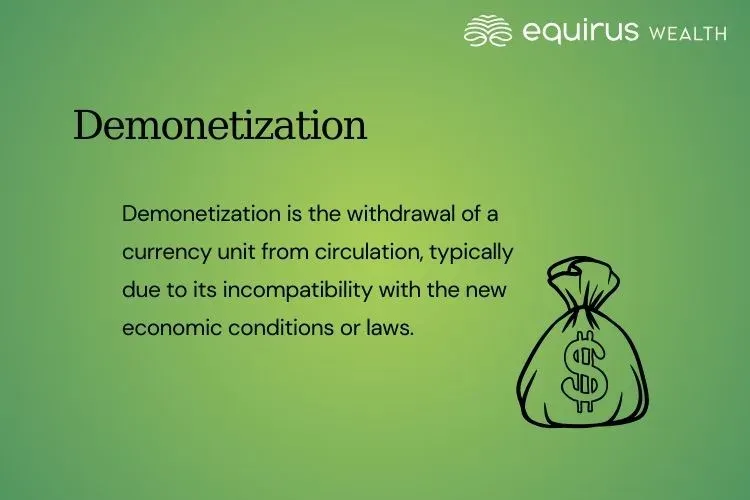
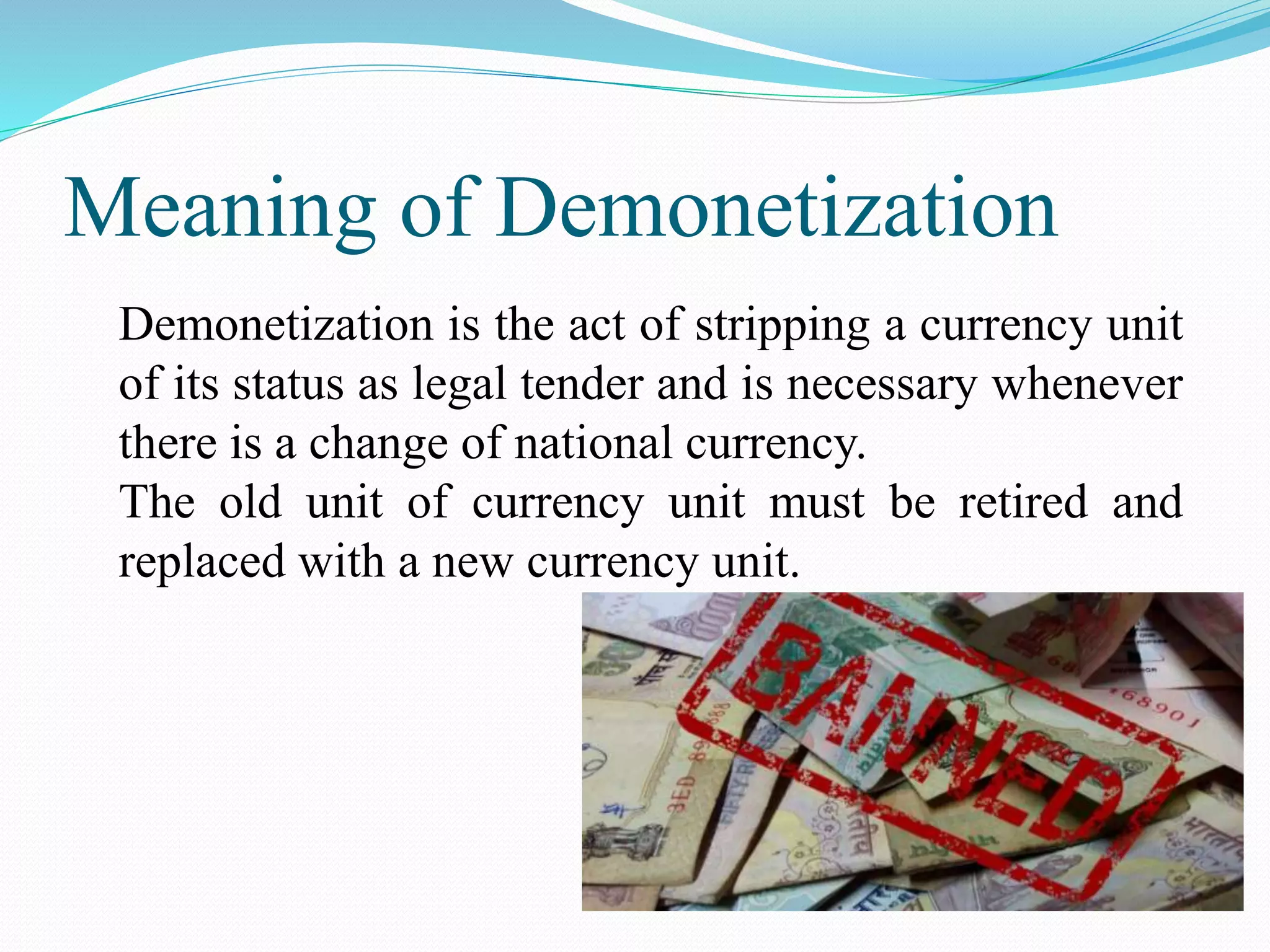
Demonetization is one of the most drastic and consequential tools in a government’s monetary policy toolkit. At its core, it is the act of stripping a currency unit of its status as legal tender. It occurs when the current form of money is pulled from circulation and replaced with new notes or coins. While the concept may sound like a simple administrative swap, the ripples it sends through personal finance, business operations, and national economies are profound and often unpredictable.
In the modern financial era, demonetization is rarely a routine event. Instead, it is typically implemented as a shock therapy measure to combat systemic economic issues such as hyperinflation, massive tax evasion, or the proliferation of counterfeit currency. For investors, business owners, and individuals, understanding the mechanics and motivations of demonetization is essential for maintaining financial resilience in an increasingly volatile global economy.
The Mechanics of Demonetization: Definition and Objectives
To understand demonetization, one must first understand the concept of “legal tender.” Legal tender is any medium of payment that is recognized by a legal system to be valid for meeting a financial obligation. When a central bank demonetizes a currency, it essentially declares that the specific paper or coin no longer holds value for transactions or debt settlement.
How Demonetization Works
The process typically begins with an official government announcement, often made with little to no prior notice to prevent “bad actors” from moving illicit funds. A grace period is usually provided, during which citizens can exchange their old notes for new ones at banks or deposit them into regulated accounts. Once this window closes, the old currency becomes worthless—mere scraps of paper.
Primary Drivers: Curbing Illicit Wealth and Counterfeiting
The most common justification for demonetization in the 21st century is the eradication of “black money.” In many developing and transitioning economies, a significant portion of the GDP operates in the shadows—untracked, untaxed, and often linked to illegal activities. By suddenly invalidating high-value denominations, governments force holders of illicit cash to either lose their wealth or deposit it into the banking system, where it can be taxed and scrutinized.
Furthermore, demonetization serves as a powerful defense against counterfeiting. Sophisticated criminal organizations and hostile foreign entities often flood markets with fake bills to destabilize an economy. Introducing new currency with advanced security features—while simultaneously voiding the old ones—effectively “resets” the integrity of the monetary supply.
The Push Toward a Cashless Economy
In recent years, a secondary objective of demonetization has emerged: the acceleration of digital transformation. By making physical cash temporarily scarce or less convenient, governments can nudge the populace toward digital payment systems. This transition increases financial transparency, lowers the cost of printing and managing physical currency, and brings a larger segment of the population into the formal banking sector.
Historical Context and Global Precedents
Demonetization is not a new phenomenon, but its execution has evolved significantly. By looking at historical precedents, we can glean insights into how these policies affect long-term financial stability and market behavior.
The 2016 Indian Experience: A Modern Case Study
In November 2016, the Indian government famously demonetized 86% of the country’s circulating cash by invalidating the 500 and 1,000 rupee notes. The move aimed to neutralize black money and digitize the economy overnight. The immediate impact was a massive liquidity crunch, as the replacement currency could not be printed fast enough to meet demand.
While the long-term success of the move remains a subject of intense debate among economists, it undeniably led to a massive surge in digital wallet adoption and a significant increase in the number of individuals filing income tax returns. For the global financial community, India served as a laboratory for understanding how a cash-dependent economy reacts to sudden monetary shifts.
The Transition to the Euro: A Planned Shift
Not all demonetization is “hostile” or sudden. The introduction of the Euro in 2002 is a prime example of a planned, systemic demonetization of multiple national currencies (like the French Franc and the German Mark). This was a coordinated effort to streamline trade and create a unified economic bloc. The transition was gradual, well-communicated, and supported by a robust banking infrastructure, demonstrating that demonetization can be a constructive tool for economic integration when managed with foresight.
Lessons from Hyperinflationary Environments
In countries like Zimbabwe and Venezuela, demonetization has been used as a desperate measure to rein in hyperinflation. When a currency loses value so rapidly that a loaf of bread costs millions of units, the government may choose to lop off zeros and issue a “new” currency. However, history shows that without accompanying fiscal discipline and structural reforms, this type of demonetization is often a temporary bandage on a deep economic wound.
Financial Consequences for Businesses and Personal Wealth
For anyone managing a portfolio or running a business, demonetization represents a systemic risk that can disrupt cash flow and asset valuations in an instant.
Impact on Liquid Assets and Cash Flow
The most immediate effect of demonetization is a liquidity squeeze. Businesses that rely heavily on cash transactions—such as retail, agriculture, and small-scale manufacturing—often see a sharp decline in sales during the transition period. For the individual, the inability to access liquid funds can lead to a temporary halt in consumption. From a business finance perspective, this necessitates a robust contingency plan, including maintaining diverse lines of credit and reducing over-reliance on physical cash reserves.
The Acceleration of Digital Payment Infrastructures
One of the most profound “Money” niche outcomes of demonetization is the forced evolution of FinTech. When cash is removed from the equation, businesses must pivot to digital gateways, mobile payments, and online banking. This shift often leads to better record-keeping, more accurate financial auditing, and the ability for small businesses to access formal credit markets, as their digital transaction history provides a verifiable “paper trail” for lenders.
Long-term Effects on Real Estate and Commodity Markets
Demonetization often has a cooling effect on asset classes that are traditionally used to park “unaccounted” wealth. Real estate and gold are frequent targets. In the wake of demonetization, real estate prices may stagnate or drop as the volume of cash-based transactions evaporates. Conversely, gold often sees a spike in demand as a “safe haven” asset during the initial period of uncertainty, as investors look for ways to preserve value outside of the traditional banking system.
Navigating a Demonetized Landscape: Strategies for Financial Resilience
In an era of shifting monetary policies, financial literacy involves more than just knowing how to invest; it involves knowing how to protect your capital from policy-driven volatility.
Diversification of Assets Beyond Physical Currency
The most effective hedge against demonetization is asset diversification. Keeping an entire net worth in a single currency’s cash or low-interest savings accounts exposes an individual to significant policy risk. A resilient financial strategy includes a mix of equities, bonds, real estate, and perhaps digital assets or foreign exchange. By spreading wealth across different asset classes and jurisdictions, the impact of any single country’s demonetization policy is mitigated.
Leveraging FinTech and Digital Banking Tools
To thrive in a post-demonetization world, both individuals and businesses must embrace the digital financial ecosystem. This means moving beyond basic bank accounts to utilize sophisticated financial tools such as:
- Automated Accounting Software: To ensure all transactions are logged and tax-compliant.
- Multi-Currency Wallets: To hold value in different denominations.
- Digital Credit Lines: To maintain liquidity even when physical cash is scarce.
Business Adaptability in Policy-Driven Shifts
For business owners, demonetization is a test of operational agility. Companies that already have digital payment infrastructures in place are able to capture market share while cash-strapped competitors struggle. Furthermore, demonetization often leads to a period of lower interest rates as banks become flush with deposited cash. Savvy business leaders can use this period to refinance debt or take out expansion loans at more favorable terms.

The Future of Money and Policy
As central banks around the world explore Central Bank Digital Currencies (CBDCs), the concept of demonetization may evolve once again. In a future where money is purely digital, “demonetization” might look more like a software update or a transition between different cryptographic protocols rather than a physical exchange of notes.
Regardless of the form it takes, the underlying principle remains the same: the state reserves the right to redefine what constitutes value. For the proactive investor and the disciplined business owner, the goal is not to fear these shifts but to build a financial structure that is robust enough to withstand them. By focusing on transparency, diversification, and digital integration, one can navigate the complexities of demonetization and emerge with their wealth and business integrity intact.
In conclusion, while demonetization is often viewed through the lens of political controversy, its true essence lies in its power to reshape the economic landscape. It serves as a reminder that money is a social contract—one that requires constant vigilance and strategic adaptation from those who wish to master their financial destiny.
aViewFromTheCave is a participant in the Amazon Services LLC Associates Program, an affiliate advertising program designed to provide a means for sites to earn advertising fees by advertising and linking to Amazon.com. Amazon, the Amazon logo, AmazonSupply, and the AmazonSupply logo are trademarks of Amazon.com, Inc. or its affiliates. As an Amazon Associate we earn affiliate commissions from qualifying purchases.