
In the era of hyper-globalization, technology has largely erased physical borders. We communicate across continents in milliseconds, and software built in Silicon Valley is used in the rural highlands of Vietnam. However, while physical borders are fading in the digital realm, invisible boundaries known as isoglosses remain more relevant than ever. In the fields of Data Science, Natural Language Processing (NLP), and Geographic Information Systems (GIS), the concept of the isogloss is shifting from a dusty linguistic term to a critical tool for developing sophisticated, localized technology.

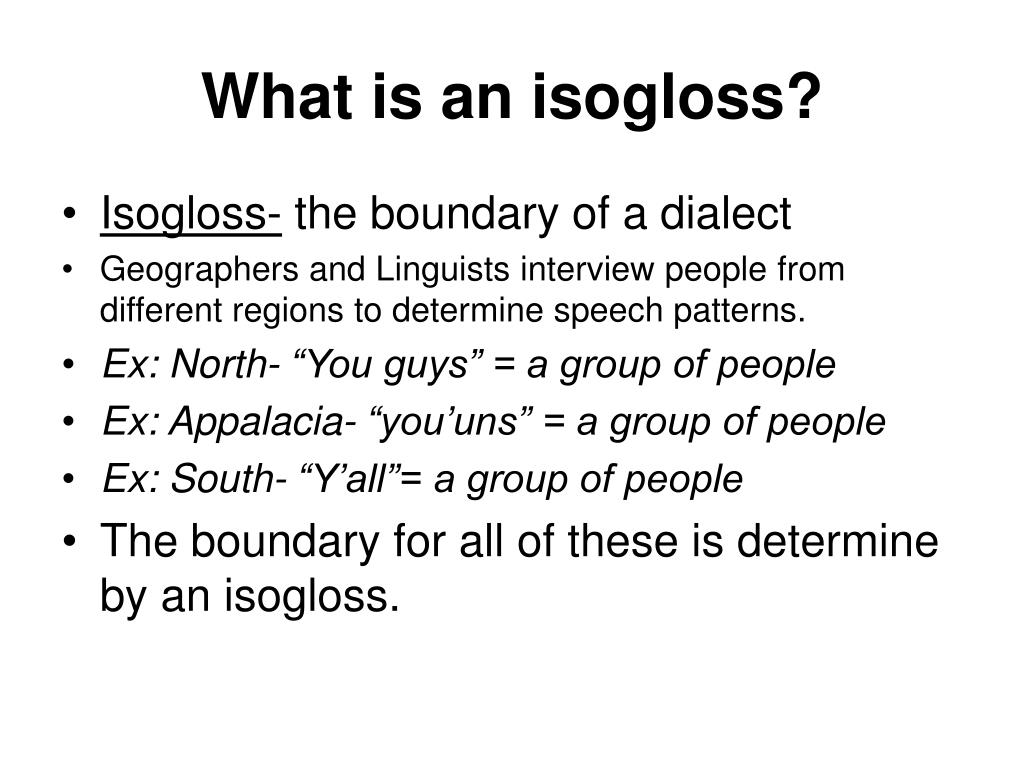
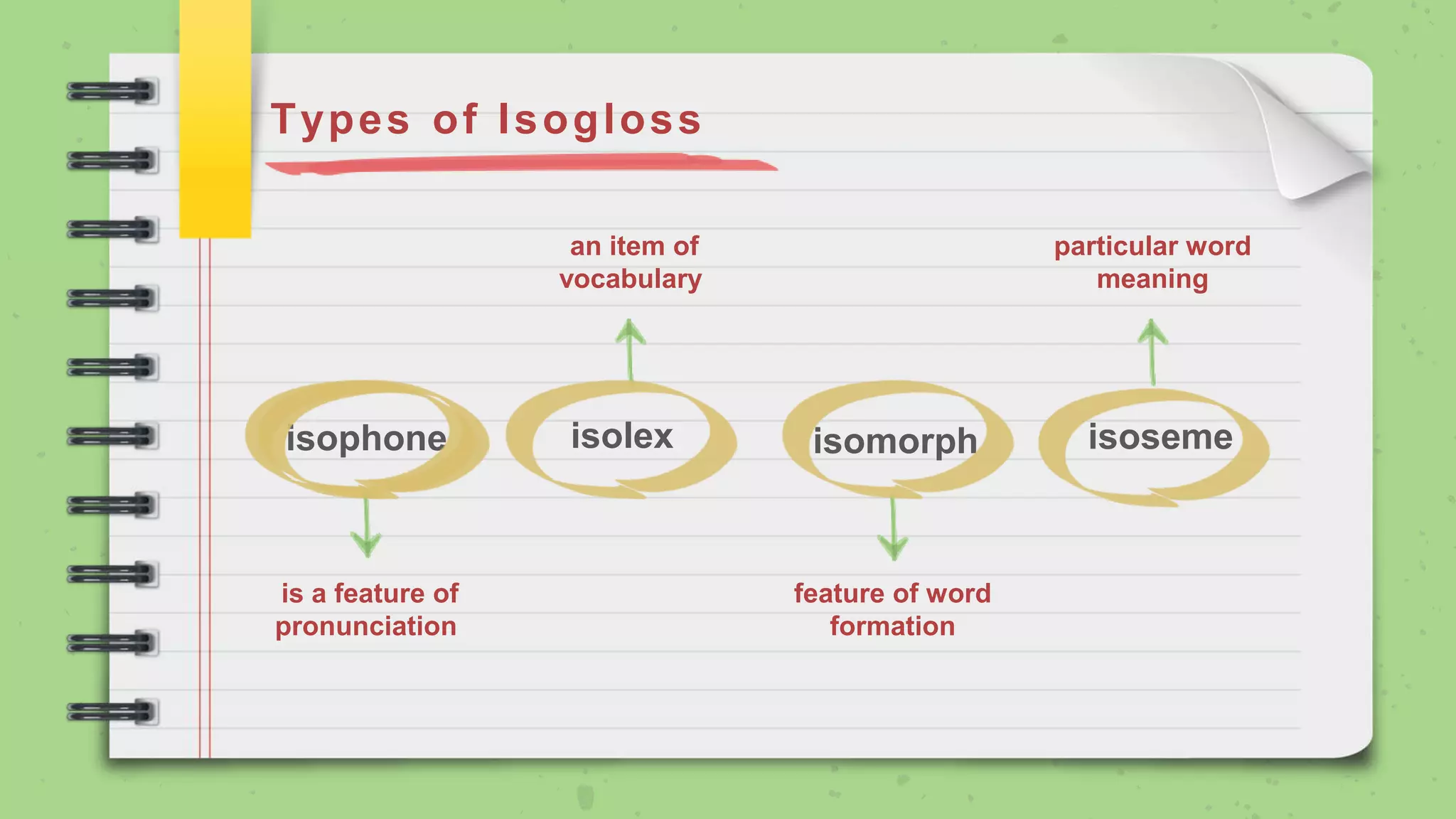
An isogloss is traditionally defined as a line on a map marking the geographical boundary within which a particular linguistic feature occurs. Whether it is a specific way of pronouncing a vowel, the choice of one word over another for the same object, or a unique grammatical structure, the isogloss represents the edge of a data set. For tech professionals, understanding these boundaries is the key to building software that truly “speaks” to its users, ensuring that AI tools, search engines, and digital security protocols are optimized for regional realities.
The Digital Transformation of Linguistic Mapping
Historically, mapping an isogloss was a labor-intensive task involving field researchers traveling from village to village with notebooks. Today, technology has automated this process, turning linguistic mapping into a cornerstone of spatial data analysis.
Defining the Isogloss in a Data-Driven World
In the context of modern technology, an isogloss is more than just a line; it is a boundary of high-density data variance. When we look at Twitter (X) metadata, Reddit threads, or localized search queries, we can see clear patterns where certain technological terms or slang shift abruptly at a specific latitude or longitude. Tech companies use these “digital isoglosses” to segment their user bases. For instance, if a fintech app is launching a “peer-to-peer” payment feature, knowing whether the target demographic refers to this as “sending money,” “venmoing,” or “pinging” is essential for UX design and search engine optimization.
From Paper Maps to GIS: The Evolution of Spatial Analysis
Geographic Information Systems (GIS) have revolutionized how we visualize isoglosses. By layering linguistic data over demographic and economic maps, tech developers can identify correlations that were previously invisible. For example, a GIS developer might overlay an isogloss of tech-specific slang over a map of high-speed internet penetration. This allows companies to identify “innovation hubs” where new terminology is being generated. These insights are invaluable for software deployment, as they help engineers predict which regions will adopt new features faster based on their linguistic receptivity to tech-forward terminology.
Leveraging Isoglosses in Natural Language Processing (NLP)
One of the most significant challenges in Artificial Intelligence today is “Standard Language Bias.” Most AI models are trained on standardized versions of English, Spanish, or Mandarin, which often excludes millions of users who speak regional dialects. Understanding and integrating isoglosses is the solution to this technical hurdle.
Overcoming the “Standard Language” Bias in AI
When a Large Language Model (LLM) or a Voice Assistant (like Alexa or Siri) fails to understand a user, it is often because the user is situated on the other side of a linguistic isogloss that the training data ignored. By identifying these isoglosses, NLP engineers can create more inclusive training sets. Instead of one monolithic model, developers are now building “dialect-aware” layers. These layers detect the user’s location or speech patterns and adjust the model’s weights to favor the vocabulary and syntax typical of that specific geographic zone. This is not just a matter of convenience; it is a necessity for the global scaling of AI tools.
Dialect-Aware Algorithms and Regional UX
The user experience (UX) of a digital product is heavily dependent on how “natural” the interaction feels. If an automated customer service bot uses terminology from one side of an isogloss to communicate with a user on the other, it creates cognitive friction. By utilizing real-time isogloss data, companies can implement dynamic UI/UX. This means an app could automatically switch its microcopy—the small bits of text on buttons and menus—based on the user’s regional dialect. For example, a grocery delivery app might use the term “soda” in one region and “pop” in another, determined by the known isogloss boundaries of the user’s GPS coordinates.
The Role of Isoglosses in Hyper-Local Digital Security and Geofencing
As cyber threats become more sophisticated, tech security firms are looking toward unconventional data points to verify identity and prevent fraud. This is where the concept of the linguistic isogloss meets digital security.
Enhancing Security through Linguistic Fingerprinting
Linguistic fingerprinting is a growing field in digital security. Every individual has a unique “idiolect,” but that idiolect is heavily influenced by the isoglosses they live within. Security algorithms can now use linguistic patterns as a secondary factor in authentication. If a user typically logs in from a region where a specific dialect is dominant and suddenly attempts to access their account using syntax or vocabulary from a different side of a major isogloss, the system can flag the activity as a potential compromise. It’s a form of behavioral biometrics that uses the geography of language to secure data.
Geofencing Beyond GPS: Semantic Boundaries
Geofencing traditionally relies on GPS coordinates to trigger actions, such as sending a notification when a user enters a specific area. However, “semantic geofencing” uses isoglosses to create more nuanced boundaries. For developers of social media platforms or community-based apps, this allows for the creation of “digital neighborhoods.” By understanding where a certain slang term or cultural reference begins and ends, developers can tailor content moderation and community guidelines. This ensures that a phrase considered a friendly greeting in one regional pocket—defined by an isogloss—is not unfairly flagged as offensive by a global algorithm that doesn’t understand the local context.
Building Global Tech with Local Precision
For tech companies, the ultimate goal is “Glocalization”—the ability to be a global brand while maintaining a local feel. Navigating the isoglosses of the world is the technical blueprint for achieving this.
The Engineering Challenges of Multi-Dialect Software
Building software that respects isogloss boundaries presents significant engineering challenges. It requires a robust backend architecture that can handle “localization-at-scale.” Instead of having separate localized versions of an app (e.g., US English vs. UK English), modern engineering favors a modular approach. Content is stored in “strings” that are pulled dynamically based on a complex matrix of regional data. Engineers must build high-performance databases that can map a user’s IP or GPS to a specific isogloss profile in milliseconds, ensuring that the localized experience does not come at the cost of latency.
Future Trends: Real-time Isogloss Tracking and the Metaverse
As we move toward more immersive digital environments like the Metaverse or AR (Augmented Reality), the importance of the isogloss will only grow. In a virtual world, we are no longer bound by physical geography, but “digital isoglosses” will emerge based on user communities. We will likely see the development of real-time isogloss tracking software that analyzes how language evolves within virtual spaces.
For developers, this means the future of tech lies in “Predictive Localization.” Instead of reacting to linguistic shifts, AI will be able to predict how an isogloss will move or expand based on viral trends and digital migration. This will allow tech companies to stay ahead of the curve, ensuring their products remain relevant as the boundaries of human communication continue to shift in the digital age.
In conclusion, an isogloss is far more than a map line for linguists; it is a vital data point for the next generation of technology. By respecting and integrating these invisible boundaries, tech leaders can build AI that is more inclusive, security that is more robust, and user experiences that feel truly personal, no matter where in the world the user happens to be. Understanding the “what” and “where” of an isogloss is the key to unlocking the “how” of global digital success.
aViewFromTheCave is a participant in the Amazon Services LLC Associates Program, an affiliate advertising program designed to provide a means for sites to earn advertising fees by advertising and linking to Amazon.com. Amazon, the Amazon logo, AmazonSupply, and the AmazonSupply logo are trademarks of Amazon.com, Inc. or its affiliates. As an Amazon Associate we earn affiliate commissions from qualifying purchases.