
In the world of mechanical engineering and security hardware, few inventions are as ubiquitous yet overlooked as the spring lock. From the front door of a suburban home to the complex internal components of industrial machinery, the spring lock—specifically the spring latch—represents a fundamental achievement in kinetic energy management and automated fastening. While often overshadowed by the high-security deadbolt, the technology behind spring-loaded mechanisms is a cornerstone of modern accessibility and convenience.
To understand what a spring lock is, one must look past the simple handle and explore the physics of potential energy, the evolution of metallurgy, and the current digital transformation that is turning traditional mechanical latches into sophisticated IoT (Internet of Things) devices. This article explores the technical foundations, industrial applications, and the future of spring lock technology.
The Fundamentals of Spring Lock Mechanics
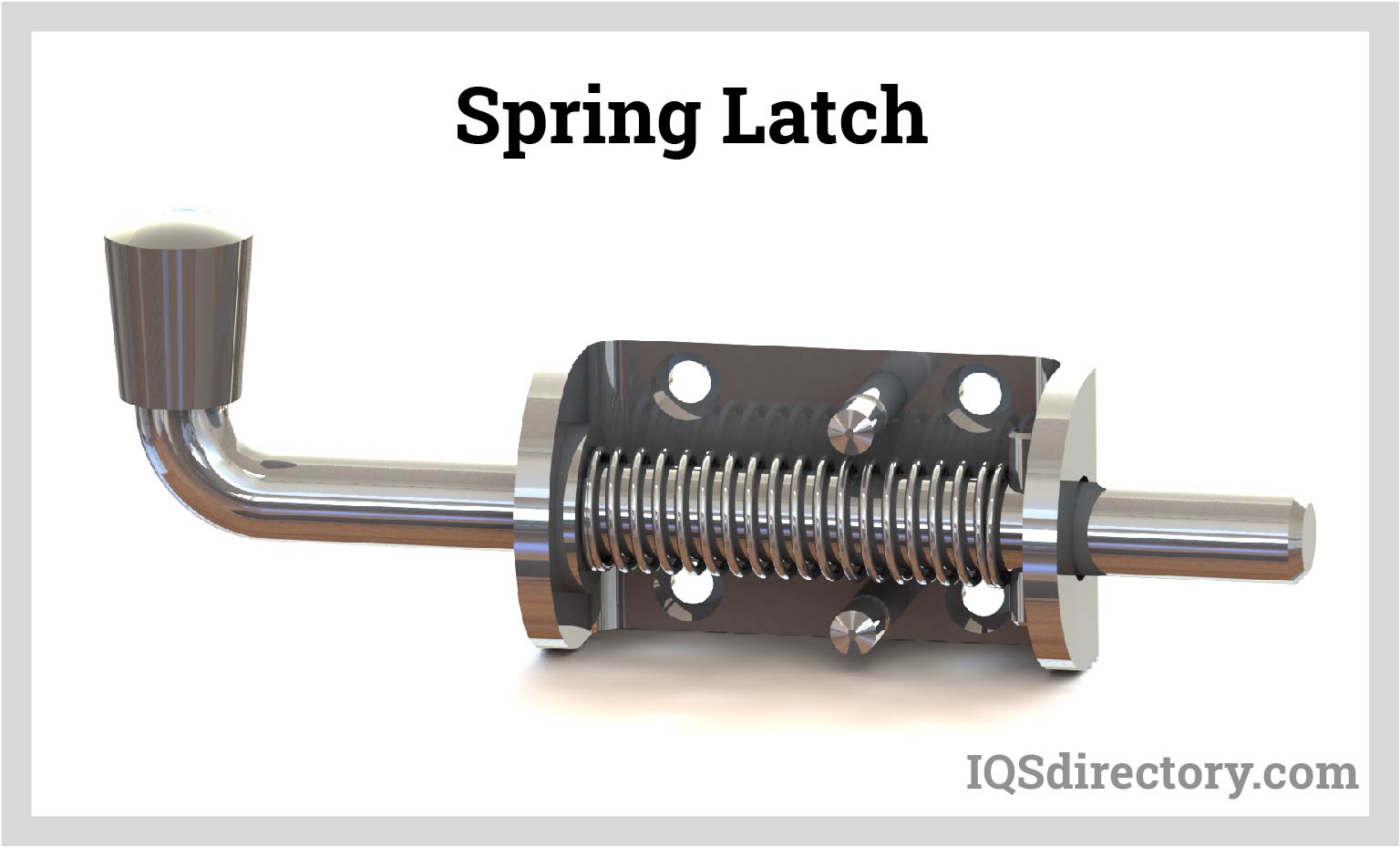
At its most basic level, a spring lock is a locking mechanism that utilizes a spring-loaded bolt to secure a door or panel. Unlike a deadbolt, which must be manually moved into place using a key or a thumb turn, a spring lock functions automatically through the use of stored energy.
The Physics of Potential Energy
The “spring” in a spring lock refers to a small compression spring housed within the lock body. When the door is open, the spring is in a relaxed or semi-relaxed state, holding the bolt in an extended position. As the door closes, the angled face of the bolt (known as the bevel) makes contact with the strike plate on the door frame. This physical contact forces the bolt backward into the lock housing, compressing the internal spring. This is a classic example of mechanical work being converted into potential energy.
Once the bolt clears the edge of the strike plate and aligns with the recessed hole (the box), the potential energy stored in the compressed spring is released. The spring expands, “snapping” the bolt back into its extended position, thereby securing the door without any manual intervention from the user.
Materials and Durability
In technical manufacturing, the choice of materials for a spring lock is critical. Because these locks are subject to frequent friction and repetitive stress, they are typically constructed from non-corrosive alloys. The bolt itself is often made of brass, zinc, or stainless steel. The internal springs are usually engineered from “music wire” or stainless steel alloys designed to withstand hundreds of thousands of cycles without losing their “K-factor” (spring constant). A failure in the spring’s elasticity results in a “dead” latch, rendered useless for its intended purpose.
Critical Technical Components and Engineering Design
While the concept is simple, the engineering of a modern spring lock involves several precise components working in synchronization.
The Latch Bolt and Beveling
The latch bolt is the primary component that protrudes from the door. Its most significant design feature is the bevel—the slanted edge. The angle of this bevel is mathematically calculated to ensure the least amount of resistance when the door is pushed shut. In high-end architectural tech, this bevel may be coated in Teflon or other low-friction materials to ensure a “whisper-quiet” closure.
The Guard Bolt (Anti-Shim Technology)
One of the most important technical advancements in spring lock design is the addition of the “deadlatch” or guard bolt. This is a smaller, secondary plunger located next to the main latch bolt. When the door is closed, the main bolt enters the strike plate, but the guard bolt is held back by the plate itself. This mechanical state prevents the main bolt from being retracted by external pressure (such as a credit card or a “shim” tool). This is a vital security feature that distinguishes a cheap privacy latch from a secure entry lock.
The Cylinder and Cam Mechanism
The interaction between the user and the spring lock occurs at the cylinder. When a key is inserted and turned, or a handle is depressed, a cam (a rotating piece of metal) engages with the retractor. This overcomes the force of the spring to pull the bolt back manually. The precision of these tolerances—often measured in thousandths of an inch—determines how “smooth” the lock feels to the end-user.
Vulnerability and Digital Security: The Tech Behind the Latch
Despite their convenience, spring locks have historically been viewed as less secure than deadbolts. In the tech community, the vulnerability of spring-loaded systems is a major point of discussion, particularly concerning “forced entry” versus “surreptitious entry.”
The “Loiding” Vulnerability
Because spring locks rely on a spring to hold the bolt in place, they are susceptible to a technique known as “loiding” (derived from celluloid). If a spring lock lacks a guard bolt, a thin, flexible material can be inserted between the door and the frame to force the bolt back into the housing. From a security engineering perspective, this represents a failure of “positive engagement.”
The Transition to Electronic Actuators
To solve these security flaws, modern security tech has moved toward electronic spring locks. In these systems, the traditional mechanical spring is often supplemented or replaced by a solenoid or a small motor.
When a digital signal (from a keypad, RFID card, or smartphone) is received, the actuator pulls the bolt back. This allows for the convenience of a spring-loaded “slam-shut” door while maintaining the internal rigidity of a locked system. These electronic latches are common in hotel rooms and high-sec data centers, where “audit trails” are required to track every time the spring mechanism is engaged.
Smart Integration and Sensors
The latest generation of spring locks incorporates Hall Effect sensors. These sensors use magnetic fields to detect whether the bolt is actually extended or retracted. This information is then relayed to a central hub via Zigbee, Z-Wave, or Thread protocols. This technological layer ensures that the user doesn’t just know if the door is closed, but specifically if the spring lock has successfully engaged.
Advanced Industrial Applications: From Robotics to Aerospace
The term “spring lock” isn’t limited to doors. In broader technological contexts, spring-loaded locking pins and fasteners are essential for mechanical stability in various industries.
Robotics and End-Effectors
In robotics, spring locks are used as “fail-safe” mechanisms. For example, if a robotic arm loses power, spring-loaded brakes or locks engage automatically to prevent the arm from collapsing or dropping a payload. This “normally closed” configuration uses the spring’s natural tension as a safety feature, requiring power only to unlock the mechanism.
Aerospace and Automotive Engineering
In aircraft, spring-loaded latches are used on access panels and overhead bins. These must be engineered to withstand extreme vibrations and pressure changes without “unseating.” Similarly, in automotive tech, the hood latch and trunk lock of a car are specialized spring locks designed to engage upon impact, ensuring that the hood does not fly open at high speeds.
Animatronics and Precision Fastening
In the field of animatronics—the intersection of robotics and entertainment—spring-loaded pins are often used to hold heavy cosmetic shells onto metal endoskeletons. These mechanisms allow for quick maintenance access while ensuring the heavy components remain locked during high-velocity movements. The precision required here is immense; if a spring lock fails in a heavy-duty animatronic, the resulting mechanical failure can be catastrophic to the machine’s internal servos.
The Future of Latching Technology in the IoT Era
As we move further into the decade, the humble spring lock is undergoing a significant digital evolution. The focus is shifting from pure mechanics to “active” security systems.
Biometric Integration
We are seeing a rise in spring locks that feature embedded fingerprint scanners or facial recognition. In these units, the spring mechanism remains the “muscle,” but the “brain” is a dedicated micro-processing unit (MCU). These systems require ultra-low power consumption, leading to innovations in “energy harvesting” where the physical act of turning the door handle generates enough micro-electricity to power the biometric sensor.
AI and Predictive Maintenance
In industrial settings, “Smart Spring Locks” are now being equipped with vibration and acoustic sensors. By using AI to analyze the sound of the spring snapping into place, maintenance software can predict when a spring is beginning to fatigue or when the bolt is misaligned. This shift toward predictive maintenance reduces downtime in factories and improves the overall lifecycle of security hardware.

Conclusion: The Enduring Utility of the Spring Lock
The spring lock is a masterpiece of functional tech. It bridges the gap between the physical world of springs and bolts and the digital world of sensors and automation. While it may seem like a simple device, its evolution from a basic iron latch to a digitally monitored, IoT-enabled security component demonstrates the incredible trajectory of mechanical engineering.
Whether it is protecting a home, securing a robotic arm, or ensuring the safety of a vehicle, the spring lock remains an essential component of the modern world. Its brilliance lies in its simplicity: the use of a simple coil of wire to provide the security and convenience we rely on every single day. As we look toward the future, the spring lock will continue to adapt, proving that even the most basic mechanical concepts can find a permanent home in the high-tech landscape.
aViewFromTheCave is a participant in the Amazon Services LLC Associates Program, an affiliate advertising program designed to provide a means for sites to earn advertising fees by advertising and linking to Amazon.com. Amazon, the Amazon logo, AmazonSupply, and the AmazonSupply logo are trademarks of Amazon.com, Inc. or its affiliates. As an Amazon Associate we earn affiliate commissions from qualifying purchases.