
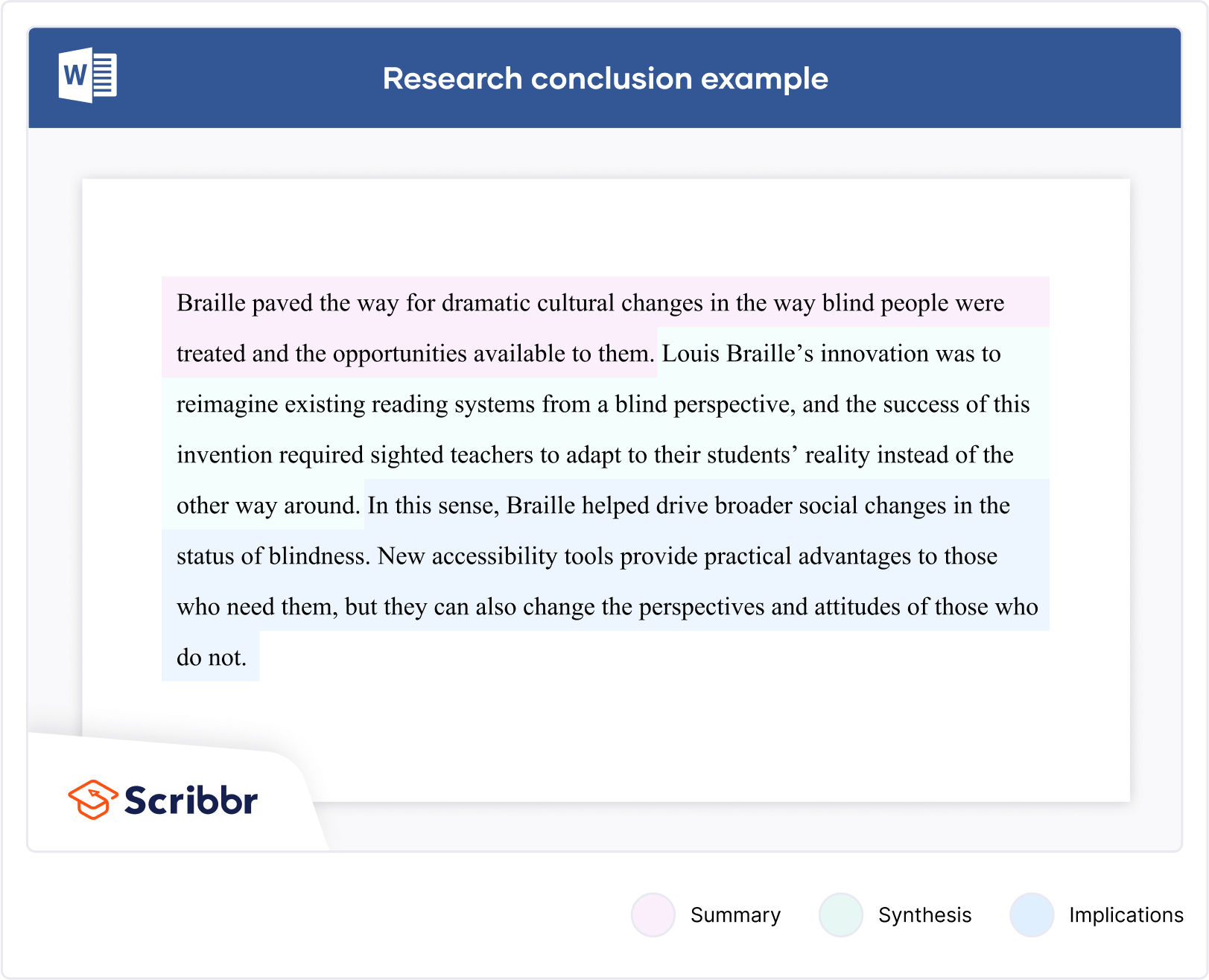
In the rapidly evolving landscape of technology, the term “scientific conclusion” has migrated from the isolated laboratories of chemistry and physics into the heart of the silicon-driven world. Whether it is an AI developer determining the accuracy of a large language model, a software engineer analyzing the results of a high-load stress test, or a data scientist interpreting user engagement metrics, the scientific conclusion remains the final, critical bridge between raw observation and actionable knowledge.
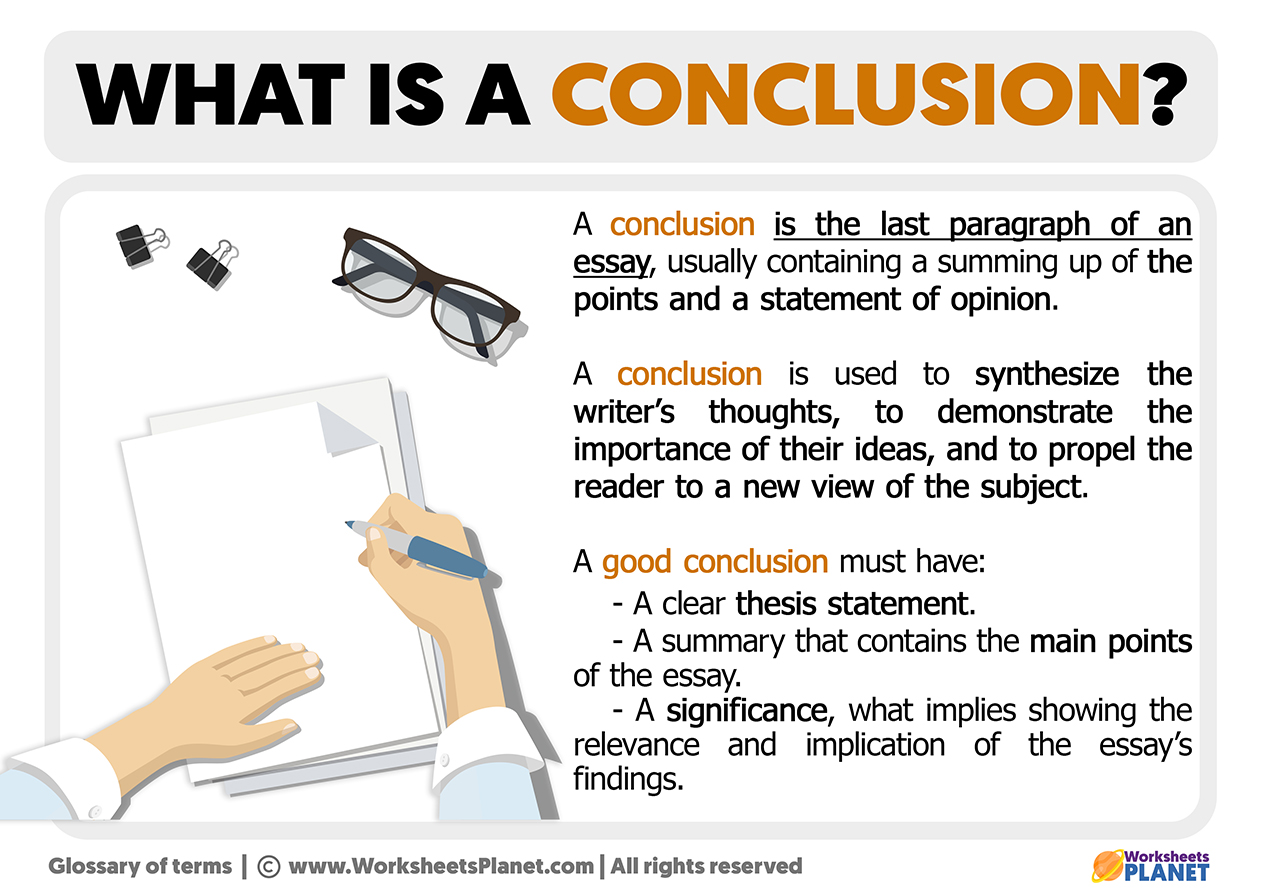
At its core, a scientific conclusion is more than just a summary of results. It is a definitive statement, backed by empirical evidence and rigorous testing, that accepts or rejects a hypothesis. In the tech sector, where billions of dollars are staked on the reliability of algorithms and the integrity of code, understanding how to reach a sound scientific conclusion is the difference between a breakthrough innovation and a catastrophic system failure.
The Architecture of Evidence: How Tech Professionals Reach Conclusions
In technology, the journey toward a scientific conclusion begins long before the final line of a report is written. It starts with the application of the scientific method to technical problems. Unlike a casual observation, a technical conclusion must be reproducible, verifiable, and grounded in data.
A/B Testing: The Modern Laboratory
One of the most prevalent applications of the scientific method in technology today is A/B testing. When a company like Netflix or Amazon considers a change to its user interface, it does not rely on intuition. Instead, it forms a hypothesis: “Changing the ‘Buy Now’ button from blue to orange will increase conversion rates by 2%.”
The “scientific conclusion” in this context is the result of a controlled experiment where two groups of users are exposed to different variables. For a conclusion to be considered valid, it must meet the threshold of statistical significance. Tech professionals look for a p-value—a measure of the probability that the observed results occurred by chance. If the data shows a clear, statistically significant preference for the orange button, the scientific conclusion is that the change is effective, prompting a global rollout.
Machine Learning and Model Validation
In the realm of Artificial Intelligence, a scientific conclusion is reached through model validation. When training a neural network, developers split their data into training sets and test sets. The hypothesis is that the model can generalize its learning to unseen data.
The conclusion is reached by analyzing metrics such as precision, recall, and F1 scores. If a model performs exceptionally well on the training data but fails on the test data—a phenomenon known as overfitting—the scientific conclusion is that the model has not actually “learned” the underlying patterns, but has merely memorized the noise. This rigorous approach prevents the deployment of “black box” systems that might fail in real-world scenarios.
Distinguishing Correlation from Causation in Software Analytics
A recurring challenge in technology is the temptation to jump to conclusions based on surface-level data. A core component of a true scientific conclusion is the ability to distinguish between correlation (two things happening at the same time) and causation (one thing causing the other).
The Pitfalls of Big Data
In the age of Big Data, tech companies have access to trillions of data points. However, more data does not automatically lead to better conclusions. For instance, a software company might notice that as their app’s load time increases, user satisfaction scores decrease. While it is tempting to conclude that load time is the only factor, a scientific approach requires looking deeper.
Perhaps the load time increased because a new, complex feature was added that users find confusing. In this case, the confusion—not the speed—might be the primary driver of dissatisfaction. A scientific conclusion requires isolating variables to ensure that the “cause” identified is the actual driver of the “effect.”
Statistical Significance and P-Values in UI/UX Research
In User Experience (UX) research, reaching a scientific conclusion often involves qualitative and quantitative analysis. When a researcher concludes that a specific workflow is “counter-intuitive,” they must back that claim with data from usability testing.
Technical professionals use tools like heatmaps and click-stream analysis to gather evidence. A scientific conclusion in UX isn’t just “I think this looks better”; it is “User testing on a cohort of 500 participants showed a 30% reduction in task completion time, leading to the conclusion that Version B is the superior design.” By relying on these metrics, tech teams avoid the “Highest Paid Person’s Opinion” (HiPPO) syndrome, ensuring that product development is guided by facts rather than corporate hierarchy.
The Role of Peer Review and Documentation in Technical Ecosystems
In the academic world, a scientific conclusion is not accepted until it survives the gauntlet of peer review. The technology industry has adopted a similar framework to ensure the integrity of software and hardware development.
Code Reviews as a Scientific Audit
In software engineering, the code review process serves as a form of peer review. When a developer submits a pull request, they are essentially proposing a hypothesis: “This code solves the bug without introducing new vulnerabilities.”
The reviewers act as the scientific community, scrutinizing the logic, testing the edge cases, and verifying the conclusion. A “scientific conclusion” in this workflow is reached when the code is merged, signifying that it has been vetted and proven to meet the system’s requirements. This culture of skepticism and verification is what allows complex systems, like cloud infrastructure or banking software, to operate with high degrees of uptime.
Technical Documentation: The Scientific Paper of the Enterprise
Just as a scientist publishes their findings in a journal, a tech professional must document their conclusions in technical specifications and white papers. Documentation provides the “methods” section of the tech world, allowing other engineers to understand how a conclusion was reached.
If a cybersecurity team concludes that a specific encryption protocol is no longer safe, they must document the vulnerabilities found and the exploits used to reach that conclusion. This transparency ensures that the conclusion can be audited and that the organization can build upon that knowledge rather than repeating the same mistakes.
Challenges to the Scientific Conclusion: AI Bias and “Black Box” Logic
As we move further into the era of advanced AI, the process of reaching a scientific conclusion faces new, unprecedented challenges. The complexity of modern algorithms often makes it difficult to trace the “why” behind a specific output.
Addressing Algorithmic Hallucinations
Generative AI models sometimes produce “hallucinations”—confidently stated facts that are entirely false. For developers, the scientific conclusion here is that the model’s probabilistic nature sometimes overrides its factual accuracy. To combat this, tech professionals are developing “grounding” techniques, where the AI’s conclusions are cross-referenced against trusted databases. A conclusion in this field is now often a “confidence score” rather than a simple true/false binary.
The Drive for Explainable AI (XAI)
The “Black Box” nature of deep learning poses a threat to scientific rigor. If an AI concludes that a loan applicant is a high risk, but cannot explain why, that conclusion lacks scientific validity in a regulatory and ethical sense.
The tech industry is currently pivoting toward Explainable AI (XAI). The goal is to create systems where the conclusion is accompanied by a transparent trail of logic. In this context, a scientific conclusion is only as good as its interpretability. If we cannot explain the process, we cannot truly validate the conclusion.

The Future of Scientific Conclusions: Quantum Computing and Beyond
As we look toward the future, the nature of scientific conclusions in technology will continue to shift. With the advent of quantum computing, the very logic we use to reach conclusions—binary true/false states—will be augmented by qubits that can exist in multiple states simultaneously.
In a quantum-powered tech world, scientific conclusions will likely become more multi-dimensional. We will move away from linear problem-solving toward a model where we can conclude the probability of millions of different outcomes in seconds. This will revolutionize fields like cryptography, material science, and pharmaceutical tech.
However, regardless of the processing power at our disposal, the fundamental definition of a scientific conclusion will remain unchanged: it is an insight derived from evidence, tested against reality, and open to revision in the face of new data. In the world of technology, staying committed to this level of rigor is what ensures that our digital tools remain servants of progress rather than sources of error.
By treating every software update, every data analysis, and every AI training session as a scientific experiment, the tech industry upholds the standard of excellence that has defined the digital revolution. A scientific conclusion is the ultimate safeguard against the noise of the digital age, providing a clear, evidence-based path forward in an increasingly complex world.
aViewFromTheCave is a participant in the Amazon Services LLC Associates Program, an affiliate advertising program designed to provide a means for sites to earn advertising fees by advertising and linking to Amazon.com. Amazon, the Amazon logo, AmazonSupply, and the AmazonSupply logo are trademarks of Amazon.com, Inc. or its affiliates. As an Amazon Associate we earn affiliate commissions from qualifying purchases.