
In an increasingly interconnected digital world, the choice of your web browser is paramount, influencing everything from your online security and privacy to your daily productivity and overall digital experience. For Mac users, while Safari remains the default and a strong contender, many seek alternatives that offer different philosophies, features, and customization options. Among these, Mozilla Firefox stands out as a powerful, privacy-focused, and highly adaptable browser that has consistently evolved to meet the demands of modern internet users.
This guide provides a comprehensive walkthrough on installing Firefox on your macOS device, ensuring a smooth setup, and offering insights into optimizing its performance. Whether you’re a long-time Mac user looking for a change, a privacy advocate, or simply curious about what Firefox has to offer, this tutorial will equip you with the knowledge to integrate this robust browser seamlessly into your digital workflow. From understanding its unique advantages to troubleshooting common issues, we’ll cover every step to empower you with a browser that champions user control and open web standards, aligning perfectly with the “Tech” focus of our platform, particularly in areas like “Software,” “Digital Security,” and “Productivity.”
Why Choose Firefox for Your Mac? A Deep Dive into Its Advantages
Before we jump into the installation process, it’s worth understanding why millions of users globally choose Firefox. In a landscape dominated by a few major browsers, Firefox carves out a significant niche by prioritizing user values that resonate strongly with today’s tech-savvy individuals. Its core strengths directly address key aspects of modern digital life, making it a compelling choice for your Mac.
Unparalleled Privacy and Digital Security Features
At the heart of Firefox’s appeal is its unwavering commitment to user privacy. Unlike some competitors whose business models rely heavily on data collection, Mozilla, the non-profit organization behind Firefox, has built a browser designed to protect your online identity.
- Enhanced Tracking Protection (ETP): This feature, enabled by default, blocks a wide range of common web trackers, including social media trackers, cross-site tracking cookies, cryptominers, and fingerprinters. This not only safeguards your personal data but also contributes to a faster browsing experience by preventing unwanted scripts from loading. For users concerned about “Digital Security” and data breaches, ETP is a significant advantage, ensuring your browsing habits remain private.
- DNS over HTTPS (DoH): Firefox was one of the first browsers to implement DoH, an advanced security protocol that encrypts your Domain Name System (DNS) requests. This prevents third parties, such as internet service providers (ISPs), from snooping on the websites you visit, adding an extra layer of privacy that is crucial in an era of increasing surveillance.
- Built-in Password Manager (Firefox Lockwise): Integrated seamlessly, Lockwise securely stores your usernames and passwords, generating strong, unique passwords for new accounts. This not only enhances your “Digital Security” by promoting good password hygiene but also significantly boosts “Productivity” by eliminating the need to remember or manually type complex credentials.
- Open Source and Transparency: Firefox’s code is open source, meaning it’s publicly available for scrutiny by security experts worldwide. This transparency fosters trust and allows for rapid identification and patching of vulnerabilities, making it a highly secure platform for your daily online activities. This aspect also aligns with the broader “Technology Trends” of transparency and community-driven development in software.
Robust Performance and Productivity Enhancements
While privacy is a cornerstone, Firefox doesn’t compromise on performance or features designed to enhance your “Productivity.” It’s engineered to be fast, efficient, and responsive, even with numerous tabs open.
- Multi-Process Architecture (Quantum Engine): Firefox’s Quantum engine dramatically improved its speed and memory management. It runs different parts of the browser in separate processes, preventing a single problematic tab from crashing the entire browser and ensuring smoother multitasking. This technical advancement directly translates to a more fluid and productive user experience.
- Extensive Customization with Add-ons: The Firefox Add-ons store offers thousands of extensions, themes, and plugins to personalize your browsing experience. From powerful ad blockers like uBlock Origin to productivity tools for note-taking, task management, and research, you can tailor Firefox to perfectly suit your workflow. This level of customization is a significant draw for users who want their “Software” to adapt to them, rather than the other way around.
- Firefox Sync for Seamless Cross-Device Experience: With a Firefox Account, you can sync your bookmarks, open tabs, history, passwords, and add-ons across all your devices – Mac, iPhone, iPad, Windows, and Android. This feature ensures a consistent and productive browsing experience, allowing you to pick up exactly where you left off, regardless of the device you’re using. This is a vital “Productivity” tool for anyone operating in a multi-device ecosystem.
- Picture-in-Picture Mode: This handy feature allows you to pop out videos into a floating window that stays on top of other applications, enabling you to watch content while working on other tasks. It’s a small but significant detail that exemplifies Firefox’s commitment to enhancing user “Productivity.”
Championing the Open Web and User Choice
Beyond its technical merits, choosing Firefox is also a statement about supporting an open, accessible, and user-centric internet. Mozilla, as a non-profit, actively contributes to web standards and advocates for user rights online. By choosing Firefox, you’re not just selecting a browser; you’re supporting an organization dedicated to keeping the internet a global public resource, an ideology that resonates with forward-thinking “Technology Trends” and digital ethics. This aligns with the broader idea of “Brand” in the sense of a mission-driven organization impacting the digital landscape.
Considering these compelling advantages, it’s clear why Firefox remains a top choice for Mac users seeking a powerful, secure, and customizable web browser. Now, let’s prepare your Mac for a seamless installation.
Preparing Your Mac for Firefox Installation
Before initiating the download and installation process, a few preliminary checks and preparations can ensure a smooth experience. These steps are crucial for any “Software” installation on macOS and prevent potential hitches.
Checking System Requirements
Firefox is designed to run efficiently on a wide range of macOS versions. However, it’s always good practice to ensure your system meets the minimum requirements.
Currently, Firefox requires macOS 10.12 (Sierra) or newer.
To check your macOS version:
- Click the Apple menu () in the top-left corner of your screen.
- Select “About This Mac.”
- The macOS version will be displayed prominently.
If your Mac is running an older version, you might consider updating it to benefit from the latest security patches and features, not just for Firefox but for your overall system “Digital Security.”
Ensuring Sufficient Disk Space
While Firefox itself is not a large application, it’s wise to have adequate free disk space for the installer, the application itself, and future cache and profile data. Typically, Firefox requires around 200-300 MB for the initial installation.
To check your available disk space:
- Click the Apple menu () > “About This Mac.”
- Go to the “Storage” tab.
- You’ll see a breakdown of your disk usage and available space.
If space is tight, consider clearing out old files, emptying your trash, or uninstalling unused applications. Efficient “Software” management is key to maintaining system performance.
Stable Internet Connection
A stable internet connection is essential for downloading the Firefox installer file. Ensure you are connected to a reliable Wi-Fi network or via Ethernet to prevent corrupted downloads or interruptions.
Closing Unnecessary Applications
While not strictly mandatory, it’s a good habit to close any non-essential applications before installing new “Software.” This frees up system resources and minimizes potential conflicts during the installation process, contributing to overall system “Productivity.”
With these preparations complete, your Mac is now ready to welcome Firefox.
Step-by-Step Guide: Installing Firefox on macOS
Installing Firefox on a Mac is a straightforward process, designed for user convenience. We’ll walk through each step, from downloading the official installer to setting up your new browser.
Downloading the Firefox Installer
The first and most crucial step is to download the official Firefox installer. Always obtain “Software” directly from the developer’s official website to ensure authenticity and avoid potential security risks, a core principle of “Digital Security.”
- Open Your Current Browser: Launch Safari or any other web browser currently installed on your Mac.
- Navigate to the Official Firefox Website: In the address bar, type
www.mozilla.org/firefox/and press Enter. This is the official home for Firefox. - Initiate the Download: On the Firefox homepage, you’ll typically see a prominent “Download Firefox” button. Click this button. The website will automatically detect your operating system (macOS) and offer the correct version of the installer (a
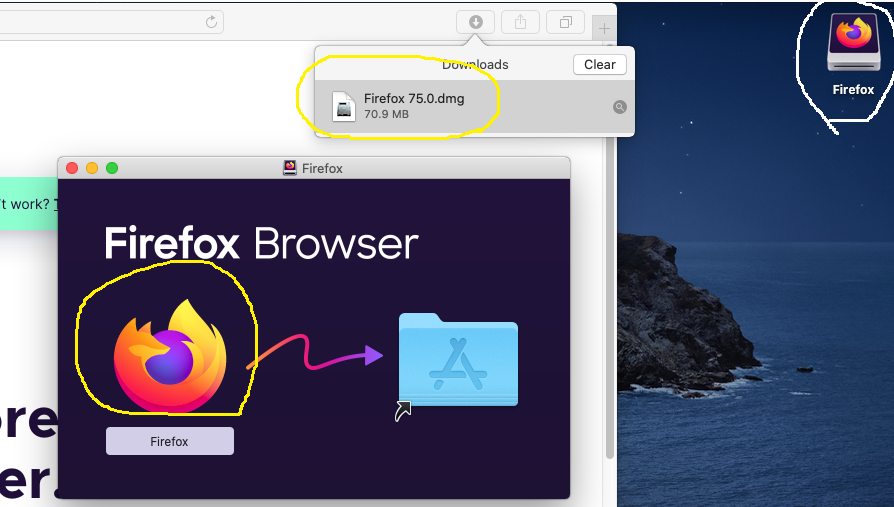
.dmgfile). - Save the File: Your browser will prompt you to save the file. The default download location is usually your “Downloads” folder, which is perfectly fine. Click “Save” or “Allow” to begin the download. The file size is typically around 120-150 MB, so it should download relatively quickly on a stable connection.
Running the Installation File
Once the .dmg file has finished downloading, you can proceed with the installation. macOS makes installing most applications incredibly simple.

- Locate the Downloaded File: Open your “Downloads” folder (you can usually find it in your Dock, or by going to Finder > Downloads). You should see a file named something like
Firefox [version number].dmg. - Open the Disk Image: Double-click on the
.dmgfile. macOS will verify the disk image and then mount it, opening a new Finder window that displays its contents. - Drag and Drop to Applications: In the newly opened Finder window, you will typically see the Firefox application icon and an alias to your “Applications” folder. To install Firefox, simply click and drag the “Firefox” application icon into the “Applications” folder alias.
- Note: If you don’t see the “Applications” folder alias, you can drag the Firefox icon directly to the “Applications” folder listed in the sidebar of any Finder window.
- Wait for Copying: macOS will copy the Firefox application to your Applications folder. This process usually takes only a few seconds.
- Eject the Disk Image: Once the copying is complete, you can “eject” the Firefox disk image. You can do this by dragging the “Firefox” disk image icon from your desktop or Finder sidebar to the Trash, or by right-clicking (or Control-clicking) the disk image icon and selecting “Eject ‘Firefox’.” This cleans up your desktop.
- Move the
.dmgto Trash (Optional): The original.dmginstaller file is no longer needed after the application is copied. You can drag it from your “Downloads” folder to the Trash and empty the Trash to free up disk space.
Initial Setup and Customization
With Firefox installed, it’s time to launch it and begin personalizing your browsing experience.
- Launch Firefox: Go to your “Applications” folder (Finder > Applications) and double-click the “Firefox” icon.
- Security Prompt (First Launch): The first time you open Firefox, macOS Gatekeeper might present a warning stating, “Firefox is an app downloaded from the Internet. Are you sure you want to open it?” This is a standard security measure. Click “Open” to proceed. This is part of macOS’s “Digital Security” framework to protect users from potentially malicious “Software.”
- Set as Default Browser (Optional): Firefox will likely ask if you want to make it your default browser.
- If you choose “Yes,” Firefox will open all web links automatically.
- If you choose “No” or “Not now,” your current default browser will remain unchanged. You can always change your default browser later in Firefox’s preferences or in macOS System Settings.
- Import Data: Firefox offers to import bookmarks, history, passwords, and other data from other browsers already installed on your Mac (like Safari or Chrome). This is a fantastic “Productivity” feature that helps you transition smoothly without losing your personalized web environment. Follow the on-screen prompts if you wish to import.
- Sign in to Firefox Account (Recommended): If you have an existing Firefox Account, sign in now. If not, consider creating one. This allows you to sync your browsing data across all your devices, benefiting from the “Firefox Sync” feature we discussed earlier. This is crucial for a consistent and productive cross-device workflow.
- Explore and Customize: Take a moment to explore Firefox’s interface. You can customize themes, install add-ons (extensions), and adjust settings to your liking. Look for the “Hamburger menu” (three horizontal lines) in the top-right corner to access options like “Add-ons and themes,” “Settings,” and “Customize Toolbar.” This is where you can truly make Firefox your own, enhancing your “Productivity” and tailoring the “Software” to your specific needs.
Congratulations! You have successfully installed Firefox on your Mac and are ready to explore the web with a powerful, private, and customizable browser.
Maintaining and Optimizing Your Firefox Experience
Installation is just the beginning. To truly leverage Firefox’s full potential on your Mac, regular maintenance and optimization are key. This ensures you benefit from the latest security features, performance improvements, and productivity enhancements that align with best practices in “Software” management and “Digital Security.”
Updating Firefox for Security and Performance
Keeping your browser up to date is perhaps the single most important action for maintaining “Digital Security” and optimal performance. Mozilla frequently releases updates that include crucial security patches, bug fixes, and new features.
- Automatic Updates (Default): By default, Firefox is configured to check for and install updates automatically in the background. This is the most convenient and recommended method. You might occasionally see a prompt to restart Firefox to finalize an update.
- Manual Update Check: If you want to ensure you’re on the very latest version or if you’ve disabled automatic updates, you can manually check for updates:
- Open Firefox.
- Click the “Hamburger menu” (three horizontal lines) in the top-right corner.
- Go to “Help” > “About Firefox.”
- Firefox will open a window and automatically check for updates. If an update is available, it will start downloading. Once downloaded, you’ll be prompted to restart Firefox to apply the update.
Never ignore update notifications. Timely updates are your first line of defense against newly discovered vulnerabilities, a critical aspect of personal “Digital Security.”
Enhancing Productivity with Firefox Extensions
Firefox’s extensive add-on library is a treasure trove for boosting “Productivity” and tailoring your browsing. Carefully selected extensions can transform your web experience.
- Accessing the Add-ons Store:
- Click the “Hamburger menu” > “Add-ons and themes” (or press Shift + Command + A).
- This will open the Firefox Add-ons Manager, where you can browse recommended extensions or search for specific ones.
- Recommended Categories for Productivity and Security:
- Ad Blockers: Extensions like uBlock Origin significantly reduce page load times and block intrusive ads, contributing to a smoother, faster, and more private browsing experience.
- Password Managers: Beyond Firefox Lockwise, dedicated password managers like LastPass or Bitwarden offer advanced features and cross-browser compatibility, further bolstering your “Digital Security.”
- Privacy Extensions: Tools like Privacy Badger or Decentraleyes add extra layers of protection against tracking.
- Productivity Tools: From note-taking extensions (e.g., OneTab for tab management, Todoist for tasks) to grammar checkers, there’s an add-on for almost every workflow need.
- Security Best Practices for Add-ons:
- Read Reviews: Always check user reviews and ratings before installing an add-on.
- Check Permissions: Be mindful of the permissions an add-on requests. Does a simple dark mode extension truly need access to all your browsing data?
- Install Sparingly: While tempting, installing too many add-ons can slow down your browser. Only install what you genuinely need.
- Keep them Updated: Just like Firefox itself, keep your add-ons updated for security and functionality.
Integrating these “Software” tools responsibly can dramatically improve your browsing efficiency and online safety.
Troubleshooting Common Installation and Performance Issues
Even with the best preparation, you might encounter minor issues. Here are solutions to some common problems:
- “Firefox can’t be opened because it is from an unidentified developer.”
- This is another Gatekeeper security feature. To bypass it for a trusted application:
- Go to “System Settings” (or “System Preferences” on older macOS) > “Privacy & Security.”
- Scroll down, and you might see a message about Firefox being blocked with an “Open Anyway” button. Click it.
- Alternatively, Control-click (or right-click) the Firefox app icon in the Applications folder, then select “Open.” You’ll get the same warning, but with an “Open” button that will proceed.
- This is another Gatekeeper security feature. To bypass it for a trusted application:
- Firefox is slow or unresponsive:
- Clear Cache and Cookies: Go to “Hamburger menu” > “Settings” > “Privacy & Security” > “Cookies and Site Data” > “Clear Data.” This can often resolve performance issues.
- Disable Extensions: Try disabling add-ons one by one to identify if a particular extension is causing slowdowns.
- Refresh Firefox: This feature restores Firefox to its default state while saving your essential information (bookmarks, history, passwords). Go to “Help” > “More Troubleshooting Information” > “Refresh Firefox.” This is a powerful troubleshooting step that can fix many stubborn problems without a full reinstallation.
- Check Hardware Acceleration: In “Settings” > “General,” scroll down to “Performance” and ensure “Use recommended performance settings” is checked. If issues persist, try unchecking it and then rechecking “Use hardware acceleration when available” if it’s an option.
- Download issues: If the
.dmgfile doesn’t download correctly, try downloading it again, ensuring a stable internet connection. You could also try downloading from a mirror site if available (though the official site is always preferred).
By proactively managing updates, thoughtfully integrating extensions, and knowing how to troubleshoot, you can ensure your Firefox experience on Mac remains consistently fast, secure, and productive.
Uninstalling Firefox from Your Mac
While our goal is to help you embrace Firefox, there might come a time when you need to uninstall it. Perhaps you’re troubleshooting a persistent issue, clearing up disk space, or simply opting for a different browser. Removing “Software” cleanly from macOS involves more than just dragging the application to the Trash, especially if you want to eliminate all residual files. This section details both the standard uninstallation and the more thorough removal of associated data, which is good practice for “Software” management.
Standard Uninstallation Process
This method removes the main Firefox application from your system.
- Quit Firefox: Before attempting to uninstall, ensure Firefox is completely closed. Click on “Firefox” in the menu bar at the top of your screen and select “Quit Firefox” (or press Command + Q).
- Open the Applications Folder: Navigate to your “Applications” folder. You can do this by opening Finder and selecting “Applications” from the sidebar, or by pressing Shift + Command + A.
- Drag to Trash: Locate the “Firefox” application icon within the Applications folder. Click and drag the “Firefox” icon directly into the Trash icon in your Dock.
- Empty the Trash: To finalize the removal, right-click (or Control-click) on the Trash icon in your Dock and select “Empty Trash.” Confirm the action if prompted.
At this point, the Firefox application itself is removed. However, certain user-specific configuration files, caches, and preference files remain on your system. These are small, but if you’re aiming for a completely clean slate (e.g., before reinstalling), you might want to remove them.
Removing Residual Files (Optional but Recommended for a Clean Uninstall)
Firefox stores user profile data, caches, and preferences in various hidden folders within your macOS user Library. Removing these ensures that no old settings or potentially corrupted data remain.
- Warning: Modifying files in the Library folder requires caution. Only delete files related to Firefox. If you are unsure, it’s safer to stick to the standard uninstallation.
- Open Finder.
- Access the Hidden Library Folder: In the Finder menu bar, click “Go,” then hold down the Option (Alt) key. “Library” will appear in the dropdown menu. Click “Library.”
- Alternatively, press Shift + Command + G to open the “Go to Folder” dialog, type
~/Library/, and press Enter.
- Alternatively, press Shift + Command + G to open the “Go to Folder” dialog, type
- Locate Firefox-Related Folders and Files: Within the Library folder, you’ll want to look for and delete the following items:
- Application Support: Open the
Application Supportfolder. Delete the folder namedFirefox. - Caches: Open the
Cachesfolder. Delete any folders or files starting withorg.mozilla.firefox. - Preferences: Open the
Preferencesfolder. Delete any files starting withorg.mozilla.firefox.plist. - Note: You might also find some related items in
Saved Application StateorContainers, but theApplication Support,Caches, andPreferencesfolders are the primary locations.
- Application Support: Open the
- Drag to Trash and Empty: Drag these identified Firefox-related folders and files to the Trash. Once again, right-click on the Trash icon and select “Empty Trash.”
By following these steps, you will have completely uninstalled Firefox and all its associated data from your Mac, freeing up disk space and ensuring no remnants remain. This thorough approach is particularly useful if you were experiencing problems and plan to reinstall, as it eliminates any potential for old, problematic configurations to persist.

Conclusion: Empowering Your Digital Journey with Firefox
Choosing the right web browser is a foundational decision for anyone navigating the modern digital landscape. For Mac users, Firefox offers a compelling blend of features that cater to the most critical aspects of online life: “Digital Security,” “Productivity,” and user empowerment. Through this comprehensive guide, we’ve walked you through every step of installing Firefox on your macOS device, from initial preparation and the smooth drag-and-drop installation to the vital processes of ongoing maintenance, optimization, and even clean uninstallation.
We’ve explored why Firefox stands out in a crowded market, emphasizing its robust privacy protections, commitment to open-source principles, and a rich ecosystem of extensions designed to supercharge your “Productivity.” By understanding its advantages and knowing how to keep it updated and customized, you’re not just installing a piece of “Software”; you’re adopting a powerful tool that aligns with proactive “Technology Trends” and personal digital well-being.
As the internet continues to evolve, so too will the tools we use to access it. Firefox, with its consistent innovation and user-centric philosophy, remains a steadfast choice for those who value control, privacy, and an uncompromised browsing experience. We encourage you to make Firefox your own – customize it, explore its vast add-on library, and experience a web browser truly built for you and for an open, accessible internet. Embrace Firefox on your Mac, and take a significant step towards a more secure, productive, and personalized digital journey.
aViewFromTheCave is a participant in the Amazon Services LLC Associates Program, an affiliate advertising program designed to provide a means for sites to earn advertising fees by advertising and linking to Amazon.com. Amazon, the Amazon logo, AmazonSupply, and the AmazonSupply logo are trademarks of Amazon.com, Inc. or its affiliates. As an Amazon Associate we earn affiliate commissions from qualifying purchases.