
In the lexicon of military engineering and tactical technology, few devices are as infamous or as technically distinctive as the “Bouncing Betty.” Officially known as the S-mine (Schrapnellmine), this piece of hardware revolutionized the concept of area denial and reactive defense during the mid-20th century. While its historical context is rooted in conflict, the underlying engineering principles—trigger sensitivity, dual-stage propulsion, and synchronized detonation—have left a lasting legacy on modern sensor technology, proximity hardware, and even the conceptual frameworks of digital security.
To understand what a Bouncing Betty is, one must look past the battlefield and into the intricate mechanics of “bounding” technology. It represents a pivotal moment in engineering where weaponry moved from static, buried hazards to dynamic, height-sensitive machines.

The Mechanical Anatomy: How the S-Mine Functioned
The Bouncing Betty was not a standard landmine that exploded underfoot. Instead, it was a sophisticated mechanical system designed to maximize the “lethal radius” by utilizing the third dimension: height. Standard mines often lose energy into the ground; the S-mine, however, was designed to meet its target at waist height.
The Dual-Charge Propulsion System
At the heart of the Bouncing Betty’s technology was a two-stage firing mechanism. When the trigger was activated, it did not immediately detonate the main payload. Instead, a small propellant charge (usually black powder) was ignited. This charge acted as a launch motor, propelling the inner canister of the mine out of its outer casing and into the air.
The engineering challenge here was precision. If the mine climbed too high, the blast would dissipate; if it didn’t climb high enough, it would be no more effective than a traditional mine. The S-mine was calibrated to “bounce” to a height of approximately 0.9 to 1.5 meters (3 to 5 feet) before the main explosive charge was triggered by a short-delay fuse.
Sensor Technology and Tripwires
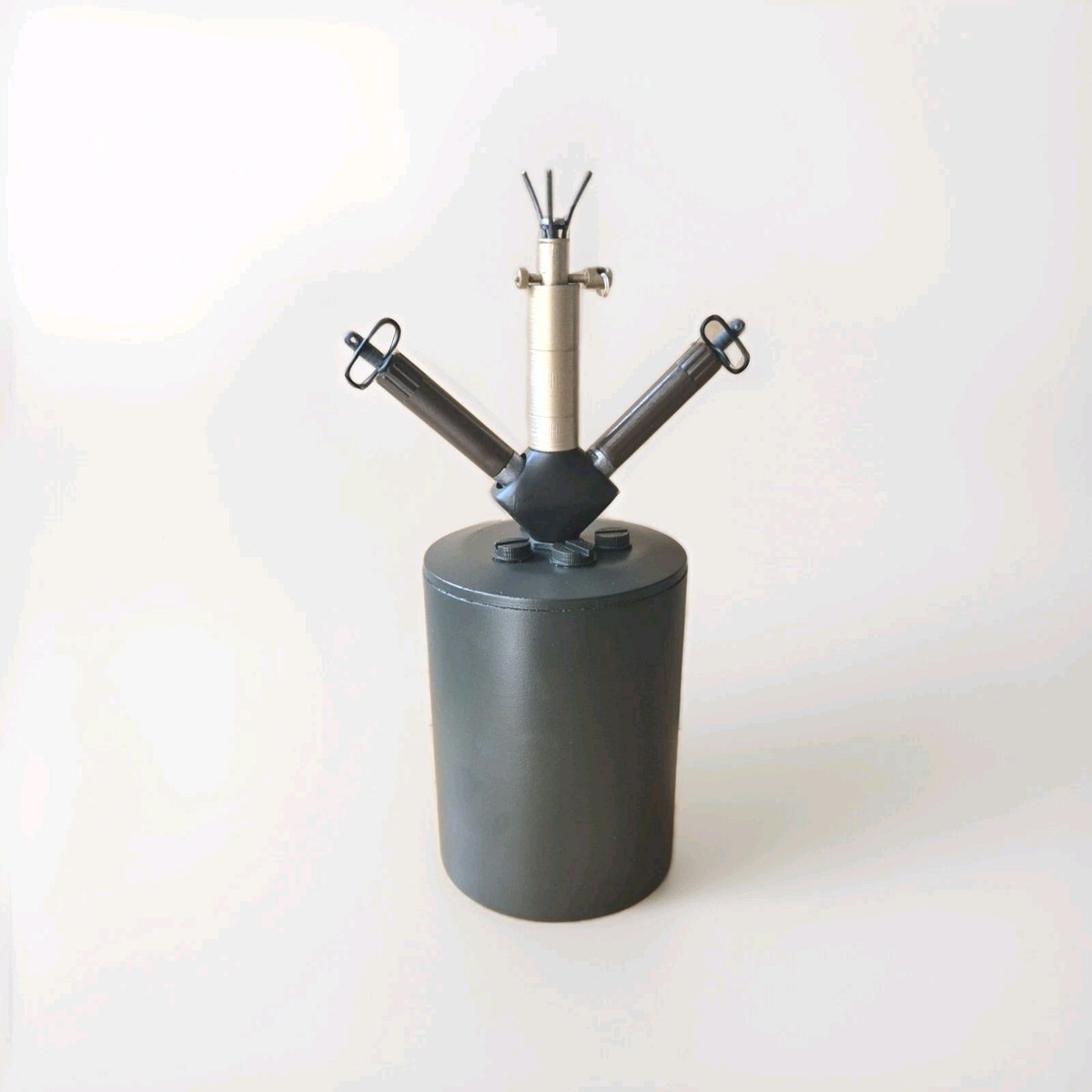
The “user interface” of the Bouncing Betty was its fuse system. The device was remarkably versatile for its era, featuring a three-pronged pressure sensor. This sensor could be triggered by direct downward force (stepping on it) or by a lateral pull (tripwires).
From a technical standpoint, the igniter was a masterclass in mechanical reliability. It utilized a spring-loaded striker held back by a shear pin. The level of tension required to break the pin was carefully calculated to ensure that small animals would not trigger it, but the weight of a human soldier would. This focus on “target discrimination” is a precursor to the sophisticated filtering we see in modern motion-sensing tech today.
The Evolution of Proximity Sensors in Modern Tech
While the Bouncing Betty is a relic of hardware history, the core concepts of its operation—detecting a presence and initiating a multi-stage response—are foundational to modern sensing technology. The transition from mechanical tripwires to digital proximity sensors reflects the broader evolution of the tech industry.
From Shrapnel to Data: The Shift to Non-Lethal Detection
The physics of the “bounce”—moving an object to a specific coordinate to perform a function—has been superseded by the physics of the “ping.” Modern proximity sensors, such as those found in autonomous vehicles (LiDAR) or smart home security systems (PIR), operate on the same principle of area denial and perimeter monitoring.
Instead of a mechanical striker, we now use Passive Infrared (PIR) sensors that detect changes in heat signatures or Ultrasonic sensors that measure the time-of-flight of sound waves. The “Bouncing Betty” logic survives in the way these systems are programmed: a “pre-alert” phase (equivalent to the bounce) where the system identifies a threat, followed by an “action” phase (equivalent to the detonation) where the system records video, sends an alert, or engages a deterrent.
Smart Security Systems and Motion Intelligence
In the world of gadgets and IoT (Internet of Things), the “reactive” nature of the Bouncing Betty has been refined into “smart triggers.” Modern security cameras often use a “bounding box” in their software—a digital area that, when breached, triggers a specific sequence of high-tech responses. This is the high-tech, digital descendant of the tripwire. By defining zones of interest, engineers can minimize false positives, a problem that plagued early mechanical mine technology.

Digital “Bouncing Bettys”: Reactive Exploits in Cybersecurity
In the realm of digital security and software engineering, the term “Bouncing Betty” is often used metaphorically to describe a specific type of defensive or offensive code. These are “logic bombs” or “trapdoors” designed to remain dormant until a specific condition is met, at which point they “pop up” and execute their payload.
Logic Bombs and Tripwire Code
In cybersecurity, a “logic bomb” acts much like an S-mine. It is a piece of code intentionally inserted into a software system that will set off a malicious function when specified conditions are met. For example, a programmer might hide a code snippet that deletes a database if their employee ID is removed from the payroll system.
Just like the Bouncing Betty, these digital mines are designed for maximum impact. They don’t just “explode” on the surface; they often wait for the “height” of the system’s vulnerability—such as a backup cycle or a system update—to trigger, ensuring the damage is as widespread as possible.
Behavioral Analysis vs. Static Triggers
Modern digital defense has moved toward “Active Defense” mechanisms that mirror the S-mine’s complexity. Anti-malware software now uses “heuristics” to detect “bouncing” behavior. If a piece of software starts performing unusual actions—like trying to elevate its own administrative privileges (the “bounce”) before encrypting files—the security tech intercepts it.
We also see “Honeypots” in network security. These are digital decoys designed to look like high-value targets. When a hacker “steps” on a honeypot, it doesn’t just alert the admins; it often triggers a secondary “bounce” protocol that redirects the hacker into a sandbox environment where their movements can be tracked without them knowing they’ve triggered a “mine.”
Ethical Engineering and the Future of Autonomous Defense
As we look toward the future of technology, the legacy of reactive systems like the Bouncing Betty raises significant questions about the role of AI and autonomy in engineering. The shift from purely mechanical triggers to AI-driven decision-making represents the next frontier in “Smart Tech.”
AI in Precision Targeting
The next generation of defensive technology involves Autonomous Weapon Systems (AWS). Unlike the Bouncing Betty, which was indiscriminate once triggered, modern AI-driven systems are being engineered to use facial recognition and gait analysis to identify specific targets. This is the ultimate evolution of the S-mine’s three-pronged igniter: a sensor that doesn’t just feel pressure, but “understands” the target.
From a tech trend perspective, this move toward “precision reactivity” is seen in everything from automated drone defense systems to high-speed algorithmic trading in finance, where “traps” are set for competing bots.
The Global Movement Toward “Smart” Limitation
The inherent danger of “reactive” tech—whether it’s a 1940s landmine or a 2024 automated cybersecurity exploit—is the risk of unintended consequences. In the engineering world, there is a growing movement toward “Safe-by-Design.” This means creating systems that have a “dead man’s switch” or an automatic deactivation feature.
Modern tech reviews of defense hardware now focus heavily on “discriminatory capability.” The tech community is increasingly critical of “indiscriminate” systems, pushing instead for gadgets and software that can distinguish between a legitimate threat and a false alarm with 99.9% accuracy.
Conclusion: The Legacy of a Lethal Innovation
The Bouncing Betty remains a stark example of how engineering can be used to solve tactical problems through complex, multi-stage mechanics. While its original purpose was one of devastation, the technological concepts it introduced—dual-stage execution, sophisticated triggering, and area-denial logic—continue to influence how we build everything from home alarm systems to robust cybersecurity firewalls.
In the modern tech landscape, a “Bouncing Betty” serves as a reminder that the most effective systems are often those that don’t just sit and wait, but those that react dynamically to their environment. Whether in the form of a proximity sensor in a self-driving car or a reactive script in a digital security suite, the “bounce” is a fundamental principle of high-stakes engineering: the ability to elevate a response at exactly the right moment to achieve a calculated result. For tech professionals and enthusiasts alike, understanding these mechanical roots is essential to mastering the sophisticated, reactive digital world we navigate today.
aViewFromTheCave is a participant in the Amazon Services LLC Associates Program, an affiliate advertising program designed to provide a means for sites to earn advertising fees by advertising and linking to Amazon.com. Amazon, the Amazon logo, AmazonSupply, and the AmazonSupply logo are trademarks of Amazon.com, Inc. or its affiliates. As an Amazon Associate we earn affiliate commissions from qualifying purchases.