
In the hyper-competitive world of beauty and personal care, the emergence of the “Botox hair treatment” serves as a masterclass in brand strategy, cognitive association, and premium market positioning. To the uninitiated, the term suggests needles and toxins; to the brand strategist, it represents a brilliant maneuver in “borrowed equity.” While the treatment itself contains no botulinum toxin, the use of the word “Botox” is a deliberate branding choice designed to bypass traditional marketing hurdles and immediately communicate a promise of anti-aging, smoothing, and restoration.
This article explores how the “Botox hair treatment” has redefined salon service branding, the psychological triggers it pulls, and how companies leverage high-authority trademarks to create entirely new service categories.

1. The Power of Association: Borrowing Brand Equity
The primary engine driving the success of the Botox hair treatment is not just the chemical formula of the deep conditioner used, but the name itself. In branding, “borrowed equity” refers to the practice of associating a new product with an established, high-authority brand to inherit its perceived values.
The Psychology of Familiarity
When a consumer hears the word “Botox,” a specific set of attributes is instantly triggered: smoothing, wrinkle-reduction, youthfulness, and medical-grade efficacy. By co-opting this name, hair care brands have successfully bypassed the “education phase” of the marketing funnel. Instead of explaining a complex deep-conditioning protein treatment, they simply call it “Botox for hair.” The consumer’s brain fills in the gaps: “It will make my hair look younger, smoother, and healthier.”
Cognitive Ease and Consumer Decision-Making
Branding is often a battle for “cognitive ease.” Humans are hardwired to prefer information that is easy to process. A “Keratin-infused collagen smoothing system” requires mental effort to understand. “Hair Botox” is intuitive. From a brand strategy perspective, this reduces the friction between the consumer’s desire and the final purchase, making it an easier sell for salon professionals and product manufacturers alike.
The Halo Effect of Medical Aesthetics
By aligning with a medical-grade aesthetic procedure, hair care brands elevate the perceived importance of the treatment. It moves the service from a “nice-to-have” luxury to a “transformative” necessity. This halo effect allows brands to charge a premium, as the consumer perceives they are receiving a technical, high-performance solution rather than a standard cosmetic topical.
2. Market Positioning: Turning a Commodity into a Luxury Service
One of the greatest challenges in the beauty industry is differentiation. Deep conditioning treatments have existed for decades, often perceived as a low-cost add-on at the shampoo bowl. The “Botox” branding pivot successfully moved these services into the premium “Specialty Treatment” tier.
Creating a Premium Tier in the Hair Care Industry
Brand positioning is about where a product sits in the mind of the consumer relative to its competitors. By labeling a treatment as “Hair Botox,” brands have successfully created a new price ceiling. While a standard conditioner might retail for $20, a “Botox” treatment can command $150 to $400 per session. This isn’t just because of the ingredients; it’s because the brand positioning suggests a “reconstructive” rather than “maintenance” outcome.
The Psychology of the “Professional Grade” Label
The branding of these treatments often emphasizes that they are “for professional use only.” This exclusivity is a key component of brand strategy. It positions the salon as the gatekeeper of a powerful technology, reinforcing the brand’s identity as an expert authority. When a consumer cannot simply buy the “magic” in a bottle at a drugstore, the value of the brand—and the service—increases exponentially.
Targeted Value Propositions
Effective branding requires a clear value proposition. For Botox hair treatments, the value proposition is “reversal.” In an era where consumers are obsessed with “anti-aging,” branding a hair product as a restorative agent targets a specific demographic: those looking to undo the damage of time, heat, and chemicals. This “reversal” narrative is far more lucrative than a simple “improvement” narrative.
3. Visual Identity and Sensory Branding
A brand is more than a name; it is a total sensory experience. The most successful Botox hair treatment manufacturers have meticulously designed their visual and sensory identity to mirror the clinical precision of the medical world.
Packaging the Experience: From Lab Vials to Salon Chairs
The packaging of these products often deviates from traditional colorful shampoo bottles. Many utilize ampoules, syringes (without needles), or clinical-style vials. This visual branding reinforces the “Botox” metaphor. It tells the consumer, “This is a potent, measured, and scientific solution.” This commitment to the clinical aesthetic is a deliberate brand choice that justifies the high cost and professional application.
Brand Storytelling: The “Fountain of Youth” Narrative
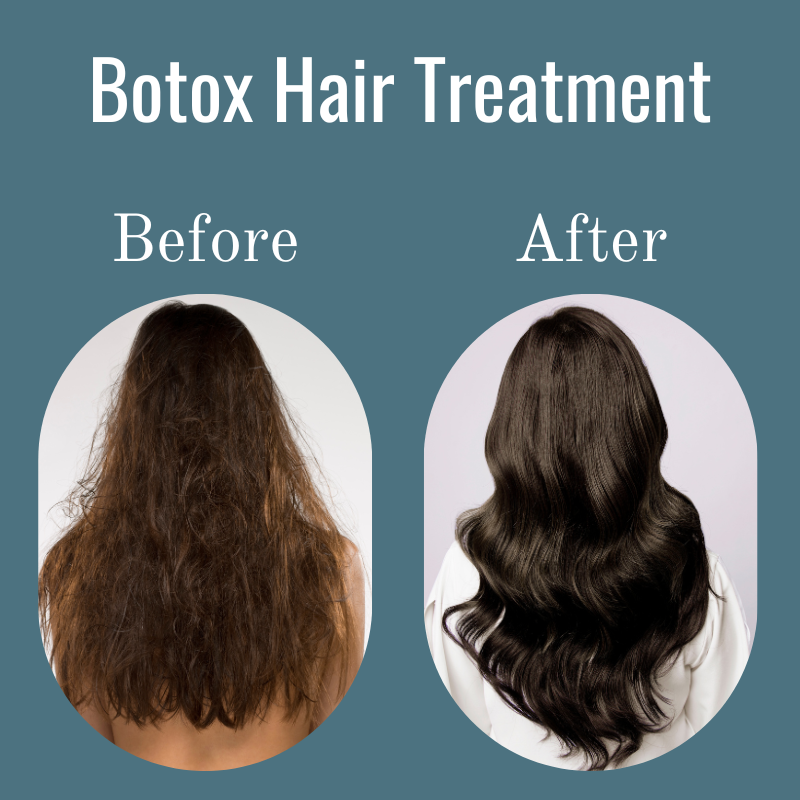
Every successful brand tells a story. The story of Botox hair treatment is one of rejuvenation. The marketing collateral often uses high-contrast “Before and After” imagery that mimics dermatological case studies. By framing the product through the lens of a “cure” for “aged” or “dead” hair, brands tap into deep-seated consumer desires for restoration. This narrative shifts the brand from being a vendor of products to a provider of confidence.
Consistency Across Touchpoints
For a brand strategy to work, the experience must be consistent. Salons that specialize in these treatments often adopt a “medical spa” atmosphere. The white-coat aesthetic, the meticulous application process, and the specific heat-sealing steps all contribute to a branded experience that feels significantly different from a standard haircut. This consistency builds brand trust and encourages word-of-mouth marketing.
4. Navigating Intellectual Property and Genericization
The use of the name “Botox” in hair care presents a fascinating case study in trademark law and the risks of a brand name becoming a generic term.
The Allergan Dilemma: Protecting a Trademark
“Botox” is a registered trademark of Allergan (now part of AbbVie). From a brand management perspective, the hair care industry’s use of the term is technically an infringement. However, the term has become so ubiquitous that it is bordering on “proprietary eponym” status—similar to how people say “Kleenex” for tissues. Brand strategists must navigate the fine line between leveraging a famous name and facing legal repercussions.
When a Brand Name Becomes a Category
When a brand name is used to describe an entire category of products, it is both a victory and a danger. For Allergan, the “Hair Botox” trend reinforces their brand as the gold standard for smoothing. For the hair care companies, however, there is the risk of “genericization.” If every salon offers “Hair Botox,” the term may eventually lose its premium luster, forcing brands to innovate with new names like “Hair Fillers” or “Glass Hair Treatments” to regain a competitive edge.
The Rise of Alternative Branding
Aware of the legal and saturation risks, some high-end brands are already pivoting their strategy. They are moving away from the “Botox” label toward “Molecular Hair Repair” or “Biomimetic Silk.” This shift represents the next evolution in branding: moving from borrowed equity to proprietary technology. By branding the specific molecule (e.g., “K18Peptide” or “Olaplex Bond Building”), companies are creating their own unique equity that they can legally protect and scale.
5. Marketing Strategies for the Modern Salon Entrepreneur
For business owners and brand managers, the “Botox hair treatment” phenomenon offers actionable insights into how to market high-margin services in a digital-first economy.
Leveraging Social Proof and Influencer Marketing
The visual nature of Botox hair treatments—the “liquid glass” shine and the dramatic frizz reduction—is perfectly suited for social media platforms like Instagram and TikTok. Brand strategy in this space relies heavily on “social proof.” By partnering with influencers who can demonstrate the “unreal” transformation, brands create a viral demand loop. The “Botox” name provides a searchable, high-intent keyword that drives organic discovery.
Retention Strategies: Building Brand Loyalty through Visible Results
A brand is only as good as its promise. The reason the Botox hair treatment has persisted as a brand category is that it delivers highly visible, immediate results. In terms of brand loyalty, this “instant gratification” is a powerful retention tool. When a customer sees their hair transformed, they associate that positive emotion with the brand, leading to high rebooking rates and long-term brand affinity.

Educating the Consumer as a Brand Pillar
Modern branding is often about education. The most successful salons don’t just “sell” a treatment; they educate the client on the “why” behind the brand. By explaining the difference between keratin (which can be harsh) and hair botox (which is nutrient-dense), a salon positions itself as a “consultative brand.” This builds a deeper level of trust, transforming a one-time customer into a brand advocate.
In conclusion, the “Botox hair treatment” is a quintessential example of how strategic naming, psychological positioning, and clinical visual identity can transform a standard service into a global beauty phenomenon. It proves that in the world of branding, the name on the bottle is often just as important as the ingredients inside. By understanding the mechanisms of borrowed equity and premium positioning, brands in any industry can learn how to capture consumer imagination and dominate their market segment.
aViewFromTheCave is a participant in the Amazon Services LLC Associates Program, an affiliate advertising program designed to provide a means for sites to earn advertising fees by advertising and linking to Amazon.com. Amazon, the Amazon logo, AmazonSupply, and the AmazonSupply logo are trademarks of Amazon.com, Inc. or its affiliates. As an Amazon Associate we earn affiliate commissions from qualifying purchases.