
In the rapid evolution of the digital age, we often credit software, artificial intelligence, and silicon chips for the leaps in human capability. However, beneath the sleek glass of a smartphone or the carbon-fiber composite of a modern drone lies a more ancient but equally transformative science: metallurgy. Specifically, the development and application of alloys. While the question “what is an alloy” might seem like a basic chemistry query, in the context of modern technology, it is the fundamental question that determines the limits of our hardware, the efficiency of our energy systems, and the reach of our aerospace endeavors.

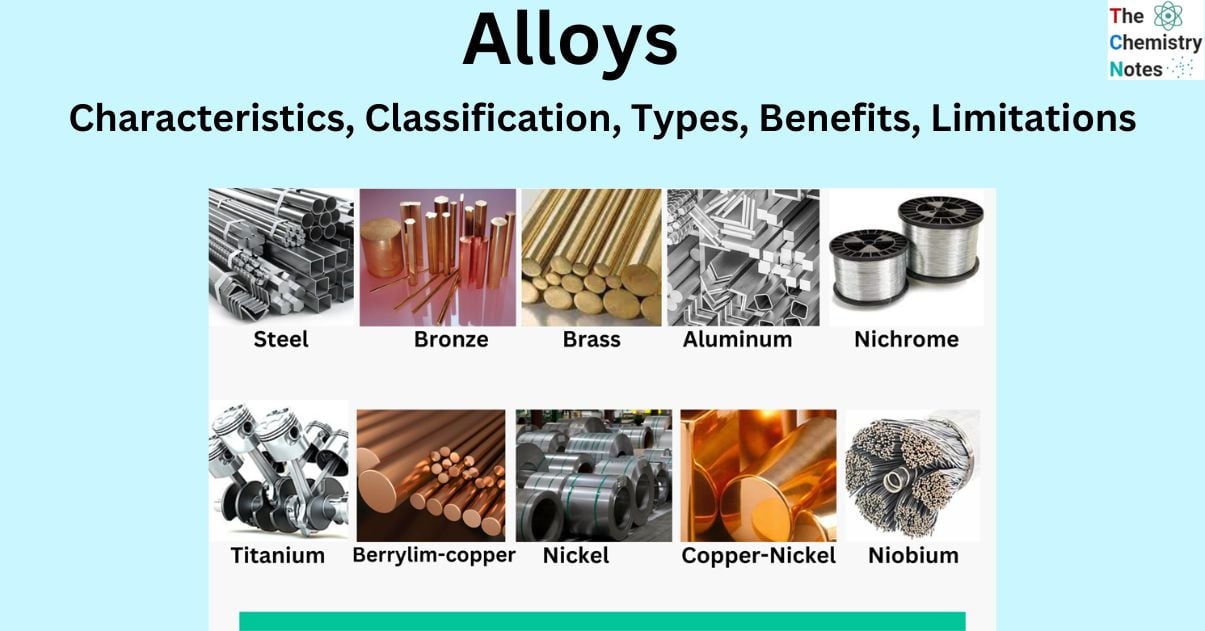
An alloy, at its simplest, is a metallic substance composed of two or more elements, where at least one is a metal. The goal of creating an alloy is not merely to mix materials, but to engineer specific properties—such as increased strength, corrosion resistance, or electrical conductivity—that no single element possesses on its own. In the tech sector, alloys are the unsung heroes that allow our gadgets to survive daily drops and our servers to withstand blistering heat.
The Foundation of Hardware: Why Pure Elements Aren’t Enough
To understand why alloys are the backbone of technology, one must first understand the limitations of pure metals. Pure gold is too soft for jewelry; pure iron is too brittle and prone to rust for construction; and pure aluminum lacks the structural integrity required for high-performance computing chassis.
Molecular Engineering for Structural Integrity
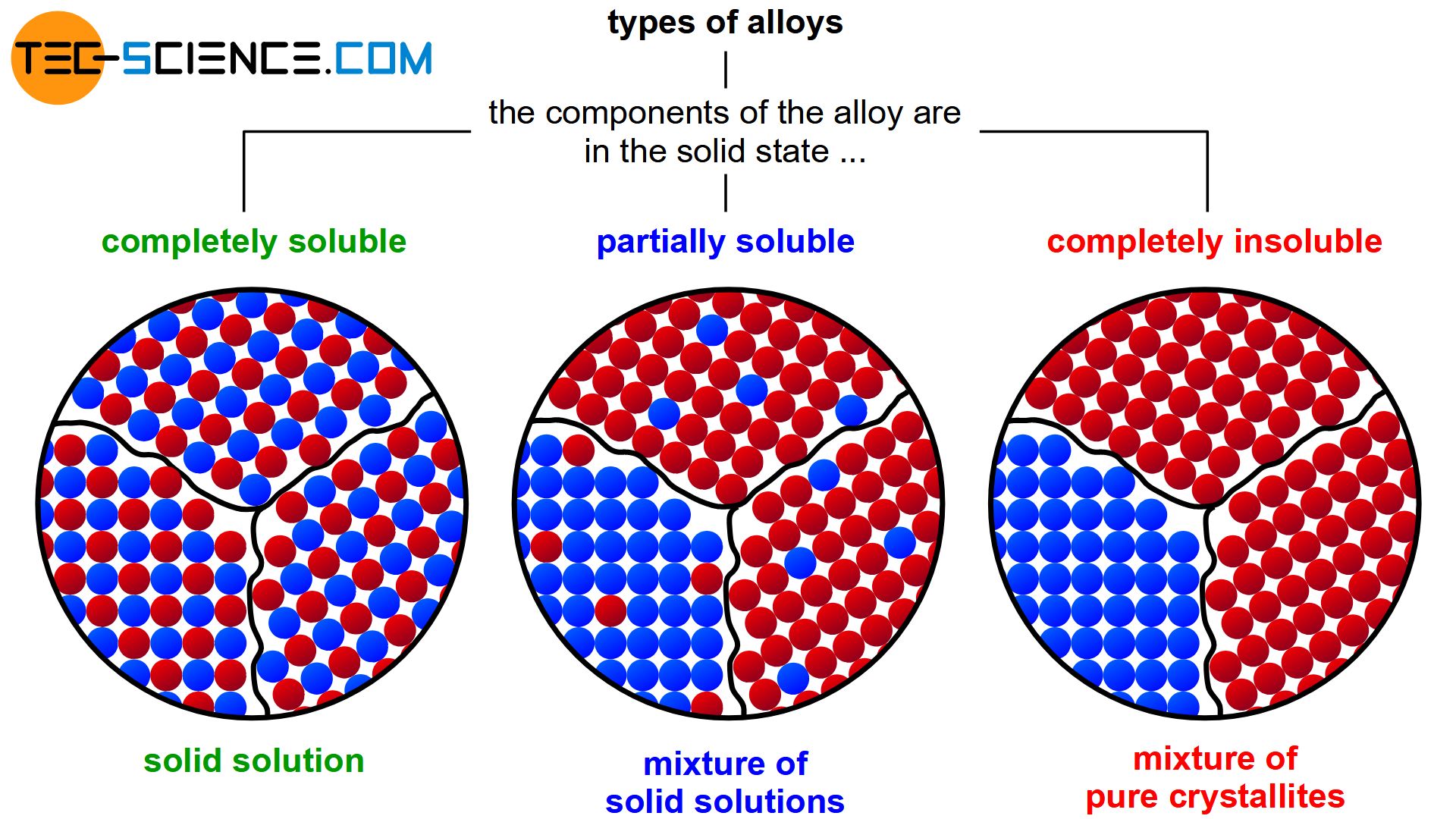
At the atomic level, pure metals have a regular, repeating crystalline structure. While this makes them predictable, it also makes them vulnerable. When pressure is applied, the layers of atoms can slide over one another, leading to deformation. By introducing a different element—a “solute”—into the host metal’s lattice, engineers create “atomic speed bumps.” These foreign atoms disrupt the regular pattern, making it harder for the layers to slide. This is the fundamental principle behind why an alloyed casing on a high-end laptop or smartphone is significantly more durable than its pure-metal counterparts.
Thermal Management in High-Performance Computing
As processors become smaller and more powerful, thermal management has become the primary bottleneck in hardware design. Modern Tech relies on heat sinks and thermal interface materials made from specialized alloys. For instance, copper-tungsten alloys are frequently used in microelectronics because they combine the high thermal conductivity of copper with the low thermal expansion of tungsten. This ensures that as a device heats up, the components do not expand at different rates, which would otherwise lead to mechanical failure or “bricking” of the hardware.
Consumer Electronics: The Art of the Sleek and Durable
The “Tech” niche is perhaps most visible in the palm of our hands. The evolution of the smartphone from a plastic brick to a slim, metallic slab is entirely a story of alloy innovation.
The Rise of Aerospace-Grade Aluminum
If you look at the technical specifications of a flagship smartphone, you will often see terms like “7000-series aluminum.” This isn’t just marketing jargon; it refers to a specific alloy of aluminum and zinc. This alloy provides a higher strength-to-weight ratio than many steels, allowing tech companies to build devices that are incredibly thin yet resistant to bending. The transition to these alloys allowed for the “bezel-less” designs we see today, as the frame provides enough structural support to hold the glass in place without bulky external supports.
Solder: The Invisible Connector
Every circuit board in every AI server, gaming console, and IoT device is held together by solder. For decades, this was a lead-tin alloy. However, due to environmental regulations and the need for better conductivity in high-speed data transfer, the tech industry shifted to lead-free alloys, such as SAC (Tin-Silver-Copper). These alloys are engineered to have a specific melting point that allows for precision manufacturing via automated “reflow” ovens, ensuring that billions of microscopic connections are made with zero defects.
Aerospace and Defense: Pushing the Limits of Material Science
In the realms of aerospace and defense technology, the requirements for alloys are pushed to their absolute physical limits. Here, we move beyond simple mixtures into the world of “superalloys.”
Superalloys and Jet Propulsion
The engines that power modern commercial jets and military drones operate at temperatures that would melt most metals. To solve this, engineers use nickel-based superalloys. These materials are designed to maintain their structural integrity at “homologous temperatures”—conditions that are nearly 90% of their melting point. Without these alloys, modern aviation would be impossible, and the high-thrust-to-weight ratios required for modern tech-heavy defense platforms would be unattainable.
Titanium Alloys in Satellite Technology
Space is perhaps the most hostile environment for technology. Satellites and deep-space probes face extreme temperature fluctuations and high levels of radiation. Titanium alloys (specifically Ti-6Al-4V) are the gold standard here. They offer exceptional corrosion resistance and can withstand the massive G-forces of a rocket launch while remaining light enough to be fuel-efficient. The “tech” of a satellite is often judged by its sensors and transmitters, but those components would never reach orbit without the protective housing of advanced titanium alloys.
Emerging Frontiers: Smart Alloys and Additive Manufacturing
As we look toward the future of technology, the definition of an alloy is expanding. We are no longer just mixing metals; we are creating “smart” materials that can respond to their environment.
Shape-Memory Alloys (SMA) and Robotics
One of the most exciting developments in robotics and medical tech is the use of Nitinol, an alloy of nickel and titanium. Nitinol is a “shape-memory” alloy, meaning it can “remember” its original shape and return to it when heated. In the tech world, this is used to create micro-actuators and robotic “muscles” that are far smaller and more reliable than traditional motors. In medical technology, Nitinol stents are compressed for insertion into arteries and then “programmed” to expand once they reach body temperature, a feat of material engineering that saves thousands of lives daily.
3D Printing and Additive Metallurgy
The rise of 3D printing (additive manufacturing) has revolutionized how we think about alloys. Traditionally, alloys were cast or forged. Now, specialized alloy powders are melted by lasers to build complex, lattice-based structures that were previously impossible to manufacture. This allows for the creation of “topologically optimized” parts—components that have metal only where it is needed for strength, reducing weight by up to 50% without sacrificing performance. This tech is currently being used to print rocket engine parts and custom titanium bone implants.
The Future: AI-Driven Alloy Discovery
The most profound intersection of “Tech” and alloys is happening right now in the field of computational materials science. Historically, discovering a new alloy was a process of trial and error that could take decades. Today, AI and machine learning are being used to predict the properties of millions of potential alloy combinations before a single gram of metal is ever melted.
Predictive Modeling and Quantum Computing
By using AI algorithms, researchers can simulate how different elements will interact at the quantum level. This is leading to the discovery of “High-Entropy Alloys” (HEAs)—materials made by mixing five or more elements in roughly equal proportions. These alloys exhibit “cocktail effects,” where the resulting material is vastly superior to any of its individual components. HEAs are expected to lead to breakthroughs in nuclear fusion shielding, ultra-efficient batteries, and next-generation superconductors.
Sustainability and the Circular Tech Economy
As the tech industry moves toward a more sustainable future, the role of alloys in the “circular economy” cannot be overstated. Modern technology depends on “strategic alloys” containing rare earth elements. Tech giants are now investing in metallurgical research to create alloys that are easier to recycle or that use more abundant materials to replace “conflict minerals.” The goal is to create a closed-loop system where the alloys in your old smartphone can be efficiently extracted and repurposed for the next generation of hardware.
Conclusion
What is an alloy? It is far more than a mixture of metals. In the context of technology, an alloy is a precisely engineered solution to a physical limitation. It is the material foundation upon which our digital world is built. From the aluminum frames that make our devices portable to the nickel-based superalloys that allow us to explore the stars, alloys are the silent enablers of innovation. As we move further into the age of AI and quantum computing, the partnership between material science and digital technology will only deepen, proving that even in a world of software, the “hardware” of the elements remains the ultimate frontier.
aViewFromTheCave is a participant in the Amazon Services LLC Associates Program, an affiliate advertising program designed to provide a means for sites to earn advertising fees by advertising and linking to Amazon.com. Amazon, the Amazon logo, AmazonSupply, and the AmazonSupply logo are trademarks of Amazon.com, Inc. or its affiliates. As an Amazon Associate we earn affiliate commissions from qualifying purchases.