
In the landscape of social knowledge-sharing, Quora stands as a unique repository of human intelligence. Unlike traditional social media platforms where content is often ephemeral, Quora functions as a living archive. Central to its technical architecture is a robust system of transparency: the ability to see edits and activity history on profiles and individual posts. For the tech-savvy user or the digital privacy advocate, these features are not mere UI additions; they are sophisticated mechanisms designed to ensure data integrity, facilitate version control, and maintain a high-quality knowledge graph.

Understanding how to navigate and interpret these logs provides a window into the evolution of digital content and the platform’s underlying commitment to accountability. This article explores the technical nuances of Quora’s activity tracking, the architecture of its versioning systems, and the implications for digital security and information veracity.
1. The Architecture of Accountability: Version Control in Knowledge Management
At its core, Quora operates on a principle similar to Wikipedia: the idea that information is iterative. When a user publishes an answer, it is rarely the final version. To manage this constant flux, Quora utilizes a technical framework known as version control. Every time a user modifies a post—whether it is a minor typo fix or a complete overhaul of the argument—the platform creates a new “snapshot” of the data.
The Role of Diff-Logging in Content Integrity
From a software engineering perspective, Quora employs “diff-logging.” Instead of merely overwriting the old entry in the database, the system records the differences (the “diffs”) between the previous version and the current one. When you click on the “Log” or “Suggested Edits” on a post, the interface reconstructs these changes for the viewer. This allows users to see exactly what was added, deleted, or formatted.
This transparency serves a critical function in the tech ecosystem by preventing “stealth editing.” In a world where misinformation can be spread by changing the context of a highly-upvoted post after the fact, the public edit history acts as a technical deterrent. It ensures that the reputation of a piece of content is tied to its entire history, not just its most recent iteration.
Metadata and the Audit Trail
Beyond the text itself, Quora’s activity logs track metadata. This includes timestamps of when edits occurred, which user performed the edit (if it was a collaborative wiki-style edit), and the sequence of status changes (such as when a question is merged or redirected). This audit trail is essential for the platform’s moderators and automated algorithms to identify patterns of “vandalism” or coordinated manipulation, which are common challenges in open-access databases.
2. Navigating the User Footprint: Interpreting Profile Activity Histories
Every Quora profile is more than just a bio and a list of answers; it is a comprehensive log of a user’s digital footprint on the site. The “Activity” tab on a profile provides a granular view of how a user interacts with the platform’s ecosystem.
The Granularity of the Activity Feed
The activity history records a wide array of technical events:
- Upvotes and Shares: These interactions signal the user’s preferences and influence the platform’s recommendation engine.
- Question Distribution: When a user asks a question or requests an answer from an expert, it is logged, showcasing their areas of interest.
- Profile Modifications: Changes to credentials, bios, and topic expertise are tracked, allowing others to see how a user’s self-representation has evolved over time.
For a developer or data analyst, this feed represents a rich stream of behavioral data. It reflects how the Quora algorithm interprets “engagement.” Every logged action informs the machine learning models that populate the user’s “Home” feed, making the activity history a mirror of the user’s personalized algorithmic profile.
The Technical Visibility of Deleted Content
A common question regarding Quora’s activity history is the visibility of deleted items. While a user can delete an answer, the “Activity” log may still show that an action occurred at a specific time, even if the content itself is no longer accessible. This design choice highlights a technical commitment to chronological continuity. By maintaining a placeholder in the activity log, the platform ensures that the “timeline” of a user’s presence remains intact, even if the specific data points are redacted.
3. Privacy, Security, and the Transparency Trade-off
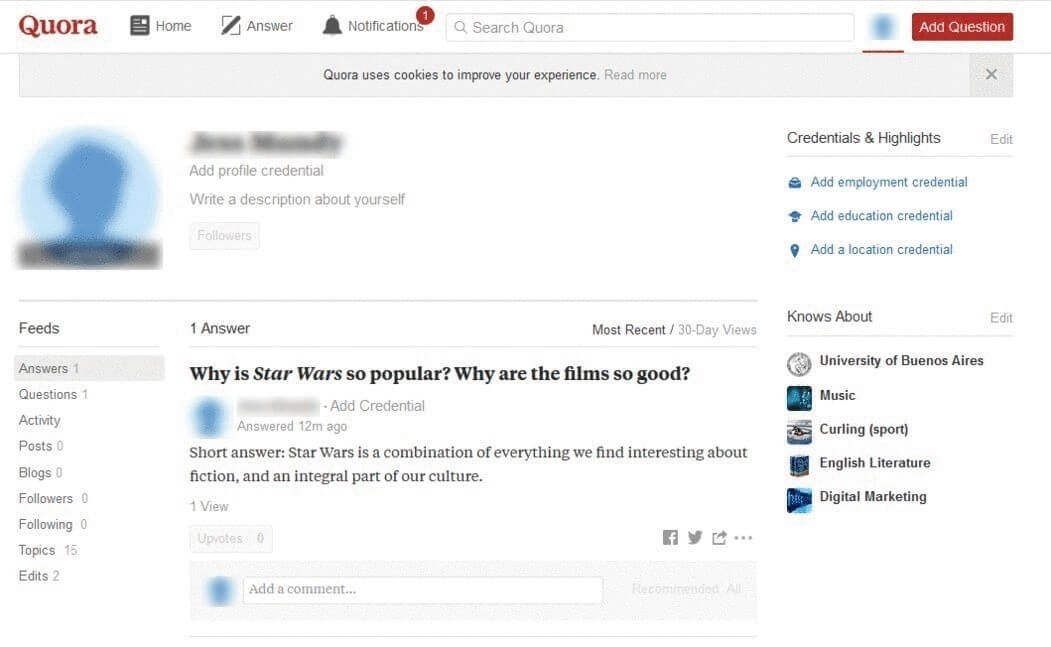
While the ability to see edits and history is a boon for content quality, it presents a complex challenge regarding digital privacy and security. The tension between “radical transparency” and “user anonymity” is a central theme in modern web development.
Anonymity vs. Accountability: The Technical Balance
Quora offers an “Anonymous” mode for posting, which is a technical workaround to the standard activity logging. When a user posts anonymously, the platform’s backend still associates the content with an account (for safety and moderation purposes), but the frontend UI breaks the link in the public activity history.
However, tech-conscious users must realize that anonymity on Quora is often content-specific, not profile-wide. If a user edits an anonymous post after they have revealed their identity, or vice versa, the version history can sometimes create “leakage” where the two states overlap. Understanding the technical boundaries of these privacy settings is vital for users who handle sensitive information or wish to maintain a low digital profile.
Protecting Against Social Engineering
From a digital security standpoint, a public activity history can be a double-edged sword. On one hand, it allows users to verify the credibility of an “expert” by reviewing their long-term history and consistency. On the other hand, it can be used for “doxing” or social engineering. An attacker could analyze years of activity logs to determine a user’s online patterns, professional background, and personal interests.
Quora addresses this by allowing users to adjust their privacy settings, such as opting out of having their content indexed by search engines. Nevertheless, the technical reality remains: once an edit is made public on a platform built for transparency, that data enters a permanent ledger that is difficult to fully erase.
4. The Role of Metadata in the Quora Trust Algorithm
Quora’s ranking system—the algorithm that determines which answers appear at the top of a thread—relies heavily on the data found in edit and activity histories. This isn’t just about the number of upvotes; it’s about the “velocity” and “quality” of the activity.
Algorithmic Evaluation of Edit Quality
Not all edits are treated equally. Quora’s AI models analyze the nature of edits to determine if a user is genuinely improving an answer or merely trying to “bump” it to the top of the feed. Technical indicators such as the ratio of characters changed, the addition of reputable external links, and the removal of flagged “spam” keywords all contribute to a post’s internal quality score.
If a user has a history of making high-quality, substantive edits, the algorithm assigns a higher “trust score” to their profile. Conversely, a history of frequent, low-value edits (such as changing a single comma multiple times) can trigger a technical red flag, potentially leading to the account being throttled or shadowbanned.
Verifying Subject Matter Expertise
The activity history serves as a technical validation of a user’s “Credentials.” When a user claims to be a “Software Engineer at Google,” the community and the algorithm look at their activity history to see if their past contributions align with that claim. If the history shows years of insightful, technical answers in the “Python” or “Cloud Computing” topics, the platform’s trust in that user’s expertise increases. This data-driven approach to credibility is what separates Quora from more chaotic, unmoderated forums.
5. The Future of Content Auditing: AI and Automated History Analysis
As we look toward the future of knowledge platforms, the role of activity history will only grow in importance, particularly with the rise of Generative AI.
Detecting AI-Generated Content Through Edit Patterns
One of the most pressing technical challenges today is distinguishing human-written content from AI-generated text. Quora is increasingly utilizing the activity and edit history to assist in this detection. Human writers typically have a “messy” edit history—they pause, they rephrase, they fix typos over several minutes. AI-generated content is often pasted in a single, large block with zero subsequent edits. By analyzing the temporal patterns in the activity log, Quora can deploy technical “classifiers” to flag content that lacks the hallmarks of human iteration.

Automated Content Auditing
In the future, we may see more robust tools that allow users to “audit” a profile’s history using AI. Imagine a feature that summarizes a user’s stance on a topic over five years, highlighting how their views have shifted based on their edit logs. This would move the activity history from a simple list of actions to a sophisticated data visualization of intellectual growth.
From a technical perspective, Quora’s decision to make edits and activity history visible is a masterful stroke in platform design. It transforms a simple Q&A site into a transparent, verifiable, and high-integrity database. For users, it provides the tools to vet information; for the platform, it provides the data to maintain order; and for the broader tech world, it serves as a model for how digital accountability can be baked into the very fabric of a social ecosystem. Whether you are a casual reader or a power user, the “history” button is your most powerful tool in navigating the complex web of online information.
aViewFromTheCave is a participant in the Amazon Services LLC Associates Program, an affiliate advertising program designed to provide a means for sites to earn advertising fees by advertising and linking to Amazon.com. Amazon, the Amazon logo, AmazonSupply, and the AmazonSupply logo are trademarks of Amazon.com, Inc. or its affiliates. As an Amazon Associate we earn affiliate commissions from qualifying purchases.