
The intersection of sports and national branding is rarely as enigmatic or as tightly controlled as it is in the Democratic People’s Republic of Korea (DPRK). For decades, the North Korean national soccer team—known colloquially as the “Chollima,” named after a mythical winged horse—has served as more than just a sports collective. It is a vital component of the state’s corporate identity, a vessel for soft power, and a carefully managed brand that oscillates between global visibility and total reclusion. To understand what happened to the North Korean soccer team is to analyze a masterclass (and a cautionary tale) in state-led brand strategy, where the “product” is national prestige and the “marketing” is conducted through the lens of extreme isolationism.

The Paradox of the Reclusive Brand: Why Visibility Matters in Global Sports
In the world of brand management, consistency and visibility are the pillars of success. However, the North Korean soccer brand operates on a different set of principles. The team’s history is defined by sporadic bursts of excellence followed by long periods of strategic withdrawal. This “on-off” presence creates a unique brand mystique that keeps the global audience engaged, albeit through a lens of curiosity and speculation.
The 1966 World Cup Legacy: Building the Brand Foundation
Every successful brand needs a founding myth, and for North Korean soccer, that myth was forged in 1966. Their historic defeat of Italy and their narrow loss to Portugal in the quarter-finals established a “giant-killer” brand identity. For the North Korean state, this was an invaluable marketing asset. It proved that a small, isolated nation could compete with—and defeat—established Western powers. This era established the core values of the Chollima brand: resilience, speed, and an unbreakable collective spirit. For decades, the memory of 1966 served as the primary equity of the North Korean sports brand, sustaining interest even when the team was absent from the world stage.
Defining the “Chollima” Identity as a Corporate Asset
The “Chollima” is not just a nickname; it is the visual and ideological soul of the North Korean sports brand. In branding terms, the Chollima represents “innovation and rapid progress.” By aligning the soccer team with this symbol, the state ensures that every victory on the pitch is perceived as a victory for the state’s political ideology. The team does not play for individual glory or commercial endorsements; they play to reinforce a unified corporate identity. This rigid adherence to a central theme is a branding tactic used by major corporations to ensure that every “touchpoint” (in this case, every match) reinforces the core message of the parent organization (the State).
Strategic Disappearance: Managing the Narrative of Absence
One of the most frequent questions asked by sports analysts is: “Where did they go?” Between 2020 and 2023, the North Korean soccer team virtually disappeared from the international circuit. While the COVID-19 pandemic was the functional reason for this withdrawal, from a brand strategy perspective, it functioned as an forced hiatus that reshaped the world’s perception of the team.
The Impact of Global Isolation on Brand Perception
When a brand goes silent, the market fills the void with its own narratives. During North Korea’s period of self-imposed isolation, the brand of the “Chollima” shifted from “competitor” to “mystery.” In brand management, mystery can be a powerful tool for generating interest, but it is also high-risk. Without active participation in FIFA-sanctioned events, the team’s “brand value” in terms of ranking and relevance plummeted. However, the scarcity of sightings actually increased the “perceived value” of their eventual return. The team’s absence became a narrative of its own, proving that in certain niche markets, silence can be more evocative than constant noise.

Controlling the Information Flow as a Tactical Asset
North Korea manages its soccer team’s narrative with a level of control that most Fortune 500 PR firms would envy. There are no leaked locker room scandals, no unauthorized social media posts from players, and no transparent injury reports. This total control over the “brand story” ensures that the outside world only sees what the state permits. By limiting information, they prevent the brand from being diluted by individual personalities. The “team” is the product, and individual players are merely components of that product. This strategy of information scarcity keeps competitors and the media off-balance, ensuring that when the team does reappear, they dominate the news cycle through sheer novelty.
Soft Power and the Branding of Sovereignty
For North Korea, soccer is an essential tool for “Sports Diplomacy,” a subset of brand strategy aimed at improving international relations and projecting a specific image of sovereignty. The team is an ambassadorial asset used to signal when the country is ready to engage with the outside world.
Soccer as a Diplomatic Lever
The decision to send the soccer team to international tournaments is rarely about the sport itself; it is a branding move. For example, participation in Asian Games or World Cup qualifiers is often timed to coincide with diplomatic shifts. When the team performs well, it humanizes the nation in the eyes of the global public. This is “Soft Power” in action—using cultural or sporting assets to achieve political influence. By competing on the global stage, North Korea asserts its status as a legitimate, functioning sovereign entity, countering narratives of state failure or instability.
The Export of Talent and the Revenue-Identity Loop
A fascinating sub-plot in the branding of North Korean soccer is the “export” of players like Han Kwang-song, who played in Italy’s Serie A. Han was a high-profile “brand ambassador” for North Korean athleticism. However, this created a conflict between the brand of the individual (a rising European star) and the brand of the state (total collective loyalty). The eventual forced return of such players due to international sanctions highlights the limits of this branding exercise. The state must constantly balance the financial and reputational gains of international exposure against the risk of brand “contamination” from Western capitalist influences.
Rebranding for the Modern Era: Challenges and Future Outlook
As of 2024, the North Korean soccer team has begun to re-emerge, participating in World Cup qualifiers and regional tournaments. However, the landscape of global sports branding has changed, and the “Chollima” brand faces significant headwinds.
Navigating International Sanctions and Sports Marketing
Modern sports are driven by data, sponsorships, and digital engagement. The North Korean soccer brand is largely excluded from these revenue streams due to international sanctions. From a business perspective, the team is a “non-monetized asset.” They cannot sign kit deals with major brands like Nike or Adidas, nor can they benefit from high-value broadcasting rights in the same way other nations do. This financial isolation forces the brand to remain primitive in its marketing approach, relying on traditional themes of nationalism rather than modern, consumer-driven engagement.
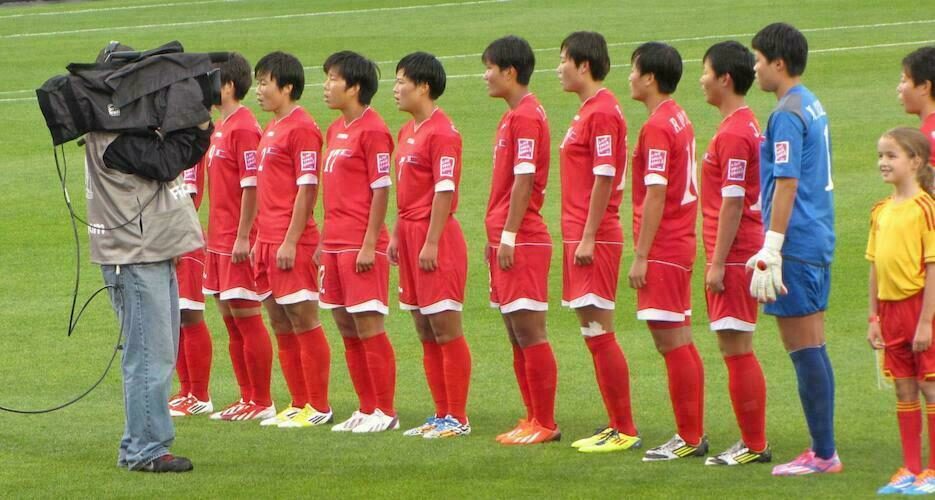
The Sustainability of the Hermit Kingdom Brand
The core challenge for North Korean soccer moving forward is sustainability. A brand that relies on mystery and periodic absence risks becoming obsolete in an era of 24/7 content. While the “reclusive” nature of the team provides a short-term boost in curiosity, long-term brand equity requires consistent performance. If the team fails to qualify for major tournaments or if their level of play stagnates due to lack of international exposure, the “Chollima” brand risks losing its status as a formidable underdog.
In conclusion, what happened to the North Korean soccer team is not merely a story of a sports team in flux; it is a case study in how a nation uses a specific sporting asset to manage its global reputation. By treating the team as a tightly controlled brand, North Korea has managed to maintain a level of international intrigue that far outweighs its actual performance on the pitch. Whether they are winning in 1966 or disappearing in 2021, every move is a calculated step in a broader strategy of national branding—a strategy that prioritizes the integrity of the state’s identity over the conventional metrics of sports success. As they return to the pitch, the world will once again be watching, not just to see the score, but to decipher the next chapter of one of the world’s most secretive brand narratives.
aViewFromTheCave is a participant in the Amazon Services LLC Associates Program, an affiliate advertising program designed to provide a means for sites to earn advertising fees by advertising and linking to Amazon.com. Amazon, the Amazon logo, AmazonSupply, and the AmazonSupply logo are trademarks of Amazon.com, Inc. or its affiliates. As an Amazon Associate we earn affiliate commissions from qualifying purchases.