
In the landscape of personal finance and long-term wealth building, few investments yield a higher return than specialized education. Historically, “SAT Subjects”—formally known as SAT Subject Tests—served as a primary benchmark for demonstrating this specialization. While the College Board officially discontinued these specific exams in 2021 to streamline the admissions process, the underlying economic principle remains unchanged: subject-specific mastery is a high-yield financial asset. To understand what SAT Subjects were, and what their modern equivalents represent today, one must view them through the lens of human capital investment, scholarship ROI, and the strategic allocation of intellectual resources.
Decoding the Economics of SAT Subject Tests and Their Modern Successors
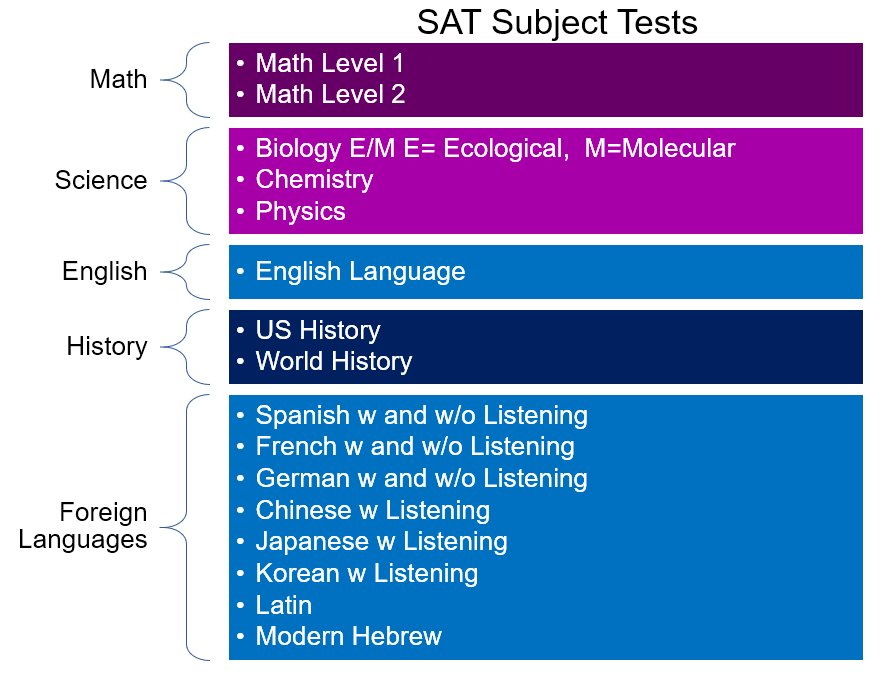
For decades, SAT Subject Tests were the “gold standard” for students looking to differentiate their academic portfolios. These were one-hour, multiple-choice exams in specific areas like Chemistry, Physics, Math Level 2, U.S. History, and various foreign languages. From a financial perspective, these tests were more than just academic hurdles; they were tools for market differentiation.
The Cost-Benefit Analysis of Specialized Testing
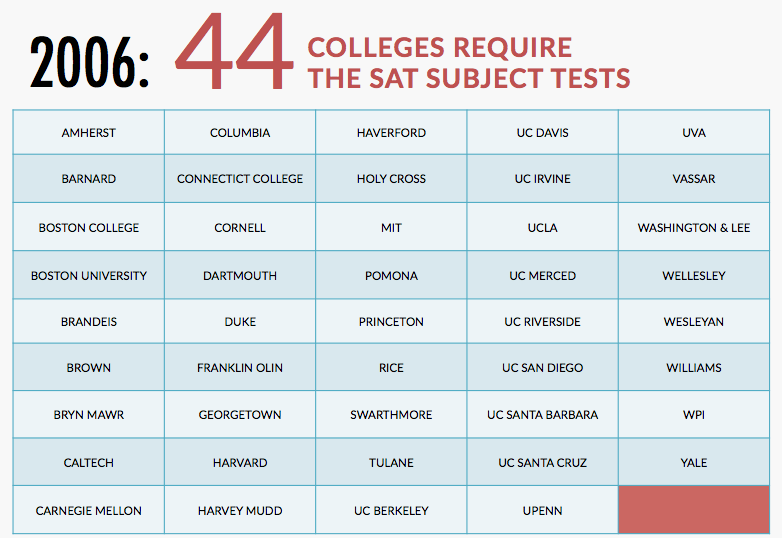
In the realm of personal finance, every expenditure should be evaluated for its potential return. The direct cost of an SAT Subject Test was relatively low—roughly $26 for basic registration plus $22 per test. However, the potential upside was immense. For a student eyeing a top-tier engineering program, a perfect 800 on the Math Level 2 and Physics tests could be the “signal” that secured an invitation to an institution like MIT or Stanford.
The economic value of attending an elite institution often manifests in higher starting salaries and access to exclusive alumni networks. Therefore, the “SAT Subjects” acted as a low-cost entry ticket to a high-value ecosystem. Even though the tests are gone, the requirement for “subject-specific mastery” has simply shifted to Advanced Placement (AP) exams or International Baccalaureate (IB) certifications, which follow the same financial logic.
From College Board Fees to Scholarship ROI
The most direct “Money” aspect of subject-specific testing is its impact on merit-based aid. Many private and state universities use specific academic benchmarks to award scholarships. Historically, high scores on SAT Subjects could trigger automatic scholarship tiers, potentially saving a family $10,000 to $40,000 over four years.
By investing in the preparation for these subjects, students were effectively “buying” a discount on their future tuition. When we talk about “what are SAT subjects” in a modern financial context, we are talking about the strategic selection of disciplines that prove to an institution that a student is a low-risk, high-reward investment.
Subject Mastery as a Hedge Against Tuition Inflation
With the cost of higher education rising at a rate that consistently outpaces general inflation, families must look for ways to de-risk the investment. Subject mastery—the core intent behind the SAT Subject Tests—serves as a powerful hedge against the ballooning costs of a four-year degree.
The Correlation Between Subject Expertise and Merit-Based Aid
Institutional financial aid offices operate much like venture capital firms. They want to invest their scholarship dollars in “assets” (students) that will likely succeed, graduate on time, and eventually contribute to the university’s prestige and endowment.
A student who demonstrates profound mastery in a “SAT Subject” area—such as Biology or Molecular Chemistry—presents a higher “yield” potential. In a competitive market, universities often use financial incentives to attract these high-performers. Consequently, the time spent mastering these subjects is not just an academic pursuit; it is a labor-intensive way to generate “found money” for college.
Reducing Time-to-Degree: The Financial Upside of Advanced Placement
While the SAT Subject Tests were primarily for admission, their modern successors (AP exams) offer something even more valuable: college credit. This is where the “Money” niche becomes most apparent. If a student masters a subject early and passes the equivalent exam, they can often skip introductory college courses.
Consider the math: If one semester at a private university costs $30,000, and a student enters with enough subject-specific credits to graduate one semester early, the family has realized a $30,000 net gain. This is a far more effective wealth-building strategy than many traditional side hustles. Understanding “SAT Subjects” as a precursor to this credit-earning model is essential for any savvy financial planner or parent.
Strategic Asset Allocation: Choosing Subjects with the Highest Market Value
Just as an investor chooses between stocks, bonds, and real estate, a student must choose which subjects to master. Not all subjects offer the same economic “exit velocity.” In the context of “SAT Subjects,” the choice of whether to take the Literature test or the Physics test carried significant implications for future earning potential.
STEM Subjects and the High-Income Career Path
Historically, the SAT Subject Tests in Mathematics, Physics, and Chemistry were the most highly scrutinized by admissions officers for high-paying career tracks. From a “Money” perspective, focusing on these subjects is a form of specialized asset allocation.
Data from the Bureau of Labor Statistics consistently shows that STEM-related fields offer some of the highest ROIs on educational debt. By excelling in these specific subject areas during high school, students are “pre-qualifying” for lucrative careers in software engineering, biotechnology, and quantitative finance. The “SAT Subjects” were the first formal audit of this professional potential.
Humanities and the Premium on Communication Skills
It would be a financial mistake to overlook the “softer” subjects, such as World History or Foreign Languages. In the globalized business economy, the ability to communicate across cultures is a rare and valuable asset. Mastery in a foreign language (formerly tested via SAT Subject Tests in French, Spanish, or Chinese) can lead to a “language premium” in salary—often ranging from 5% to 20% in international business roles.
Investing in these subjects builds “portable skills” that protect an individual’s income during technological shifts. While AI might automate coding, the nuanced negotiation skills developed through a deep understanding of history and language remain high-value human capital.
The Business of Test Prep: Navigating the Multi-Billion Dollar Industry
The existence of “SAT Subjects” spawned a massive secondary market. Understanding the business of test preparation is a crucial component of managing a family’s educational budget.
Avoiding the Sunk Cost Fallacy in Academic Coaching
Many parents fall into the trap of the “sunk cost fallacy,” spending thousands of dollars on tutoring for subjects where the student has little aptitude or interest. From a business finance perspective, this is a poor allocation of capital.
The goal should be to identify the “Low-Hanging Fruit”—subjects where a marginal investment in tutoring will yield the greatest increase in score. If a student is already scoring a 700 in Math, the investment to move that to an 800 has a clear ROI. However, spending $5,000 to move a 400 to a 500 in a subject the student dislikes may not be a sound financial move, especially if that money could be better used for a high-yield savings account or a 529 College Savings Plan.
Digital Resources vs. Private Tutoring: Budgeting for Success
In the modern “Money” landscape, the democratization of information has changed the cost structure of subject mastery. Previously, elite SAT Subject prep was the domain of expensive private tutors. Today, platforms like Khan Academy or specialized AI-driven boot camps offer high-quality preparation at a fraction of the cost. For the budget-conscious family, leveraging these digital tools allows them to achieve the same “Subject Mastery” asset without the heavy capital outlay, thereby preserving more wealth for the actual tuition costs.
Future-Proofing the Student Portfolio: Beyond the SAT Label
The discontinuation of SAT Subject Tests does not mean the end of subject-specific valuation. In fact, in an era of “grade inflation,” external validation of knowledge is more valuable than ever to those who control the scholarships and the high-paying jobs.
Building “Brand Equity” for the Global Job Market
Think of a student’s academic record as a corporate balance sheet. The “SAT Subjects” were specific line items that proved the existence of “intangible assets” like discipline, analytical thinking, and specialized knowledge. Today, students build this “brand equity” through certifications, portfolio projects, and specialized exams. From a personal branding and finance perspective, being a “subject matter expert” is what allows an individual to command higher consulting fees or salary packages later in life.
Long-term Earning Potential and the Specialized Knowledge Premium
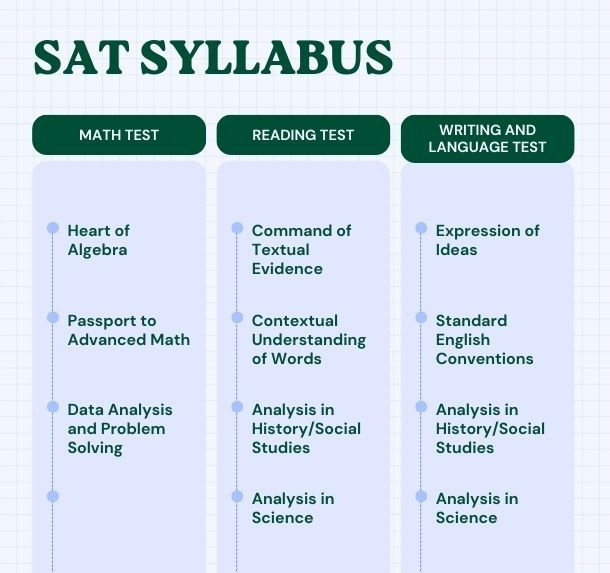
Ultimately, the question of “what are SAT subjects” leads to a broader discussion about the “Specialized Knowledge Premium.” In economics, the more specialized a skill, the less competition there is, and the higher the price that skill can command in the marketplace.
By treating high school subjects as the foundation of a professional “moat,” students are not just studying for a test; they are building a defensive financial position. Whether it is through the lens of saving on tuition, winning scholarships, or preparing for a high-income career, the mastery of specific academic subjects remains one of the most potent tools for financial mobility available today. Education is the only investment where the investor is also the asset, and in that market, subject-specific expertise is the highest-valued currency.
aViewFromTheCave is a participant in the Amazon Services LLC Associates Program, an affiliate advertising program designed to provide a means for sites to earn advertising fees by advertising and linking to Amazon.com. Amazon, the Amazon logo, AmazonSupply, and the AmazonSupply logo are trademarks of Amazon.com, Inc. or its affiliates. As an Amazon Associate we earn affiliate commissions from qualifying purchases.