
In the lexicon of modern technology, few terms carry as much weight, mystery, and ambition as the “moonshot.” Originally a reference to the Apollo 11 mission that put a human on the lunar surface, the term has been co-opted by the Silicon Valley elite and global tech pioneers to describe projects that sit at the intersection of extreme difficulty and world-changing potential.
A moonshot is not a mere upgrade or an incremental improvement. It is not about making a processor 10% faster or a battery last 20% longer. Instead, a moonshot is a radical proposal to solve a massive problem using breakthrough technology. In an era where digital transformation has become the baseline for survival, understanding moonshots is essential for anyone looking to grasp where the next thirty years of technological evolution are headed.

The Anatomy of a Moonshot: Beyond Conventional Research and Development
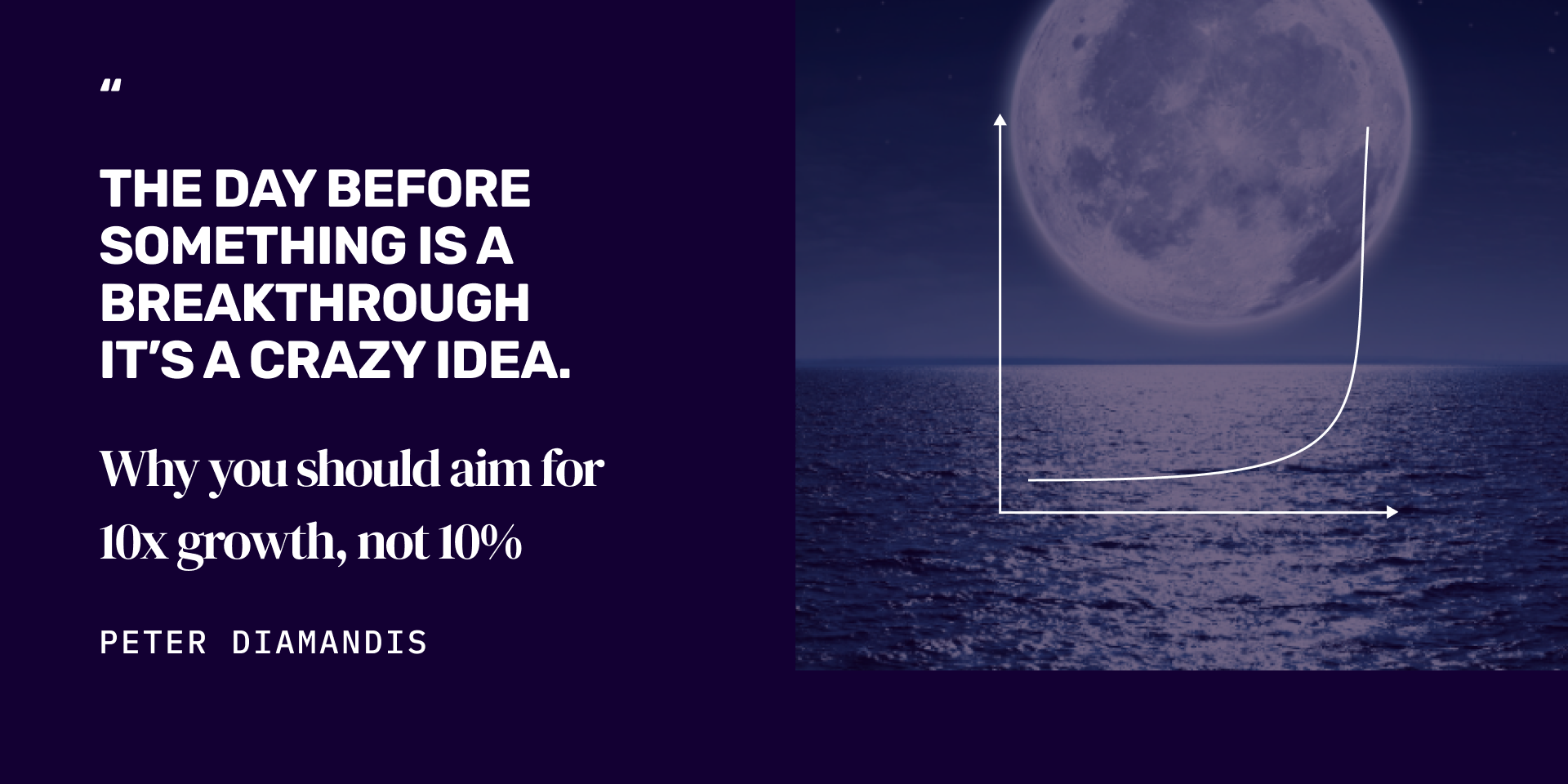
To understand what a moonshot is, one must first distinguish it from traditional Research and Development (R&D). Most corporate R&D is focused on “incrementalism”—the slow, steady refinement of existing products. Moonshots, however, operate on the “10x” rule: the goal is to make something ten times better, cheaper, or more efficient, rather than just 10% better.
Defining the Three Pillars: Problem, Solution, and Technology
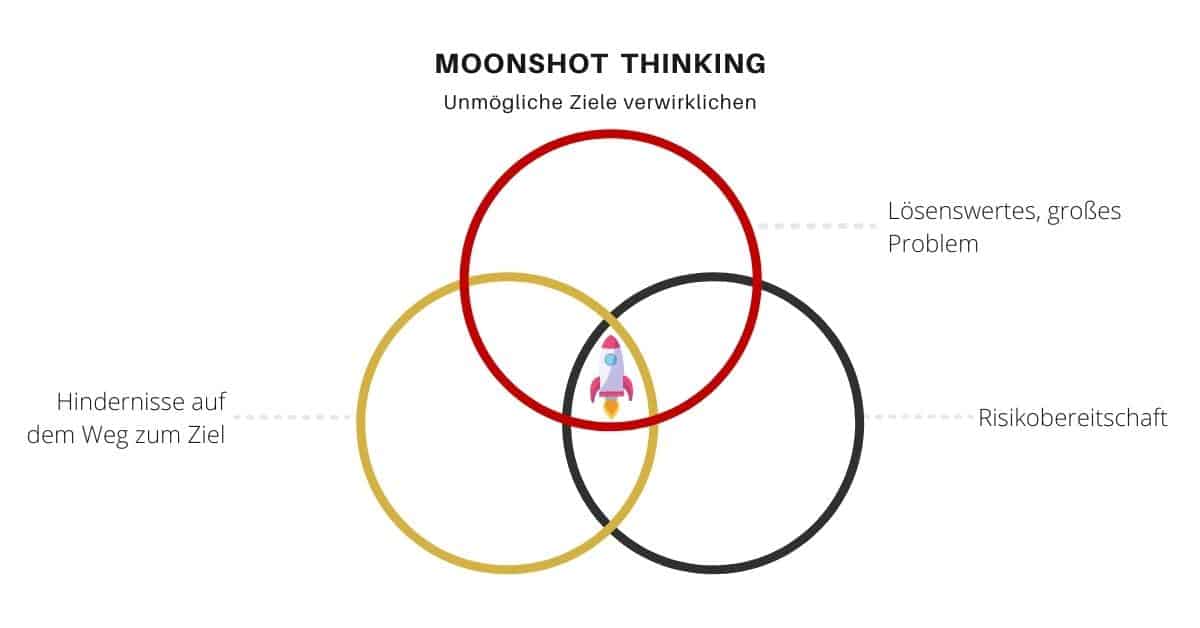
According to the framework popularized by X (formerly Google X), the “moonshot factory,” a true moonshot must meet three specific criteria:
- A Huge Problem: The project must address a global issue that affects millions, if not billions, of people. This could range from global connectivity to the eradication of a specific class of diseases through computational biology.
- A Radical Solution: The proposed answer must sound like science fiction. It should be a complete departure from how the problem is currently handled.
- Breakthrough Technology: There must be a “glimmer of hope” that a specific technology—whether it is Artificial Intelligence, nanotechnology, or quantum computing—can actually make the solution a reality within the next decade.
Moonshots vs. Incremental Innovation
The difference between a tech upgrade and a moonshot is the difference between building a faster horse and inventing the internal combustion engine. Incremental innovation is predictable and follows a roadmap. Moonshots are inherently unpredictable. They require a “first principles” thinking approach, where engineers and scientists strip a problem down to its fundamental physical constraints and build back up from there. This tech-centric audacity is what separates industry leaders from disruptors.
Pioneering the Future: Key Sectors Transformed by Moonshot Thinking
The tech landscape is currently being reshaped by several high-stakes moonshots. These aren’t just theoretical concepts; they are multi-billion dollar engineering efforts that aim to redefine the limits of what humans can achieve through hardware and software.
Artificial General Intelligence (AGI) and Cognitive Computing
While current AI tools like Large Language Models (LLMs) are impressive, they are examples of “Narrow AI.” The ultimate moonshot in the software world is Artificial General Intelligence—a system that can learn, reason, and apply knowledge across any domain at a human or super-human level.
The pursuit of AGI involves massive breakthroughs in neural network architecture, self-supervised learning, and computational efficiency. If successful, this moonshot would represent the final invention humans ever need to make, as AGI could theoretically solve all subsequent engineering and scientific challenges.
Quantum Computing: Solving the Unsolvable
Classical computers, regardless of how powerful they become, are fundamentally limited by binary logic. Quantum computing is the moonshot aimed at shattering these limits. By utilizing the principles of superposition and entanglement, quantum processors can perform calculations that would take a traditional supercomputer thousands of years.
The technical hurdle here is “decoherence”—the tendency of quantum bits (qubits) to lose their state due to environmental noise. Solving this requires advancements in cryogenics, materials science, and error-correction algorithms. The payoff? The ability to simulate molecular structures for new drugs or crack encryption methods that currently protect the world’s data.
DeepTech and the Integration of Physical and Digital Worlds
Moonshots often bridge the gap between bits (software) and atoms (hardware). We see this in the development of “Brain-Computer Interfaces” (BCIs). Projects like Neuralink or Synchron are attempting to create high-bandwidth digital pathways directly into the human motor cortex. This is a moonshot aimed at curing paralysis and eventually augmenting human cognition. Similarly, in the realm of energy, the pursuit of “Nuclear Fusion” at a commercial scale is the ultimate “clean tech” moonshot, promising near-limitless energy by replicating the processes of the sun.
The Ecosystem of Innovation: How Tech Giants and Startups Fuel Radical Projects
Moonshots do not happen in a vacuum. They require a specific ecosystem that balances immense capital, elite talent, and a high tolerance for technical failure.
The Google X Model: Making the “Impossible” Possible
Alphabet’s X is perhaps the most famous example of a dedicated moonshot factory. By separating the moonshot team from the core business (Google), the organization allows its engineers to work without the pressure of quarterly earnings. This environment led to the development of Waymo (self-driving technology) and Loon (internet-beaming balloons).
The “X” model teaches us that moonshots require “psychological safety.” Engineers must feel comfortable pointing out why a project won’t work so it can be “killed” early, allowing resources to be redirected to more viable radical ideas.
Venture Capital and the Risk-Reward Paradox in High-Tech
Outside of big tech “labs,” moonshots are funded by specialized venture capital firms that focus on DeepTech. Unlike traditional SaaS (Software as a Service) investing, which looks for quick scaling, moonshot investing requires “patient capital.” These investors understand that the hardware and regulatory hurdles for a tech-driven moonshot might take 10 to 15 years to clear. However, the reward for successfully commercializing a moonshot is usually a total monopoly on a new market, creating value that dwarfs traditional tech startups.
Overcoming the Barriers: Why Most Moonshots Fail (and Why That’s Okay)
The failure rate for moonshot projects is astronomical—often exceeding 90%. In the world of tech, however, failure is viewed as a data-gathering exercise rather than a total loss.
The Culture of “Fast Failure” and Psychological Safety
A critical component of moonshot methodology is the “Pre-Mortem.” Before a project begins, teams try to imagine all the technical reasons it might fail. If a project is destined to fail because of a law of physics or a fundamental hardware limitation, it is better to find that out in year one than in year ten.
For example, Google’s “Project Ara”—a moonshot to create a modular smartphone where you could swap out cameras and processors like Lego bricks—was eventually cancelled. While the product never hit the market, the research into miniaturization and modular interconnects influenced subsequent hardware designs across the industry.
Ethical Implications and the Governance of Frontier Tech
As moonshots push the boundaries of AI, genomics, and surveillance, they often outpace the law. A significant barrier to moonshot success is “regulatory lag.” For instance, autonomous drone delivery is technically possible today, but the “moonshot” isn’t just the drone; it’s the sophisticated AI-driven air traffic control system required to manage thousands of devices safely.
There is also the “alignment problem.” As we build more powerful tech, ensuring that it remains aligned with human values is perhaps the most difficult moonshot of all. Technical safety protocols for AGI or gene-editing (CRISPR) are not just engineering challenges; they are existential ones.
The Future of Moonshots: From Sustainable Energy to Interplanetary Exploration
As we look toward the next decade, the focus of moonshots is shifting toward global resilience and the expansion of the digital frontier.
We are seeing the rise of “Climate-Tech moonshots,” such as direct air capture (DAC) technologies that use chemical engineering and massive fan arrays to scrub CO2 from the atmosphere. On the hardware side, the push for “Solid-State Batteries” aims to provide the energy density required for electric aviation—a moonshot that would revolutionize global logistics.
Furthermore, the space industry has become a hotbed for tech-driven moonshots. The goal of making humanity a multi-planetary species relies on the “Starship” moonshot—the development of a fully and rapidly reusable heavy-lift rocket. This isn’t just an aerospace feat; it is a software and materials science triumph, requiring real-time computational fluid dynamics and advanced heat-shielding tech.
In conclusion, moonshots are the engine of human progress. They represent the moment when our technological reach exceeds our current grasp, forcing us to invent our way into a new reality. While the risks are high and the path is littered with the remnants of failed prototypes, the successful moonshots are the ones that define the eras of human history. From the internet itself—once a moonshot project by ARPA—to the looming arrival of quantum supremacy, we live in a world built by those who dared to aim for the 10x improvement. In the world of tech, if you aren’t working on a moonshot, you are simply waiting to be disrupted by one.
aViewFromTheCave is a participant in the Amazon Services LLC Associates Program, an affiliate advertising program designed to provide a means for sites to earn advertising fees by advertising and linking to Amazon.com. Amazon, the Amazon logo, AmazonSupply, and the AmazonSupply logo are trademarks of Amazon.com, Inc. or its affiliates. As an Amazon Associate we earn affiliate commissions from qualifying purchases.