
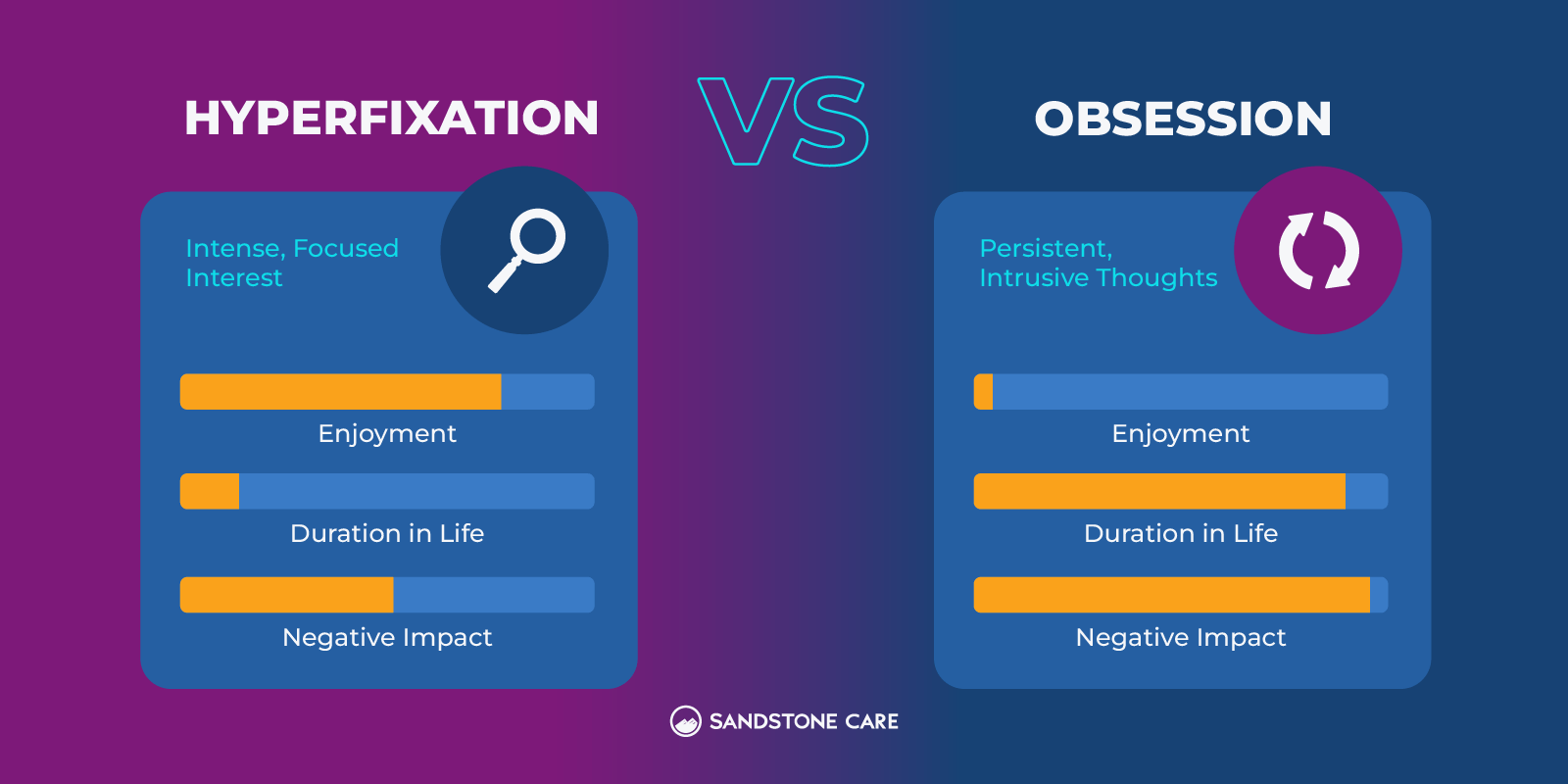
In the lexicon of modern psychology and digital culture, the term “hyperfixation” has transitioned from a clinical observation to a cornerstone of how we discuss productivity, neurodivergence, and our relationship with technology. At its core, a hyperfixation is a state of intense, immersive focus on a specific interest, task, or technology, often to the exclusion of everything else. In the high-velocity world of technology—where software developers, data scientists, and digital creators reside—hyperfixation is not just a cognitive quirk; it is a powerful, albeit double-edged, tool that drives innovation and specialized mastery.
As we navigate an era defined by the Attention Economy, understanding the mechanics of hyperfixation is essential for anyone working within the tech sector. Whether it is a developer spending thirty straight hours debugging a kernel issue or a designer losing themselves in the pixel-perfect nuances of a new interface, the intersection of human cognition and digital tools has created a unique environment where hyperfixation flourishes.
The Anatomy of Hyperfixation in Technology
To understand hyperfixation within a tech context, one must first distinguish it from more common concepts like “focus” or “engagement.” While regular focus is a controlled application of attention, hyperfixation is often described as a “locking in” of the brain’s reward systems. In the realm of technology, this state is frequently triggered by the immediate feedback loops inherent in software and digital systems.
Defining Hyperfixation vs. Flow State in Tech Environments
In the professional tech world, we often talk about “Flow State”—a concept popularized by Mihaly Csikszentmihalyi. While flow is a balanced state of challenge and skill that feels effortless, hyperfixation is more intense and less controlled. For a software engineer, flow might look like a productive four-hour session of writing clean code. Hyperfixation, conversely, might look like an obsessive deep dive into a legacy codebase to find a single logical error, resulting in the user forgetting to eat, sleep, or check their notifications.
In tech, hyperfixation is often fueled by the “problem-solving” dopamine hit. Every time a line of code works or a hardware component syncs, the brain receives a micro-dose of reward. For individuals with neurodivergent traits, such as ADHD or Autism, which are statistically prevalent in the tech industry, these digital environments are tailor-made to induce hyperfixation.
The Role of Dopamine Loops in Software and Development
Modern technology is built on logic gates and binary outcomes. This clarity is addictive. Unlike the ambiguity of social interactions or corporate politics, tech offers a “Correct/Incorrect” paradigm. This binary nature allows the brain to stay locked into a feedback loop. Developers often describe the “rabbit hole” effect—where one curiosity about an API leads to a deep dive into its source code, which leads to exploring the underlying framework, and suddenly ten hours have passed. This is the physiological reality of hyperfixation: the brain becomes so synchronized with the digital logic that it deprioritizes physical and social needs.
How UX/UI Design Leverages (and Triggers) Hyperfixation
While hyperfixation can be an internal cognitive state, it is increasingly being “designed for” by tech companies. The digital tools we use daily are not neutral; they are architected to capture and hold attention, often pushing users from simple interest into the territory of hyperfixation.
Gamification and the “Just One More” Architecture
From GitHub contribution streaks to Duolingo leaderboards, gamification is the primary method through which tech triggers hyperfixation. By applying game-design elements to non-game contexts, companies create an environment where the brain is constantly seeking the next “achievement.”
For developers and tech enthusiasts, this often manifests in the “tinkering” phase. A new Linux distribution, a new AI prompting technique, or a new smart-home setup can become the subject of a hyperfixation because the tech provides constant, incremental progress markers. The UX is designed to lower the “barrier to entry” while making the “ceiling of mastery” seemingly infinite, which is the perfect recipe for a prolonged fixation.
Personalization Algorithms and the Rabbit Hole Effect
We cannot discuss hyperfixation without mentioning the algorithmic engines of platforms like YouTube, TikTok, or even technical forums like Stack Overflow. These systems use machine learning to identify the exact “texture” of a user’s current interest.
If a tech professional begins researching “Large Language Model quantization,” the algorithm ensures that every subsequent piece of content reinforces that specific interest. This creates a digital echo chamber that sustains hyperfixation. While this can lead to rapid learning and “upskilling,” it also creates a cognitive Narrowing, where the professional becomes an expert in an incredibly specific niche while losing sight of the broader tech landscape.

Leveraging Hyperfixation as a Technical Superpower
Despite the potential for burnout, hyperfixation is often the “secret sauce” behind some of the greatest breakthroughs in technology. When harnessed correctly, it allows for a level of specialization and “Deep Work” that is otherwise unattainable.
Deep Work and High-Output Coding Sessions
In his book Deep Work, Cal Newport discusses the necessity of distraction-free concentration. Hyperfixation is, in many ways, Deep Work on steroids. In the tech industry, being able to hyperfixate on a complex problem—such as optimizing a database or architecting a cloud migration—can result in weeks of work being compressed into a few days.
The tech industry’s shift toward “sprint” methodologies and “hackathons” is an institutional acknowledgment of the power of hyperfixation. These structures provide a socially acceptable and productive outlet for intense, obsessive focus. When a team “crashes” on a project, they are collectively engaging in a form of managed hyperfixation to push a product over the finish line.
The Rise of Specialist Tech Communities
Hyperfixation has also birthed some of the most robust digital communities. Subreddits dedicated to mechanical keyboards, specific programming languages (like Rust or Zig), or obscure vintage computing hardware are populated by individuals in various stages of hyperfixation.
These communities serve as a decentralized R&D department for the tech world. Because the members are hyperfixated, they notice bugs, edge cases, and optimization opportunities that a generalist would miss. For a tech brand or software project, fostering a community of hyperfixated users is the ultimate competitive advantage, as these users will provide higher-quality feedback and documentation than any paid QA team.
AI as a Management Layer for Cognitive Intensity
As we enter the era of Generative AI, the relationship between humans and hyperfixation is changing. AI tools like GitHub Copilot, ChatGPT, and specialized agents are becoming “cognitive prosthetics” that can both enable and regulate our intense focus periods.
Using AI Productivity Tools to Channel Focus
One of the dangers of hyperfixation is getting lost in “shaving the sub-tasks”—spending hours on minor details that don’t move the needle. AI can act as an executive function layer. For a developer hyperfixating on a project, AI can handle the “boilerplate” code, allowing the human to stay focused on the high-level architecture.
Furthermore, AI can help bridge the gap between “fixation” and “execution.” If a researcher is hyperfixated on a specific area of AI ethics, they can use LLMs to quickly summarize peripheral papers, ensuring they stay informed without being pulled into a dozen different “mini-fixations” that dilute their primary goal.
Digital Wellness Apps: Mitigating the Risks of “The Hyperfixation Hangover”
The “hyperfixation hangover” is the physical and mental exhaustion that follows a period of intense focus. In the tech world, this often leads to burnout and “tech fatigue.” However, technology is also providing the solution.
A new generation of “Digital Wellness” tools is emerging. These aren’t just simple screen-time trackers; they are sophisticated apps that use biometric data (from smartwatches) and usage patterns to detect when a user is in a state of hyperfixation. They can then intervene with “forced” breaks or “focus-shifting” prompts. By using tech to monitor our cognitive states, professionals can enjoy the benefits of deep, obsessive focus without the detrimental effects on their long-term health and productivity.
Conclusion: The Strategic Value of Intense Focus
Hyperfixation is more than just a buzzword; it is a fundamental aspect of how the human brain interacts with complex digital systems. In the technology sector, it is the engine of mastery and the catalyst for innovation. By understanding the mechanics of hyperfixation—from the dopamine loops of software design to the regulatory potential of AI—we can begin to treat it as a strategic asset rather than a distraction.
As the boundary between human intelligence and machine efficiency continues to blur, the ability to “lock in” on a task will become increasingly valuable. The challenge for the modern tech professional is not to eliminate hyperfixation, but to build a digital environment that supports it, directs it toward meaningful goals, and provides the necessary guardrails to ensure that when we dive into the rabbit hole, we eventually find our way back out with something valuable in hand.
aViewFromTheCave is a participant in the Amazon Services LLC Associates Program, an affiliate advertising program designed to provide a means for sites to earn advertising fees by advertising and linking to Amazon.com. Amazon, the Amazon logo, AmazonSupply, and the AmazonSupply logo are trademarks of Amazon.com, Inc. or its affiliates. As an Amazon Associate we earn affiliate commissions from qualifying purchases.