
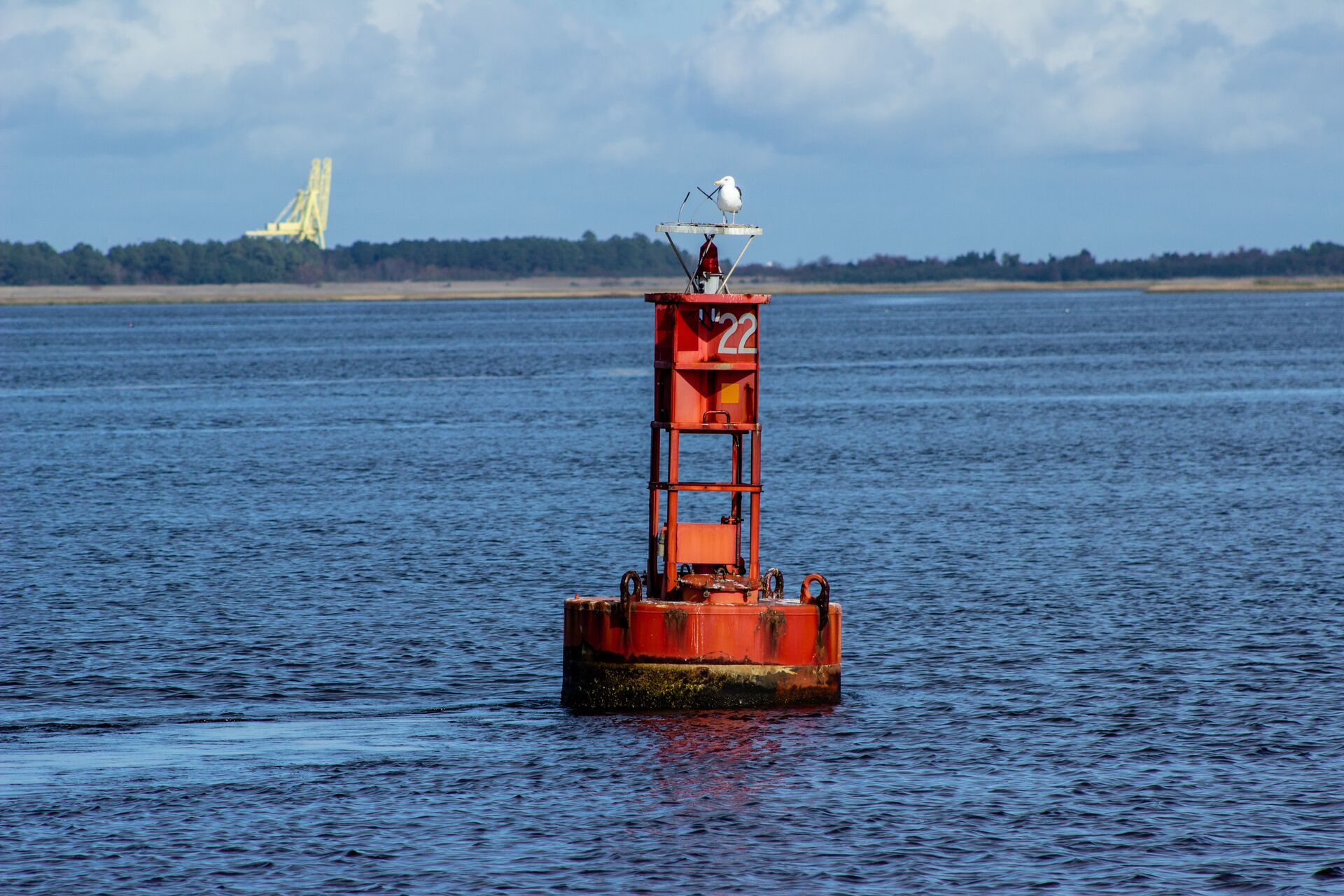
For centuries, the buoy was a humble sentinel of the sea—a simple, brightly colored float used to mark channels or warn sailors of hidden reefs. However, in the era of the Internet of Things (IoT), artificial intelligence, and global connectivity, the definition of a “buoy” has undergone a radical technological transformation. Today, buoys are no longer just floating markers; they are sophisticated, autonomous data centers.
In the modern tech landscape, buoys serve as the critical hardware interface between the physical ocean and the digital world. They are the “edge devices” of the maritime environment, gathering massive datasets that fuel global logistics, climate modeling, and national security. To understand what buoys are for in the 21st century is to understand the cutting edge of sensor technology, satellite communication, and predictive analytics.
The Architecture of Smart Buoys: IoT at the Edge
The transition from “dumb” buoys to “smart” buoys represents one of the most significant leaps in maritime technology. At its core, a modern buoy is a platform for an array of specialized hardware designed to survive the most hostile environment on Earth.
Sensor Integration and Real-Time Data Acquisition
Modern buoys are equipped with an intricate suite of sensors that monitor variables far beyond simple location. High-frequency radar, MEMS (Micro-Electro-Mechanical Systems) accelerometers, and acoustic doppler current profilers (ADCPs) allow these devices to measure wave height, period, direction, and subsurface current velocities with millimeter precision.
Beyond physical movement, chemical and biological sensors integrated into the buoy’s “payload” monitor pH levels, dissolved oxygen, and chlorophyll concentrations. This data is processed locally using low-power microcontrollers before being beamed to the cloud. For tech-focused industries, this represents a massive “Big Data” pipeline that was previously inaccessible, turning the ocean into a searchable, quantifiable database.
Powering the Deep: Solar and Kinetic Energy Solutions
A major technical challenge for offshore gadgets is power management. Since buoys cannot be plugged into a grid, they serve as pioneers in autonomous energy systems. Most modern smart buoys utilize a hybrid power strategy, combining high-efficiency photovoltaic panels with kinetic energy harvesters that convert the motion of the waves into electrical power.
Advancements in solid-state battery technology and ultra-low-power wide-area network (LPWAN) modules allow these devices to operate for years without human intervention. This focus on “zero-maintenance tech” is driving innovation in other sectors, such as remote industrial monitoring and aerospace, where reliability in isolation is paramount.
The Role of AI and Machine Learning in Oceanic Monitoring
Hardware is only half the story. The true value of modern buoys lies in the software stacks that interpret the data they collect. With the integration of Artificial Intelligence (AI) and Machine Learning (ML), buoys have evolved from passive recorders into proactive intelligence tools.
Predictive Modeling for Tsunami and Storm Surges
One of the most critical tech applications for buoys is the Deep-ocean Assessment and Reporting of Tsunamis (DART) system. These buoys work in tandem with pressure sensors on the seafloor. When the seafloor sensor detects a seismic event, it communicates acoustically with the buoy, which then uses edge computing to verify the threat level before triggering satellite alerts.
AI algorithms now run directly on the buoy’s internal processors to filter out “noise”—such as common tidal changes or passing ships—to ensure that emergency services receive high-fidelity, actionable data. This use of AI at the edge reduces the latency of critical warnings, potentially saving thousands of lives through faster digital dissemination of alerts.
Autonomous Maintenance and Anomaly Detection
Machine learning is also being used to monitor the health of the buoys themselves. Through “digital twin” technology, engineers can create a virtual representation of a buoy in the cloud. By comparing real-time sensor data from the physical buoy against the digital twin’s expected performance, AI can identify anomalies that suggest a sensor is fouling, a battery is degrading, or the buoy has been moved by an unauthorized party. This predictive maintenance model reduces the need for expensive ship-based repair missions and ensures the continuity of data streams.

Connectivity and Digital Security in High-Seas Networks
In the tech world, a device is only as useful as its connectivity. Because buoys operate far beyond the reach of cellular towers, they rely on a complex ecosystem of satellite and mesh network technologies to transmit their findings.
Satellite Linkages and Global Positioning Systems
The primary communication backbone for modern buoys is the Low Earth Orbit (LEO) satellite constellation, such as Iridium or the emerging Starlink maritime services. These networks allow buoys to maintain a persistent “heartbeat” with data centers on land.
Furthermore, high-precision GNSS (Global Navigation Satellite System) modules allow buoys to act as geodetic reference points. For offshore construction, such as wind farms or oil platforms, these buoys provide the high-accuracy positioning data required for subsea robotics and automated vessel docking. They are, in essence, the “GPS satellites of the sea surface,” providing a localized network for other autonomous maritime gadgets.
Securing the Blue Perimeter: Protecting Marine Data from Cyber Threats
As buoys become more integral to global trade and national defense, they become targets for cyberattacks. A compromised buoy could provide false navigation data to autonomous ships or mask the movement of illicit vessels.
Consequently, digital security has become a primary focus in buoy manufacturing. Modern units now feature hardware-based encryption (Trusted Platform Modules) and secure boot protocols to prevent firmware tampering. Data transmitted via satellite is encrypted using AES-256 standards, ensuring that the “maritime IoT” remains resilient against interception and spoofing. This focus on digital security reflects the broader tech trend of “securing the edge,” where every remote sensor is treated as a potential entry point for a network breach.
Future Trends: The Buoy as a Hub for Global Connectivity
Looking forward, the role of buoys is expanding from individual data points to central hubs in a wider maritime technology ecosystem. The “Smart Ocean” is becoming a reality, and buoys are its primary infrastructure.
Integrating with Underwater Drones and ROVs
Future buoy designs are acting as “docking stations” for Autonomous Underwater Vehicles (AUVs) and Remotely Operated Vehicles (ROVs). In this tech configuration, a buoy serves as a surface gateway. It can recharge a drone using its solar/wave energy and act as a high-bandwidth data relay, taking the data collected by the underwater drone and uploading it to the cloud via satellite. This “nested tech” approach allows for continuous, long-term underwater exploration without the need for a manned support vessel nearby.
The Impact of 5G and Edge Computing on Maritime Tech
While satellite remains king for the open ocean, “Coastal 5G” is beginning to change how buoys operate near shore. By utilizing 5G “small cell” technology, buoys can handle massive amounts of data—such as high-definition video feeds used for port security or environmental monitoring—with near-zero latency.
The integration of advanced edge computing means that instead of sending raw data to the cloud, the buoy can process it locally, only sending the most relevant insights. For example, a buoy equipped with a camera and AI can identify a specific species of whale or a particular type of vessel and only transmit that specific notification, drastically reducing bandwidth costs and power consumption.
Conclusion: The Digital Sentinel
What are buoys for? In the modern tech context, they are the vital sensory organs of a digitally connected planet. They represent the successful convergence of ruggedized hardware, sophisticated AI, and global telecommunications.
As we move toward an era of autonomous shipping, deep-sea mining, and heightened climate awareness, the humble buoy has been promoted to a position of strategic technological importance. It is no longer just a marker in the water; it is a sophisticated gadget that bridges the gap between our terrestrial digital lives and the vast, data-rich mysteries of the ocean. The evolution of the buoy is a testament to the power of technology to illuminate the darkest and deepest corners of our world.
aViewFromTheCave is a participant in the Amazon Services LLC Associates Program, an affiliate advertising program designed to provide a means for sites to earn advertising fees by advertising and linking to Amazon.com. Amazon, the Amazon logo, AmazonSupply, and the AmazonSupply logo are trademarks of Amazon.com, Inc. or its affiliates. As an Amazon Associate we earn affiliate commissions from qualifying purchases.