
In the world of mathematics, an array is often introduced as a simple arrangement of objects, numbers, or symbols in rows and columns. While this definition serves elementary students learning multiplication, its implications for the technology sector are profound. In the digital age, the “math array” has evolved from a classroom visualization tool into the literal foundation of computer science, data architecture, and artificial intelligence.
Understanding what arrays are in math is the first step toward understanding how software handles massive amounts of information. Every time you scroll through a social media feed, play a high-definition video game, or interact with a generative AI, you are witnessing the mathematical logic of arrays in action. This article explores how this fundamental mathematical concept serves as the backbone of the global tech infrastructure.
The Foundation: Translating Mathematical Arrays into Computational Logic
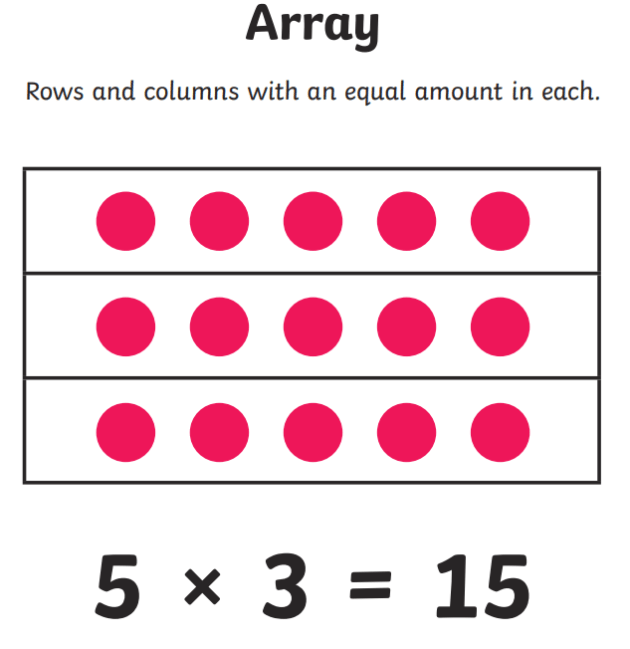
At its core, a mathematical array is a structured way to organize data so that individual elements can be located using coordinates. In a 2D array, these are typically rows and columns. In the realm of technology, this structure is translated into a data structure that allows for efficient storage and retrieval in a computer’s memory.
Defining the Mathematical Matrix in a Digital Context
In mathematics, a rectangular array of numbers is called a matrix. In technology, we use this same concept to represent everything from spreadsheet data to the pixels on your screen. The transition from “math” to “tech” happens when we assign these values to memory addresses. By organizing data into a contiguous block of memory, software can access any piece of information instantly, provided it knows the “index” or the coordinate of that data point.
The Leap from Paper to Memory: How Computers Store Array Data
Unlike a human looking at a grid on paper, a computer sees an array as a sequence of slots in its Random Access Memory (RAM). The genius of the mathematical array is its predictability. Because the array has a defined structure (e.g., 10 rows and 10 columns), the computer can calculate exactly where the 55th element is without having to search through the first 54. This “random access” capability is what makes arrays the preferred structure for high-performance computing.
Why Arrays are the Backbone of Modern Software Development
Software engineering is essentially the art of managing data efficiently. Developers rely on the mathematical properties of arrays to ensure that applications remain fast and responsive, even as the volume of data grows.
Efficiency and Performance: O(1) Access and Indexing
In algorithmic complexity (often referred to as Big O notation), arrays provide what is known as O(1) access time. This means that whether an array contains ten items or ten billion items, the time it takes to retrieve a specific element is constant. This efficiency is derived directly from the mathematical predictability of the grid. In tech, this translates to lightning-fast user interfaces and real-time data processing. If you are building a high-frequency trading platform or a real-time navigation app, the array is your most valuable tool for speed.
Multi-dimensional Arrays in Graphics and Game Development
When we move beyond simple lists into 2D and 3D arrays, we enter the world of computer graphics. Every digital image is essentially a 2D array of pixels, where each “cell” contains a color value. Modern video games take this further, using 3D arrays (or voxels) to represent depth and volume. The math used to rotate, scale, or light a 3D character in a game like Cyberpunk 2077 involves complex matrix multiplication—the same array math taught in linear algebra. Without the mathematical framework of arrays, the modern visual landscape of the internet and gaming would simply not exist.
Arrays in the Era of Artificial Intelligence and Data Science
Perhaps the most significant application of mathematical arrays today is in the field of Artificial Intelligence (AI). If data is the fuel for AI, then arrays are the engine that processes it.

Tensors: The Mathematical Arrays Fueling Deep Learning
In advanced mathematics and physics, a tensor is a generalization of scalars, vectors, and matrices to higher dimensions. In technology, “Tensors” are the primary data structure used by frameworks like Google’s TensorFlow or Meta’s PyTorch. When a Large Language Model (LLM) like GPT-4 processes a prompt, it isn’t reading words; it is performing massive mathematical operations on multi-dimensional arrays (tensors) that represent the relationships between words. The “intelligence” in AI is essentially the result of billions of array calculations performed in parallel.
Vectorization: How Arrays Speed Up Big Data Processing
Data scientists often deal with datasets containing millions of rows. Traditional “looping” through this data (checking one item at a time) is too slow. Instead, tech professionals use “vectorization,” a technique that applies a mathematical operation to an entire array at once. By leveraging the mathematical properties of arrays, software can perform calculations across an entire dataset simultaneously using specialized hardware like Graphics Processing Units (GPUs). This is the secret behind the rapid growth of “Big Data” analytics in the last decade.
Choosing the Right Data Structure: Arrays vs. Dynamic Alternatives
While arrays are powerful, their mathematical rigidity presents challenges in certain tech environments. Understanding when to use a static mathematical array versus a more flexible structure is a key skill for software architects.
When to Use Static Arrays
A standard mathematical array has a fixed size. In software, this is known as a static array. These are ideal when the developer knows exactly how much data will be handled. Because they have a fixed footprint, they are incredibly memory-efficient. You will find them in embedded systems, such as the software running your microwave or your car’s braking system, where memory is limited and reliability is paramount.
The Evolution into Lists and Vectors
Most modern programming languages, like Python and JavaScript, use “Dynamic Arrays” (often called Lists or Vectors). These structures take the concept of a math array but allow it to grow or shrink as needed. While this adds a layer of complexity to the underlying technology, it maintains the ease of use that the array structure provides. It bridges the gap between the rigid requirements of hardware and the fluid needs of modern web applications.
Future-Proofing Tech Infrastructure with Optimized Array Management
As we look toward the future of technology—including quantum computing and edge computing—the role of the array remains central. However, the way we manage these arrays is evolving to meet the demands of sustainability and extreme performance.
Memory Management and Cache Locality
Modern CPUs are much faster than the RAM they pull data from. To solve this bottleneck, chip manufacturers use “caches.” Arrays are the most cache-friendly data structure because they store data in contiguous blocks. When a computer pulls one element of an array, it automatically pulls the neighboring elements into the cache. This “spatial locality” is a mathematical byproduct of the array’s design. In the tech industry, optimizing for cache locality is a high-level strategy used to make software run faster without requiring more power, contributing to “Green Tech” initiatives by reducing server energy consumption.
Quantum Arrays: The Next Frontier
In the burgeoning field of quantum computing, the concept of the array is being reimagined. Quantum bits (qubits) can exist in multiple states at once, meaning a “Quantum Array” can represent a staggering amount of information compared to a classical binary array. While the math is significantly more complex, the fundamental principle—organizing data into a structured grid for systemic manipulation—remains the same.

Conclusion
What are arrays in math? They are more than just rows and columns on a whiteboard. In the technology sector, arrays are the fundamental architecture of the digital world. They are the pixels on our screens, the logic within our algorithms, and the “neurons” within our artificial intelligence models.
For the tech professional, the array is a reminder that the most powerful software is built on timeless mathematical foundations. As we continue to push the boundaries of what is possible with software and hardware, we do so by standing on the shoulders of these mathematical structures. Whether you are a developer, a data scientist, or a tech enthusiast, recognizing the ubiquity and power of the array is essential to understanding the complex, data-driven world we inhabit.
aViewFromTheCave is a participant in the Amazon Services LLC Associates Program, an affiliate advertising program designed to provide a means for sites to earn advertising fees by advertising and linking to Amazon.com. Amazon, the Amazon logo, AmazonSupply, and the AmazonSupply logo are trademarks of Amazon.com, Inc. or its affiliates. As an Amazon Associate we earn affiliate commissions from qualifying purchases.