
The age-old question, “What anime should I watch next?” was once answered by word-of-mouth recommendations in school hallways or niche internet forums. However, as the global anime market has expanded into a multi-billion-dollar industry, the process of content discovery has undergone a radical technological transformation. Today, the decision of what to watch is less about chance and more about complex data architectures, machine learning models, and sophisticated streaming infrastructures.
For the modern viewer, the “Next Up” prompt is the result of thousands of variables being processed in milliseconds. Understanding the technology behind these recommendations not only explains why certain shows keep appearing in your feed but also highlights the frontier of personalized digital experiences.

The Evolution of Content Discovery: From Manual Search to AI Personalization
The transition from linear television to on-demand streaming necessitated a shift in how media is categorized and suggested. In the early days of digital media, discovery was primarily “pull-based,” meaning users had to actively search for specific titles. Today, the ecosystem is “push-based,” where the technology anticipates user desire through predictive analytics.
The Role of Collaborative Filtering in Anime Platforms
At the heart of platforms like Crunchyroll, Netflix, and HIDIVE lies an algorithmic approach known as Collaborative Filtering. This technology operates on a simple yet powerful premise: if User A and User B share a high degree of overlap in their watch history, the system assumes they share similar tastes.
When you finish a high-octane “Shonen” series and the system suggests a niche “Seinen” title you’ve never heard of, it is likely because thousands of other users who enjoyed the first show also gravitated toward the second. This matrix-based calculation identifies patterns in human behavior that are often too subtle for the users themselves to articulate. By analyzing “watch time,” “completion rates,” and even “rewatch frequency,” the tech builds a multi-dimensional profile of your preferences.
Deep Learning and Content-Based Filtering
While collaborative filtering looks at user behavior, Content-Based Filtering looks at the “DNA” of the anime itself. Modern recommendation engines utilize Deep Learning—a subset of Artificial Intelligence—to analyze the intrinsic attributes of a show.
This involves more than just genre tags like “Action” or “Romance.” AI models now perform sentiment analysis on subtitles to determine the emotional tone of a series. They use computer vision to analyze visual styles, identifying whether a user prefers the high-contrast aesthetic of Studio MAPPA or the soft, painterly backgrounds of CoMix Wave Films. By quantifying these aesthetic and narrative elements, the technology can suggest shows that match your “vibe” even if no other users in your immediate demographic have watched them yet.
The Engineering of Streaming Ecosystems: How Tech Shapes Your Watchlist
Finding what to watch next is only half the battle; the technical delivery of that content plays a critical role in user retention. If a platform’s interface is sluggish or its video delivery is poor, the most accurate recommendation engine in the world won’t keep a user engaged.
Metadata Enrichment: The DNA of Anime Tagging
The accuracy of any discovery tool is only as good as the data fed into it. This has led to the rise of advanced Metadata Enrichment. In the tech world, metadata is the descriptive data that tells a computer what a file contains. For an anime series, this includes everything from the director and voice actors to “micro-genres” like “Cyberpunk Isekai” or “Iyashikei” (healing) themes.
Streaming giants now employ automated tagging systems that use Natural Language Processing (NLP) to scan scripts and fan-sourced databases (like MyAnimeList or AniList). These systems create a dense web of interconnected data points. This technical infrastructure allows for “semantic search,” where a user can type “shows about existential dread and giant robots” into a search bar and receive accurate results, even if those specific words aren’t in the show’s official description.
Latency and Quality: The Technical Hurdles of Global Simulcasting
The decision of what to watch next is often driven by “Simulcasts”—shows that air digitally within an hour of their Japanese broadcast. The technology required to localize, subtitle, and distribute high-definition video globally in near real-time is an engineering marvel.
Content Delivery Networks (CDNs) are utilized to cache video data in servers physically close to the user, reducing latency. Furthermore, Adaptive Bitrate Streaming (ABS) ensures that the transition from one episode to the next is seamless. If the technology detects a dip in your bandwidth, it dynamically adjusts the video resolution to prevent buffering. This “invisible tech” ensures that the “binge-watching” experience is never interrupted, directly influencing your decision to click “Play Next.”

Emerging AI Tools for the Modern Otaku
We are currently entering a new era of discovery characterized by Generative AI and Large Language Models (LLMs). These tools are moving beyond the static “If you liked X, you’ll like Y” model toward a conversational, highly nuanced advisory role.
Large Language Models as Personalized Curators
Users are increasingly turning to AI interfaces like ChatGPT or specialized anime-GPTs to find their next watch. These LLMs have been trained on decades of critical reviews, fan theories, and cultural analyses. Unlike a standard database, an LLM can understand context.
For example, a user can provide a highly specific prompt: “I’m looking for a short series with a 90s aesthetic, a lo-fi soundtrack, and a philosophical ending similar to Serial Experiments Lain.” The AI’s ability to synthesize these disparate technical and artistic requirements into a curated list represents a significant leap in search technology. It shifts the burden of discovery from the user to the machine, making the process of finding a new series as easy as having a conversation.
Semantic Search and Visual Recognition in Anime Discovery
Beyond text, visual-based search technology is becoming a reality. “Trace-moe” and similar image-recognition engines allow users to upload a screenshot of an anime they saw on social media to identify the source. This utilizes Convolutional Neural Networks (CNNs) to match pixel patterns against a massive database of indexed frames.
In the near future, we may see this tech integrated directly into streaming platforms. Imagine pausing a scene and asking the AI, “What other shows have this specific art style?” The integration of visual recognition with recommendation engines creates a multi-modal discovery path that was technologically impossible a decade ago.
Data Privacy and the Ethics of Predictive Viewing
As we rely more on technology to tell us what to watch, it is essential to consider the implications of data collection and the algorithms that govern our choices.
The Filter Bubble Phenomenon in Niche Media
One of the technical challenges facing recommendation engines is the “Filter Bubble.” If an algorithm only shows you content similar to what you have already watched, it creates a feedback loop that prevents you from discovering new genres. From a software engineering perspective, this is known as the “Overfitting” problem.
To combat this, developers are experimenting with “Exploration vs. Exploitation” algorithms. The system “exploits” known preferences to keep the user satisfied but occasionally introduces “exploratory” content—randomly selected or trending titles outside the user’s usual bubble—to test for new interests. This technical balancing act is crucial for keeping the medium fresh and preventing user fatigue.
Decentralized Databases and User-Controlled Recommendation Engines
There is a growing movement toward “User-Centric Data.” Currently, your watch history is siloed within individual platforms like Netflix or Hulu. However, new technologies are emerging that allow users to own their viewing data.
By using decentralized databases or open APIs (like those provided by AniList), third-party developers are building platform-agnostic recommendation engines. These tools can aggregate your history across every service you use, providing a holistic view of your tastes. This technical shift moves the power away from the “Big Tech” platforms and puts it back into the hands of the consumer, allowing for a more transparent and customizable discovery process.
Conclusion
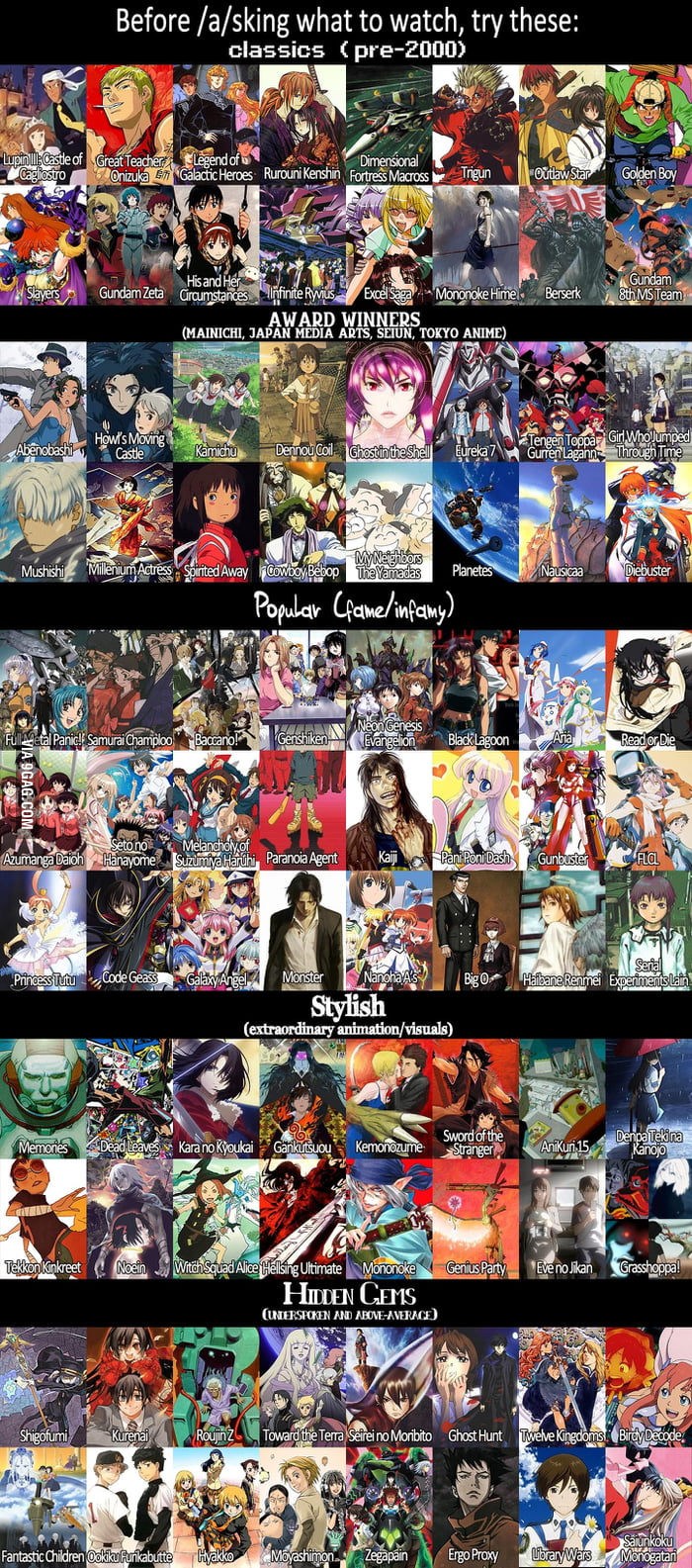
The question of “what anime should I watch next” is no longer a simple query; it is a point of intersection for some of the most advanced technologies in the digital age. From the machine learning models that predict our emotional responses to the global CDNs that deliver 4K animation to our pockets, the technology of discovery is constantly evolving.
As AI continues to refine its understanding of narrative and aesthetics, the friction between wanting to watch something and finding it will eventually disappear. We are moving toward a future where the “Next Up” button isn’t just a guess—it’s a perfectly calibrated reflection of our own evolving tastes, powered by the most sophisticated software architecture in the world of entertainment. For the viewer, this means less time scrolling through menus and more time immersed in the stories that matter.
aViewFromTheCave is a participant in the Amazon Services LLC Associates Program, an affiliate advertising program designed to provide a means for sites to earn advertising fees by advertising and linking to Amazon.com. Amazon, the Amazon logo, AmazonSupply, and the AmazonSupply logo are trademarks of Amazon.com, Inc. or its affiliates. As an Amazon Associate we earn affiliate commissions from qualifying purchases.