
In the early decades of the automotive industry, identifying the specific production year of a vehicle required a keen eye for aesthetic nuances—the shape of a fender, the placement of a chrome trim, or the specific pattern of a radiator grille. Today, the question “what year is this car?” is no longer a matter of visual guesswork or consulting dusty physical catalogs. It has become a sophisticated data problem solved by advanced algorithms, global databases, and cutting-edge computer vision.
As vehicles transition from purely mechanical machines into complex software-defined entities, the technology used to identify and categorize them has evolved. From the standardized 17-character Vehicle Identification Number (VIN) to AI-powered mobile applications, the intersection of automotive history and digital technology provides a fascinating look at how we track, verify, and value the machines that move us.
The Digital Fingerprint: Decoding the Vehicle Identification Number (VIN)
The most reliable technological tool for identifying a car’s year is the Vehicle Identification Number (VIN). While the concept of chassis numbers has existed for nearly a century, it wasn’t until the early 1980s that the National Highway Traffic Safety Administration (NHTSA) in the United States standardized the 17-character format used globally today. This string of alphanumeric characters acts as a digital fingerprint, containing specific data points about the vehicle’s origin and manufacture.
The Anatomy of a 17-Character Code
To understand how technology identifies a car’s year, one must look at the structural logic of the VIN. The first three characters represent the World Manufacturer Identifier (WMI), telling us where the car was built and by whom. The following five characters (4 through 8) describe the vehicle’s attributes, such as engine type and body style. The 9th character is a “check digit,” a security feature generated by a mathematical algorithm to ensure the VIN’s authenticity and prevent fraud.
Identifying the Year through the 10th Character
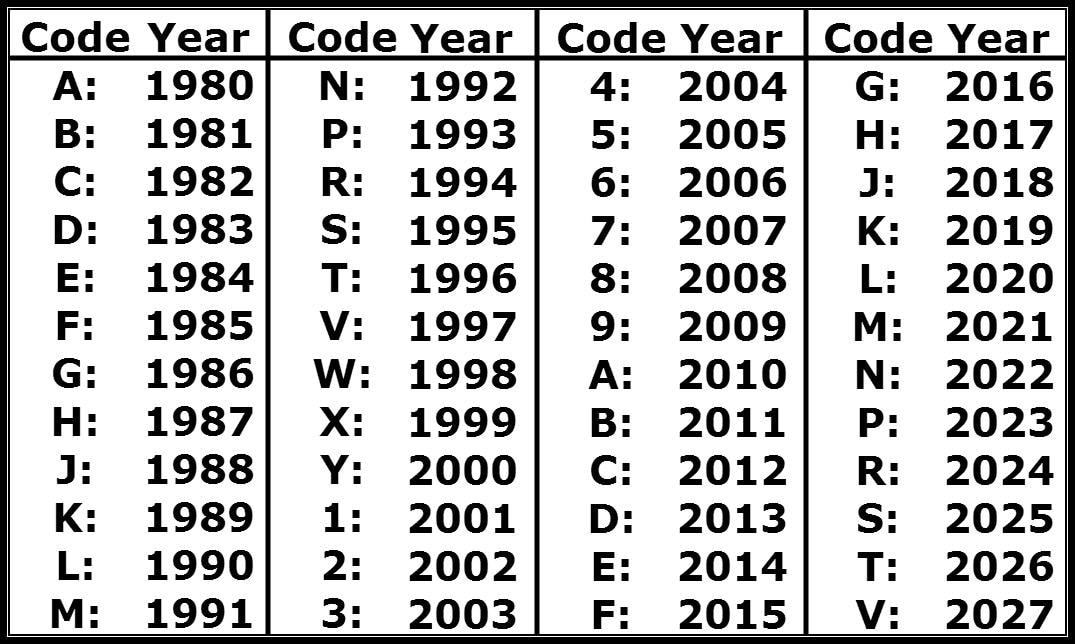
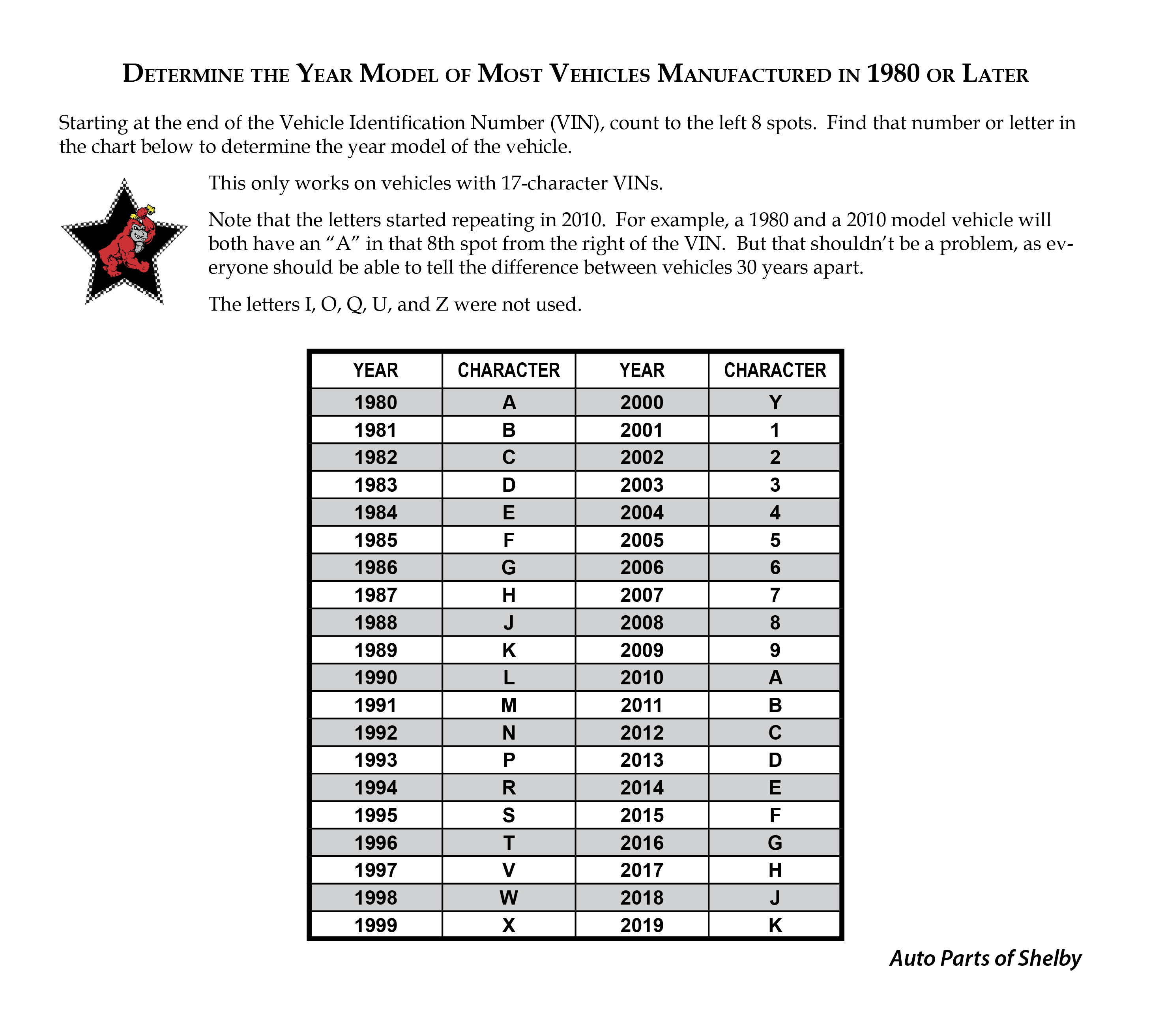
For anyone asking “what year is this car,” the 10th character of the VIN is the most critical piece of data. This character represents the “Model Year.” This is a purely technological designation that doesn’t always align with the calendar year of production. For example, a car manufactured in November 2022 might be designated as a 2023 model.
The system uses a specific cycle of 30 characters (letters and numbers), excluding I, O, Q, U, and Z to avoid confusion. For instance, the letter “A” represented 1980 and again 2010. By 2023, the character is “P.” Modern software decoders instantly cross-reference this character against a standardized table to provide a result in milliseconds.
APIs and the Democratization of Vehicle Data
The technology behind VIN decoding is no longer locked in proprietary manufacturer databases. Today, Application Programming Interfaces (APIs) allow developers to integrate vehicle identification into nearly any app or website. Companies like vPIC (NHTSA’s database) offer public APIs that return JSON or XML data, allowing users to input a VIN and receive a complete breakdown of the vehicle’s specifications, including the exact model year, assembly plant, and safety features.
Visual Intelligence: Using AI and Computer Vision for Identification
While the VIN is the “source of truth,” it isn’t always accessible. If you see a car driving down the street or parked at a distance, you cannot read its 10th character. This is where modern AI and computer vision come into play, turning a smartphone camera into a sophisticated identification tool.
Mobile Apps and Image Recognition
In the last five years, machine learning models have become incredibly proficient at visual pattern recognition. Apps designed for car enthusiasts and insurance adjusters use Convolutional Neural Networks (CNNs) to analyze the geometric features of a vehicle. By training these models on millions of labeled images, the software can distinguish between a 2018 and a 2019 model of the same car—even if the only difference is a slight adjustment to the LED headlight signature or the diameter of the alloy wheels.
The Role of Machine Learning in Distinguishing Model Refreshes
Automakers often perform “facelifts” mid-cycle. To an untrained human eye, a 2020 BMW 5 Series might look identical to a 2021 model. However, technology analyzes the “latent space” of an image—detecting subtle changes in the pixels that correspond to the “Life Cycle Impulse” (LCI) updates. Advanced AI can pinpoint the exact production window by identifying these incremental software and hardware changes, providing a probable year of manufacture based on visual data points alone.
Reverse Image Search and Community-Driven Databases
Beyond dedicated AI apps, the technology of reverse image searching (like Google Lens) has revolutionized how we identify car years. These systems index billions of images from automotive forums, auction sites, and manufacturer archives. When a user uploads a photo, the algorithm compares the visual metadata against these repositories. If a specific wheel design was only offered in 2014, the search engine can cross-reference that hardware limitation to narrow down the vehicle’s year with high accuracy.
Software Tools and Databases for Professionals and Enthusiasts
Identifying the year of a car is often the first step in a deeper technological dive into its history. For professionals in the automotive tech space, “what year is this car” is just the entry point into a massive ecosystem of interconnected software tools.
Telematics and Integrated Vehicle Software
Modern cars are essentially rolling computers. Through telematics and On-Board Diagnostics (OBD-II) ports, technicians can query the vehicle’s Electronic Control Units (ECUs). The software firmware versions installed on these units are often year-specific. By scanning the vehicle’s digital architecture, a technician can see the “build date” encoded into the software itself, which may provide more granular detail than the VIN alone, such as the specific day and shift the car was assembled.
Cloud-Based Maintenance Tracking
Platforms like Carfax or AutoCheck leverage massive cloud databases to track a vehicle’s lifecycle. These tools aggregate data from DMV records, insurance claims, and service centers. When a user asks “what year is this car,” these platforms provide a chronological map. By looking at the date of the first “title issued” or the first “pre-delivery inspection,” the software confirms the model year and ensures that the physical vehicle matches its digital record.
Digital Security and the Prevention of Vehicle Cloning
One of the most critical uses of identification technology is in the realm of digital security. “Vehicle cloning” involves taking the identity (the year, make, and VIN) of a legal car and applying it to a stolen or salvaged one. Modern cryptographic techniques and “digital twins” are being used to prevent this. High-end manufacturers now use encrypted digital certificates within the car’s hardware that must match the manufacturer’s central server, ensuring that a “2023” model is exactly what it claims to be at the code level.
Future Trends: The Evolution of Digital IDs for Vehicles
As we look toward the future, the methods we use to answer “what year is this car” are becoming even more integrated and immutable. The transition to electric vehicles (EVs) and autonomous systems is accelerating the need for high-fidelity digital identification.
Blockchain and Immutable Service Histories
There is a growing movement to move vehicle identification and history onto the blockchain. This would create a “birth certificate” for the car that includes its production year, battery health (for EVs), and every software update it has ever received. Because blockchain is decentralized and immutable, it would be impossible to “roll back” the digital age or identity of a vehicle, providing 100% certainty to future owners or service providers.

The Shift Toward Software-Defined Vehicles (SDV)
In the era of Software-Defined Vehicles, the “year” of a car might become less about when the metal was pressed and more about the version of the operating system it runs. Much like an iPhone, where the hardware might be three years old but the software is current, future cars may be identified by their “Digital Year.” We are already seeing this with Tesla and Rivian, where over-the-air (OTA) updates can change the vehicle’s performance and features overnight. In this context, identification technology will focus on the “stack” the car is running, blurring the lines between the physical manufacturing year and its current digital capabilities.
The simple question “what year is this car?” has evolved into a complex interaction between hardware, software, and global data networks. Whether through decoding the 10th character of a VIN, employing neural networks for visual recognition, or querying cloud-based history reports, technology has turned automotive identification into a precise science. As we move deeper into the digital age, our ability to track and verify the machines we drive will only become more sophisticated, ensuring that every car’s history is just a few clicks or a camera scan away.
aViewFromTheCave is a participant in the Amazon Services LLC Associates Program, an affiliate advertising program designed to provide a means for sites to earn advertising fees by advertising and linking to Amazon.com. Amazon, the Amazon logo, AmazonSupply, and the AmazonSupply logo are trademarks of Amazon.com, Inc. or its affiliates. As an Amazon Associate we earn affiliate commissions from qualifying purchases.