
In the landscape of modern home automation and climate tech, the most foundational tools often hide in plain sight. While we frequently discuss the latest in smart thermostats or multi-zone HVAC systems, the ceiling fan remains a critical piece of hardware in the residential ecosystem. However, maximizing the efficiency of this kinetic gadget requires more than simply flipping a switch. It requires an understanding of the mechanical engineering and directional physics that govern airflow. To answer the quintessential seasonal question—what way does a ceiling fan go in summer—we must look beyond the blades and into the technical integration of modern cooling hardware.
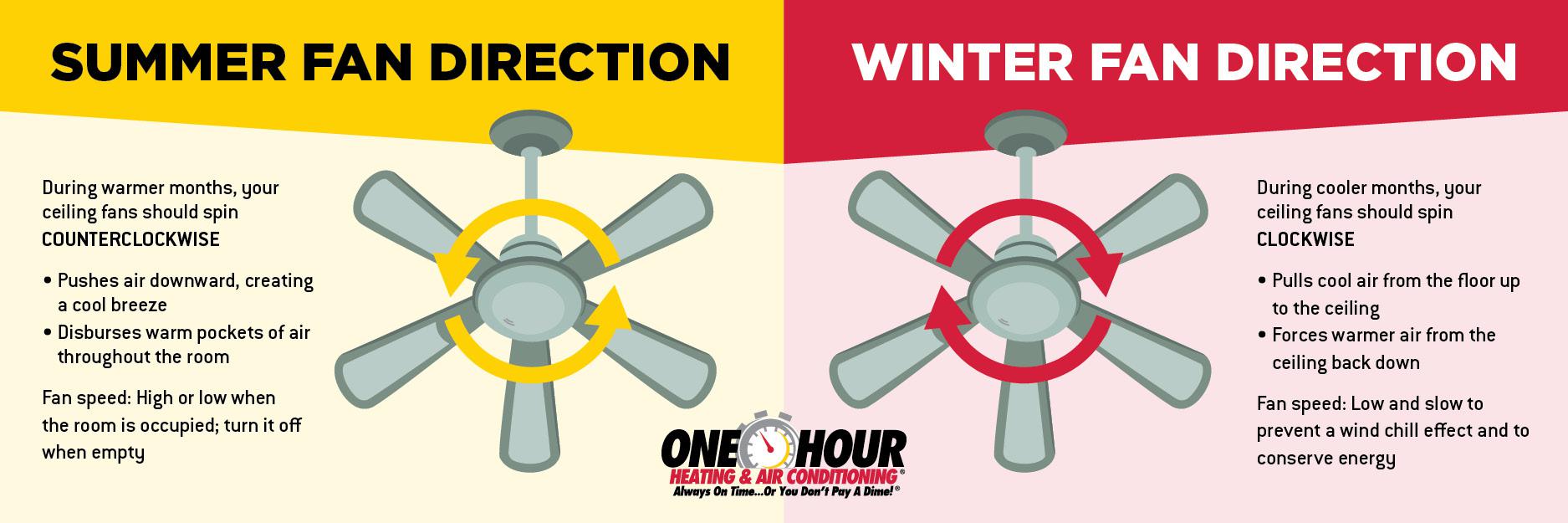
The Physics of Airflow: Why Counter-Clockwise is the Summer Standard
The primary function of a ceiling fan in a high-temperature environment is not to lower the room’s temperature, but to facilitate a biological and mechanical interface known as the wind-chill effect. From a technical standpoint, the direction of rotation determines the vector of the air displacement.
Understanding Blade Pitch and Rotation
Ceiling fan blades are engineered with a specific “pitch”—the angle at which the blade meets the air. In the summer, the fan must be set to rotate in a counter-clockwise direction (when looking up at the blades). This specific rotation, combined with the blade pitch, creates a concentrated column of air that is pushed directly downward.
In mechanical terms, this is referred to as a “downdraft.” As the blades slice through the air at an angle, they compress the air beneath them, forcing it toward the occupants of the room. This does not change the ambient temperature of the space (as an air conditioning unit would), but it accelerates the evaporation of moisture on human skin, which is the body’s natural cooling mechanism.
The Downdraft Phenomenon and Thermal Comfort
The efficiency of this downdraft is measured by its “CFM” (Cubic Feet per Minute). High-tech fans are rated based on their ability to move large volumes of air at specific RPMs (Revolutions Per Minute). During the summer months, a high-speed, counter-clockwise rotation allows a room to feel up to six to eight degrees cooler than it actually is. This interaction between hardware and human biology is a cornerstone of “thermal comfort” tech, allowing users to increase their thermostat set-points without sacrificing comfort.
Beyond the Pull Chain: The Rise of DC Motor Technology
While older fans relied on rudimentary AC (Alternating Current) motors, the latest gadgets in the ceiling fan market utilize DC (Direct Current) motors. This shift represents a significant technological leap in how we manage summer cooling.
AC vs. DC Motors in Modern Fans
The technical distinction between AC and DC motors is profound when it comes to seasonal efficiency. DC motors utilize permanent magnets to rotate the internal rotor, which generates significantly more torque while using up to 70% less energy than traditional AC motors.
From a user-experience perspective, DC motor technology allows for more precise control over the “Summer Mode.” Where an AC fan might have three standard speeds, a DC-powered smart fan often features six or more speed intervals. This granularity allows for a more customized downdraft, preventing the “buffeting” effect where the air feels choppy or turbulent, rather than a smooth, consistent stream.
Precision Control and Variable Speed Algorithms
Modern fans are increasingly equipped with onboard microprocessors that manage speed and direction. In summer, these algorithms can simulate a “nature mode” or “breeze mode.” Instead of a static counter-clockwise spin, the fan’s software subtly varies the RPM to mimic natural wind patterns. This tech prevents sensory adaptation—where you stop feeling the cooling effect because it is too consistent—ensuring that the summer downdraft remains effective throughout the day.
Smart Home Integration: Automating the Summer Shift

The “manual switch” on the side of the motor housing is quickly becoming a relic of the past. As we move toward a fully integrated IoT (Internet of Things) household, the direction and speed of ceiling fans are becoming automated components of a larger digital strategy.
IoT Sensors and Automated Directional Switching
The latest generation of smart fans connects directly to home networks via Wi-Fi or Bluetooth. Using protocols like Matter or Zigbee, these fans can communicate with external temperature sensors. When the outdoor temperature crosses a certain threshold or the indoor humidity rises, the fan’s firmware can automatically initiate a counter-clockwise high-speed rotation.
Furthermore, digital security and remote management apps allow homeowners to monitor their cooling hardware from anywhere. If a sensor detects that a room is unoccupied but the fan is running in its summer setting, the smart hub can power it down, as fans cool people, not rooms. This “occupancy-aware” technology is the pinnacle of current residential gadgetry.
Integration with Smart Thermostats and Ecosystems
The true power of the counter-clockwise summer setting is realized when the fan is synced with a smart thermostat (like Nest or Ecobee). This is known as “inter-device orchestration.” When the fan is verified to be in “Summer Mode,” the thermostat can adjust its cooling algorithm. By leveraging the fan’s downdraft, the HVAC system can run less frequently, reducing wear and tear on the compressor and optimizing the entire home’s energy profile.
Data-Driven Cooling: Energy Efficiency and Digital Monitoring
In the tech world, efficiency is measured by the ratio of output to input. In the context of summer cooling, the ceiling fan is an incredibly efficient gadget when used correctly.
Reducing the Load on HVAC Systems
From a systems-engineering perspective, the ceiling fan acts as a “load reducer.” By ensuring the fan is rotating counter-clockwise, the resident is utilizing a low-wattage device (the fan) to offset the high-wattage demand of the central air conditioning. Digital energy monitors have shown that for every degree the thermostat is raised in summer, homeowners can save approximately 3% to 5% on cooling costs—provided the fan is moving air effectively.
Real-Time Energy Tracking via Mobile Apps
Modern smart fans often come with dedicated apps that provide real-time data on energy consumption. These digital interfaces allow users to see exactly how much power is being drawn at various RPMs. During a heatwave, this data-centric approach allows for “peak demand management,” where the fan’s software can prioritize efficiency during hours when the local electrical grid is under the most stress.
The Future of Residential Climate Tech
As we look toward the future of home hardware, the humble ceiling fan is undergoing a digital transformation. We are moving away from simple “on/off” devices toward intelligent climate nodes.
AI-Driven Thermal Mapping
Experimental tech is now being developed that uses infrared sensors built into the fan’s canopy. These sensors “map” the thermal signature of the room. If the AI detects a “hot spot” (such as a sun-drenched window in July), it can adjust the fan’s pitch and speed to distribute the air more effectively in that specific direction. This level of technical sophistication ensures that the summer rotation is doing more than just spinning; it is actively responding to the environment.

Blade Aerodynamics Inspired by Aerospace Engineering
The blades themselves are being redesigned using computational fluid dynamics (CFD). Borrowing from aerospace engineering, some high-end fans now feature “winglets” or serrated edges designed to reduce noise and increase the volume of air moved per revolution. This allows the fan to maintain a cooling downdraft at lower, quieter speeds, merging mechanical engineering with acoustic comfort.
In conclusion, the question of which way a ceiling fan should go in the summer is the entry point into a wider discussion about home technology. By setting your fan to rotate counter-clockwise, you are engaging a sophisticated system of airflow physics, DC motor precision, and smart home automation. As our homes become more digitally integrated, these kinetic gadgets will continue to play a vital role in creating efficient, data-driven, and comfortable living environments.
aViewFromTheCave is a participant in the Amazon Services LLC Associates Program, an affiliate advertising program designed to provide a means for sites to earn advertising fees by advertising and linking to Amazon.com. Amazon, the Amazon logo, AmazonSupply, and the AmazonSupply logo are trademarks of Amazon.com, Inc. or its affiliates. As an Amazon Associate we earn affiliate commissions from qualifying purchases.