
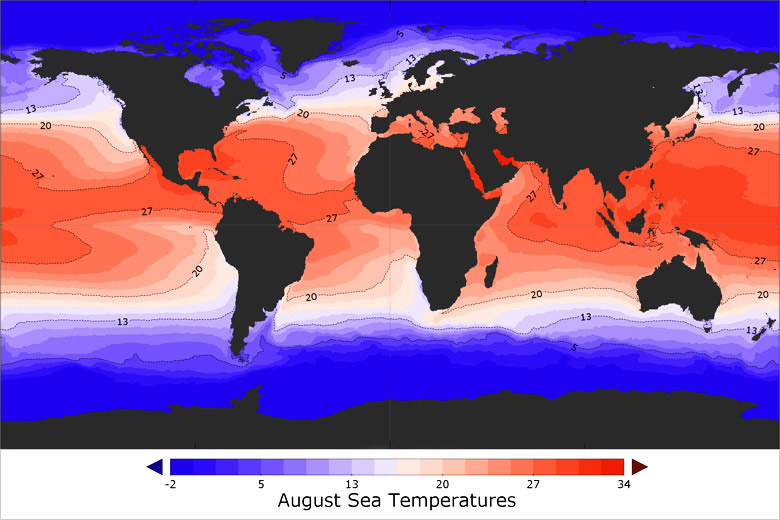
In the realm of geographic trivia, the answer to “what ocean is the warmest” is a matter of simple fact: the Indian Ocean. However, from the perspective of modern technology, the answer is the starting point for one of the most complex data-gathering and analytical challenges in human history. To determine which body of water holds the most heat, and to understand the implications of those temperatures on global systems, we rely on a sophisticated ecosystem of satellites, autonomous submersibles, and artificial intelligence.
The Indian Ocean, particularly its tropical zones, acts as a massive thermal reservoir. Understanding its heat content is no longer just the domain of marine biologists; it is a critical focus for software engineers, data scientists, and hardware innovators. The intersection of oceanography and technology has birthed a new era of “Marine Tech” that allows us to visualize, predict, and respond to the thermal dynamics of our planet with unprecedented precision.
The Digital Frontier: Measuring the Indian Ocean’s Thermal Profile
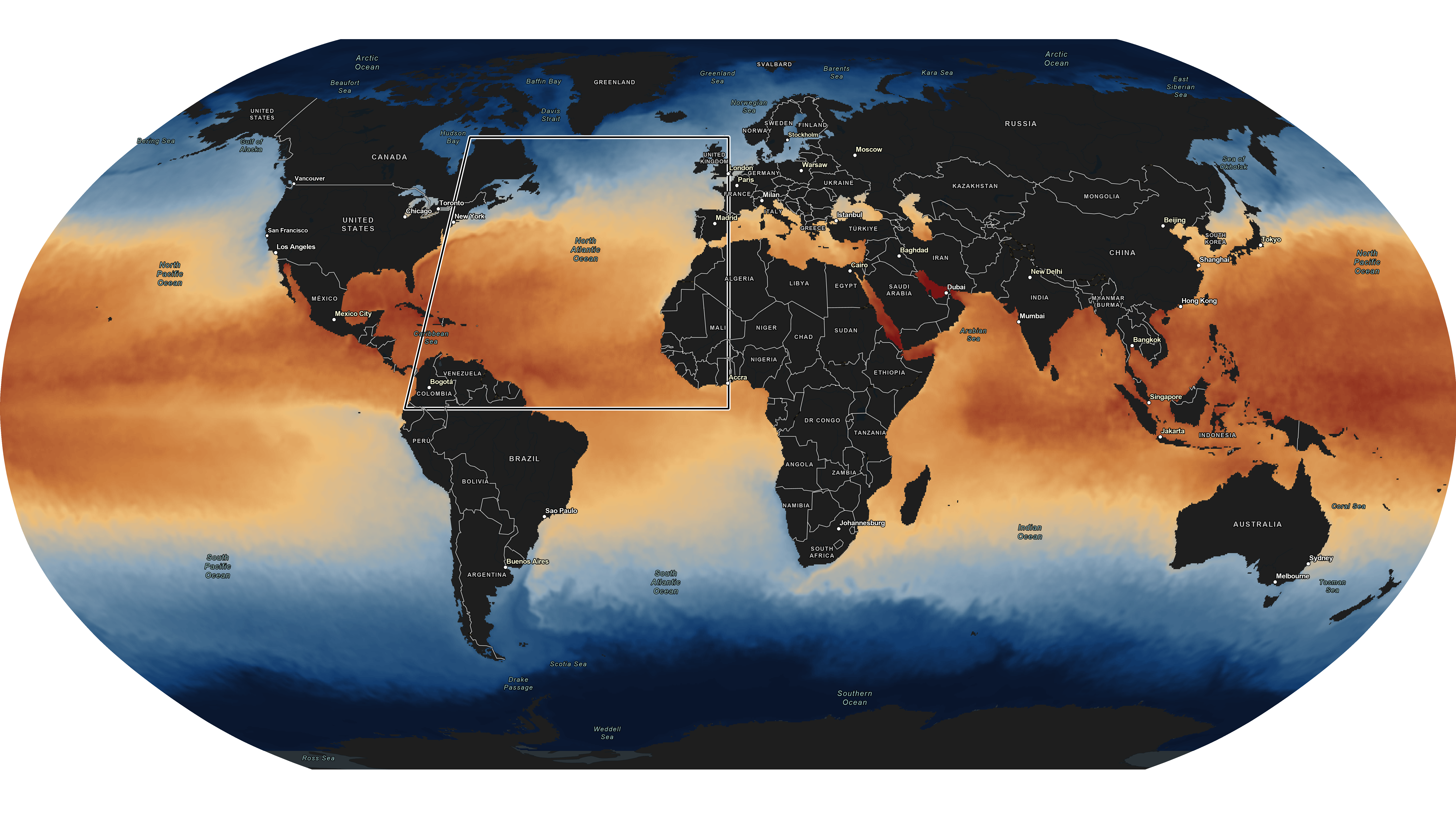
The identification of the Indian Ocean as the world’s warmest is not a result of a few thermometer readings taken from the back of a boat. It is the result of a global, multi-layered technological network that monitors the “pulse” of the ocean in real-time.
Satellite Remote Sensing and Infrared Imagery
The primary tool in the technologist’s arsenal for measuring ocean temperature is the satellite. Instruments such as the Moderate Resolution Imaging Spectroradiometer (MODIS) on NASA’s Aqua satellite and the Visible Infrared Imaging Radiometer Suite (VIIRS) provide high-resolution Sea Surface Temperature (SST) maps. These satellites utilize infrared sensors to detect the long-wave radiation emitted from the ocean’s surface.
In the Indian Ocean, where surface temperatures can exceed 30°C (86°F), these satellites process gigabytes of data every hour. The software behind these sensors must account for atmospheric interference, such as water vapor and aerosol particles, using complex algorithms to “clear” the view. This digital filtering ensures that the thermal data transmitted back to Earth is accurate to within a fraction of a degree.
Argo Floats: The IoT of the Abyss
While satellites are excellent at measuring the surface, the “warmth” of an ocean is truly defined by its Heat Content (OHC), which extends thousands of meters deep. This is where the Argo Program comes in—a massive deployment of nearly 4,000 autonomous robotic floats.
These devices are essentially the “Internet of Things” (IoT) for the ocean. They are programmed to sink to depths of 2,000 meters, drifting with the currents for days, before ascending to the surface to transmit temperature and salinity data via Iridium satellite links. For the Indian Ocean, the Argo network has been revolutionary. It has allowed data scientists to see that the Indian Ocean is warming faster than any other, a trend that was previously obscured by the lack of physical monitoring stations in the region.
Data Centers and Subsea Infrastructure in High-Temperature Zones
The fact that the Indian Ocean is the warmest body of water presents unique challenges for the global technology infrastructure that resides within and beneath it. Subsea cables and offshore data solutions are the backbone of our digital world, and their performance is directly tied to the environment they inhabit.
The Engineering Challenge of Warm-Water Cooling
One of the most significant trends in “Green Tech” is the use of seawater for cooling data centers. Companies like Microsoft have experimented with underwater data center pods (Project Natick), which leverage the naturally low temperatures of the deep ocean to dissipate heat from high-density servers.
However, in the Indian Ocean, the “warmth” of the water creates a higher baseline. Tech firms operating in regions like Singapore or Mumbai must engineer more robust heat exchange systems. If the ambient water temperature is significantly higher, the efficiency of the cooling system drops, requiring more advanced materials and more energy-intensive pump systems. This has spurred innovation in “Closed-Loop Cooling” software that uses AI to optimize fan speeds and liquid flow rates based on real-time external water temperature data.
Redundancy and Resilience in the Indian Ocean Corridor
The Indian Ocean is a critical corridor for subsea fiber-optic cables connecting Europe to Asia. Warm water environments are biologically active, leading to faster biofouling (the growth of marine organisms on equipment). For tech infrastructure providers, this means that cables and sensors deployed in the Indian Ocean require specialized chemical coatings and reinforced housing to prevent degradation.

Furthermore, the thermal energy of the Indian Ocean fuels intense tropical cyclones. This environmental volatility requires the implementation of “software-defined networking” (SDN). When a thermal event or storm threatens a physical cable landing station in a warm-water zone, these intelligent systems can automatically reroute global data traffic through cooler, more stable corridors, ensuring that the digital economy remains uninterrupted.
AI and Predictive Modeling in Oceanographic Research
Identifying the warmest ocean is only the first step; predicting how that heat will move and influence the weather is where Artificial Intelligence (AI) and Machine Learning (ML) shine. The Indian Ocean Dipole (IOD)—a phenomenon similar to El Niño—is a major driver of global climate variability, and its behavior is dictated by the ocean’s thermal gradients.
Machine Learning for Ocean Heat Content (OHC) Forecasting
Traditional climate models are computationally expensive and often struggle with the “chaos” of oceanic turbulence. Modern data scientists are now utilizing Neural Networks to bridge this gap. By training AI models on decades of satellite and Argo data, researchers can now predict shifts in the Indian Ocean’s temperature months in advance.
These AI models look for patterns that are invisible to the human eye, such as subtle changes in sea-level height (detected by altimetry satellites) that indicate a surge in warm water below the surface. For the tech industry, these predictions are vital. They allow insurance-tech (InsurTech) companies to adjust risk models for agriculture and supply chains in countries bordering the Indian Ocean, transforming raw thermal data into actionable financial intelligence.
Digital Twins of the Marine Ecosystem
Perhaps the most ambitious tech project involving the Indian Ocean is the creation of “Digital Twins.” A Digital Twin is a high-fidelity virtual representation of a physical object or system—in this case, the entire Indian Ocean.
Using platforms like NVIDIA’s Earth-2 or the European Union’s Destination Earth (DestinE), scientists can run simulations to see how the warmest ocean will react to various CO2 emission scenarios. These simulations require massive supercomputing power and sophisticated software architectures. By creating a “virtual Indian Ocean,” technologists can test “what-if” scenarios: How will a 1-degree rise in temperature affect the subsea cable network? What happens to coral reef monitoring sensors if the warm pool expands?
The Role of Sustainable Tech in Mitigating Oceanic Warming
As we acknowledge that the Indian Ocean is the warmest and continues to heat up at an accelerated pace, the focus of the tech industry has shifted toward mitigation and adaptation. “Climate Tech” is now a multi-billion dollar sector dedicated to addressing the thermal imbalances of our planet.
Renewable Energy Harvesting: Wave and Thermal Tech
The heat of the Indian Ocean is not just a challenge; it is also a potential energy source. Ocean Thermal Energy Conversion (OTEC) is a technology that uses the temperature difference between cooler deep and warmer shallow or surface seawaters to run a heat engine and produce electricity.
In the warm reaches of the Indian Ocean, the temperature gradient is particularly pronounced, making it a prime candidate for OTEC innovation. Startups are currently developing offshore platforms that act as giant floating batteries, converting the ocean’s thermal energy into hydrogen fuel. This represents a “Full-Circle” tech solution: using the ocean’s heat to create the very clean energy needed to reduce the carbon emissions causing the heat in the first place.
Carbon Capture and Storage (CCS) Technologies
The warming of the Indian Ocean reduces its ability to absorb CO2, leading to a feedback loop that exacerbates global warming. In response, a new wave of “Blue Tech” startups is emerging. These companies are developing autonomous “Carbon Sequestration Drones” that can be deployed into warm currents to enhance the ocean’s natural alkalinity or to monitor the health of seagrass meadows, which are highly efficient carbon sinks. The sensors on these drones use machine vision to identify areas of degradation, allowing for targeted restoration efforts that are tracked via blockchain to ensure transparency in carbon credit markets.
Conclusion: The Synergy of Data and the Deep Blue
The question of “what ocean is the warmest” leads us directly to the Indian Ocean, but the story doesn’t end there. In the 21st century, the ocean is no longer a dark, unknowable void. Through the lens of technology, it has become a data-rich environment that informs our global economy, our infrastructure, and our survival.
From the satellites orbiting 20,000 kilometers above to the Argo floats drifting 2,000 meters below, the Indian Ocean is being digitized. This technological oversight allows us to manage the risks of its rising heat while harnessing its potential for energy and innovation. As we continue to develop more advanced AI models and more resilient hardware, our relationship with the world’s warmest ocean will be defined not by fear of its power, but by the precision of our digital understanding. The future of the Indian Ocean—and indeed, the planet—is being written in code, powered by data, and monitored by the most sophisticated technology humanity has ever produced.
aViewFromTheCave is a participant in the Amazon Services LLC Associates Program, an affiliate advertising program designed to provide a means for sites to earn advertising fees by advertising and linking to Amazon.com. Amazon, the Amazon logo, AmazonSupply, and the AmazonSupply logo are trademarks of Amazon.com, Inc. or its affiliates. As an Amazon Associate we earn affiliate commissions from qualifying purchases.