
In the realm of modern technology, precision is the currency of progress. Whether we are discussing the microscopic dimensions of a semiconductor or the massive data centers housing the world’s information, the way we measure space is fundamental. When it comes to volume—the quantity of three-dimensional space occupied by a liquid, solid, or gas—the International System of Units (SI) provides the global standard.
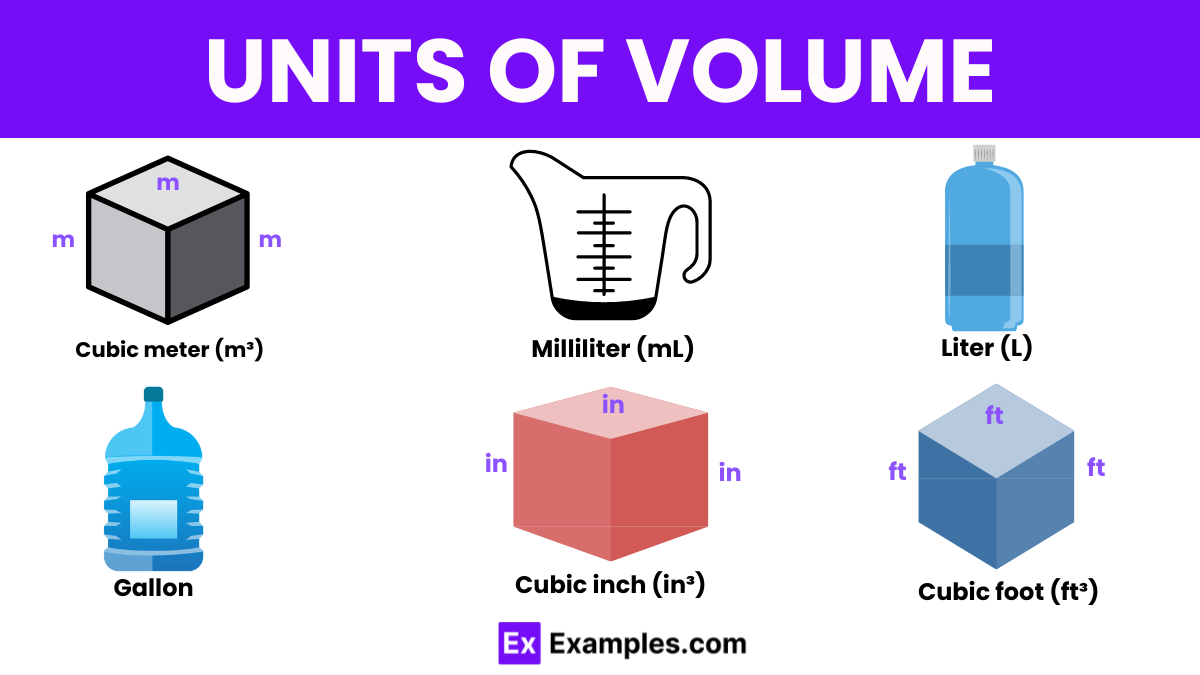
The SI unit for volume is the cubic meter ($m^3$). While this might seem like a simple concept from a primary school physics textbook, its application within the technology sector is vast, complex, and vital for the next generation of digital and physical innovations. From the algorithms used in 3D modeling software to the fluid dynamics calculated by Artificial Intelligence (AI) for aerospace engineering, understanding the cubic meter is essential for any tech professional.
Understanding the SI Unit of Volume in the Digital Age
To understand why the cubic meter is the cornerstone of volumetric measurement, we must first look at its derivation. The SI system is built upon seven base units, one of which is the meter ($m$). Because volume represents space in three dimensions (length × width × height), it is a derived unit.
The Cubic Meter ($m^3$) vs. Non-SI Units
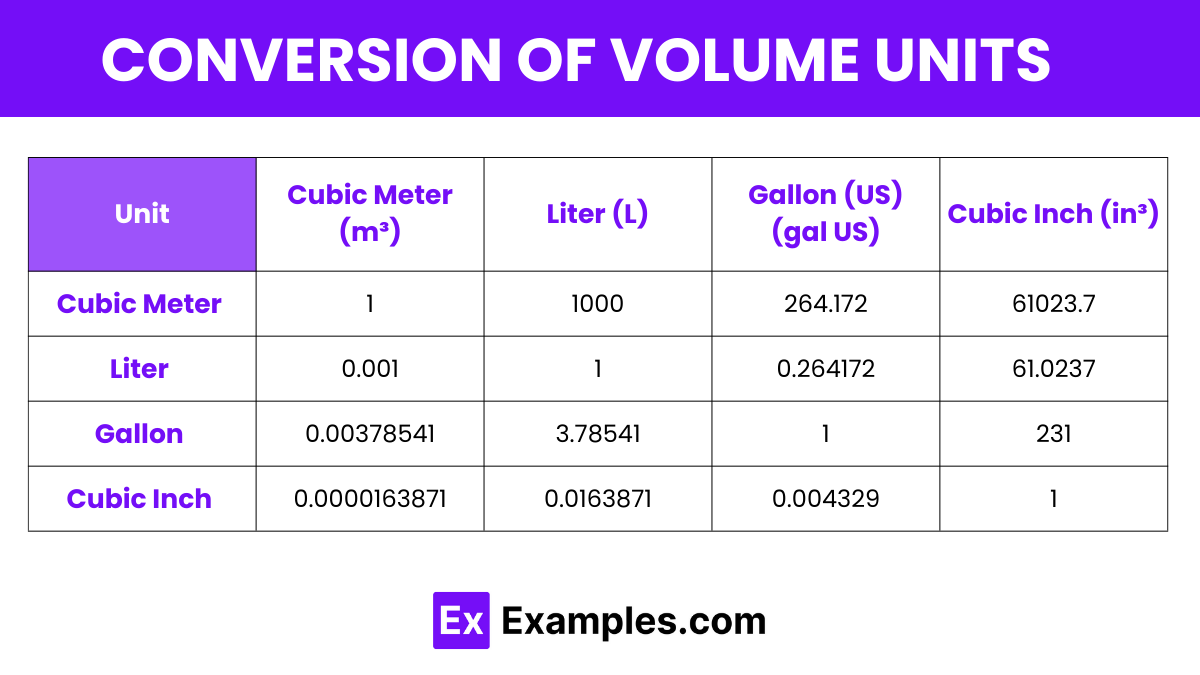
In everyday life, we often encounter the “liter” (L). While the liter is accepted for use with the SI, it is not the official SI unit itself. One cubic meter is equivalent to 1,000 liters. In the high-tech manufacturing sector, using the cubic meter as a baseline ensures that there is no ambiguity when communicating specifications across international borders.
Software developers working on global platforms must often decide between metric and imperial systems. However, in the backend of most scientific and engineering software, the cubic meter serves as the “source of truth.” This avoids the “rounding errors” that can occur when converting between gallons, fluid ounces, and liters, which could lead to catastrophic failures in precision-dependent fields like pharmaceutical tech or chemical engineering.
Why Standardization Matters in Software Engineering
In software engineering, specifically within database management and Physical Simulation Engines (PSE), standardization is the difference between a functional product and a system crash. When programmers build simulations for autonomous vehicles or weather patterns, they rely on a unified coordinate system.
The “Mars Climate Orbiter” disaster of 1999 remains the ultimate cautionary tale in the tech world. The spacecraft was lost because one piece of software produced results in United Kingdom imperial units (pound-seconds), while another expected SI units (newtons-seconds). In the context of volume, using the cubic meter as a hardcoded standard ensures that sensors, cloud data, and mechanical actuators are all “speaking the same language.”
Volume Calculations in CAD and 3D Modeling Software
Computer-Aided Design (CAD) and 3D modeling have revolutionized how we interact with physical space. Whether it’s an architect designing a skyscraper or a game developer creating a virtual environment, the calculation of volume is a core functional requirement.
Algorithmic Determination of Complex Volumes
In modern CAD software like AutoCAD, SolidWorks, or Rhino 3D, calculating the volume of a simple cube is easy. However, tech tools today deal with complex, non-standard geometries—organic shapes, hollowed-out lattice structures, and intricate mechanical parts.
Software engineers utilize algorithms such as the “Divergence Theorem” or “Discrete Integration” to calculate the volume of these meshes. By breaking down a complex 3D object into millions of tiny tetrahedrons, the software can sum up the individual volumes to provide an exact measurement in cubic meters (or cubic millimeters for micro-tech). This precision allows engineers to predict the weight, displacement, and material cost of a product before a single physical prototype is ever built.
The Role of SI Units in Additive Manufacturing (3D Printing)
Additive manufacturing, or 3D printing, is a technology entirely dependent on volumetric accuracy. A 3D printer’s “slicer” software converts a digital model into a series of thin layers. To do this effectively, the software must calculate the exact volume of material required to fill the object’s “infill.”
If the volume calculation is off by even a fraction of a cubic millimeter, the structural integrity of the part is compromised. High-end industrial 3D printers used in the medical tech field to create titanium bone implants rely on the SI unit system to ensure that the volume of the implant perfectly matches the void in the patient’s biological scans.
Scientific Computing: Data Analysis and Simulation of Fluid Dynamics
Beyond solid objects, the measurement of volume is critical in the digital simulation of fluids and gases. This field, known as Computational Fluid Dynamics (CFD), is one of the most computationally expensive areas of modern technology.
Simulating Volumetric Flow in Computational Fluid Dynamics (CFD)
CFD software allows tech companies in the automotive and aerospace sectors to simulate how air (a gas) or fuel (a liquid) moves through a system. The volume of the fluid being moved is measured in cubic meters per second ($m^3/s$), known as the volumetric flow rate.
Supercomputers process billions of data points to simulate how the volume of air inside a jet engine reacts to extreme pressure. By using the SI unit as the constant, these simulations can be incredibly granular. This allows tech firms to optimize fuel efficiency and reduce carbon footprints by tweaking the volumetric capacity of engine components by mere micrometers.
Edge Computing and Real-Time Volume Monitoring
With the rise of the Internet of Things (IoT), we are seeing an explosion in “smart sensors” used for volume monitoring. In large-scale industrial tech, sensors are placed inside massive storage tanks or pipelines to measure the volume of liquid in real-time.
These sensors utilize Edge Computing—processing the data locally on the device rather than sending it to a distant server—to provide instant feedback. If a sensor detects a sudden change in the cubic volume of a pressurized gas, it can trigger an automated shutdown to prevent an explosion. The reliance on the SI unit ensures that these IoT devices can integrate seamlessly with global cloud infrastructures like AWS or Azure, which provide standardized analytical tools for industrial data.
Future Trends: AI and the Evolution of Volumetric Data
As we move further into the decade, the way technology perceives and utilizes the SI unit of volume is shifting from static measurement to dynamic, AI-enhanced understanding.
Neural Radiance Fields (NeRFs) and Volumetric Rendering
One of the most exciting breakthroughs in AI tech is the development of Neural Radiance Fields (NeRFs). Unlike traditional photography, which captures a 2D projection of a scene, NeRFs use AI to turn a few 2D images into a fully realized 3D “volumetric” scene.
In this context, the technology is moving toward “volumetric video.” Instead of pixels (picture elements), we are dealing with “voxels” (volumetric pixels). A voxel represents a specific value on a regular grid in three-dimensional space. As VR (Virtual Reality) and AR (Augmented Reality) hardware becomes more sophisticated, the ability to render these volumes accurately in real-time will depend on the SI units that define the virtual world’s physical boundaries.
Quantum Computing and Molecular Volume Simulations
Looking even further ahead, quantum computing promises to solve problems that are currently impossible for classical computers. One of the most promising applications is in “Molecular Modeling.”
Scientists are using quantum algorithms to simulate the volume and behavior of molecules at the atomic level. At this scale, the SI units transition to the sub-microscopic—cubic nanometers ($nm^3$). By understanding the exact volume an experimental drug occupies within a cellular receptor, tech-driven pharmaceutical companies can develop treatments with fewer side effects and higher efficacy. This level of precision is only possible because of the rigid, standardized framework provided by the SI unit system.

Conclusion: The Foundation of Technological Innovation
The question “What is the SI unit of measurement for volume?” may seem simple, but the answer—the cubic meter—is the bedrock upon which much of our modern world is built. From the software that renders the latest video games to the industrial IoT sensors that keep our energy grids safe, the cubic meter provides the necessary framework for precision, safety, and international collaboration.
As we continue to push the boundaries of technology—venturing into AI-driven 3D rendering, quantum molecular simulations, and automated global logistics—our reliance on standardized SI units will only grow. In a world of rapidly changing software and hardware, the cubic meter remains a constant, ensuring that as our digital capabilities expand, they remain firmly rooted in the physical reality of the space they inhabit.
aViewFromTheCave is a participant in the Amazon Services LLC Associates Program, an affiliate advertising program designed to provide a means for sites to earn advertising fees by advertising and linking to Amazon.com. Amazon, the Amazon logo, AmazonSupply, and the AmazonSupply logo are trademarks of Amazon.com, Inc. or its affiliates. As an Amazon Associate we earn affiliate commissions from qualifying purchases.