
The world of software development is a vast landscape of logic, syntax, and abstraction. For beginners and seasoned developers alike, the journey of mastering a new language often brings up a recurring question: what is the hardest programming language to learn? While “difficulty” is inherently subjective—contingent upon one’s mathematical background, previous coding experience, and cognitive style—certain languages are notorious for their steep learning curves, punishing syntax, and complex underlying concepts.
In the modern tech ecosystem, choosing a language isn’t just about utility; it’s about understanding the mental model required to communicate with a machine. From the manual memory management of systems programming to the mind-bending abstractions of functional logic, let’s explore the contenders for the most challenging programming languages in existence.
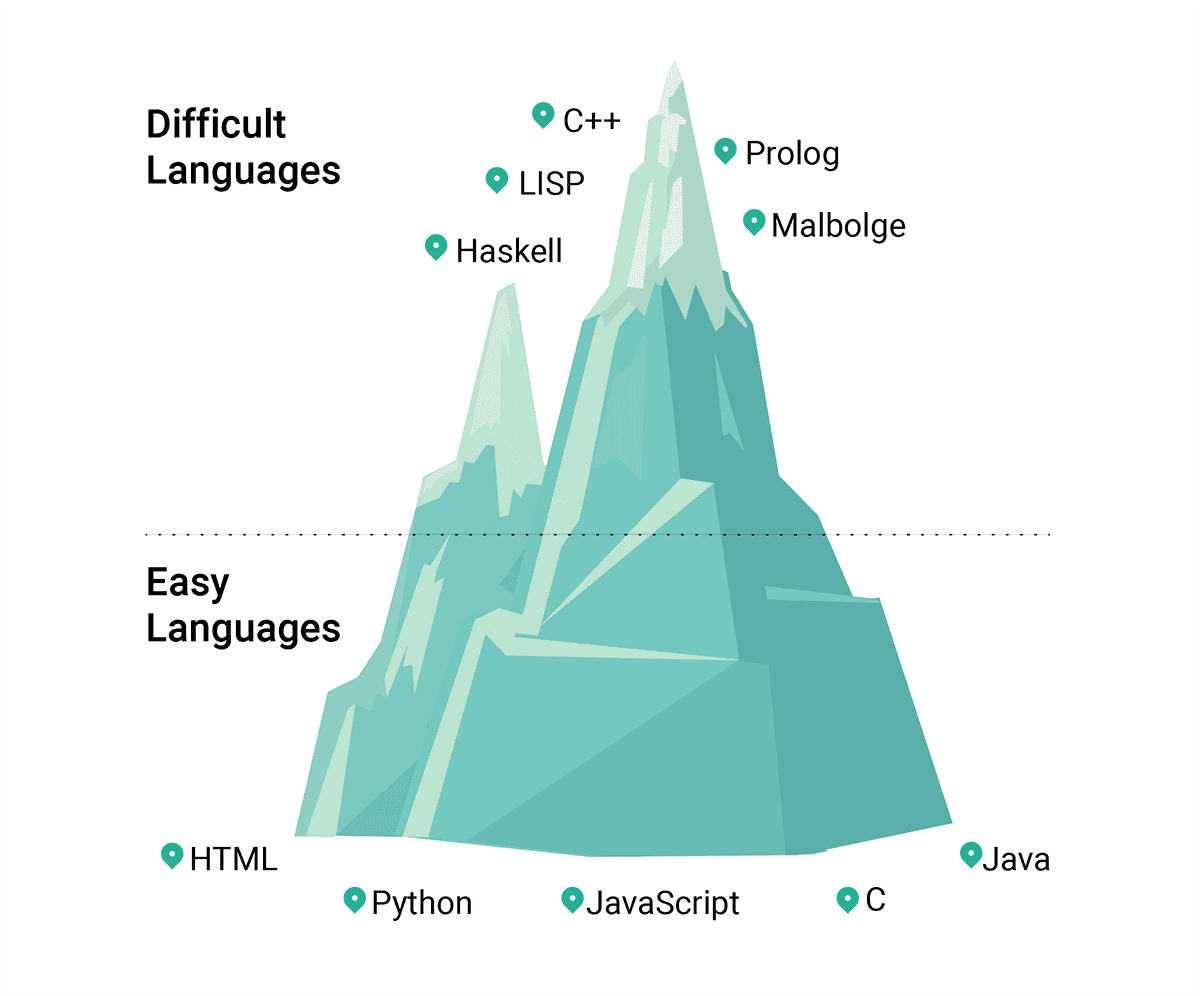
1. The Low-Level Titans: C++ and Assembly
To understand difficulty, one must first understand the proximity to the hardware. High-level languages like Python or JavaScript act as friendly intermediaries, handling most of the “dirty work” behind the scenes. Low-level languages, however, strip away these comforts, forcing the developer to manage the computer’s resources with surgical precision.
The Complexity of C++
C++ is often cited as one of the most difficult “mainstream” languages. Unlike its predecessor, C, which is relatively small and procedural, C++ is a multi-paradigm behemoth. It supports procedural, object-oriented, and generic programming, often all within the same codebase.
The primary hurdle for C++ learners is manual memory management. In C++, there is no “garbage collector” to automatically tidy up unused data. If you allocate memory and forget to deallocate it, you get a memory leak. If you try to access memory you’ve already freed, your program crashes—or worse, creates a security vulnerability. Furthermore, the syntax of C++ is notoriously dense, featuring pointers, references, templates, and operator overloading, which can lead to “template metaprogramming” errors that are famously difficult to debug.
Assembly: Talking Directly to the CPU
If C++ is difficult, Assembly is primal. Assembly language is essentially a human-readable version of machine code—the 1s and 0s that the processor executes. There are no variables in the traditional sense, no loops like for or while, and no built-in data structures.
Learning Assembly requires an intimate knowledge of computer architecture. You must understand CPU registers, stack pointers, and interrupt calls. Writing even a simple “Hello World” program in Assembly can take dozens of lines of code and a deep understanding of how the operating system interacts with the hardware. It is the ultimate test of a programmer’s patience and technical foundational knowledge.
2. The Functional Paradigm Shift: Haskell and Lisp
For many developers, the difficulty isn’t in how “close” they are to the hardware, but in how “far” they are from traditional logic. Most popular languages follow an imperative or object-oriented style (doing things in steps). Functional programming, however, treats computation as the evaluation of mathematical functions.
The Mathematical Rigor of Haskell
Haskell is frequently crowned the hardest functional language to master. It is “purely functional,” meaning functions have no side effects. If you give a function the same input, it must always return the same output, and it cannot change a global variable or print to a console without using a complex construct called a “Monad.”
The learning curve for Haskell is steep because it requires a background in category theory and abstract mathematics. Concepts like “Lazy Evaluation” (where code isn’t executed until its result is absolutely needed) and “Higher-Order Functions” require a total rewiring of the brain for those accustomed to the linear execution of Python or Java. Mastering Haskell is often described as learning mathematics more than learning coding.
Lisp and the “Parenthesis Hell”
Lisp (List Processing) is one of the oldest programming languages still in use, and its difficulty lies in its extreme minimalism and its unique syntax. In Lisp, code and data are the same thing (a concept known as homoiconicity).
The most striking feature of Lisp is its use of S-expressions and a seemingly endless sea of parentheses. For a beginner, keeping track of nested logic in Lisp is a nightmare. However, the true challenge of Lisp is its power; it allows programmers to rewrite the language itself through macros. This level of abstraction is incredibly powerful but requires a level of meta-cognition that many find overwhelming.
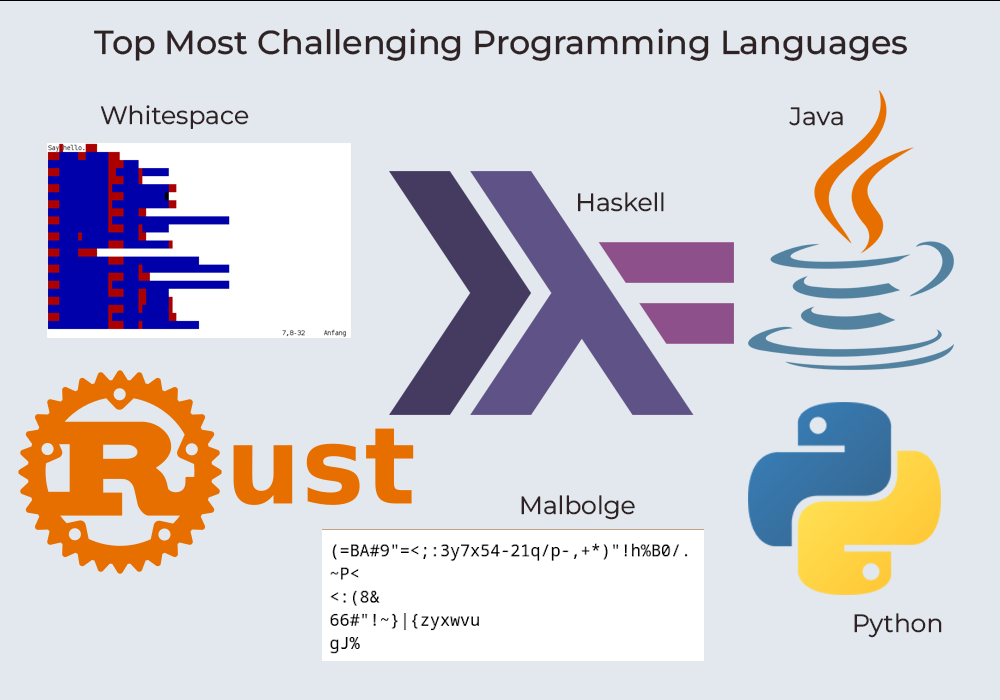
3. The Modern Gatekeeper: Rust and the Borrow Checker
In recent years, a new contender has emerged that balances the performance of C++ with modern safety features. While Rust is beloved by developers, it is also feared by newcomers for its uncompromising compiler.
Understanding the Borrow Checker
The “Borrow Checker” is the single biggest obstacle for anyone learning Rust. In most languages, you either manage memory yourself (C++) or let the system do it (Java/Python). Rust introduces a third way: “Ownership.”
The language enforces strict rules at compile-time about who “owns” a piece of data and how long it lives. If you try to pass a variable to a function in a way that might cause a data race or a memory error, the compiler simply refuses to build your program. Learning to “fight the borrow checker” is a rite of passage. It forces developers to have a perfect plan for their data’s lifecycle before they even run the code, making the initial learning phase frustratingly slow.
Strict Concurrency and Safety
Beyond memory, Rust’s difficulty stems from its commitment to safety. It eliminates entire classes of bugs (like null pointer exceptions) that plague other languages. However, providing these guarantees requires a complex system of “lifetimes,” “traits,” and “generics.” For a developer moving from a “loose” language like JavaScript, the discipline required by Rust can feel like a vertical wall.
4. Esoteric Languages: Theoretical Extremes
While the languages mentioned above are used in industry, there is a subcategory of programming languages designed specifically to be difficult. These are known as “Esoteric Programming Languages” (Esolangs). While not used for real-world software, they represent the theoretical limits of language difficulty.
Malbolge: Designed for Impossible
Named after the eighth circle of Hell in Dante’s Inferno, Malbolge was specifically engineered to be the most difficult programming language possible. Its code is self-modifying, its instructions depend on their position in memory, and the data is manipulated using a base-3 (ternary) system instead of binary. In fact, the first Malbolge program wasn’t even written by a human; it was generated by a Lisp algorithm because the logic was too complex for a person to grasp.
Brainfuck: Minimalist Obscurity
Brainfuck consists of only eight simple commands, represented by characters like >, <, +, and [. Despite its tiny vocabulary, it is “Turing complete,” meaning it can theoretically calculate anything. The difficulty lies in the total lack of abstraction. To do something as simple as adding two numbers, you must manually move a pointer across an array of memory cells. It is an exercise in extreme mental mapping and is essentially unusable for practical applications, though it remains a favorite for coding puzzles.
5. Why Learn a Hard Language?
If these languages are so difficult, why do developers bother with them? The answer lies in the unique perspective and power they provide.
The Benefits of Mental Expansion
Learning a difficult language like Haskell or Rust changes the way you think about code in every language. Haskell teaches you about immutability and state, which makes you a better React or JavaScript developer. Rust teaches you how memory actually works, making your Python code more efficient.
Performance and Career Longevity
High-difficulty languages often pay better. Because the barrier to entry is high, there is a smaller pool of experts. Companies building high-performance systems (like high-frequency trading platforms, game engines, or cloud infrastructure) desperately need developers who can handle the complexities of C++ or Rust. Mastering the “hard” path is often the best way to secure a specialized, high-paying role in the tech industry.

Conclusion
The “hardest” programming language is ultimately the one that challenges your current mental models. For a web developer, Assembly might be the peak of difficulty. For a hardware engineer, Haskell’s abstract math might be the true challenge.
Whether it is the manual control of C++, the mathematical purity of Haskell, or the strict safety of Rust, the difficulty is not a bug—it’s a feature. These languages push the boundaries of what humans can instruct machines to do, and in mastering them, we don’t just become better coders; we become better thinkers. In the ever-evolving world of technology, the hardest path often leads to the most rewarding destinations.
aViewFromTheCave is a participant in the Amazon Services LLC Associates Program, an affiliate advertising program designed to provide a means for sites to earn advertising fees by advertising and linking to Amazon.com. Amazon, the Amazon logo, AmazonSupply, and the AmazonSupply logo are trademarks of Amazon.com, Inc. or its affiliates. As an Amazon Associate we earn affiliate commissions from qualifying purchases.