
In the competitive landscape of modern commerce, the difference between a brand that resonates and one that is merely a commodity lies in how it communicates value. Every day, consumers are bombarded with thousands of marketing messages. To cut through the noise, brand strategists must master a fundamental distinction: the difference between features and benefits.
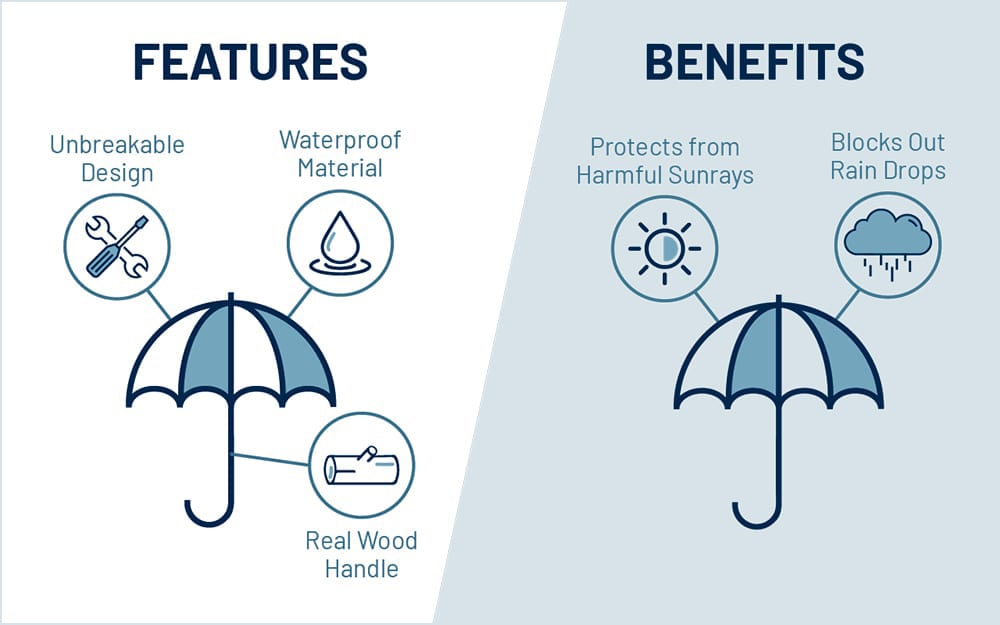
While “features” describe the technical aspects and attributes of a product or service, “benefits” describe the positive outcomes and emotional transformations the customer experiences. Within the realm of brand strategy and marketing, focusing on features tells your audience what you have, but focusing on benefits tells them why they should care. This guide explores how to pivot your corporate identity from a list of specifications to a narrative of value.

Understanding the Core Dichotomy: What vs. Why
To build a robust brand, one must first deconstruct the anatomy of an offering. Every product or service exists as a collection of parts (features) that generate a specific result (benefits).
Defining Features: The Logic and the Specs
Features are the factual, objective characteristics of your product or service. They are the “what” of your brand. In brand strategy, features are essential because they provide the “reason to believe.” They are the evidence that your product can do what you claim it can.
For example, a luxury watch brand might list features such as “scratch-resistant sapphire crystal,” “water-resistant to 100 meters,” and “72-hour power reserve.” These are verifiable facts. In a professional marketing context, features address the logical part of the brain. They satisfy the customer’s need for quality assurance and technical viability. However, relying solely on features often leads to “feature fatigue,” where the consumer becomes overwhelmed by data and fails to see the relevance to their own life.
Defining Benefits: The Emotion and the Transformation
Benefits represent the “why.” They are the subjective advantages that a customer gains from using those features. If a feature is a fact, a benefit is a feeling or a solution. Benefits answer the consumer’s internal question: “What’s in it for me?”
Returning to the luxury watch example, the “72-hour power reserve” (feature) translates to the benefit of “uninterrupted reliability for the busy professional.” The “scratch-resistant sapphire crystal” (feature) offers the benefit of “enduring elegance that maintains its value over a lifetime.” Benefits speak to the emotional and aspirational drivers of human behavior. In brand positioning, benefits are what foster loyalty and connection, moving the brand from a utility to an essential part of the customer’s identity.
The Psychological Shift from Selling to Solving
Successful brand strategy requires a psychological pivot. Instead of selling a product, a brand must sell a solution to a problem or a bridge to a better version of the user. This shift is what separates iconic brands from their forgotten competitors.
The “So What?” Test: Validating Value Propositions
One of the most effective tools in a brand strategist’s arsenal is the “So What?” test. This exercise forces a brand to dig deeper into its messaging to find the true benefit. To perform this, you take any feature of your brand and ask, “So what?” until you reach a fundamental human need or desire.
Consider a corporate software brand that boasts a “cloud-based collaborative interface.”
- Feature: Cloud-based collaborative interface.
- So what? Teams can work on the same document simultaneously from anywhere.
- So what? Projects are completed faster with fewer errors.
- So what? (The Benefit): Your team can reclaim their weekends and reduce the stress of missed deadlines.
By applying this test, the brand moves from a dry technical specification to a high-impact promise of work-life balance and operational efficiency. This is the cornerstone of effective marketing communication.
Functional vs. Emotional Benefits: Layering the Brand Experience
Not all benefits are created equal. To build a deep corporate identity, brands should distinguish between functional benefits and emotional benefits.
Functional benefits are directly tied to the performance of the product—saving time, saving money, or increasing safety. Emotional benefits, however, go a step further by addressing how the customer feels about themselves while using the brand. For a high-end automotive brand, a functional benefit might be “superior handling in rain,” while the emotional benefit is “the confidence of knowing your family is protected.” A comprehensive brand strategy layers these benefits, providing a logical justification for the purchase while securing an emotional commitment.

Integrating Features and Benefits into Your Brand Strategy
Once the distinction is understood, the next challenge is implementation. How do you weave these elements into your brand’s DNA, from design to copy?
Mapping the Customer Journey: When to Use Which
The balance between features and benefits should shift depending on where the customer is in their journey.
- Awareness Stage: At the top of the funnel, benefits should dominate. You are trying to capture attention by highlighting a transformation or solving a pain point. The messaging should be aspirational and outcome-oriented.
- Consideration Stage: As the customer begins to compare options, features become more important. They need to know how you deliver the promised benefits. This is where you introduce technical specs to build credibility.
- Decision Stage: At the point of purchase, a blend is required. The customer needs the emotional reassurance of the benefits combined with the logical confirmation of the features to feel they are making a “smart” investment.
By strategically timing the delivery of features and benefits, a brand can guide a prospect through the sales cycle with minimal friction.
Case Study Analysis: Apple vs. The Industry Standard
Apple is often cited as the gold standard for benefit-driven marketing. When the first iPod was released, competitors were marketing “5GB of storage space” (a feature). Apple marketed “1,000 songs in your pocket” (a benefit).
The competitors focused on the technology, requiring the consumer to do the mental work of figuring out what 5GB actually meant for their life. Apple did the work for them, translating a technical specification into a lifestyle enhancement. This approach didn’t just sell a gadget; it built a brand identity centered on simplicity, creativity, and the democratization of technology. Today, Apple continues this by focusing on what their users can create (benefits) rather than just the silicon chips inside their devices (features).
Avoiding Common Pitfalls in Marketing Communication
Even seasoned marketers can fall into traps when navigating the feature-benefit divide. Understanding these pitfalls is essential for maintaining a clear and persuasive brand voice.
The Feature Trap: Why Technical Specs Fail Alone
The “Feature Trap” occurs when a brand becomes so enamored with its own innovation that it forgets the user. This is common in B2B and tech-heavy industries. When a brand focuses exclusively on features, it assumes the customer is as much of an expert as the creator.
The result is “technobabble”—messaging that is technically accurate but emotionally hollow. To avoid this, every piece of marketing collateral should be reviewed through the lens of the customer. If the copy reads like a manual rather than a manifesto, it is likely stuck in the feature trap. Remember: customers don’t buy “1/4-inch drill bits”; they buy “1/4-inch holes.”
Vague Benefits: The Danger of Over-Promising
On the flip side, focusing too much on benefits without grounding them in features can lead to “Vague Benefit Syndrome.” This happens when a brand makes grand, sweeping promises—like “Change your life” or “Experience total freedom”—without explaining the mechanisms that make it possible.
Without features to back them up, benefits can sound like “marketing fluff” or empty hype. This erodes brand trust and corporate identity. To maintain integrity, every benefit you claim must be tethered to a specific feature. If you claim your service provides “ultimate peace of mind” (benefit), you must point to your “24/7 biometrically secured monitoring” (feature) as the proof.
Conclusion: Crafting a Value-First Identity
Mastering the difference between features and benefits is not merely a copywriting trick; it is a fundamental pillar of brand strategy. It requires a deep empathy for the consumer and a clear-eyed understanding of the value your business provides.
Features provide the foundation of truth, ensuring your brand is viewed as competent and reliable. Benefits provide the wings of aspiration, ensuring your brand is viewed as desirable and indispensable. By leadings with benefits and supporting them with features, you create a brand narrative that speaks to the whole person—the logical thinker and the emotional dreamer alike. In doing so, you move beyond the transactional and into the realm of a truly resonant brand.
aViewFromTheCave is a participant in the Amazon Services LLC Associates Program, an affiliate advertising program designed to provide a means for sites to earn advertising fees by advertising and linking to Amazon.com. Amazon, the Amazon logo, AmazonSupply, and the AmazonSupply logo are trademarks of Amazon.com, Inc. or its affiliates. As an Amazon Associate we earn affiliate commissions from qualifying purchases.