
In the landscape of material science, few elements are as ubiquitous or as vital to the progression of technology as aluminum. Known for its lightweight properties, exceptional conductivity, and corrosion resistance, aluminum is the backbone of everything from the smartphones in our pockets to the fuselages of high-altitude aircraft. However, as our technological ambitions push toward more extreme environments—ranging from the high-vacuum chambers of semiconductor manufacturing to the intense heat of atmospheric re-entry—the focus has shifted from the metal’s melting point to its boiling point.
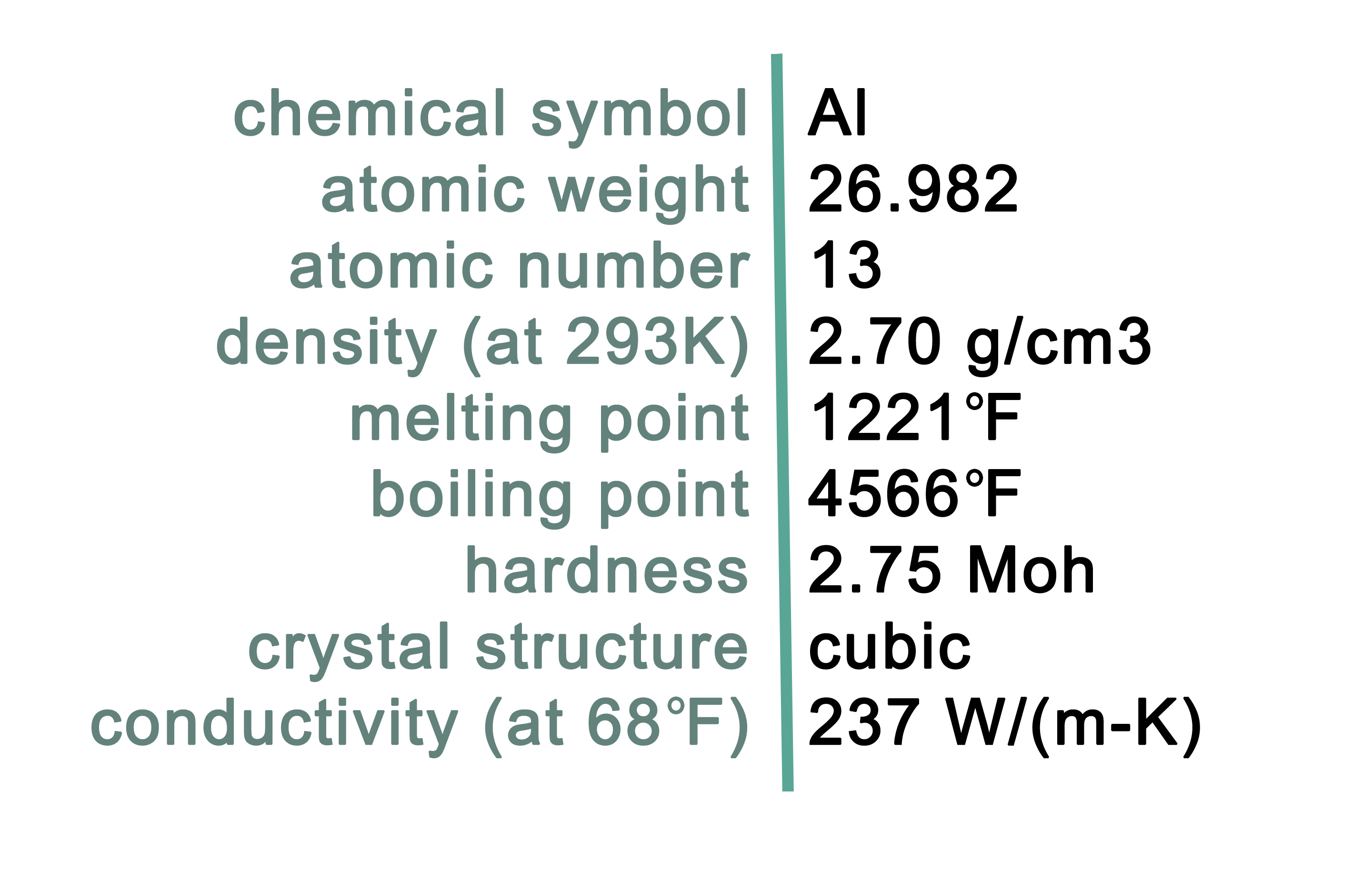
At 2,470 degrees Celsius (4,478 degrees Fahrenheit), the boiling point of aluminum represents a critical thermal threshold. In the realm of high-tech engineering, reaching this temperature is not merely a scientific curiosity; it is a fundamental requirement for processes that define the modern digital age. This article explores the technical significance of aluminum’s vaporization point, its role in cutting-edge hardware manufacturing, and why this specific physical property is a cornerstone of future innovation.

The Physics of Thermal Thresholds: Why 2,470°C Matters
To understand why the boiling point of aluminum is a “tech” topic rather than just a “chemistry” topic, one must look at the energy required to transition this metal from a liquid to a gas. Unlike the melting point (660.3°C), which is easily achieved in standard industrial furnaces, the boiling point requires specialized equipment and precise control over atmospheric pressure.
The Atomic Structure and Latent Heat
Aluminum is a trivalent element with a face-centered cubic crystal structure. When we heat it toward its boiling point, we are battling the strong metallic bonds that hold its atoms together. The “latent heat of vaporization” for aluminum is exceptionally high. In tech manufacturing, managing this energy input is essential. Engineers must account for the fact that as aluminum nears 2,470°C, the energy required to flip those atoms into a gaseous state can cause significant thermal stress on surrounding components. This makes the boiling point a “danger zone” for hardware design but a “utility zone” for materials engineering.
Vaporization in Controlled Vacuum Environments
One of the most significant breakthroughs in tech is the realization that the boiling point is not a fixed number, but a variable of pressure. In the high-vacuum environments used to create microchips and optical coatings, aluminum can be “boiled” or evaporated at much lower temperatures. This process, known as physical vapor deposition (PVD), allows tech manufacturers to create ultra-thin layers of aluminum on silicon wafers or glass surfaces. Without the precise knowledge of aluminum’s phase-change behavior, the production of high-resolution displays and high-speed processors would be impossible.
Aluminum in High-Performance Computing and Semiconductor Cooling
As we move toward an era of AI-driven computing and exascale data centers, the thermal management of hardware has become the primary bottleneck for performance. While we rarely want aluminum to reach its boiling point inside a computer, understanding the upper limits of its thermal capacity is vital for designing the next generation of heat sinks and cooling systems.
Thermal Management and Heat Sink Design
Aluminum is the gold standard for heat sinks due to its high thermal conductivity. However, as chips become more powerful, they generate localized “hot spots” that can approach temperatures that compromise the structural integrity of the metal. By studying the approach to the boiling point, engineers can develop alloys that maintain their shape and conductive efficiency even under extreme thermal loads. This is particularly relevant in the development of GPUs for AI training, where the density of transistors requires heat dissipation materials that can withstand rapid cycling between ambient and high temperatures without fatiguing.
Phase-Change Cooling and Heat Pipes
The concept of a “boiling point” is utilized creatively in heat pipe technology. In many high-end laptops and gaming consoles, aluminum or copper tubes contain a working fluid. While the aluminum casing itself doesn’t boil, the tech is designed around the principles of phase change. Advanced research is currently looking into aluminum-based porous structures that can facilitate the rapid evaporation and condensation of cooling agents. Understanding the point at which aluminum atoms begin to lose their cohesive bond helps researchers develop “liquid metal” interfaces that bridge the gap between a hot processor and a cooling block.
Industrial Applications: Vacuum Deposition and Thin-Film Technology
Perhaps the most direct application of aluminum’s boiling point in the tech world is in the creation of thin films. If you are reading this on a screen, you are likely looking through or at a surface that has been enhanced by aluminum vapor.
The Role of Aluminum Vapor in Electronics
In the semiconductor industry, “boiling” aluminum is a daily occurrence. Through a process called Thermal Evaporation, aluminum is heated in a vacuum chamber until it reaches its boiling point. The resulting vapor rises and coats a substrate—such as a silicon wafer—with an incredibly thin, uniform layer of metal. This layer acts as the wiring (interconnects) within the microchip. Because the boiling point is so high, the precision required to control the rate of evaporation is immense. This process is what allows for the miniaturization of tech; we are essentially “painting” with aluminum atoms.
Physical Vapor Deposition (PVD) and Optical Gadgets
Beyond microchips, aluminum’s transition to a gas is used to create the reflective surfaces in telescopes, camera lenses, and even the internal mirrors of VR headsets. By heating aluminum to its boiling point in a controlled environment, technicians can deposit a film that is only a few atoms thick. This ensures maximum reflectivity with minimum weight. The “Tech” behind your smartphone’s camera relies entirely on the fact that we can reliably push aluminum to its boiling point to create these precision optical coatings.
The Future of Aerospace and Additive Manufacturing
As we look toward the future of gadgets and transport, aluminum remains the primary material for aerospace tech. However, the way we work with it is changing, moving from casting and machining to 3D printing (additive manufacturing).
Laser Powder Bed Fusion (LPBF) Dynamics
In 3D printing for aerospace, high-powered lasers melt and sometimes partially vaporize aluminum powder to fuse layers together. Here, the boiling point of aluminum is a critical factor to avoid “keyhole” defects. If the laser is too intense and reaches the boiling point, the metal can vaporize, creating bubbles (porosity) in the final part. Tech companies like SpaceX and Relativity Space must use advanced software simulations to predict the thermal gradients during the print process, ensuring the aluminum stays just below the boiling point to maintain structural integrity while still being liquid enough to fuse.
Managing Overheating in Spacecraft Engineering
For satellites and probes, the boiling point of aluminum serves as the ultimate “fail-safe” limit. In the vacuum of space, heat cannot be dissipated through air (convection); it can only be radiated. When a spacecraft faces the sun, its aluminum skin can reach extreme temperatures. While 2,470°C is far beyond what a craft would normally experience, the thermal expansion and the loss of tensile strength as the metal approaches higher temperatures are calculated using the boiling point as the theoretical ceiling. Understanding the vapor pressure of aluminum is also essential to ensure that the metal doesn’t “outgas” (evaporate) in the vacuum of space, which could coat sensitive sensors in a layer of unwanted aluminum soot.
Digital Security and Hardware Integrity
Finally, the thermal properties of aluminum play a niche but vital role in digital security and data destruction. In the world of high-level digital security, the physical destruction of hardware is often the only way to ensure data “sanitization.”
Thermal Limits for Data Storage Protection
For government and high-security tech firms, destroying a hard drive isn’t just about smashing it; it’s about altering the state of the storage medium. Aluminum is frequently used as the substrate for hard drive platters. To guarantee that data can never be recovered via forensic magnetism, the material must be heated to a point where its physical properties are permanently altered. While this usually happens at the melting point, reaching temperatures toward the vaporization threshold ensures that any magnetic orientation—the “1s and 0s” of our digital lives—is completely and irreversibly obliterated.

The Integrity of the Global Tech Supply Chain
As we move into an era of “sovereign tech,” where nations compete to build the best hardware, the ability to process aluminum at high temperatures becomes a matter of national security. The infrastructure required to reach and manage the boiling point of aluminum—such as high-frequency induction furnaces and electron-beam evaporators—is considered critical technology. Mastering these thermal thresholds allows for the domestic production of everything from fighter jet components to the next generation of solar panels.
In conclusion, the boiling point of aluminum is far more than a statistic in a textbook. It is a vital parameter that governs the manufacturing of our most advanced electronics, the efficiency of our cooling systems, and the structural viability of our space-faring vessels. As technology continues to shrink in size and grow in power, our ability to manipulate materials at their most extreme thermal limits will define the next century of digital and physical innovation.
aViewFromTheCave is a participant in the Amazon Services LLC Associates Program, an affiliate advertising program designed to provide a means for sites to earn advertising fees by advertising and linking to Amazon.com. Amazon, the Amazon logo, AmazonSupply, and the AmazonSupply logo are trademarks of Amazon.com, Inc. or its affiliates. As an Amazon Associate we earn affiliate commissions from qualifying purchases.