
In the realm of simulation software and digital entertainment, few titles have achieved the enduring influence of Stardew Valley. Developed by ConcernedApe, this masterpiece of game design serves as a case study in how complex systems—agriculture, social simulation, and resource management—can be harmonized into a single, cohesive user experience. For many users, the primary technical hurdle and most significant strategic decision occurs at the very beginning of the program: selecting the optimal farm map.
Choosing the “best” farm is not merely a matter of aesthetic preference; it is a choice of foundational architecture. Each map functions as a unique software environment with its own set of constraints, resource generation algorithms, and spatial limitations. To determine which farm reigns supreme, we must analyze these maps through the lens of technical efficiency, mechanical utility, and long-term scalability.
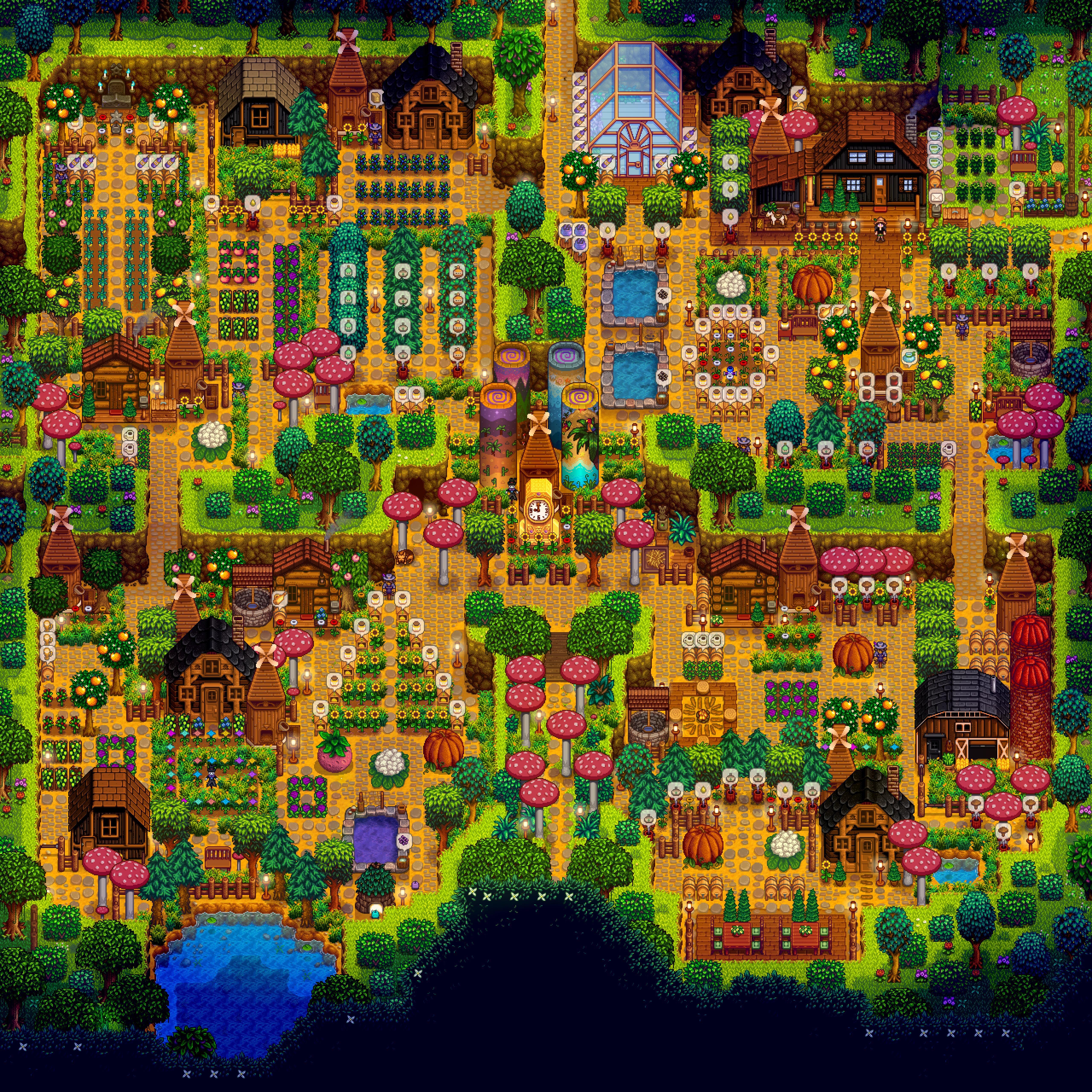
Understanding the Architecture of the Farm Layouts
At its core, Stardew Valley operates on a grid-based coordinate system. Every tile on a farm map represents a data point that can be utilized for crops, buildings, or natural resource spawning. When evaluating the technical superiority of a layout, we must first look at the “Standard” and “Forest” models, which represent the two ends of the efficiency spectrum.
The Standard Farm: Maximizing Resource Throughput
The Standard Farm is the “vanilla” environment of the software, designed for maximum output. From a technical standpoint, it offers the highest number of tillable tiles—3,427 to be exact. For players focused on high-throughput industrial farming, this is the superior choice.
The logic here is simple: more tiles equals more surface area for crop placement and automated sprinkler systems. In terms of “min-maxing” (a technical approach to optimizing performance), the Standard Farm allows for the highest possible revenue generation per season. It provides a blank canvas that minimizes environmental obstacles, allowing the user to design a highly efficient, high-bandwidth agricultural system.
The Forest Farm: Balancing Ecology and Loot Tables
In contrast to the Standard Farm, the Forest Farm introduces unique “forageable” spawns and hardwood generation. While it sacrifices tillable land—dropping to approximately 1,413 tiles—it compensates with a specialized resource logic. It is the only map where “Large Stumps” respawn daily, providing a steady stream of Hardwood, a critical late-game resource.
From a systems design perspective, the Forest Farm is ideal for players who prefer a “hybrid” build. It integrates the game’s foraging mechanics directly into the home base, reducing the need for the user to travel to external map sectors (like the Secret Woods) to gather materials. This saves “in-game cycles” and travel time, making it a highly efficient choice for players who prioritize crafting over pure monoculture.
Specialized Maps for Different Playstyles: A Mechanics Review
As the software evolved through various updates, more specialized “niche” environments were introduced to cater to specific gameplay mechanics. These maps—Riverland, Hill-top, and Wilderness—function as specialized modules, each prioritizing a different skill tree within the game’s engine.
The Riverland Farm: Navigating Spatial Constraints
The Riverland Farm is perhaps the most technically challenging layout. The vast majority of the map is composed of water tiles, which facilitates the fishing mechanic but severely limits terrestrial construction. From a UI/UX perspective, the Riverland Farm forces the player to manage a fragmented workspace.
While it is often criticized for its lack of space, the Riverland Farm serves as a specialized “Fishing” tutorial environment. It increases the probability of high-quality fish spawns directly on the farm property. However, for users looking for long-term scalability and “industrial” builds, the spatial constraints often lead to a “bottleneck” in the mid-to-late game stages.
The Hill-top Farm: Integrated Resource Generation
The Hill-top Farm introduces a “Mining” mini-biome. It features a raised plateau where stones, ore nodes, and geodes spawn periodically based on the player’s Mining level. This layout is an exercise in verticality and pathing.
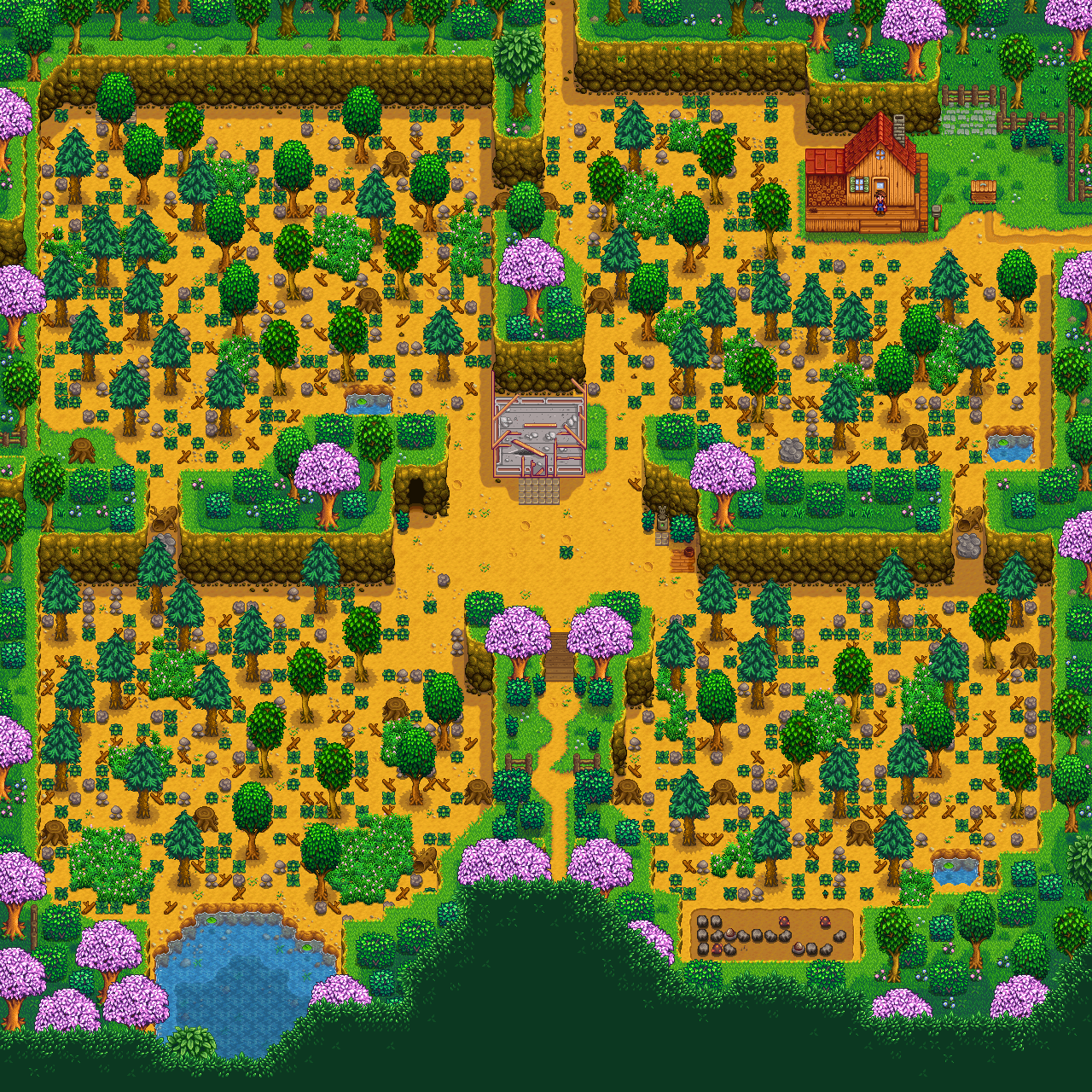
Technically, the Hill-top Farm reduces the player’s reliance on the “Mines” (the game’s primary dungeon). By providing a local source of copper, iron, and gold, it creates a more self-contained ecosystem. However, the irregular terrain can complicate the placement of large-scale structures like Barns or Sheds, requiring more sophisticated spatial planning and “pathing” management.
The Wilderness Farm: Combat Mechanics Integration
For users who enjoy the combat sub-routines of Stardew Valley, the Wilderness Farm offers a unique technical quirk: monsters spawn at night. This map converts the farm into a dynamic combat zone, scaling in difficulty with the player’s Combat level.
From a strategic standpoint, this map is less about resource efficiency and more about “risk management.” While it offers a decent amount of tillable land, the constant interruption of hostile entities requires the player to invest more heavily in defensive equipment and lighting. It is a niche choice for those who view the game primarily as an action-RPG rather than a farming simulator.
Advanced Technical Features and the 1.6 Update Meta
With the release of version 1.6, the technical “meta” (most effective tactic available) of Stardew Valley shifted significantly. The introduction of new map types and modified mechanics has provided seasoned users with new ways to optimize their digital homesteads.
The Meadowlands Farm: Optimizing Livestock Algorithms
The Meadowlands Farm is the newest addition to the software’s suite of environments. Its primary technical feature is the “Blue Grass” variant, which doubles the friendship growth rate of livestock when consumed. Unlike previous maps that focused on crops or mining, the Meadowlands is optimized for the animal husbandry sub-system.
By starting the player with a small coop and two chickens, the Meadowlands Farm bypasses the traditional early-game “crop grind.” It encourages a pivot toward high-value animal products (like Truffle Oil or Mayonnaise). From an optimization standpoint, this map is currently considered the most efficient for players who wish to leverage the “Artisan” profession and minimize their reliance on seasonal weather patterns.
The Four Corners: Multi-Player Synchronization and Load Distribution
The Four Corners map was specifically designed for the game’s multiplayer (Co-op) mode. It divides the farm into four distinct quadrants, each mimicking the characteristics of other maps (Forest, Hill-top, Standard, and Riverland).
Technically, this is an masterclass in “resource distribution.” In a multiplayer environment, having four distinct zones allows players to work independently without competing for space or resources. It minimizes “user collision” and allows for a modular approach to farm management, where one player can focus on mining while another focuses on agriculture, all within the same synchronized instance.
Data-Driven Optimization: Choosing Based on Efficiency Ratios
When we analyze these maps as pieces of software, we must look at the “Efficiency Ratio”—the balance between land utility and unique mechanical benefits.
- For Profit (The Industrialist): The Standard Farm remains the gold standard. Its lack of obstacles makes it the most compatible with high-end automation tools and Junimo Hut layouts.
- For Speedrunning (The Early-Game Boost): The Meadowlands Farm is the current technical favorite. Starting with livestock significantly accelerates the early-game economy and provides a more stable revenue stream regardless of the season.
- For Completionists (The Resource Collector): The Four Corners or Forest Farm provides the best “all-in-one” experience. These maps reduce the need for external travel, centralizing diverse resources (hardwood, forage, ore) in a single location.

Conclusion: The Technical Verdict
Determining the “best” farm in Stardew Valley ultimately depends on the user’s primary objective within the simulation. If the goal is to stress-test the game’s economy through massive agricultural output, the Standard Farm is the most robust piece of architecture available. However, if the goal is a balanced, multi-faceted gameplay experience that leverages the software’s 1.6 updates, the Meadowlands Farm offers a superior technological edge.
From a technical perspective, Stardew Valley is not just a game about farming; it is a complex system of resource management and spatial optimization. Each map represents a different “operating system” for the player’s experience. Whether you prioritize the high-bandwidth potential of the Standard Farm or the specialized livestock algorithms of the Meadowlands, your choice of farm is the most significant technical configuration you will make. By understanding the underlying mechanics and spatial logic of each layout, you can ensure that your digital homestead is not just a farm, but a highly optimized engine of productivity.
aViewFromTheCave is a participant in the Amazon Services LLC Associates Program, an affiliate advertising program designed to provide a means for sites to earn advertising fees by advertising and linking to Amazon.com. Amazon, the Amazon logo, AmazonSupply, and the AmazonSupply logo are trademarks of Amazon.com, Inc. or its affiliates. As an Amazon Associate we earn affiliate commissions from qualifying purchases.